-
We detected your language preference as English. Would you like to switch to the English version for a better experience?
Switch to English
Stay here


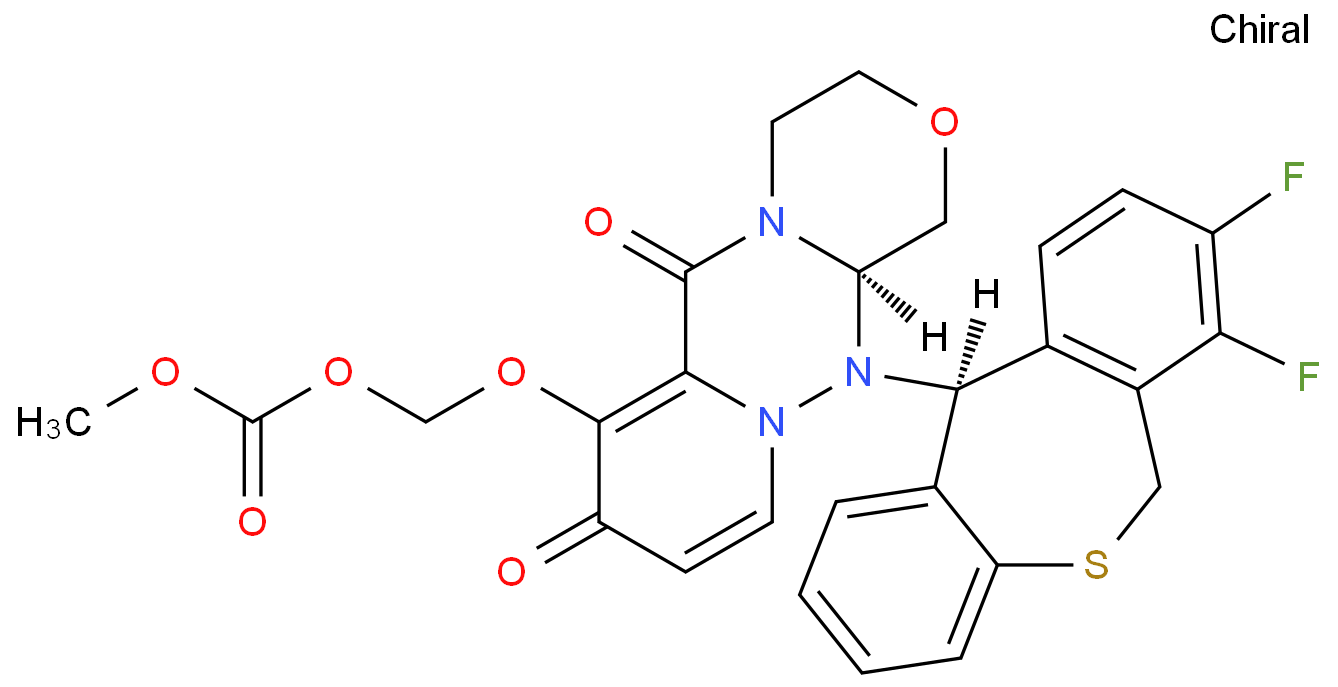
Baloxavir marboxil, CAS 1985606-14-1, is an orally administered prodrug that is converted in vivo to baloxavir, the pharmacologically active parent. The distinction is fundamental: baloxavir marboxil improves oral delivery, while hydrolytic removal of the prodrug moiety yields the metal-binding active species. Baloxavir inhibits the cap-dependent endonuclease function of the influenza virus polymerase acidic protein and thereby interrupts viral messenger-RNA transcription. Commercial discussion must remain within approved influenza labeling and should not present bulk API as a consumer product.
The product is associated with a single-dose treatment context in approved markets, but this white paper gives no dosing or patient-selection instructions. From a supply perspective, the molecule is a complex, stereochemically defined small-molecule API with challenging solid-state, impurity, and low-solubility considerations. Route control must preserve stereochemistry and govern residual catalysts, prodrug-related hydrolysis products, and mutagenic impurity risks. Dossier quality and finished-tablet bioavailability are at least as important as chemical assay.
This paper is intended for pharmaceutical buyers, quality units, formulation teams, and CDMO partners evaluating baloxavir marboxil supply in 2026. It reviews prodrug activation, cap-dependent endonuclease inhibition, route architecture, market drivers, compliance, ESG, and logistics. The analysis distinguishes the marboxil prodrug from baloxavir and from research analogues at every stage. It also emphasizes DMF strategy, cGMP, ICH development, method validation, and controlled tech-transfer for regulated campaigns.
Baloxavir marboxil contains masking groups that improve delivery of the underlying baloxavir pharmacophore and is converted by hydrolytic enzymes after administration. The liberated parent presents a chelating arrangement that binds divalent metal ions in the active site of the influenza polymerase acidic subunit. This inhibits cap-dependent endonuclease cleavage of host capped RNA fragments required to prime viral messenger-RNA synthesis. The mechanism is distinct from neuraminidase inhibition and should be described without extrapolating activity beyond susceptible influenza viruses and approved use.
Commercial synthesis assembles a densely functionalized, heterocyclic core with defined stereochemistry, then installs and preserves the marboxil prodrug functionality through late-stage operations. Route selection must manage chiral starting materials or asymmetric transformations, convergent coupling, heterocycle formation, protection strategy, and a controlled final solid form. Reactive reagents and catalysts create potential carryover, while closely related diastereomers and hydrolysis products require powerful purge steps. Process R&D should connect critical reaction parameters to the final impurity and polymorph profile under ICH Q11 principles.
Demand follows seasonal influenza incidence, public-health procurement, approved-market penetration, resistance surveillance, and competition among antiviral classes. The single-dose regimen context supports differentiated finished products but can also produce sharp seasonal inventory swings. Pandemic preparedness and stock rotation add forecasting complexity without guaranteeing steady annual consumption. Generic-development interest increases demand for impurity standards, route scouting, and dossier-ready alternative processes.
Originator-linked supply is concentrated in qualified complex-API and finished-dose networks, while Asia-Pacific and China provide substantial advanced-intermediate and custom-synthesis capacity. North America and Europe remain major regulated markets and centers for analytical, clinical, and regulatory work. Export flows depend on intellectual-property freedom to operate, inspection status, and acceptance of the specific API site in marketing authorizations. Capacity cannot be judged by reactor volume alone because stereochemical control, containment, chromatography, and dossier linkage constrain interchangeable output.
Baloxavir marboxil pricing reflects complex chiral chemistry, multiple advanced fragments, modest campaign scale, yield-sensitive purification, and extensive analytical support. GMP premiums include process validation, ICH stability, reference standards, genotoxic impurity assessments, and regulatory maintenance. Particle-size or solid-form customization can create additional value when linked to finished-product performance. Procurement should compare total cost of qualified material and regulatory change rather than low-volume research quotations.
Baloxavir marboxil intended for medicine manufacture requires cGMP and ICH Q7/Q11 systems, including a scientifically justified route and starting-material strategy. A Type II DMF can support FDA review, while European applications may use an ASMF or a CEP if an applicable Ph.Eur. monograph and eligibility exist. Buyers should verify current USP/Ph.Eur. status rather than assume compendial coverage for a relatively modern API. REACH, CLP, TSCA, FDA, GHS, patent, occupational, and transport obligations all require use-specific assessment.
The API's environmental burden is driven by multi-step chiral synthesis, protecting-group chemistry, solvent-intensive workups, and possible chromatography. Low yields in advanced steps embed upstream reagents and energy into discarded material. ESG programs should target process mass intensity, solvent recovery, hazardous-reagent substitution, worker containment, and reliable medicine access. ISO 9001/14001 systems provide governance, while campaign data demonstrates actual improvement.
Scope 1-3 Emissions include site utilities, temperature-controlled reactions, solvent distillation, purchased electricity, advanced intermediates, catalysts, waste incineration, packaging, and international freight. A convergent route can reduce late-stage loss if fragment quality is strong, but duplicated upstream operations still require accounting. Telescoping and direct isolation may lower emissions when impurity purge remains validated. Carbon comparisons should use the same cGMP grade, yield basis, and system boundary.
Traceability should cover chiral building blocks, heterocyclic fragments, prodrug reagents, catalysts, solvents, and primary packaging. Each key starting-material supplier needs change notification and impurity-profile commitments because upstream variation can create new stereoisomers or mutagenic risks. Quality agreements should define data access, investigations, subcontractors, and regulatory support. Responsible sourcing reviews should include labor, waste, and business-integrity controls across the extended chain.
Baloxavir marboxil logistics must protect a defined solid form and moisture-sensitive prodrug impurity profile. Qualified packaging, controlled temperature, and secure pharmaceutical lanes reduce hydrolysis, physical change, diversion, and customs delays. Shipment plans should match ICH stability data and the registered container configuration. Receiving laboratories need representative, contained sampling and methods able to detect both chemical and solid-state change.
Dangerous-goods status should be determined from the supplier's supported classification and current air, sea, and road rules. If no regulated UN entry applies, robust pharmaceutical packaging and GHS workplace communication remain mandatory. Shipping records should include certificate of analysis, safety data sheet, temperature instructions, country-of-origin, and regulatory-use description. Excursions must be assessed against stability data before release, not accepted solely because appearance is unchanged.
A market-entry plan should integrate freedom to operate, route economics, API quality, formulation performance, and regulatory timing. Buyers should define the intended region and product application before requesting a generic material quotation. Development agreements need clear ownership of process knowledge, impurity standards, methods, and dossier sections. RUO, non-GMP development, validation, and commercial GMP batches should follow distinct release pathways.
Baloxavir marboxil is a sophisticated prodrug API whose identity, activation, and quality cannot be collapsed into the parent baloxavir. Its clinical mechanism begins after conversion to a metal-binding cap-dependent endonuclease inhibitor. Commercial success depends on stereochemical fidelity, hydrolysis control, solid-state performance, and robust regulatory documentation. Seasonal demand and limited interchangeable capacity make lifecycle planning especially important.
Buyers should integrate DMF or regional dossier review, cGMP audits, ICH Q7/Q11 controls, impurity science, particle engineering, stability, and secure logistics. Suppliers should invest in convergent process efficiency, parent-drug impurity control, validated analytics, and transparent Scope 1-3 Emissions data. CDMO arrangements need explicit grade boundaries and disciplined tech-transfer. All use, including the single-dose treatment context, remains governed by approved labeling and professional healthcare decisions.
Powered by Guidechem
This white paper is exclusively compiled by the Guidechem Intelligence Team based on global customs data, regulatory databases, and industry research. Guidechem is a leading global B2B chemical platform, dedicated to connecting global buyers with verified, high-quality manufacturers.
Relying on Guidechem's extensive global database, we have mapped the core participants in the current global Baloxavir marboxil supply chain:
Disclaimer: The content of this white paper is compiled based on public market data and regulatory information available as of 2026. Global chemical regulations are subject to dynamic adjustments. In actual export operations, enterprises must consult professional regulatory advisors or relevant competent authorities to obtain the latest compliance guidance.
|
 |
 |
 |
 |
 EN
EN
 Agricultural News
 Food News
 Industrial News
 Cosmetic News
 Pharmaceutical News
 Science News

 4YRS
4YRS

