
I. Executive Summary
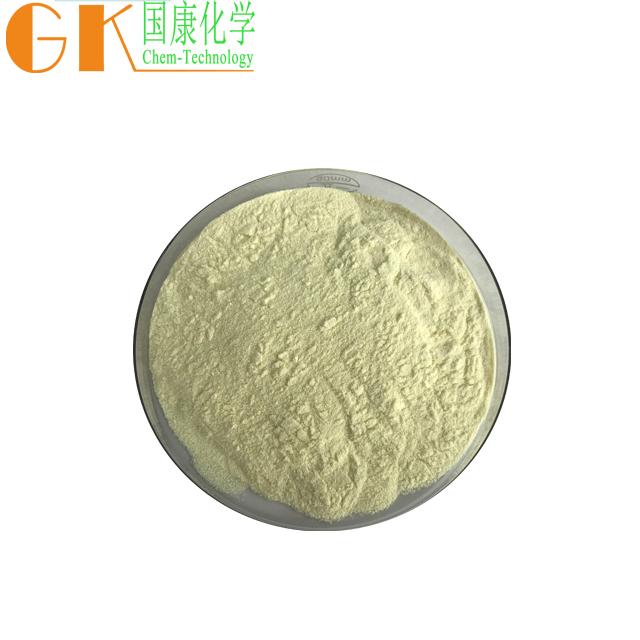
2-Amino-6-chlorobenzoic acid (6-chloroanthranilic acid, CAS 2148-56-3) is the anthranilate fragment most widely consumed in the anthranilic diamide class of insecticides and a compact ortho-amino acid template for quinazolinone and benzoxazinone scaffolds. At C7H6ClNO2, relative molecular mass 171.58, it is normally supplied as an off-white crystalline powder melting near 183-187 °C with decomposition. Its commercial value rests less on headline assay than on positional-isomer purity, residual-metal content and trace arylamine control.
Through 2026 demand has become visibly dual-track. Agrochemical programmes running generic diamides consume multi-tonne technical grade and compete on delivered cost, while pharmaceutical and CDMO programmes buy grams to hundreds of kilograms under ICH Q7, Q11 and M7 expectations. Buyers who purchase this molecule as a commodity powder often discover too late that their certificate lacks the isomer-specific data their filing requires.
This paper is written for sourcing managers, regulatory officers and CDMO partners. It examines the two dominant route families and their impurity fingerprints, the crop-protection and medicinal application matrix, capacity and export flows, the REACH, CLP and TSCA perimeter, ESG expectations now embedded in tenders, and the packaging and transport realities that decide whether a lot arrives usable.
II. Product Deep Dive: Molecular Mechanisms and Production Evolution
2.1 Physicochemical Properties and Mechanisms
Structurally the molecule carries amino, carboxyl and chlorine in a 1,2,6 relationship. That proximity lowers the apparent acid pKa through intramolecular hydrogen bonding, while the chlorine withdraws electron density and damps the basicity and nucleophilicity of the aniline nitrogen. The result is a strongly hydrogen-bonded lattice with modest water solubility, workable solubility in DMF, NMP and DMSO, and ready dissolution in aqueous alkali as the carboxylate. Industrial purification exploits that contrast.
- Ortho effects and solid-state behaviour: The N-H to carbonyl hydrogen bond together with the chlorine ortho effect creates a dense, high-melting lattice that retains water and alcohols tenaciously, which is why drying is specified as loss on drying rather than by Karl Fischer alone. Caking after tropical container voyages is common, and the powder discolours pink or tan when iron or copper leaches from contact surfaces, since anthranilate chelates adventitious transition metals effectively.
- Cyclisation versus decarboxylation: Two competing manifolds exist. Activation condenses the amino and carboxyl functions into benzoxazinone intermediates later opened by amines in diamide assembly, whereas sustained heating above roughly 190 °C decarboxylates to meta-chloroaniline, and acidic dehydrating conditions can close further to acridones. Both manifolds generate the impurity families most often responsible for failed release.
2.2 Synthesis and Manufacturing Technologies
Two route families dominate industrial supply. One installs chlorine by electrophilic substitution on anthranilic acid or a protected derivative; the other rearranges a pre-chlorinated phthalimide skeleton or reduces a pre-chlorinated nitrobenzoic acid. In both, economics are decided by regioselectivity rather than conversion: the 5-chloro isomer and over-chlorinated species are thermodynamically accessible and isomer resolution is solvent-intensive, so plants optimise selectivity and polish only by crystallisation.
- Regioselective chlorination with protection control: Anthranilic acid is monochlorinated using electrophilic chlorine sources under N-acetylation, controlled pH and low-temperature sub-stoichiometric dosing to suppress the para-directed 5-chloro isomer and the 3,5-dichloro adduct, then purified by carbon treatment and pH-swing crystallisation of the sodium salt. Buyers should demand the isomer-resolved impurity table, because a generic single-impurity limit conceals the species that later emerge as new impurities in the registered active substance.
- Hofmann rearrangement and nitro-reduction sequences: Alternative campaigns convert 3-chlorophthalic anhydride through the imide under hypohalite Hofmann conditions, or hydrogenate the corresponding nitro acid. The first offers attractive raw-material economics but delivers an isomer pair needing resolution; the second introduces dehalogenation risk and palladium carry-over. Mature operations manage this with screened low-leaching catalyst, chelating resin polish and ICP-MS testing against ICH Q3D limits.
2.3 Core Application Matrix
- Anthranilic diamide insecticide programmes: The dominant demand driver remains the ryanodine receptor modulator class, where this acid is cyclised to a benzoxazinone, opened with an alkylamine and elaborated into the pyrazole carboxamide side chain. This application alone sets commercial isomer specifications, because positional isomers survive into the active substance and then need separate toxicological qualification under Regulation (EC) No 1107/2009.
- Quinazolinone and benzoxazinone medicinal scaffolds: Discovery programmes buy it as a pre-functionalised precursor to quinazolinones, benzoxazinones and acridones appearing across kinase, receptor and central nervous system portfolios. Volumes are small but documentation heavy: route disclosure, genotoxic impurity assessment and, as campaigns mature, ICH Q11 development data with confidential DMF-type support.
- Reference standards, pigments and ligand chemistry: Reference material producers and residue laboratories consume kilogram quantities for metabolite and impurity standards, pigment makers exploit the acridone chemistry, and ligand researchers use its chelation behaviour. Tonnage is small but influence is disproportionate, because methods validated here often become the defaults applied to bulk shipments.
III. Global Market Supply-Demand Landscape and Export Trends
3.1 Demand Drivers and Market Shifts
Demand tracks global diamide active-ingredient volumes plus three secondary drivers: generic entry after key patent expiries, resistance-management rotation away from older lepidopteran chemistry, and formulation expansion into seed treatment and professional pest control. As generic formulators in Asia have scaled, consumption has migrated from captive innovator streams into merchant purchases, which converts internal quality standards into contractual ones and makes auditable capability a commercial differentiator.
3.2 Capacity Distribution and Export Flows
Capacity concentrates in Zhejiang, Jiangsu and Shandong, where multipurpose halogenation and hydrogenation assets sit close to chlor-alkali and solvent infrastructure, and in Gujarat, Maharashtra and Hyderabad. European and North American demand is served largely through Rotterdam, Hamburg and Antwerp distribution, with genuine synthesis retained mainly in toll plants. Because the solid cakes, buyers in Brazil and Southeast Asia specify desiccant-loaded liners and reject drums held in unventilated yard storage.
3.3 Market Bifurcation and Pricing Dynamics
The market bifurcates sharply. Technical grade near 98.5 to 99.0 percent tracks chlorine, hypochlorite, acetic acid and steam costs on thin margins. Support grade at 99.5 percent and above, supplied with isomer tables, residual solvent and metal results and change-control commitments, commands a premium reflecting analytical cost rather than raw materials. Attempts to buy the second specification at the first price reliably generate investigations costing more than the premium would.
IV. In-depth Analysis of Global Compliance and Regulatory Barriers
Obligations here are shared. The supplier documents what it makes; the downstream registrant or applicant must prove what reaches the finished substance. Suppliers who anticipate that need win repeat business, while those who treat compliance as paperwork lose tenders at technical review regardless of quoted price.
4.1 European Market: REACH, CLP, and Sector-Specific Directives
- REACH registration and only-representative access: Above one tonne per year a non-EU manufacturer cannot register directly, so an only representative must hold the registration or the importer inherits its cost. Asian producers maintaining such an arrangement covering the tonnage band, identified uses and exposure scenarios can quote into Europe immediately; the rest sell through distributors who become importers, adding cost and reducing flexibility.
- CLP notification and downstream metabolite scrutiny: Every form placed on the market must be notified to national poison centres, typically covering acute oral toxicity, skin and eye irritation and respiratory tract irritation. Buyers must read safety data sheet section 14 rather than assume it. Downstream, the chlorinated aromatic skeleton attracts metabolite scrutiny under Regulation (EC) No 1107/2009 and drinking-water guidance, so registrants increasingly require structural identification of impurities rather than area-percent reporting.
4.2 North American Market: TSCA, EPA, and FDA Regulations
- TSCA inventory status and export notification: The substance is expected to be listed as active on the TSCA inventory, permitting ordinary import, yet exporters must observe applicable export notification duties and importers must certify inventory status at entry. A negative certification can stall customs clearance for weeks, so exporters should supply written inventory confirmation before first shipment.
- FIFRA context and GMP expectations: The intermediate itself is not registered, but registrants must demonstrate manufacturing source and impurity carry-over to EPA under FIFRA and 40 CFR. Equally, although no finished pharmaceutical exists for this intermediate, customers applying ICH Q7 and Q11 will audit starting-material justification, change control, deviation management, retest dating and reference standard qualification, and will expect confidential dossier support.
4.3 The Critical Hurdle: Quality Control and Safety Limits
Compliance Warning: The costliest failure mode is not assay but unqualified impurity carry-over. Anthranilates are primary aromatic amines, an ICH M7 structural alert, so that every new or unexplained impurity requires (Q)SAR assessment and, where inconclusive, bacterial reverse mutation testing, controlled against the 1.5 µg per day threshold of toxicological concern. Positional isomers such as 2-amino-5-chlorobenzoic acid likewise survive into the active substance and become regioisomeric impurities needing separate qualification. Add palladium and nickel under ICH Q3D and residual solvents under Q3C: any supplier unable to provide isomer-resolved, structure-identified impurity data backed by a defensible genotoxic risk assessment should be disqualified before price discussion begins.
V. Green Trade Barriers and ESG in Manufacturing
ESG criteria have migrated from brochures into contracts. multinational buyers request quantified environmental performance, solvent recovery data and audit evidence at quotation stage, and Asian producers supplying European agrochemical majors now face Together for Sustainability style assessments once reserved for petrochemical vendors.
5.1 Carbon Footprint and Circular Economy
Process mass intensity here is dominated by work-up rather than stoichiometry: pH-swing dissolution, reprecipitation, carbon treatment and drying are solvent- and steam-intensive. Producers able to demonstrate recovered acetic acid loops, counter-current mother liquor recycling for isomer purge, heat-integrated dryers and quantified Scope 1 and 2 emissions per kilogram defend premium pricing through their customer's Scope 3 accounting, particularly as buyers replace defaults with supplier primary data.
5.2 Sustainable Sourcing and Traceability
Traceability means demonstrable backward visibility from the bagged lot to campaign record, chlorination batch, catalyst lot and upstream anthranilate source, plus forward genealogy of every repack and blend. Because reverse logistics after an impurity excursion are expensive, leading plants implement batch-level ERP traceability, retain control samples through the full retest period, and run ISO 9001, 14001 and 45001 systems covering aromatic amine exposure. Always ask whether a quoted lot is single-campaign material or a rework blend.
VI. Supply Chain Resilience and Export Logistics
Logistics rarely destroys value in this trade; it erodes it quietly. Three damage modes recur: moisture-driven caking, metal-driven discolouration, and lot commingling during transhipment that invalidates traceability and therefore the customer's own regulatory narrative.
6.1 Packaging Standards and Moisture/Contamination Control
- Multi-barrier drum configuration: Trade standard is a fibre or HDPE drum fitted with two independent heat-sealed polyethylene liners, desiccant placed between liner and wall and, for tropical routes, inside the outer liner as well. Twenty-five kilogram palletised, shrink-wrapped drums are the usual trading unit. Buyers should specify maximum headspace and request loading photographs, because drum deformation is routinely blamed on the producer when it begins at the dock.
- Metal exclusion and dust containment: Because anthranilate chelates iron and copper, contact surfaces must be 316L stainless, glass-lined steel or polyethylene, with carbon steel chutes prohibited in the manufacturing instruction. The fine powder also carries occupational exposure risk for a sensitising aromatic amine, so packing runs under local exhaust ventilation with closed transfer and externally clean drums.
6.2 Dangerous Goods Identification and Transit Protocols
Most commercial grades move as non-restricted cargo by road, sea and air, because the damage profile typical of the notified classification does not meet the acute toxicity thresholds used for transport; nevertheless nothing should be assumed. Shippers must read section 14 of the lot-specific safety data sheet and, where an aquatic chronic hazard is notified, expect assignment to UN 3077 or UN 3082, class 9, packing group III, with marine pollutant marking for sea carriage. Standard practice then adds desiccated containers, storage below 30 °C and retained sealed dispatch samples.
VII. Enterprise Global Expansion Strategy Guide
Suppliers seeking framework agreements rather than transactional spot business should execute the sequence below, which reflects how multinational agrochemical and pharmaceutical buyers actually qualify starting materials.
- Qualify two specifications in parallel: Offer technical grade tuned for diamide producers with tight isomer limits and aggressive cost, alongside support grade carrying structure-identified impurity tables, metal and solvent data and batch record review access. Splitting both from one campaign at a documented point avoids duplicated effort while letting each buyer be quoted against the expectations it holds.
- Pre-build the regulatory evidence pack: Maintain only-representative cover for the European tonnage band, poison centre notification records, a written TSCA inventory statement for United States importers, route disclosure suitable for confidential submission to registrants, and an ICH M7 genotoxic assessment addressing the aromatic amine alert. Buyers routinely disqualify capable suppliers merely because none of these can be produced inside the tender window.
- Regionalise finishing and hold strategic inventory: Ship bulk intermediate to European or Indian partners for repack, control testing and local-language labelling, and hold eight to twelve weeks of safety stock in a bonded destination warehouse. That shifts discussion from freight quote to service level, protects customers against seasonal application penalties, and converts a commodities vendor into a supply-security partner.
VIII. Conclusion
2-Amino-6-chlorobenzoic acid is a mature intermediate whose commercial centre of gravity has moved from captive innovator streams into the merchant market, transferring quality risk from internal audits to purchase contracts. Winners are not the cheapest chlorinators; they prove regiochemical control, translate it into isomer-resolved impurity data, and support it with REACH access, a defensible ICH M7 position on the aromatic amine alert and metals within Q3D limits.
Buyers should therefore write specifications that test what actually matters, namely isomers, metals and unidentified peaks, and audit change-control discipline before negotiating price. For CDMO partners the opportunity lies in the gap between the grades: processes that improve regioselectivity, purification designs replacing repeated recrystallisation with a deliberate purge, and analytical packages anticipating registrant needs convert a 171 dalton commodity into a durable relationship.
IX. Industry Resource Connection and Supplier Ecosystem
Powered by Guidechem
This white paper is exclusively compiled by the Guidechem Intelligence Team based on global customs data, regulatory databases, and industry research. Guidechem is a leading global B2B chemical platform, dedicated to connecting global buyers with verified, high-quality manufacturers.
Relying on Guidechem's extensive global database, we have mapped the core participants in the current global 2-Amino-6-chlorobenzoic acid supply chain:
- China (Zhejiang, Jiangsu and Shandong) - integrated halogenation corridor: Multipurpose plants here combine electrophilic chlorination and hydrogenation trains with solvent recovery and captive upstream anhydrides. The ecosystem also includes export traders working through Ningbo and Shanghai, contract laboratories developing isomer-resolved HPLC methods, and producers holding ISO certificates, environmental permits and documentation sufficient for European only-representative registrations.
- India (Gujarat, Maharashtra and Hyderabad) - cost-competitive generic support hub: Producers in Ankleshwar, Vapi, Tarapur and the Hyderabad bulk-drug belt supply technical grade to domestic and export formulators and increasingly offer documented campaigns under ICH Q7-aligned systems. Strengths are English-language regulatory documentation, established only-representative relationships, and willingness to run moderate multi-step sequences that commodity plants decline. Flows move through Nhava Sheva and Mundra onward to Europe and Latin America.
- European Union (Germany, Switzerland, Italy and France) - high-assurance finishing and toll network: Europe retains little primary chlorination for cost and permitting reasons but holds disproportionate capability in high-containment hydrogenation, particle control, GMP repacking and dossier support. Toll manufacturers here import crude intermediate, purify and finish it under ISO or GMP conditions, and serve registrants needing campaign traceability and short lead times rather than the lowest ex-works price.
Disclaimer: The content of this white paper is compiled based on public market data and regulatory information available as of 2026. Global chemical regulations are subject to dynamic adjustments. In actual export operations, enterprises must consult professional regulatory advisors or relevant competent authorities to obtain the latest compliance guidance.



 EN
 Agricultural News
 Food News
 Industrial News
 Cosmetic News
 Pharmaceutical News
 Science News


 5YRS

