-
We detected your language preference as English. Would you like to switch to the English version for a better experience?
Switch to English
Stay here


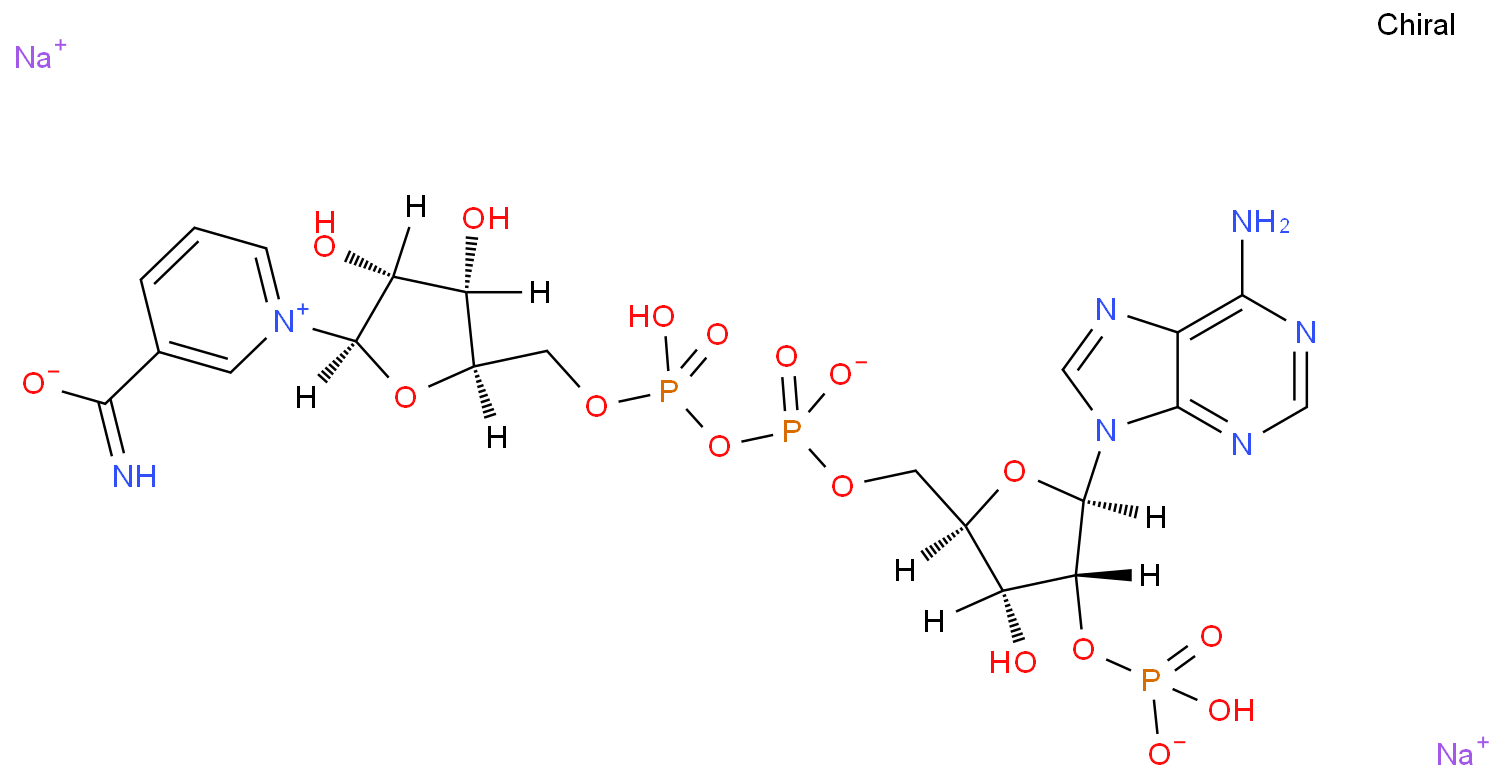
beta-Nicotinamide adenine dinucleotide phosphate, disodium salt (CAS 24292-60-2) is the disodium salt of the oxidised pyridine nucleotide cofactor beta-NADP, the 2'-phosphorylated analogue of NAD supplying reducing equivalents to a distinct family of dehydrogenases, reductases and monooxygenases. Value is set by redox-form ratio, nucleotide purity, sodium stoichiometry and water content, and a nominally 98% lot can underperform a 95% lot in an NADPH-dependent assay. This paper is written from a CDMO perspective: the material is a Research Use Only (RUO) reagent and a manufacturing input for in-vitro diagnostic and bioprocessing customers, it has no approved therapeutic indication as supplied, it is not a finished consumer or dietary product, and no anti-ageing, longevity, NAD+-booster or supplement claim is made here.
Demand is driven by three industrial segments: clinical chemistry and in-vitro diagnostic kit manufacturing, notably glucose-6-phosphate dehydrogenase and coupled NADPH assays; NADPH-dependent biocatalysis for chiral alcohol, amine and hydroxylated intermediates; and cell-free or synthetic-biology platforms consuming oxidised and reduced nucleotide pairs at pilot scale. In each the real specification is a performance envelope - NADPH content, related-nucleotide profile, endotoxin level and nuclease-free status - tied to a validated method. That is what separates the research-grade spot market from contract campaigns run under ICH Q7 and Q11 discipline.
The following sections examine production route classes, purification strategy, the specification topics that cause lot failure, analytical validation under ICH Q2(R1) and Q14, cold-chain packaging, and the compliance perimeter covering RUO supply, ISO 13485 diagnostic manufacturing and ICH Q3D elemental impurities. Buyers should treat the certificate of analysis as the commercial contract: if it omits NADPH content, sodium content and Karl Fischer water, the lot is not specification-critical material.
NADP differs from NAD by a single phosphate ester on the 2'-hydroxyl of the adenosine ribose. That modification is the recognition element read by NADP-dependent enzymes and it also dictates how the material is analysed: the oxidised form absorbs at 260 nm with a molar extinction coefficient near 18,000 M-1 cm-1, while NADPH shows the diagnostic 340 nm band near 6,220 M-1 cm-1 that underpins most coupled assays in clinical chemistry. The disodium salt (C21H26N7Na2O17P3, relative molecular mass approximately 787) is freely water soluble, hygroscopic and stable only across a narrow pH window; the alpha-anomer is enzymatically inactive.
Three production route classes supply the market, each leaving an impurity fingerprint a buyer can read from the CoA. At route-class level only: enzymatic phosphorylation of high-purity NAD+ using NAD kinase with ATP or polyphosphate and an ATP-regeneration module; fermentation-derived NAD+ recovered from yeast or bacterial biomass followed by chemical phosphorylation and controlled hydrolysis; and integrated routes pairing biomass-derived NAD+ with enzymatic 2'-phosphorylation. The choice trades selectivity against throughput.
Two shifts are reshaping demand. The migration of pharmaceutical intermediate manufacture from stoichiometric reduction to enzymatic catalysis has created recurring, campaign-sized demand for NADPH-dependent cofactor systems rather than one-off laboratory purchases, while diagnostic kit manufacturing has consolidated around platform analysers whose tolerances tighten the acceptable spread of redox ratio and water content. Cell-free and synthetic-biology platforms add a third pull. None of these segments is a consumer or dietary market: a supplier positioning this material as a supplement ingredient is signalling the wrong regulatory posture.
Supply is concentrated in a small number of fermentation-and-purification specialists plus a long tail of repackaging traders. China holds the largest share of upstream fermentation and NAD+ capacity and a growing share of enzymatic phosphorylation; Japan retains long-standing high-purity cofactor expertise; EU and US producers dominate the documented end and the reference-material segment. Lyophilisation and cold-chain finishing capacity, not reaction volume, is the real bottleneck.
The market has bifurcated into research grade sold on nominal HPLC purity, diagnostic grade sold on a full performance specification with endotoxin and nuclease data, and contract GMP campaigns sold with development, validation and change-control deliverables; price per gram spans an order of magnitude across the tiers. Premiums attach to tightly controlled NADPH content, endotoxin below the customer's limit, DNase/RNase/protease-free certification and ISO 17034 certification with uncertainty.
A pyridine nucleotide cofactor is not a drug substance, and its compliance perimeter is set by the buyer's end use. Supplied for research and diagnostic manufacturing, the material sits outside therapeutic regulation; the operative instruments are chemical inventory rules, the customer's industry quality-system standard and reference-material standards. Where the cofactor is consumed in a GMP bioprocess or API step, ICH expectations propagate backwards through supplier qualification and audit.
Cofactor manufacturing is energy- and solvent-intensive per kilogram in a way bulk chemicals are not, because the value sits in purification and lyophilisation rather than in the reaction. ESG pressure from diagnostic and pharmaceutical customers arrives through supplier questionnaires rather than statute, focusing on solvent recovery, cold-chain emissions, process-water quality and biological traceability.
The dominant contributors are lyophilisation energy, chromatography solvent with its acetonitrile and buffer load, fermentation steam and aeration, and refrigerated transport of a low-mass, high-value product. Credible reductions include solvent recovery in the HPLC suite, high-efficiency lyophiliser retrofits and ATP regeneration to cut phosphate-donor burden. Scope 3 disclosure should cover the cold chain, because dry-ice emissions per gram can exceed process emissions.
Traceability runs forward from the fermentation feedstock. Customers increasingly require statements on the production organism used for recombinant NAD kinase, absence of animal-derived materials with TSE/BSE status, non-GMO status of the fermentation substrate and lot genealogy linking bulk lyophilisation to filled vials. Suppliers that present this as a documented chain turn ESG questionnaires into a barrier against repackaging traders.
Logistics is where specification-critical cofactor material is most often degraded. Oxidised beta-NADP disodium salt is hygroscopic and sensitive to heat, light and pH excursion; an excellent lot can arrive out of specification because of an unqualified shipper. Packaging, monitoring and documentation must be written into the product specification rather than delegated to a forwarder.
The cofactor itself is normally not a dangerous good under IMO, ADR or IATA rules, but the refrigerant is: dry-ice shipments move as UN 1845, Class 9, under IATA Packing Instruction 954 with the associated marking and documentation. Air freight is standard for kilogram-scale documented lots because transit time dominates degradation risk; sea freight is viable only in reefer containers with continuous records. Misdeclaration causes more customs delay than any hazard rule, so invoices should carry the CAS number, the salt form, the storage statement and the RUO designation.
Three moves decide whether a buyer secures reliable specification-critical beta-NADP supply: qualify two sources against one written specification, invest in the analytical method before negotiating price, and contract change-control terms that make a CDMO partnership durable.
Beta-NADP disodium salt (CAS 24292-60-2) is a small-volume, high-consequence input whose commercial risk is specification ambiguity rather than price volatility. The difference between a lot that holds a diagnostic calibration curve for two years and one that fails in month three is usually NADPH content, water content or cold-chain handling.
Regulatory posture is equally consequential. Supplied as RUO and as a manufacturing input for diagnostics and bioprocessing, the disodium salt sits outside therapeutic and consumer frameworks, and any drift toward supplement, anti-ageing or NAD+-booster positioning is a compliance liability. Through 2026 the market will reward producers that combine ISO 9001 systems, ISO 17034 competence and ICH-aligned stability data with validated cold-chain logistics.
Powered by Guidechem
This white paper is exclusively compiled by the Guidechem Intelligence Team based on global customs data, regulatory databases, and industry research. Guidechem is a leading global B2B chemical platform, dedicated to connecting global buyers with verified, high-quality manufacturers.
Relying on Guidechem's extensive global database, we have mapped the core participants in the current global beta-Nicotinamide adenine dinucleotide phosphate disodium salt supply chain:
Disclaimer: The content of this white paper is compiled based on public market data and regulatory information available as of 2026. Global chemical regulations are subject to dynamic adjustments. In actual export operations, enterprises must consult professional regulatory advisors or relevant competent authorities to obtain the latest compliance guidance.
|
 |
 |
|
 |
 EN
 Agricultural News
 Food News
 Industrial News
 Cosmetic News
 Pharmaceutical News
 Science News


 1YR

