
I. Executive Summary
Clindamycin phosphate (CAS 24729-96-2) is a water-soluble ester prodrug of the lincosamide antibiotic clindamycin, and one of the most widely prescribed antimicrobial actives for both systemic and topical indications worldwide. As a semisynthetic derivative obtained by chemical modification of naturally fermented lincomycin, it combines the Gram-positive and anaerobic coverage of the lincosamide class with favorable aqueous solubility that enables parenteral, topical, and vaginal formulations. This white paper analyzes the chemistry, manufacturing, market structure, and regulatory posture of clindamycin phosphate for B2B stakeholders across pharmaceutical, contract-manufacturing, and topical-dermaceutical value chains in 2026.
The global clindamycin phosphate market in 2026 is shaped by steady antimicrobial demand, the enduring popularity of topical clindamycin-benzoyl peroxide acne combinations, and a structural supply base concentrated in India and China serving generic markets under intensifying GMP and impurity-control expectations. Demand is comparatively insulated from consumer-cycle volatility but exposed to antibiotic-stewardship policy, generic-price erosion, and the rising bar for genotoxic-impurity management under ICH guidelines. Enterprises must therefore balance cost-competitive sourcing against uncompromising quality-assurance and regulatory-readiness imperatives.
For buyers and producers alike, the defining challenge is mastering the cGMP, DMF, and ICH Q7/Q11 framework that governs active pharmaceutical ingredient (API) manufacture, together with the dual identity of clindamycin phosphate as both a prescription drug substance and an ingredient at the boundary of cosmetic regulation under MoCRA. This paper provides an authoritative, compliance-first examination spanning molecular mechanism, fermentation-and-chemical synthesis, application economics, regulatory barriers across EU, US, and APAC jurisdictions, ESG considerations, and supply-chain strategy. It closes with a pragmatic global-expansion framework for enterprises seeking to qualify and scale clindamycin phosphate supply in 2026.
II. Product Deep Dive: Molecular Mechanisms and Production Evolution
2.1 Physicochemical Properties and Mechanisms
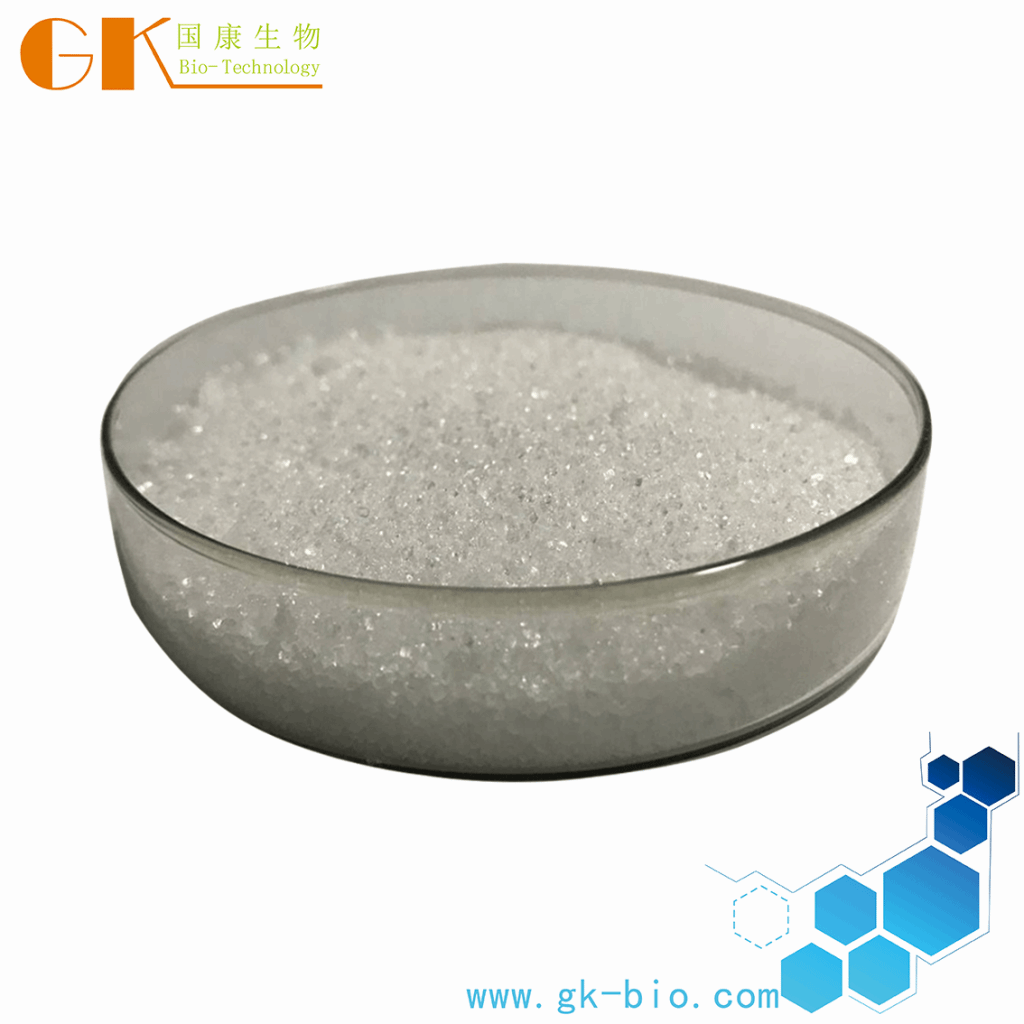
Clindamycin phosphate is the phosphorylated ester of clindamycin, presenting as a white to off-white crystalline powder that is freely soluble in water and ethanol but practically insoluble in non-polar solvents, a solubility profile that distinguishes it from the parent base and underpins its suitability for injectable and aqueous topical vehicles. Chemically it is 7(S)-chloro-7-deoxy-lincomycin-2-phosphate, with the phosphate moiety serving purely as a hydrophilic prodrug handle that is hydrolyzed in vivo to the active clindamycin. Its molecular architecture preserves the lincosamide bicyclic core responsible for ribosomal engagement and antimicrobial potency.
- Ribosomal Binding and Protein-Synthesis Inhibition: Clindamycin phosphate exerts no direct activity until dephosphorylated to clindamycin, which binds to the 50S subunit of the bacterial ribosome near the peptidyl-transferase center, blocking peptide-bond formation and the translocation step of elongation. This bacteriostatic action is potent against anaerobic bacteria, many aerobicto-Gram-positive organisms, and certain atypical pathogens, while sparing the eukaryotic 80S ribosome and most aerobic Gram-negatives, defining its clinical niche and resistance landscape.
- Stability, pH, and Formulation Behavior: The phosphate ester is hydrolytically sensitive under strongly acidic or alkaline conditions and degrades with heat and light, demanding controlled pH, low-temperature storage, and protection from oxidative conditions throughout manufacturing and distribution. Its high aqueous solubility enables clear injectable solutions and elegant topical gels, but also necessitates robust microbial-control and endotoxin monitoring consistent with parenteral-quality expectations for any water-bearing API intermediate.
2.2 Synthesis and Manufacturing Technologies
Clindamycin phosphate is a semisynthetic API built on a fermented lincosamide scaffold, so its industrial manufacture couples large-scale fermentation of Lincomycin-producing actinomycetes with multi-step chemical derivatization. The starting lincomycin is produced by submerged fermentation of Streptomyces lincolnensis (or engineered strains) followed by recovery, purification, and 7(S)-chlorination to yield clindamycin base. The final phosphorylation step installs the phosphate ester under anhydrous, controlled conditions to afford the finished API, with each chemical stage demanding rigorous impurity-trajectory management.
- Fermentation, Chlorination, and Lincomycin Supply: High-titer fermentation of lincomycin relies on optimized media, strain improvement, and tight process control of dissolved oxygen, pH, and temperature to maximize yield and minimize colored and sulfur-containing impurities. Selective 7(S)-chlorination via chlorinating agents then converts lincomycin to clindamycin, a stereospecific transformation whose regio- and enantiopurity must be verified analytically because the wrong isomer is therapeutically inert. Securing a reliable, quality-audited lincomycin supply is therefore the foundational lever for any clindamycin phosphate producer.
- Phosphorylation and Crystallization Purification: Clindamycin is phosphorylated at the C-2 hydroxyl using phosphoryl chloride or phosphoric-acid equivalents under carefully controlled stoichiometry and temperature to avoid over-reaction and degradation, after which the crude ester is neutralized, salt-formed, and purified by crystallization and activated-carbon treatment. Final isolation yields a free-flowing, low-impurity crystalline phosphate meeting USP monograph specifications, with solvent-recovery and mother-liquor recycling integrated to satisfy both cost and environmental objectives.
2.3 Core Application Matrix
- Topical Acne and Dermatological Combinations: Clindamycin phosphate is a cornerstone topical anti-acne agent, formulated alone or—more effectively—in fixed combination with benzoyl peroxide to reduce both inflammatory lesions and the emergence of resistant cutaneous flora. Its aqueous solubility enables elegant gels, lotions, and pads, making it a high-volume dermaceutical active whose demand tracks dermatology prescribing and OTC-adjacent consumer skincare trends across North America, Europe, and Asia.
- Systemic and Anaerobic Infection Therapy: Parenteral and oral clindamycin phosphate/clindamycin remain important for anaerobic infections, skin and soft-tissue infections, and as penicillin-allergy alternatives in respiratory and dental indications, frequently used in surgical prophylaxis and hospital antimicrobial stewardship programs. This systemic segment demands the highest GMP rigor, full DMF documentation, and batch-to-batch consistency validated against pharmacopoeial identity, assay, and impurity limits.
- Vaginal and Veterinary Formulations: Clindamycin phosphate is formulated into vaginal creams and suppositories for bacterial vaginosis, a stable, water-compatible indication that benefits from the phosphate's solubility and local tolerability. In veterinary medicine, lincosamide-class actives address swine and poultry bacterial disease, extending the addressable market and creating parallel, region-specific regulatory pathways for producers serving animal-health customers.
III. Global Market Supply-Demand Landscape and Export Trends
3.1 Demand Drivers and Market Shifts
Global demand for clindamycin phosphate is anchored by persistent dermatology and antimicrobial prescribing that is comparatively resilient to economic cycles, with the topical acne segment—particularly clindamycin-benzoyl peroxide combinations—driving steady volume in developed markets. Antimicrobial-stewardship campaigns and concerns over Clostridioides difficile colitis temper systemic overuse but sustain a stable, guideline-supported role in anaerobic and penicillin-allergy contexts. The 2026 demand picture is further shaped by rising skin-health consciousness in Asia-Pacific and Latin America, partially offsetting price erosion in mature generic markets.
3.2 Capacity Distribution and Export Flows
Manufacturing capacity for clindamycin phosphate is concentrated among established API producers in India and China, who leverage integrated lincomycin supply, fermentation expertise, and cost-efficient chemical conversion to serve global generic formulators. Europe and North America retain a smaller base of originator and contract-manufacturing capacity oriented toward high-margin, fully documented, audit-ready supply for regulated markets. Export flows run predominantly from the India-China axis to North America, Europe, and Latin America, with quality pedigree and DMF standing—rather than price alone—gating access to stringent regulatory jurisdictions.
3.3 Market Bifurcation and Pricing Dynamics
The clindamycin phosphate market is bifurcated between price-competitive generic material and premium, regulatory-compliant API backed by validated DMFs, stability data, and successful GMP inspections. Pricing is pressured by generic competition and intermittent oversupply of lincomycin, yet defended by the cost of maintaining ICH-aligned impurity controls, finished-product dossiers, and recurring regulatory audits. Buyers increasingly favor dual-sourcing from qualified Indian and Chinese sites to balance cost with supply security, while tender and hospital procurement reward suppliers who can demonstrate uninterrupted, inspection-clean track records.
IV. In-depth Analysis of Global Compliance and Regulatory Barriers
As a prescription antimicrobial API, clindamycin phosphate is governed by the full apparatus of pharmaceutical regulation: active-substance GMP, marketing-authorization linkage via Drug Master Files, and pharmacopoeial monographs that define identity, assay, and impurity thresholds. Because the same molecule increasingly appears in products that skirt the drug-cosmetic boundary, compliance strategy must also anticipate MoCRA and counterpart cosmetics frameworks. The analysis below isolates the principal barriers across the three major blocs and the critical quality hurdle that determines market access.
4.1 European Market: REACH, CLP, and Sector-Specific Directives
- EU GMP and Active Substance Registration: Under the EU Active Substance Master File (ASMF) and GMP Directive 2003/94/EC as updated, clindamycin phosphate manufacturers must hold a valid GMP certificate issued by a competent authority following physical inspection, with the ASMF cross-referenced to the finished-medicinal-product marketing authorization. Importers bear the obligation to verify that the API originates from a GMP-certified site listed in the EUDRA GMDP database, creating a hard gate for non-inspected suppliers regardless of price competitiveness.
- REACH Interface and CLP for Non-Pharma Grades: Material intended for research, intermediate, or non-pharmaceutical use falls within REACH registration and CLP hazard-communication obligations, including SDS issuance and, where relevant, SVHC screening. Even pharma-grade lots benefit from CLP-aligned labeling for transport and workplace safety, and any impurity or solvent exceeding threshold triggers additional downstream documentation, so producers maintain REACH-ready dossiers as a contingency for multi-use marketing.
4.2 North American Market: TSCA, EPA, and FDA Regulations
- FDA DMF, cGMP, and ICH Q7 / Q11: US market entry requires a filed Drug Master File (Type II) with the FDA and manufacture under current Good Manufacturing Practice per 21 CFR 211, supported by ICH Q7 (API) and Q11 (development/manufacture) frameworks covering process description, impurity qualification, and change control. FDA pre-approval and routine surveillance inspections assess data integrity, cleaning validation, and microbial/endotoxin controls, and a satisfactory DMF is effectively prerequisite for any formulator's ANDA or NDA to be approvable.
- USP Monograph and TSCA Oversight: The USP monograph specifies identity, assay (by HPLC), related substances, residual solvents, and microbial limits that define the compliance floor, while TSCA jurisdiction covers the substance as a chemical and may apply if non-pharma uses are pursued. Cosmetic-adjacent topical products containing clindamycin phosphate fall under FDA drug oversight rather than OTC cosmetics, so suppliers must clarify the regulatory lane of each customer's finished product to avoid misclassification and downstream enforcement risk.
4.3 The Critical Hurdle: Quality Control and Safety Limits
Compliance Warning: Clindamycin phosphate must meet stringent pharmacopoeial impurity and microbial limits; residual lincomycin, chloro-derived and degradation impurities, and genotoxicrelated substances require validated controls and specification-setting under ICH Q3A/Q3B. Aqueous, non-sterile topical grades still demand tight microbial and endotoxin monitoring, and any batch failing identity, assay, or related-substances limits must be quarantined and investigated under a documented deviation system. Suppliers lacking data-integrity-compliant analytical records and current GMP inspection status risk import alerts, product recalls, and permanent loss of qualified-supplier status. Engage qualified pharmaceutical-quality and regulatory counsel before commercializing or importing this API.
V. Green Trade Barriers and ESG in Manufacturing
Although clindamycin phosphate is not an energy-intensive commodity, its fermentation-and-chemistry hybrid route generates significant process waste and solvent streams that place it squarely within the ESG and green-manufacturing expectations now applied to pharmaceutical supply. Procurement teams at multinational formulators increasingly score suppliers on solvent recovery, wastewater treatment, and responsible fermentation-feedstock sourcing, making environmental performance a differentiating factor in qualified-supplier selection.
5.1 Carbon Footprint and Circular Economy
The carbon footprint of clindamycin phosphate is dominated by fermentation energy, solvent use in extraction and phosphorylation, and steam-intensive crystallization, with Scope 1–3 emissions increasingly quantified under ISO 14067 and disclosed to customers pursuing science-based targets. Circular-economy practice centers on recovering and regenerating phosphorylation and extraction solvents, valorizing or biologically treating fermentation broth, and improving yield through strain engineering to reduce mass intensity per kilogram of API. Producers who publish verified environmental-product data and adopt ISO 14001 systems gain preference in green-procurement tenders.
5.2 Sustainable Sourcing and Traceability
Sustainable sourcing begins with the lincomycin fermentation feedstock and extends through every chemical reagent, demanding supplier codes of conduct, conflict-free and responsible-mineral screening, and batch-level traceability from raw material to finished API. Digital batch records, blockchain or equivalent chain-of-custody, and transparent impurity genealogies enable formulators to satisfy drug-supply-chain security laws and ESG due diligence. Integration of environmental and quality management systems converts traceability from a compliance cost into a trust asset that supports premium positioning.
VI. Supply Chain Resilience and Export Logistics
Clindamycin phosphate is not classified as a dangerous good in routine commerce, but as a pharmaceutical API it requires GMP-grade logistics that protect against moisture, heat, light, and contamination while preserving chain-of-custody and regulatory documentation. Resilience planning must address single-source fermentation dependence, port and customs delays, and the audit-readiness of every handler touching the material from plant to formulation suite.
6.1 Packaging Standards and Moisture/Contamination Control
- Pharma-Grade Double Barriers and Desiccant Protection: Finished API is packed in double polyethylene-lined fiber drums or sealed HDPE containers with desiccants, often under nitrogen blanketing for long-haul or tropical transit to guard against hydrolysis and moisture uptake. Each container carries tamper-evident seals, unique batch identifiers, and GMP labeling, while inner liners meet food/pharma-contact standards to prevent extractable contamination of the active.
- Cold-Chain Awareness and Segregated Storage: Although clindamycin phosphate does not universally require refrigeration, controlled-room-temperature storage (15–25 °C, protected from light) is standard, with temperature-logged warehousing and transport for sensitive customer specifications. Segregation from incompatible actives, strong oxidizers, and odorous materials prevents cross-contamination, and validated cleaning of intermediate bulk containers supports multi-product site compliance under cGMP.
6.2 Dangerous Goods Identification and Transit Protocols
Under default classification clindamycin phosphate is not a dangerous good and moves as general cargo with a pharmaceutical SDS, though specific mixtures or customer formulations may alter this, so shippers confirm per consignment. Transit still follows GDP (Good Distribution Practice) principles: validated thermal packaging where required, controlled-handling carriers, and unbroken documentation linking the ASMF/DMF batch to the shipping record for customs and regulatory tracing. Cross-border movements require alignment with importing-country GMP verification and, for FDA-bound lots, readiness for border and import inspections under mutual-recognition agreements.
VII. Enterprise Global Expansion Strategy Guide
For enterprises aiming to launch or scale clindamycin phosphate supply in 2026, the winning strategy is built on regulatory credibility and resilient, transparent manufacturing rather than price leadership alone. The following three pillars reflect how qualified API suppliers convert pharmaceutical-compliance rigor into durable commercial advantage.
- Secure DMF / ASMF Readiness and Dual-Source Lincomycin: File and maintain a current Type II DMF (US) and ASMF (EU) with chemistry, manufacturing, and controls fully documented, and diversify the upstream lincomycin supply across at least two qualified fermentation sites to avoid single-point disruption. Pre-emptive readiness for customer ANDA cross-reference and for unannounced GMP inspections shortens qualification cycles and de-risks tender participation in regulated markets.
- Invest in ICH-Aligned Impurity and Data-Integrity Systems: Build analytical and quality systems aligned with ICH Q3A/Q3B, Q7, and Q2(R1) to qualify and trend related substances, residual solvents, and microbial attributes, with ALCOA-plus data-integrity controls across electronic batch records. Demonstrated impurity genealogies and robust change-control reassure formulators and inspectors, converting quality maturity into preferential, longer-term supply agreements that withstand price competition.
- Differentiate via ESG and Dermatology-Grade Reliability: Deploy solvent-recovery, ISO 14001 environmental management, and transparent traceability to meet the ESG scorecards of multinational dermaceutical buyers, and tune a dedicated, low-impurity grade for topical acne combinations. Pairing green manufacturing with consistent topical-segment supply positions the enterprise for high-margin, brand-sensitive customers and insulates revenue from commoditized generic price wars.
VIII. Conclusion
Clindamycin phosphate exemplifies the modern generic API paradox: a mature, widely used antimicrobial whose commercial value is increasingly defined not by chemistry—long settled—but by the discipline of GMP, impurity control, and supply transparency. In 2026 the enterprises that thrive are those treating regulatory readiness and ESG performance as core product attributes rather than overhead.
As dermatology demand and anaerobic-therapy reliance persist, and as stewardships and quality bars rise, resilient dual-sourced, audit-clean, and environmentally responsible supply will capture the qualified-pharma segment while marginal non-compliant capacity is squeezed out. The strategic mandate is clear: convert compliance excellence into a defensible, global competitive moat for clindamycin phosphate.
IX. Industry Resource Connection and Supplier Ecosystem
Powered by Guidechem
This white paper is exclusively compiled by the Guidechem Intelligence Team based on global customs data, regulatory databases, and industry research. Guidechem is a leading global B2B chemical platform, dedicated to connecting global buyers with verified, high-quality manufacturers.
Relying on Guidechem's extensive global database, we have mapped the core participants in the current global Clindamycin phosphate supply chain:
- North America: The North American clindamycin phosphate ecosystem is anchored by originator and contract API manufacturers plus a dense base of finished-dose formulators serving branded and generic acne and antimicrobial markets, supported by sophisticated analytical, DMF, and regulatory-consulting service providers. Buyers benefit from mature cGMP infrastructure and fast ANDA pathways, though supply leans on imported API from Asia, making supplier-qualification and continuity planning essential.
- Europe: Europe's ecosystem combines a smaller set of GMP-certified API and formulation sites with stringent EMA and national-competent-authority oversight, emphasizing ASMF-backed, inspection-clean supply for hospital and dermatology channels. The region rewards suppliers who can demonstrate EUDRA GMDP-listed status, robust impurity control, and ESG credentials, positioning compliant imports—primarily from India and China—as the volume backbone under tight regulatory verification.
- Asia-Pacific / China: Asia-Pacific—India and China in particular—constitutes the dominant production pole for clindamycin phosphate, integrating lincomycin fermentation, chemical conversion, and cost-efficient scale that supplies global generic markets. This region offers the deepest capacity and most competitive economics but demands rigorous due diligence on GMP inspection history, data integrity, and DMF/ASMF standing for Western-bound shipments, with leading Indian sites frequently holding US and EU certifications.
Disclaimer: The content of this white paper is compiled based on public market data and regulatory information available as of 2026. Global chemical regulations are subject to dynamic adjustments. In actual export operations, enterprises must consult professional regulatory advisors or relevant competent authorities to obtain the latest compliance guidance.




 EN
 Agricultural News
 Food News
 Industrial News
 Cosmetic News
 Pharmaceutical News
 Science News



 9YRS

