-
We detected your language preference as English. Would you like to switch to the English version for a better experience?
Switch to English
Stay here


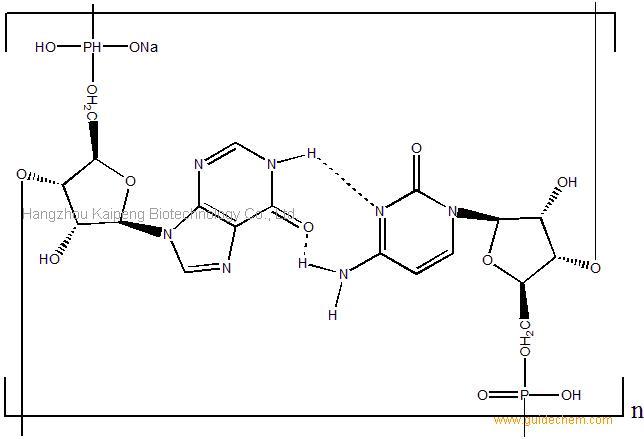
Polyinosinic acid–polycytidylic acid (poly(I:C), CAS 24939-03-5) is the canonical synthetic double-stranded RNA analogue: an annealed equimolar duplex of polyinosinic acid and polycytidylic acid that engages endosomal Toll-like receptor 3 and the cytosolic RIG-I-like receptor MDA5. It is supplied as a reagent and as a vaccine- and biopharmaceutical-development material. As offered by chemical and CDMO suppliers it is a Research Use Only (RUO) / development-grade material: it has no approved therapeutic indication as supplied, it is not a finished consumer product, and it is not for human or veterinary use. No immune-boosting, antiviral or therapeutic claim is made or implied for the material described in this paper.
Commercially, poly(I:C) sits at the intersection of two very different supply models. RUO-grade material supports innate-immunity signalling research, assay development, cell-culture characterisation work, and analytical reference use. GMP-grade material, by contrast, is drug substance or adjuvant-component material intended for incorporation into a vaccine or therapeutic candidate under full regulatory oversight (IND/CTA-enabling CMC, ICH Q7 and Q11 expectations, viral-vaccine and adjuvant guidances). Buyers who blur these two categories create the majority of the friction in this market: a purchase order written to a RUO specification cannot be silently upgraded, and a GMP campaign cannot be quoted against a catalogue specification.
The differentiators that actually determine value are not nominal purity but chain-length distribution and molecular-weight grade, verified duplex formation and annealing efficiency, nuclease- and endotoxin-free certification, counter-ion and salt form, residual protein from the polymerisation enzyme, water content in the lyophilised cake, and the integrity of the frozen cold chain from release to receipt. This paper maps those specifications, the accompanying regulatory perimeter, and the oligonucleotide manufacturing ecosystems in the United States, the European Union, Japan and China that a sourcing team must navigate in 2026.
Poly(I:C) is a high-molecular-weight anionic polyelectrolyte whose behaviour is governed less by its nominal composition than by its chain-length distribution and by the fraction of the material that is genuinely duplexed. Inosine–cytosine base pairing is weaker than guanine–cytosine pairing, so the duplex is thermally less stable than a GC analogue of the same length; the melting behaviour is therefore a direct, measurable proxy for both chain length and annealing quality. Because the polymer is a ribonucleic acid, its handling envelope is defined by nuclease susceptibility and by hydrolytic cleavage at elevated pH, not by the oxidative or thermal degradation typical of small molecules.
Two route classes dominate industrial supply, and both are discussed here only at route-class level: no operating conditions, stoichiometry or procedural detail is provided, since enzymatic and chemical oligonucleotide process detail is genuinely proprietary and since the same process envelope is used for regulated nucleic-acid manufacture.
Demand is driven by nucleic-acid therapeutic and vaccine platform investment rather than by commodity pull. Three shifts are visible in 2026. First, buyers increasingly specify molecular-weight grade explicitly instead of accepting a generic "poly(I:C)" line item, which pushes volume toward suppliers who can certify a length distribution. Second, endotoxin specification has moved from a nice-to-have to a gating attribute, because an uncontrolled endotoxin background destroys the interpretability of any innate-immunity readout. Third, adjuvant-development programmes now routinely ask for the full ICH-style control strategy at RUO stage, so suppliers who cannot produce a development report lose the later GMP campaign by default.
Capacity is concentrated in oligonucleotide and nucleotide-derivative specialists rather than in general fine-chemical plant. Export flows run from nucleic-acid manufacturing clusters in China and, for RUO reagent grades, from established US and EU reagent houses, into research and biotech demand centres in North America, Western Europe and Japan. Because the material is shipped frozen, the practical trade lanes are those with reliable −20 °C or dry-ice logistics and short customs dwell; lanes that require multi-day ambient transit are effectively closed to high-grade material regardless of price.
The market is sharply bifurcated. RUO-grade lyophilised material competes on grade definition, certification depth and cold-chain reliability, and buyers accept meaningful price premiums for documented duplex content and endotoxin data. GMP-grade material is priced as drug substance or adjuvant material, with cost driven by campaign scheduling, dedicated or validated equipment, analytical method development and validation, stability programmes under ICH Q1A, and documentation effort — not by kilogram price of the polymer. Quoting a GMP campaign against a catalogue price is the single most common commercial error in this category.
The compliance perimeter for poly(I:C) is unusually strict and must be stated plainly. Double-stranded RNA immunostimulants are prescription- and vaccine-development territory. GMP-grade poly(I:C) is drug substance or adjuvant material subject to full regulatory oversight by the competent medicines authority, and it may only be supplied into a legitimate development or manufacturing programme. Catalogue and RUO material is supplied expressly for research use, has no approved therapeutic indication as supplied, is not a finished consumer product, and is not for human or veterinary use. No immune-boosting, antiviral, prophylactic or therapeutic claim is made for any material described here.
ESG pressure on nucleic-acid manufacture is moderate on carbon and heavy on solvent, water and single-use waste. Buyers' procurement questionnaires increasingly ask for Scope 1–2 energy disclosure and, for larger campaigns, a Scope 3 position on purchased nucleotide raw materials and single-use consumables.
The dominant carbon load in a poly(I:C) campaign is not reaction energy but lyophilisation, cold-room and freezer storage, and the frozen distribution chain: a −20 °C storage and dry-ice shipping profile consumes far more energy per gram than an ambient-stable small molecule. Practical abatement is unglamorous — high-efficiency lyophilisation cycles, freezer-farm efficiency, right-sized dry-ice packaging and lane consolidation. Water-for-injection production and cleaning validation add a further utilities burden that should be measured and disclosed rather than assumed.
Traceability obligations here are regulatory rather than voluntary. Buyers should be able to trace the nucleotide starting materials, the enzyme lot, the water system and the filtration and lyophilisation records for the specific lot purchased. Single-use assemblies raise a documented waste-stream question; suppliers should state the polymer and elastomer families in contact with the stream and the disposal route. Animal-derived-component-free and TSE/BSE-status statements are routinely requested for material that will enter a regulated programme, and their absence is a frequent cause of failed supplier qualification.
Poly(I:C) is a frozen-chain, moisture-sensitive biopolymer. The logistic failure modes are predictable: thaw excursion, condensation into a hygroscopic lyophilised cake, and nuclease contamination introduced at dispensing. Logistics qualification is therefore part of the product, not an afterthought.
Lyophilised poly(I:C) is not normally a regulated dangerous good for transport, so the controlling constraint is temperature, not hazard class. Shipments move under a −20 °C frozen profile on dry ice with IATA-compliant dry-ice declaration and packaging, or refrigerated where a stability protocol supports it; UN3373-type biological-substance classification does not apply to a synthetic polynucleotide reagent, and mis-declaring it as such creates customs delay. Where material is supplied as a solution, the shipper must confirm that the formulation is not a preservative or solvent hazard and must size the coolant load to the actual lane duration, including customs dwell, with a documented contingency for dry-ice top-up on delayed lanes.
Three moves separate credible suppliers from opportunistic traders in this category, and all three are about governance rather than chemistry.
Poly(I:C) remains the reference synthetic double-stranded RNA immunostimulant, and its commercial value in 2026 is determined almost entirely by specification credibility. Chain-length distribution and grade, verified duplex formation, endotoxin and nuclease control, counter-ion and salt form, residual protein, water content and an unbroken frozen cold chain are the attributes buyers are actually paying for; a nominal purity figure is close to meaningless. Suppliers who can certify those attributes, and who can demonstrate the analytical methods behind them, will continue to win both RUO reagent business and the far more valuable GMP development campaigns that follow.
The compliance perimeter is equally decisive. Double-stranded RNA immunostimulants are prescription- and vaccine-development territory; GMP-grade material is drug substance or adjuvant material under full regulatory oversight. Material supplied as RUO has no approved therapeutic indication, is not a finished consumer product, and is not for human or veterinary use, and no antiviral, immune-boosting or therapeutic claim is made for it. Entity verification, know-your-customer review and end-use declaration, with refusal of non-qualified orders, are the operating norms of this market and the precondition for sustainable export growth.
Powered by Guidechem
This white paper is exclusively compiled by the Guidechem Intelligence Team based on global customs data, regulatory databases, and industry research. Guidechem is a leading global B2B chemical platform, dedicated to connecting global buyers with verified, high-quality manufacturers.
Relying on Guidechem's extensive global database, we have mapped the core participants in the current global Polyinosinic acid-polycytidylic acid (poly(I:C)) supply chain:
Disclaimer: The content of this white paper is compiled based on public market data and regulatory information available as of 2026. Global chemical regulations are subject to dynamic adjustments. In actual export operations, enterprises must consult professional regulatory advisors or relevant competent authorities to obtain the latest compliance guidance.
|
 |
 |
 |
 EN
 Agricultural News
 Food News
 Industrial News
 Cosmetic News
 Pharmaceutical News
 Science News



 12YRS

