-
We detected your language preference as English. Would you like to switch to the English version for a better experience?
Switch to English
Stay here


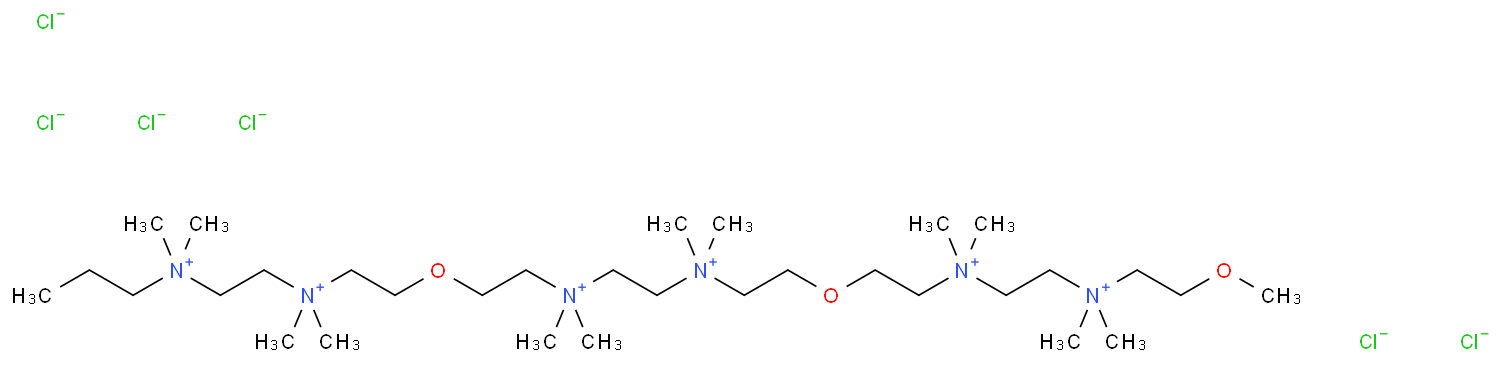
This 2026 Global Export Trends and Compliance White Paper on Mayosperse 60 (CAS 31075-24-8) examines a cationic polyelectrolyte of the polyquaternium class supplied as a high-charge-density aqueous solution and used as a dispersant, coagulant and flocculant across water treatment, papermaking, oilfield and mineral processing. The substance is the polycondensation product of a bis-chloroethyl ether with a tetramethylethylenediamine, giving a polyammonium backbone with chloride counterions along the chain. Because the quaternary nitrogens are permanent cations, the polymer carries charge at any practical pH, which is why it is effective on negatively charged colloids, fibres and clay surfaces, and equally why it attracts aquatic-toxicity scrutiny.
Demand is driven less by new chemistry than by three structural trends: industrial water reuse and zero-liquid-discharge programmes requiring higher-performance coagulation; rising recycled-fibre ratios in papermaking, which increase anionic trash and demand better fixation; and tighter produced-water and tailings management in oilfield and mineral operations. In each case the polymer displaces or supplements inorganic coagulants because it produces less sludge and responds to automated dosing. Customers increasingly buy a performance guarantee and a service package rather than a drum.
The decisive compliance question is residual monomer. A polyquaternium made from chloroethyl ether chemistry must be finished to very low levels of residual ether and amine monomers, and both are substances of toxicological concern; in several jurisdictions these raw materials also attract trade-control and end-use scrutiny, so documentation and customer qualification are gating requirements. Buyers should therefore specify residual monomer limits, heavy metals and aquatic classification explicitly, and should require the manufacturer's REACH polymer position and TSCA status in writing before awarding volume.
Mayosperse 60 works by two distinct mechanisms whose balance is set by molecular weight and charge density. Charge neutralisation dominates for low-to-medium molecular weight, high-charge-density grades, which adsorb rapidly on negatively charged particles and collapse the electrical double layer. Bridging dominates for high molecular weight grades, where a single chain attaches to several particles and builds a settleable floc. Understanding which mechanism a customer needs is the core of grade selection.
Manufacture is a step-growth polycondensation between a difunctional tertiary amine and a bis-chloroethyl ether, run in water or a water-miscible medium. Because quaternisation generates the ionic group itself, no salt by-product forms and no desalting step is required, unlike polycondensations that liberate chloride as alkali salt. The engineering challenge is therefore conversion and molecular weight control, followed by removal of unreacted monomers.
Growth comes from intensification rather than expansion. Water scarcity and discharge consent tightening push industrial sites toward reuse, raising coagulant and flocculant dose per cubic metre; paper producers running higher recycled content need stronger fixation chemistry; and oilfield operators treating larger produced-water volumes require programmes that survive high salinity and shear. Offsetting this is dose optimisation through automated control, which steadily improves efficiency and caps volume growth.
Capacity is regional because the product is mostly water: shipping a 40–50% active solution over intercontinental distances is economically and environmentally inefficient, so production follows demand. China has become the largest manufacturing and export base for water-treatment polyelectrolytes, with integrated chlor-alkali and amine feedstock positions; India supplies domestic and regional markets and exports formulation-grade material; North America and Western Europe host multinational water-treatment companies operating local solution plants with strong technical service organisations.
Pricing is tiered by end use rather than by molecule. Technical-grade material for industrial effluent and mineral processing trades on active content and performance-per-dose; potable-water grades requiring drinking-water certification and papermaking grades requiring food-contact clearance for board carry substantial documentation premiums; personal-care conditioning grades require the strictest residual monomer and heavy metal limits and are priced accordingly. Feedstock costs for the amine and chloroethyl ether inputs set the floor, but certification and service set the margin.
Polymers are treated differently from discrete substances in most chemical inventories, and that distinction defines the compliance strategy. The polymer itself may be exempt from registration while its monomeric constituents remain in scope, so a dossier built only on the polymer name is incomplete. Equally, the aquatic toxicity of cationic polyelectrolytes means the classification and labelling position, not the registration status, is what most often determines how the product may be shipped and used.
ESG positioning for cationic polymers is paradoxical. The product is a synthetic, fossil-derived, water-soluble polymer that sits under microplastics scrutiny, yet its function — enabling water reuse, reducing sludge volume and supporting fibre recycling — delivers measurable environmental benefits at the customer site. Suppliers who quantify the customer-side benefit and document the product-side risk win specification reviews that purely price-led bids lose.
Cradle-to-gate emissions are dominated by the amine and chloroethyl ether feedstocks and, for dried grades, by spray drying; supplying solution rather than powder usually lowers the footprint substantially. Because the shipped product is largely water, freight emissions per kilogram of active polymer are significant, which is why regional solution plants and on-site make-down units are the most effective decarbonisation measure. Producers should report ISO 14067-aligned figures per kilogram of active substance and should quantify sludge reduction and water reuse as customer Scope 3 benefits.
Traceability requirements concentrate on inputs and containment of concern: buyers should obtain declarations of feedstock origin, confirmation that no intentionally added substances of very high concern or microplastic-restricted material is present, and ISO 9001 and ISO 14001 certification at the manufacturing site. For textile customers, alignment with ZDHC wastewater and chemical management expectations is increasingly required. Documented biodegradability or solubility data should accompany any environmental claim, since unverifiable claims now attract regulatory as well as reputational risk.
The product is an aqueous, viscous, chloride-containing solution, so logistics concerns are physical rather than chemical hazard: freezing, phase separation, viscosity drift, microbial growth and corrosion of unsuitable metals. Storage and transport design must protect against temperature extremes and must avoid contact with anionic materials, which cause immediate gelling and product loss.
The product is non-flammable and generally not dangerous for transport on flammability grounds, but the aquatic classification decides the outcome. Specifications carrying Aquatic Acute 1 or Aquatic Chronic 1 normally ship as UN 3082, Environmentally hazardous substance, liquid, n.o.s., Class 9, Packing Group III with marine pollutant marking under IMDG and equivalent ADR and IATA provisions, while grades classified Chronic 3 or lower may move as non-dangerous goods provided the determination is documented. Transit controls should focus on bunded, covered stowage, protection from frost, and spill containment, since even modest releases of cationic polymer into surface water demand immediate containment and notification.
Because freight economics penalise shipping water and certifications take years, expansion in this class is a regionalisation and qualification exercise. Three priorities determine whether a supplier moves up the value tiers or remains a commodity bidder.
Mayosperse 60 occupies a mature but structurally supported niche. Demand from water reuse, recycled fibre and produced-water management is resilient, while dose optimisation and regional capacity keep volume growth moderate. Value therefore migrates to suppliers holding certifications, guaranteeing residual monomer performance and providing dosing and make-down service, rather than to those shipping the cheapest drum.
For sourcing teams the 2026 due-diligence list is straightforward: obtain the REACH polymer and monomer position and the TSCA basis in writing; require validated residual chloroethyl ether and amine monomer results plus heavy metals on every lot; confirm the aquatic classification against transport documentation; and verify storage and shelf-life provisions before agreeing delivery terms. Suppliers meeting these tests will also be those able to support certifications into higher-value regulated end uses.
Powered by Guidechem
This white paper is exclusively compiled by the Guidechem Intelligence Team based on global customs data, regulatory databases, and industry research. Guidechem is a leading global B2B chemical platform, dedicated to connecting global buyers with verified, high-quality manufacturers.
Relying on Guidechem's extensive global database, we have mapped the core participants in the current global Mayosperse 60 supply chain:
Disclaimer: The content of this white paper is compiled based on public market data and regulatory information available as of 2026. Global chemical regulations are subject to dynamic adjustments. In actual export operations, enterprises must consult professional regulatory advisors or relevant competent authorities to obtain the latest compliance guidance.
|
 |
|
 |
 EN
 Agricultural News
 Food News
 Industrial News
 Cosmetic News
 Pharmaceutical News
 Science News


 4YRS

