-
We detected your language preference as English. Would you like to switch to the English version for a better experience?
Switch to English
Stay here


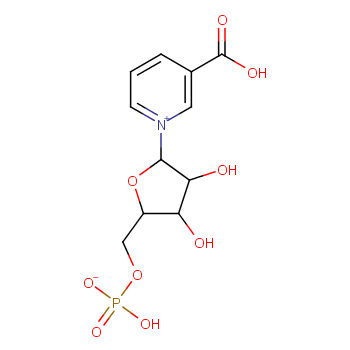
Nicotinic acid mononucleotide (NaMN; CAS 321-02-8) sits at the single most consequential junction of the Preiss–Handler arm of nicotinamide adenine dinucleotide biosynthesis: it is the ribonucleotide produced when nicotinate phosphoribosyltransferase condenses nicotinic acid with 5-phosphoribosyl-1-pyrophosphate, and it is the obligatory substrate that nicotinamide mononucleotide adenylyltransferase converts into nicotinic acid adenine dinucleotide en route to NAD+. For industrial buyers, demand is no longer confined to classical coenzyme chemistry; it now tracks NAD+ metabolism research, NAD-dependent enzymology and the wider family of NAD-precursor compounds. At the same time NaMN is a charge-dense, hygroscopic monophosphate whose specification is dominated by phosphate-related impurities, positional isomers, metal residues and water — parameters that rarely transfer cleanly between suppliers.
The sourcing picture is best understood as three parallel tracks rather than one market. The reagent track buys milligram-to-gram quantities at 98% or higher HPLC purity with a complete certificate of analysis, low endotoxin and batch-level residual-solvent data. The cosmetic-ingredient and, where lawful, food-ingredient track buys kilogram quantities, but only against documentary proof that the receiving jurisdiction admits the substance at all — a question that remains unsettled across the whole NAD-precursor family. The pharmaceutical-intermediate track buys multi-kilogram quantities under development-quality systems, frequently followed by technology transfer into a validated campaign. Each track carries a different analytical package, different documentation depth, different packaging and a very different price band; buyers who fail to declare their track at enquiry stage routinely receive quotations they cannot use.
Our read of customs and enquiry flow data indicates that NaMN sourcing failures rarely originate in price. They originate in specification mismatch, in ambiguity over whether material is intended strictly for research use or for a regulated human-facing application, and in cold-chain breaks on lyophilised lots. This white paper therefore reviews route chemistry and downstream purification, compares quality systems across research-grade and development-grade supply, and closes with logistics and ESG requirements. Material described herein is supplied for laboratory, industrial and further-manufacturing use only; it is not a finished preparation, it is not intended or offered for human or veterinary administration, and no dosing, anti-ageing, longevity or therapeutic efficacy claim is made or should be inferred.
NaMN is the beta-nicotinate ribonucleoside 5'-monophosphate: nicotinic acid linked through its ring nitrogen to C1' of ribose-5-phosphate by an N-glycosidic bond, carrying a single phosphate monoester at the 5'-position. The free-acid formula places it near 335 g/mol, and the phosphate and carboxylate make the molecule strongly anionic at neutral pH, freely water-soluble and practically insoluble in non-polar solvents. Both features drive handling: material arrives as freeze-dried acid, a defined sodium or ammonium salt, or a concentrated aqueous solution. Degradation proceeds chiefly through acid-catalysed N-glycosidic cleavage to nicotinic acid plus ribose-5-phosphate, and through metal- or phosphatase-catalysed dephosphorylation to nicotinic acid riboside; both accelerate sharply at low pH, elevated temperature and trace transition metals.
Two route families supply the market, and the choice between them largely determines impurity profile, cost structure and regulatory narrative. Enzymatic routes use nicotinate phosphoribosyltransferase, often in permeabilised recombinant host cells or as an immobilised preparation, to couple nicotinic acid with PRPP regenerated from inexpensive carbon sources through pentose phosphate metabolism; they deliver high regioselectivity and avoid protecting-group chemistry entirely. Chemical routes build the nucleotide by ribosylation of a protected nicotinate followed by regioselective phosphorylation, offering salt-form flexibility but requiring chromatographic polishing to strip positional isomers.
Demand growth is shifting away from the coenzyme-reagent niche toward two adjacent engines. The first is translational NAD+ biology: as programmes target phosphoribosyltransferase-dependent metabolism and NAD-dependent signalling enzymes, isotope-labelled reference materials and development-grade lots have become a recurring line item. Regulatory treatment of nicotinamide mononucleotide in the United States supplement channel has made every NAD-family precursor a diligence question, pushing buyers toward documented admission before any purchase order is issued.
Capacity sits where fine fermentation meets nucleotide purification. Eastern China hosts the largest cluster of recombinant-enzyme and nucleotide capability, anchored in Zhejiang, Jiangsu and Shandong, with integrated fermentation, membrane separation, ion exchange and freeze-drying able to run both catalogue and development-scale campaigns. Japan retains deep coenzyme fermentation know-how and dominates the high-consistency reagent end. Europe and the United States hold smaller but documentation-rich capacity serving research distribution, custom isotope work and contract manufacturing. Because most facilities are multipurpose nucleotide suites rather than dedicated lines, lead times swing with campaign scheduling, and buyers should plan booking windows of six to twelve weeks for kilogram-scale lots.
Price dispersion should be read as quality-system dispersion rather than volatility. Milligram packs carry extreme unit economics that mostly reflect analytical release, documentation and cold-chain handling rather than synthesis itself. Kilogram offers diverge by a factor of three or more between a simple certificate stating HPLC purity and a full development package with validated methods, residual-solvent and elemental-impurity statements, microbiological and endotoxin limits, a stability protocol and change-control commitments. Isotope-labelled lots, custom salt forms and pre-aliquoted solutions sit at the top of the band.
NaMN is simultaneously a research reagent, a potential ingredient and a chemical substance, so exporters must satisfy three independent layers: chemical-inventory admission and any applicable registration; end-use-specific food or cosmetic authorisation; and the quality-system expectations of the receiving laboratory or plant. The most common failure is assuming that a CAS number implies permission; the burden of proof sits with whoever places material on a regulated market.
Nucleotide manufacturing is water- and energy-intensive, and NaMN enquiries increasingly arrive from procurement teams carrying Scope 3 reporting obligations. Route selection therefore has a carbon and effluent dimension alongside cost, and suppliers able to quantify that footprint win tenders even at a premium — particularly where customers must defend their own environmental disclosures to downstream retailers and investors.
Enzymatic routes operate near ambient temperature in aqueous buffer and generally show lower cumulative energy demand and far lower solvent use than multi-step protection and dephosphorylation chemistry, but they are water-intensive and generate spent media requiring biological treatment. Suppliers competing for European and Japanese offtake increasingly report cradle-to-gate emissions per kilogram of isolated material and document renewable electricity for fermentation and freeze-drying, the two steps that dominate site energy demand. Recovered phosphate streams and aqueous polishing are the most credible near-term circularity claims.
Traceability has become part of specification rather than a marketing addendum. Buyers now request declared production route, country and site of manufacture, confirmation that media and enzymes are free of animal-derived inputs where vegan status is claimed, and evidence that no genetically modified host residues persist beyond validated host-cell protein and DNA clearance limits. Ingredient customers additionally expect batch linkage sufficient to survive a responsible-person audit,
NaMN lots rarely fail in transit for regulatory reasons; they fail on moisture and temperature. Export planning should start from the assumption that material is hygroscopic, oxygen-tolerant but hydrolysis-sensitive, and that every hour outside the validated storage range measurably increases related-substance growth. Buyers should also plan around the fact that nucleotide capacity is booked in campaigns, so shipping windows are usually the binding constraint.
In stable freeze-dried form NaMN is normally consigned as non-dangerous goods, but classification must be documented per lot, and introducing dry ice immediately brings UN1845 Class 9 into scope under the applicable IATA packing instruction. Air freight with validated cold-chain packaging and a calibrated data logger is standard for high-value small lots, while larger movements rely on reefer containers or dry-ice top-up arrangements with a defined excursion budget. A written temperature-excursion protocol assigning investigation responsibility should accompany every consignment, since water-content failures are otherwise untraceable to a specific leg.
The realistic posture for both sides of the market is a documentation-led, route-declared partnership rather than a spot purchase, because nearly every dispute in this category traces back to what was never written down at enquiry stage.
NaMN's commercial trajectory is defined less by volume than by precision. What separates reliable suppliers is not headline purity but command of the impurity picture: positional phosphates, anomers, residual metals, water content and, for enzymatic routes, host-cell residues.
Buyers who declare their grade, lock their methods and treat cold chain as part of the specification will find ample, competitive supply from Chinese nucleotide clusters, Japanese coenzyme specialists and Western documentation-led producers. Those who purchase on catalogue price alone usually discover that the least expensive kilogram cannot be released. All material discussed here is for research, further manufacturing or industrial use only, is not a finished preparation, is not intended for human or animal administration, and carries no representation of anti-ageing, therapeutic or disease-prevention benefit.
Powered by Guidechem
This white paper is exclusively compiled by the Guidechem Intelligence Team based on global customs data, regulatory databases, and industry research. Guidechem is a leading global B2B chemical platform, dedicated to connecting global buyers with verified, high-quality manufacturers.
Relying on Guidechem's extensive global database, we have mapped the core participants in the current global Nicotinic acid mononucleotide (NaMN) supply chain:
Disclaimer: The content of this white paper is compiled based on public market data and regulatory information available as of 2026. Global chemical regulations are subject to dynamic adjustments. In actual export operations, enterprises must consult professional regulatory advisors or relevant competent authorities to obtain the latest compliance guidance.
|
 |
|
|
 EN
 Agricultural News
 Food News
 Industrial News
 Cosmetic News
 Pharmaceutical News
 Science News


 1YR


