
I. Executive Summary
Poly(hexamethylenebiguanide) hydrochloride (PHMB, CAS 32289-58-0) is a cationic polybiguanide antimicrobial polymer supplied into cosmetics preservation, hard-surface and water disinfection, industrial product preservation, textile finishing and medical-device fluid formulations. Unlike most specialty polymers, PHMB is bought as a regulated active substance: the commercial question in 2026 is rarely whether a plant can make it, but whether the material sits inside a valid biocidal authorisation and, for personal-care grades, inside the conditions of the EU cosmetics preservative list. This paper treats regulation as the primary market structure and gives no end-use dosing guidance, because conditions of use are set by the authorisation and listing, not by the supplier.
The regulatory spine is the EU Biocidal Products Regulation 528/2012: active substances pass through the review programme, are approved for the product types listed in Annex I, and may only be sourced from suppliers named on the Article 95 list, with each product needing national or Union authorisation. In the United States, antimicrobial claims run through EPA FIFRA registration with establishment and production reporting, while non-biocidal uses sit under TSCA. In China, hygiene disinfectants are filed with the health authorities, while industrial preservatives engage MEE new-chemical-substance registration and sector GB standards. Alongside this, EU Cosmetics Regulation 1223/2009 Annex V governs personal-care preservation, with the SCCS skin-sensitisation opinion process a live dossier topic.
On the quality side, procurement is driven by impurity and consistency questions rather than nominal assay. The critical set comprises residual 1,6-hexamethylenediamine monomer, itself a skin sensitiser and therefore the most consequential specification line, residual guanidine and cyanide-type reactants, chloride content and counter-ion stoichiometry, average molecular weight and polydispersity, heavy metals, water content, and the awkward solution stability and pH behaviour of the concentrate. Add REACH and CLP exposure on acute toxicity, eye damage, sensitisation and aquatic chronic toxicity and it is clear why buyers segment PHMB into technical, cosmetic and medical grades.
II. Product Deep Dive: Molecular Mechanisms and Production Evolution
2.1 Physicochemical Properties and Mechanisms
PHMB is a linear polycation carrying protonated biguanide groups separated by hexamethylene spacers, supplied as the hydrochloride salt. Its behaviour follows from that architecture: a permanently cationic, water-soluble chain that adsorbs strongly onto negatively charged microbial surfaces and onto anionic substrates alike. That explains both its efficacy and its formulation difficulties, and why molecular-weight control matters as much as purity.
- Electrostatic adsorption and membrane disruption: Microbial cell envelopes and fungal walls are net anionic, so the polycation binds strongly and displaces the divalent cations that stabilise the outer membrane, producing permeability loss and cytoplasmic leakage. Because the interaction is physical and multivalent rather than a single-enzyme inhibition, resistance selection pressure is lower than for many single-target biocides, the core technical argument for PHMB in long-service preservation.
- Molecular weight, charge density and compatibility: Chain length sets the balance between binding strength, mobility and mammalian-cell selectivity, so the average molecular weight and its distribution are functional attributes, not cosmetic ones. It also sets compatibility: PHMB forms insoluble complexes with anionic surfactants and polyelectrolytes, loses activity in hard water and with certain sequestrants, and precipitates as pH rises, so formulation windows must be defined empirically for each host system.
2.2 Synthesis and Manufacturing Technologies
Industrial PHMB is a polycondensation product. Hexamethylenediamine is condensed with a cyanide-bearing guanidine-forming reagent, typically dicyandiamide or an alkali dicyanamide, to build the biguanide repeat unit, isolated as the hydrochloride salt. Process control has two simultaneous objectives: hit the target chain length, and drive residual diamine and small nitrogenous species down far enough for the intended grade.
- Stoichiometry, temperature profile and chain-length control: Because it is a step-growth polycondensation, molecular weight is governed by stoichiometric balance, conversion and residence time at temperature, with amine evolution managed safely. Manufacturers control the distribution through monomer ratio, staged heating and controlled termination. Lot-to-lot reproducibility of that distribution is the hardest part of the process and the most common source of complaints.
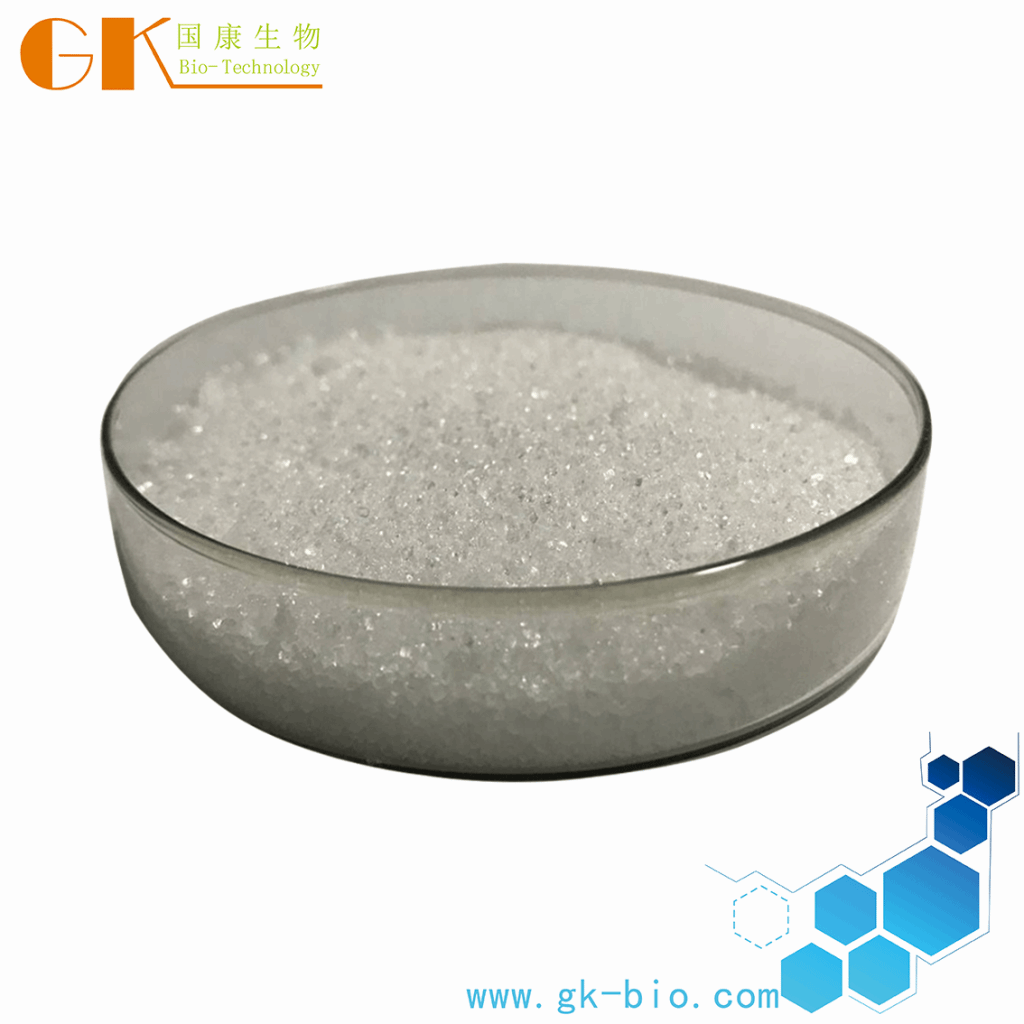
- Purification diafiltration and grade segregation: Technical material is finished as an aqueous concentrate, while higher grades are purified by membrane diafiltration to strip residual diamine, inorganic chloride and low-molecular-weight oligomers, then standardised for activity and pH. Solid grades reduce freight and microbial-growth risk but demand dust control and redissolution testing.
2.3 Core Application Matrix
- Cosmetic and personal-care preservation: PHMB is used as a preservative in rinse-off and leave-on personal-care formulations, where compatibility with mild surfactant systems and low odour are valued. Conditions of use, including maximum concentration and product-type restrictions, are set by the Annex V listing of Regulation 1223/2009 in the EU and by equivalent national positive lists elsewhere; suppliers supply the substance, not the use instruction.
- Disinfection and industrial product preservation: Under the biocidal regime it is formulated into human-hygiene, hard-surface, food-and-feed-area, film-preservation, material-preservation and process-fluid product types as authorised, and into swimming-pool and spa water treatment. In-plant preservation of paints, emulsions and metalworking fluids is a further, distinct market.
- Textile finishes and medical-device fluids: As a durable antimicrobial finish for textiles and nonwovens it must be applied under a registered biocidal claim or a compliant treated-article route, with attention to ZDHC MRSL and bluesign criteria. In wound cleansing, irrigation and contact-lens-care fluids it is a device constituent, qualified through ISO 10993 biological evaluation and, in the United States, the FDA premarket route.
III. Global Market Supply-Demand Landscape and Export Trends
3.1 Demand Drivers and Market Shifts
Three demand engines run in parallel. Preservative reformulation continues as brands move away from isothiazolinones and paraben systems, favouring polycationic actives with a defensible sensitisation dossier. Institutional hygiene and water-treatment demand remains structurally elevated, and durable antimicrobial textiles have moved from sportswear into healthcare textiles and transport interiors. All three are regulated demand, so volumes follow authorisations rather than price.
3.2 Capacity Distribution and Export Flows
Technical-grade polycondensation capacity is concentrated in China and India, with European and US participants focused on purification, standardisation, formulation and the regulatory asset rather than base polymer. Trade splits into two streams: bulk aqueous concentrate moving to regional formulators, and documented material moving under letters of access to authorised biocidal-product manufacturers.
3.3 Market Bifurcation and Pricing Dynamics
The market bifurcates between technical concentrate, where competition is on activity, chloride and diamine residuals and delivered cost, and documented grades, where price embeds the cost of the active-substance dossier, Article 95 listing support, letters of access, audit readiness and heavy-metal and microbiological testing. That premium is durable, because the capital and time needed to build a compliant dossier cannot be replicated quickly by a low-cost entrant.
IV. In-depth Analysis of Global Compliance and Regulatory Barriers
PHMB is among the most regulation-dense polymers in specialty chemicals, because the same molecule sits inside biocidal product law, cosmetics law, industrial chemicals law and, in device uses, medical-device law. Buyers should map every intended use to its own legal basis before contracting, since a clearance covering one use does not extend to another.
4.1 European Market: REACH, CLP, and Sector-Specific Directives
- Biocidal Products Regulation 528/2012 mechanics: PHMB is handled as an active substance under the EU biocidal regime, whose review programme carried existing substances from the old Biocidal Products Directive into assessment before approval under BPR. The consequences are strict: the substance may only be used for the product types listed for it in Annex I, the source must appear on the Article 95 list, and each biocidal product needs national or Union authorisation, with Article 58 governing treated articles making biocidal claims.
- Cosmetics Annex V, SCCS opinion process and CLP: For personal-care grades the operative instrument is Regulation 1223/2009, under which a preservative must appear in Annex V with its maximum concentration and stated conditions; readers must verify the current consolidated entry, since the list is revised frequently. PHMB has also been the subject of SCCS scrutiny on skin sensitisation, and that opinion process feeds into both the cosmetics conditions of use and the CLP classification discussion, which spans acute oral and inhalation toxicity, eye damage, skin sensitisation, specific target organ toxicity and aquatic acute and chronic category 1 with M-factors.
4.2 North American Market: TSCA, EPA, and FDA Regulations
- EPA FIFRA registration and establishment reporting: Any antimicrobial claim on a hard surface, in water treatment or on a textile requires an EPA-registered pesticide product, with the active substance sourced from an EPA-registered producing establishment and reported under FIFRA establishment and production reporting, kept current through registration review and state product registration. Textiles treated with a registered antimicrobial may rely on the treated-article exemption, but the claim boundary must be respected.
- TSCA, MoCRA and device expectations: Non-biocidal industrial uses sit under TSCA inventory and reporting, while US cosmetic uses engage MoCRA facility registration, product listing and safety substantiation. Where PHMB is a constituent of a wound-care or ophthalmic device fluid, the route is FDA premarket clearance supported by ISO 10993 biological evaluation and USP biological reactivity testing, not a biocide authorisation.
4.3 The Critical Hurdle: Quality Control and Safety Limits
Compliance Warning: Specify residual 1,6-hexamethylenediamine by a validated derivatisation or ion-chromatography method with a realistic limit, because that impurity drives both the skin-sensitisation profile and the classification outcome. Require residual guanidine and cyanide-type reactant data, chloride and counter-ion stoichiometry, number-average molecular weight and polydispersity with the method stated, heavy metals against ICH Q3D-style limits, water content, activity assay, pH and appearance. Confirm the source is on the Article 95 list for the intended product types, and never accept a supplier's suggested use level as a substitute for the authorised conditions of use.
V. Green Trade Barriers and ESG in Manufacturing
A polycationic biocide carries ESG obligations beyond carbon: aquatic toxicity, sewage-treatment-plant impact and residue management in textile effluent are what brand owners and regulators actually ask about, and they are written into supplier codes rather than left to general environmental management.
5.1 Carbon Footprint and Circular Economy
The footprint is dominated by upstream diamine and guanidine-forming raw materials, by the thermal duty of the polycondensation and by water use in diafiltration. Plants that recover process water, heat-integrate the condensation stage and run on contracted renewable electricity document a materially lower cradle-to-gate figure, and customers increasingly request it in GHG Protocol Scope 3 format.
5.2 Sustainable Sourcing and Traceability
Traceability here means demonstrating the substance source and its regulatory standing, not just country of origin. Buyers should require ISO 9001 and ISO 14001 certification, documented change control covering raw-material and site changes, lot retain samples, and, for textile programmes, evidence against ZDHC MRSL and bluesign criteria. Effluent containing polycationic residues needs documented treatment, and any toll manufacturing step must be disclosed and audited.
VI. Supply Chain Resilience and Export Logistics
PHMB logistics are shaped by its aquatic-hazard classification and by the chemistry of the aqueous concentrate: it is not flammable or corrosive, but it is an environmentally hazardous substance and a solution whose appearance and activity drift if pH, temperature or ionic environment is mishandled.
6.1 Packaging Standards and Moisture/Contamination Control
- Pack materials, pH window and incompatibility control: Aqueous concentrate is shipped in high-density polyethylene drums, intermediate bulk containers or lined steel, chosen to avoid metal ion pickup and to tolerate the mildly acidic pH that keeps the polycation in solution. Contact with anionic surfactants, anionic thickeners or oxidising agents causes complexation, haze or precipitation, so dedicated filling lines, validated cleaning and explicit incompatible-material rules are essential.
- Solid formats, water content and microbiological control: Solid grades reduce freight weight and eliminate in-pack microbial growth risk, but are hygroscopic and must be sealed with desiccant and a verified moisture barrier, with water content reported by Karl Fischer. For solutions, temperature-observed storage and a defined shelf life and retest interval protect both activity and appearance.
6.2 Dangerous Goods Identification and Transit Protocols
Because PHMB carries aquatic acute and chronic hazard classifications, consignments are frequently assigned to the environmentally-hazardous-substance entries, UN 3082 for liquids and UN 3077 for solids, Class 9, packaging group III, with marine-pollutant marking under IMDG and corresponding ADR, RID and IATA provisions. Classification must be confirmed against the lot's own safety data sheet and applicable M-factors rather than inherited from a previous purchase. Transit should avoid freezing and prolonged heat, and documentation should carry the Article 95 references so customs and auditors can reconcile the shipment to a legal use.
VII. Enterprise Global Expansion Strategy Guide
Expansion in PHMB is a regulatory-asset strategy: the winners are not the lowest-cost polycondensers but those holding a defensible active-substance position and able to prove impurity control lot after lot.
- Own or secure the regulatory asset: Either maintain the active-substance dossier and Article 95 standing yourself or hold a documented letter of access from a listed substance supplier, keeping product-type coverage aligned with the markets you serve. Treat dossier maintenance, renewal deadlines and study commissioning as a standing budget line rather than a project.
- Compete on the diamine and distribution specification: Invest in the analytical methods that matter most: validated residual diamine determination, molecular-weight distribution, chloride and counter-ion stoichiometry and heavy metals, and publish achievable limits. Cosmetics and medical-device customers disqualify suppliers on this data long before they discuss price.
- Run segregated quality lines and screen the end use: Keep technical, cosmetic and device grades on separated equipment and documentation systems, with ISO 9001 and ISO 14001 and, for device grades, ISO 10993 and USP biological reactivity packages. Apply know-your-customer and end-use declaration procedures so material sold for an authorised use is not diverted into an unauthorised claim.
VIII. Conclusion
PHMB is a mature molecule in a tightening legal environment. Its technical attraction is unchanged: a broad-spectrum, multivalent, physically acting polycation with low resistance-selection pressure and good compatibility with mild modern formulations. What has changed is that market access is mediated by biocidal authorisation, Annex V cosmetics conditions, EPA registration and device qualification, each with its own dossier and renewal cycle.
Participants who internalise that reality will do well. Buyers should qualify suppliers on regulatory standing first, on residual diamine and molecular-weight control second, and on price last; suppliers should treat documentation, change control and end-use screening as the product. Where the authorisation is scarce, compliance capability is the durable advantage.
IX. Industry Resource Connection and Supplier Ecosystem
Powered by Guidechem
This white paper is exclusively compiled by the Guidechem Intelligence Team based on global customs data, regulatory databases, and industry research. Guidechem is a leading global B2B chemical platform, dedicated to connecting global buyers with verified, high-quality manufacturers.
Relying on Guidechem's extensive global database, we have mapped the core participants in the current global Poly(hexamethylenebiguanide) hydrochloride (PHMB) supply chain:
- China: technical-grade production core: Chinese plants dominate base polycondensation and aqueous concentrate, supplying regional and global formulators, and increasingly invest in diafiltration, heavy-metal control and validated diamine methods to reach cosmetic-grade expectations. Export readiness depends on MEE new-chemical-substance compliance, REACH registration via an only representative where required, and impurity data supporting customers' biocidal and cosmetic dossiers.
- United States: FIFRA-centred formulation and device channel: US participants focus on EPA-registered end products, establishment reporting and state registrations, and on the device and wound-care channel governed by FDA premarket clearance, ISO 10993 and USP biological reactivity packages. Their purchasing power sets the practical specification floor on residual diamine and heavy metals, and MoCRA has added facility and product-listing discipline on the cosmetics side.
- European Union: BPR dossier ownership and Annex V discipline: EU substance suppliers and formulators hold the active-substance and product-authorisation assets, manage Article 95 standing and letters of access, and work within the Annex V conditions and the SCCS opinion cycle. They compete on dossier coverage, change control and audit readiness, and their aquatic-risk documentation sets the benchmark for the chain.
Disclaimer: The content of this white paper is compiled based on public market data and regulatory information available as of 2026. Global chemical regulations are subject to dynamic adjustments. In actual export operations, enterprises must consult professional regulatory advisors or relevant competent authorities to obtain the latest compliance guidance.




 EN
 Agricultural News
 Food News
 Industrial News
 Cosmetic News
 Pharmaceutical News
 Science News



 3YRS


