Guideview >  Articles >  Trends  > Iodobenzene diacetate:Exports & Compliance White Paper 2026

Iodobenzene diacetate:Exports & Compliance White Paper 2026

Discover Iodobenzene diacetate (CAS 3240-34-4) for 2026, an oxidizing reagent with steady demand in pharma synthesis. Guidechem suppliers provide documented, compliant material with analytical support and dependable export supply. Edison4 MIN READOctober 8, 2026
Iodobenzene diacetate (PIDA) White Paper

I. Executive Summary

Iodobenzene diacetate, CAS 3240-34-4, commonly called PIDA or (diacetoxyiodo)benzene, is a crystalline hypervalent iodine(III) oxidant used in fine-chemical and pharmaceutical synthesis. It supports selective oxidation, oxidative rearrangement, bond formation, and C–H functionalization under conditions that can avoid stoichiometric lead, chromium, or manganese reagents. Its commercial value is therefore linked to reaction selectivity, simpler metal-control strategies, and reduced heavy-metal waste.

PIDA is not automatically green: it is a reactive oxidizing solid produced from iodine-bearing feedstock, acetic media, and an oxidant, and its use generates iodobenzene-containing streams. A credible ESG case compares full mass intensity, energy, solvent, hazard, work-up, and recovery against the displaced technology. Closed-loop recovery of iodobenzene or iodine values and reduced rejection risk from elemental impurities can materially improve both economics and environmental performance.

Buyers should contract on identity, assay, active oxidant capacity, water, residual acidity, appearance, related iodine species, and lot-specific thermal behavior. Iodometric or active-oxygen titration should be supported by an orthogonal assay and stability-indicating method. Storage requires cool, dry, protected-from-light conditions away from heat, ignition sources, reducing agents, bases, metals, and incompatible organics. Transport classification must follow the actual tested product and current SDS rather than a generic assumption.

II. Product Deep Dive: Molecular Mechanisms and Production Evolution

2.1 Physicochemical Properties and Mechanisms

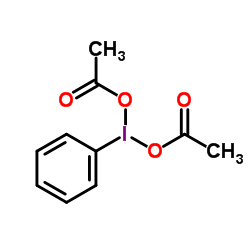
PIDA has formula C10H11IO4 and relative molecular mass about 322.10. Its iodine center is formally iodine(III), bonded to a phenyl group and two acetoxy ligands in a hypervalent arrangement. This electrophilic, ligand-transfer-capable structure enables two-electron oxidation and activation of heteroatoms, alkenes, arenes, or carbonyl-derived intermediates. Outcome depends strongly on solvent, acid-base environment, substrate, additives, and water.

  • Synthetic reactivity: PIDA can oxidize alcohols and heteroatoms, initiate oxidative cyclizations, promote rearrangements, and participate in C–N, C–O, C–C, or related bond-forming chemistry. Its soluble organic iodine by-products can simplify separation from inorganic metal salts, although removal of iodobenzene and iodine-related impurities must be demonstrated in the final process.
  • Analytical release: Identity is commonly supported by infrared or NMR spectroscopy and chromatographic comparison. Assay by iodometric titration or another validated active-oxidant method measures functional strength; HPLC can profile iodobenzene and related species. Karl Fischer water, residual acid, appearance, and thermal analysis provide essential process and storage information.

2.2 Synthesis and Manufacturing Technologies

Industrial manufacture generally oxidizes iodobenzene in acetic acid or an acetic-acid-rich medium using peracetic acid or another qualified oxidizing system, followed by controlled crystallization, isolation, washing, and low-stress drying. Process design focuses on oxidant addition, heat removal, off-gas and vapor management, residual peroxide destruction, contamination avoidance, and safe isolation of an energetic oxidizing product.

  • Iodobenzene–peracetic acid route: This established route pairs an iodine(I) aromatic feedstock with a peracid oxidant in acetic medium. Reactor calorimetry, dosing control, oxidant inventory limits, agitation, vent design, and validated quench criteria are central to scale-up. Crystallization must reject iodobenzene, acid, water, and over-oxidized or decomposition-related species without aggressive heating.
  • Process intensification and recovery: Continuous or semi-batch oxidant dosing can reduce instantaneous reactive inventory when justified by hazard studies. Mother-liquor management may recover acetic acid and iodobenzene for controlled reuse. Campaign design should track iodine mass balance, impurity carryover, peroxide residues, solvent quality, and the impact of recycle on color, assay, and thermal stability.

2.3 Core Application Matrix

  • Selective oxidation and rearrangement: Fine-chemical developers use PIDA for alcohol, phenol, sulfur, nitrogen, and other substrate oxidation, as well as oxidative dearomatization and rearrangement sequences. Value comes from chemoselectivity and avoiding persistent metal salts, subject to complete impurity and by-product removal.
  • C–H functionalization and bond construction: PIDA can support catalyst-assisted or direct oxidative functionalization and cyclization. Route selection must evaluate reagent equivalents, catalyst compatibility, regioselectivity, exotherm, gas generation, and robustness. Screening success does not replace reaction-calorimetry and impurity-fate studies before scale-up.
  • Pharmaceutical synthesis: API and intermediate manufacturers use hypervalent iodine chemistry where metal-sensitive specifications, structural complexity, or late-stage transformations justify the cost. ICH Q3D risk can be easier to manage than with chromium or lead reagents, but residual iodine species, genotoxic-impurity risk, solvents, and process-related impurities still require control.

III. Global Market Supply-Demand Landscape and Export Trends

3.1 Demand Drivers and Market Shifts

Demand is driven by pharmaceutical route modernization, metal-residue reduction, complex-molecule synthesis, and broader use of hypervalent iodine methods in process chemistry. Customers increasingly request kilogram-scale material with reproducible active assay and thermal data, not only research-reagent purity. Adoption rises where PIDA removes multiple aqueous washes, avoids heavy-metal disposal, improves selectivity, or lowers downstream purification and analytical burden.

3.2 Capacity Distribution and Export Flows

Production is distributed among Chinese and Indian fine-chemical manufacturers, European and Japanese specialty-reagent suppliers, and regional CDMOs with hypervalent iodine capability. Export flows range from laboratory bottles to fiber drums for qualified industrial campaigns. Capacity is constrained less by nominal reactor volume than by oxidant handling, calorimetry, safe drying, dedicated compatible equipment, analytical capability, and carrier acceptance for the assigned classification.

3.3 Market Bifurcation and Pricing Dynamics

Iodine and iodobenzene costs create a volatile floor, while peracid management, yield, recovery efficiency, compliant packaging, and analytical release determine conversion cost. Pharmaceutical or process-development grades command premiums for impurity mapping, low water, tight active assay, thermal characterization, and change control. Buyers should compare usable oxidizing capacity and process consistency rather than label assay alone, and contract price-adjustment formulas to transparent iodine benchmarks where volumes justify.

IV. In-depth Analysis of Global Compliance and Regulatory Barriers

Regulatory files must distinguish neat PIDA from mixtures or stabilized grades and must align composition, classification, packaging, and intended use. Because supplier SDS classifications and transport conclusions can differ with test data and formulation, the importer should obtain the latest legally applicable document, reconcile it with local inventory status, and resolve discrepancies before purchase or shipment.

4.1 European Market: REACH, CLP, and Sector-Specific Directives

  • REACH coverage: EU manufacturers or importers must verify registration obligations by tonnage, substance identity, composition, and use; non-EU suppliers may support through an only representative. Procurement should confirm that the registrant's boundary composition and identified-use information match the purchased grade. Intermediate or R&D positions require documented eligibility, not assumption.
  • CLP classification: PIDA is commonly classified by suppliers for oxidizing and irritant or harmful properties, but the binding classification and labeling must reflect applicable harmonized entries, self-classification evidence, impurities, and physical testing for the product supplied. Packaging, language, precautionary statements, and poison-center duties for mixtures need separate review.

4.2 North American Market: TSCA, EPA, and FDA Regulations

  • TSCA market access: U.S. importers should verify the exact chemical identity and active status on the TSCA Inventory or establish a valid exemption before non-exempt commercial import. They must assess import certification, significant-new-use restrictions if any, recordkeeping, workplace releases, and Chemical Data Reporting thresholds. Supplier assurances should be supported by current evidence.
  • Pharmaceutical quality interface: FDA does not approve a synthetic reagent as such, but an API manufacturer using PIDA must control its quality and impurity fate under the drug's regulatory strategy and cGMP system. ICH Q3D supports elemental-impurity risk assessment; residual iodine-bearing organic impurities and potential mutagenic species require route-specific evaluation beyond elemental testing.

4.3 The Critical Hurdle: Quality Control and Safety Limits

Compliance Warning: PIDA is a reactive oxidizing iodine(III) compound that can decompose under heat or incompatible contact. Scale-up, drying, milling, and storage require differential scanning calorimetry or equivalent thermal assessment, reaction calorimetry where processed, defined maximum safe temperature, contamination control, and emergency planning. Keep away from reducing agents, strong bases, metals, combustible materials, and unqualified heating. Use the actual SDS and transport test basis.

V. Green Trade Barriers and ESG in Manufacturing

PIDA's principal ESG opportunity is substitution of toxic, persistent heavy-metal oxidants and the associated reduction in metal-contaminated wastewater, sludge, and API purification risk. The claim is strongest when supported by a route-level process mass intensity comparison. Suppliers should avoid broad “green reagent” labeling that ignores stoichiometric use, acetic solvent, peracid hazards, iodine resource intensity, and organic by-products.

5.1 Carbon Footprint and Circular Economy

Cradle-to-gate accounting should include iodine extraction and conversion, iodobenzene synthesis, acetic acid, peracetic acid, reactor cooling, crystallization, drying, solvent recovery, waste treatment, and packaging. Circular design prioritizes recovery of iodobenzene from customer or production streams, regeneration through qualified partners, acetic-acid recovery, and minimized mother-liquor purge. Recycled material must meet impurity and traceability controls before reuse.

5.2 Sustainable Sourcing and Traceability

Iodine supply is geographically concentrated and exposed to mining output, brine economics, energy, and geopolitical or logistics disruption. Buyers should map iodine country of origin, iodobenzene manufacturer, oxidant supplier, and recovery route, then qualify alternatives without silent changes to impurity profiles. Responsible sourcing records should cover environmental permits, worker exposure, oxidizer safety, waste destinations, recycled-content calculation, and mass-balance reconciliation.

VI. Supply Chain Resilience and Export Logistics

A resilient supply plan separates production hazard control from shipment compliance. Each lot needs release testing, retained thermal and stability data, packaging compatibility, seal integrity, and documented storage conditions. Warehouses and carriers must understand that “reagent” does not mean benign. Routes should minimize prolonged heat exposure and delays while maintaining segregation from incompatible cargo.

6.1 Packaging Standards and Moisture/Contamination Control

  • Primary containment: Use qualified, clean, dry, chemically compatible inner liners or bottles inside robust secondary packaging. Protect from moisture and light, use tamper-evident closure, limit package size based on hazard assessment, and prevent contact with metals, reducing contaminants, combustible absorbents, or residues from reused containers.
  • Storage monitoring: Maintain a cool, dry, ventilated, access-controlled oxidizer area with validated temperature limits and segregation rules. Rotate first-expiry-first-out, inspect for discoloration, odor, container pressure, caking, or damage, and retest active assay and water after approved intervals. Never rework aged material without formal safety and quality review.

6.2 Dangerous Goods Identification and Transit Protocols

Transport descriptions for PIDA are not uniform across all suppliers, jurisdictions, purities, and test records. The consignor must determine whether the actual material meets an ADR, IMDG, or ICAO/IATA oxidizing-solid or other dangerous-goods criterion and document the technical basis. If regulated, use the assigned UN entry, packing group, marks, labels, declaration, quantity limits, and approved packaging; if not, retain the classification assessment.

VII. Enterprise Global Expansion Strategy Guide

Suppliers should position PIDA through process evidence rather than a commodity assay. Target customers need reproducible oxidation strength, scalable safety data, impurity understanding, stable storage, and supply resilience. A technical package that connects lot attributes to reaction performance can shorten route qualification, while vague “high purity” claims leave customers carrying hidden exotherm and impurity risk.

  1. Define a functional specification: Contract identity, iodometric or active-oxidant assay, orthogonal chromatographic assay, water, free acid, iodobenzene, related iodine species, appearance, and particle handling where relevant. Agree methods, equivalence factors, sampling, uncertainty, retest period, retain samples, and change notification for oxidant, solvent, crystallization, or recycle strategy.
  2. Qualify safety and scale-up data: Obtain lot-representative thermal analysis, decomposition onset interpretation, heat-release data, material compatibility, dust information if applicable, and emergency controls. Customer process teams should complete reaction calorimetry and impurity-fate studies. Supplier data informs but does not replace process-specific hazard assessment.
  3. Hedge iodine and logistics exposure: Use indexed commercial terms, safety stock sized to validated shelf life, dual-source iodobenzene or qualified PIDA, and contracted iodine-recovery partners. Preclear carrier classification, seasonal temperature controls, and compatible warehouses. Any second source must pass side-by-side assay, impurity, thermal, and application comparability before approval.

VIII. Conclusion

PIDA provides a strategically useful iodine(III) alternative to many metal-based oxidations, particularly where selectivity and elemental-impurity control justify its cost. Procurement success depends on active assay, water, impurity profile, thermal evidence, and safe logistics rather than catalog purity. Its environmental advantage should be demonstrated through complete process comparison and credible recovery of iodine-bearing streams.

For 2026 sourcing, buyers should favor producers that integrate oxidant process safety, controlled crystallization, stability-indicating release, REACH and TSCA support, and shipment-specific dangerous-goods decisions. Long-term contracts should address iodine-price movement, change control, retest life, and circular recovery. These controls convert a reactive specialty reagent into a reliable tool for scalable, lower-heavy-metal synthesis.

IX. Industry Resource Connection and Supplier Ecosystem

Powered by Guidechem

This white paper is exclusively compiled by the Guidechem Intelligence Team based on global customs data, regulatory databases, and industry research. Guidechem is a leading global B2B chemical platform, dedicated to connecting global buyers with verified, high-quality manufacturers.

Guidechem Global Iodobenzene diacetate (PIDA) Supplier Ecosystem List

Relying on Guidechem's extensive global database, we have mapped the core participants in the current global Iodobenzene diacetate (PIDA) supply chain:

  • Chinese fine-chemical ecosystem: China offers broad iodine-chemistry, oxidant, and multipurpose-plant capacity from research packs to industrial campaigns. Buyers should audit reaction calorimetry, peracid control, safe drying, iodine mass balance, wastewater treatment, lot-to-lot active assay, impurity data, REACH support, and regulated transport capability rather than relying on capacity claims.
  • Indian pharmaceutical-intermediate ecosystem: Indian CDMOs integrate PIDA supply with regulated-market route development and API intermediate manufacturing. Strengths include process chemistry and DMF-facing quality systems; qualification should examine oxidizer segregation, scale-up safety, solvent and iodobenzene recovery, elemental-impurity strategy, data integrity, and change control across subcontracted steps.
  • European and Japanese specialty ecosystem: Reagent manufacturers and CDMOs emphasize high-documentation grades, analytical consistency, thermal data, and regional regulatory service. Unit cost can be higher, but buyers gain smaller qualified pack sizes, shorter delivery routes, responsive technical support, and mature programs for metal-sensitive pharmaceutical synthesis and hazardous-material stewardship.

Disclaimer: The content of this white paper is compiled based on public market data and regulatory information available as of 2026. Global chemical regulations are subject to dynamic adjustments. In actual export operations, enterprises must consult professional regulatory advisors or relevant competent authorities to obtain the latest compliance guidance.

Make Guideview Preferred Source on Google
Related News