
I. Executive Summary
Disodium uridine-5'-monophosphate (CAS 3387-36-8) occupies an unusual position: it is simultaneously a food-sector material and a fine biochemical. In food it functions as a nucleotide with umami-relevant properties and as a permitted source of nucleotides in infant and follow-on formula. In the reagent sector it is a starting material and analytical reference for nucleotide chemistry and enzyme studies. This document makes no health or disease claims for the material.
The difficulty is that these markets impose different and sometimes incompatible disciplines. A flavour-grade buyer cares about sensory neutrality, assay and economics; an infant-nutrition buyer cares about documented purity, water of crystallisation control and full traceability; a reagent buyer cares about the absence of related nucleotides that would corrupt an enzymatic assay. Material sold without a stated end-use grade and without the corresponding documentation set almost always disappoints one of the three.
This paper examines the industrial route classes based on ribonucleic acid hydrolysis and on fermentation followed by phosphorylation, the specification set required by each grade, the European Union, United States, Chinese and Codex frameworks that govern food and infant-formula uses, and the practical requirements for export logistics, certification and supplier qualification. It is written for sourcing managers, regulatory affairs officers and quality groups placing multi-tonne or high-value material into regulated supply chains.
II. Product Deep Dive: Molecular Mechanisms and Production Evolution
2.1 Physicochemical Properties and Mechanisms
Disodium uridine-5'-monophosphate corresponds to the formula C9H12N2Na2O9P with a relative molecular mass near 368.15 for the anhydrous salt, and is frequently traded as a defined hydrate. It is freely soluble in water, poorly soluble in most organic solvents, and shows the ultraviolet maximum near 262 nm characteristic of the uracil chromophore. The monoester is ionised across the useful pH range, so handling is dominated by hygroscopicity.
- Sensory function and nucleotide synergy: Ribonucleotides contribute savoury depth and act synergistically with glutamate-containing materials at low inclusion levels. Because the sensory contribution depends on the intact 5'-monophosphate, positional isomers and free uridine are worthless here and must be controlled analytically.
- Hygroscopicity, hydrate form and solution behaviour: Water of crystallisation is not a cosmetic parameter. It shifts assay basis, changes flow in dry blending and drives caking in transit. Solutions are near neutral but hydrolyse slowly to uridine under acidic conditions, so solid-form specification and in-use hygiene both matter.
2.2 Synthesis and Manufacturing Technologies
Industrial supply follows two routes. The dominant one hydrolyses ribonucleic acid from yeast into a mixture of 5'-mononucleotides from which the uridine species is separated chromatographically. The alternative ferments uridine and then phosphorylates it. Both converge on decolourisation, ion-exchange purification, conversion to the disodium salt and isolation by crystallisation or spray drying.
- Enzymatic hydrolysis of ribonucleic acid: A 5'-phosphodiesterase, historically from Penicillium citrinum, cleaves yeast ribonucleic acid selectively to its 5'-mononucleotides, giving a broth containing the four common nucleotides. Separation relies on anion-exchange chromatography exploiting the differing pKa behaviour of the nucleobases, followed by activated-carbon treatment and salt-form conversion. Improvements target enzyme immobilisation and simulated moving bed chromatography to cut eluent use.
- Fermentation to uridine followed by phosphorylation: Where a single nucleotide is wanted rather than a mixture, engineered strains produce uridine from carbohydrate feedstock and the isolated nucleoside is phosphorylated either chemically, classically with phosphoryl chloride in a trialkyl phosphate solvent system, or enzymatically using kinase cascades with adenosine triphosphate regeneration. Chemical phosphorylation is faster but gives more isomers and colour; enzymatic routes cost more in cofactor but simplify purification.
2.3 Core Application Matrix
- Food flavour systems: Used at low inclusion in savoury applications alongside glutamates and other ribonucleotides. Buyers specify sensory neutrality, high assay, low free uridine and uracil, and compliance with the relevant food additive or flavouring authorisation, since inclusion levels are bounded by the legislation of the destination market.
- Infant and follow-on formula nutrition: Supplied as one of a defined group of permitted nucleotides. Because inclusion is expressed per unit of energy, tight control of water of crystallisation is a compliance issue rather than merely a quality one, and buyers require complete heavy-metal, microbiological and traceability documentation.
- Biochemical reagent and synthesis intermediate: Purchased as a substrate for uridine-dependent enzymes, as a reference standard for nucleotide assays, and as starting material for the corresponding di- and triphosphates. This grade is bought on related-substance profile, defined water content and absence of nuclease contamination rather than on price.
III. Global Market Supply-Demand Landscape and Export Trends
3.1 Demand Drivers and Market Shifts
Demand is anchored by prepared food and nutrition categories, where nucleotide inclusion is stable but specification creep is constant, and is amplified by reagent and synthetic-biology demand. Buyers have tightened requirements on genetically modified organism status, allergen declarations and residual solvent data. Interest in nucleotides as analytical standards has also risen with wider liquid chromatography use in quality control laboratories, creating a small high-margin segment.
3.2 Capacity Distribution and Export Flows
Capacity follows fermentation infrastructure and ribonucleic acid availability rather than classical organic synthesis assets. East Asian producers in China, Japan and Korea hold the largest integrated nucleotide plants, many of which originally scaled on related ribonucleotide products and now allocate capacity across several nucleotides according to margin. European and North American presence is concentrated in distribution, blending and high-specification finishing. Export flows therefore typically run from East Asia toward Europe and North America, with re-export of finished grades.
3.3 Market Bifurcation and Pricing Dynamics
Three price bands are visible. Flavour-grade material trades as a commodity, priced against carbohydrate feedstock cost and plant utilisation. Documented material for infant nutrition carries a substantial premium reflecting audit intensity, retention sampling and the cost of holding certified inventory. Reagent and metrology grades are quoted by the gram or kilogram at multiples of flavour-grade pricing. The gap between bands widens whenever an audit failure removes a plant from the qualified list for major customers.
IV. In-depth Analysis of Global Compliance and Regulatory Barriers
Food and reagent status are governed by entirely different instruments, and the same shipment can be admissible in one destination and misdeclared in another. Correct classification of intended use is therefore the first compliance decision, not the last. Exporters should also assume that customs authorities will test the declared tariff heading where a chemical name is consistent with either food-additive or reagent classification.
4.1 European Market: REACH, CLP, and Sector-Specific Directives
- Flavourings framework and food additive status: Use as a flavouring is governed by Regulation (EC) No 1334/2002 and the associated Union list adopted under it, which determines which substances may be placed on the market and in which food categories. Suppliers must confirm that the exact substance and salt form are covered and must issue the declarations required by Regulation (EC) No 178/2002 on food law traceability, alongside evidence that the material meets the applicable purity criteria.
- Nutrition instruments for supplements and infant formula: Where the material enters food supplements, the framework set by Directive 2002/46/EC and Commission Regulation (EC) No 1170/2009 applies to the nutrient substances permitted. Infant and follow-on formula is governed by Regulation (EU) 2016/127, which authorises the listed nucleotides and sets maximum incorporation levels. Buyers in this sector additionally require REACH and CLP documentation for the substance as manufactured, even where the final use is food.
4.2 North American Market: TSCA, EPA, and FDA Regulations
- Food additive, GRAS and Food Chemicals Codex route: Food uses must rest either on a specific listing in Title 21 of the Code of Federal Regulations, including the flavouring provisions applicable to ribonucleotides, or on a documented generally recognised as safe determination supported by expert panel opinion or an agency response to a notice. In parallel, identity and purity are benchmarked against the Food Chemicals Codex monograph, which is the specification most North American food buyers actually cite in purchase agreements.
- Facility obligations under food safety modernisation: Establishments supplying the United States must register and comply with the preventive controls requirements for human food, including supplier verification activities for imported inputs under the Food Safety Modernization Act. Products must be labelled in accordance with 21 CFR Part 101 and be produced under the good manufacturing practice regime of 21 CFR Part 117. Claims made downstream are regulated separately, and this document makes none.
4.3 The Critical Hurdle: Quality Control and Safety Limits
Compliance Warning: The recurring failure is a specification built around total assay while ignoring the related-substance profile and the water of crystallisation. Buyers should require HPLC assay expressed on a stated hydration basis; explicit limits for the 2'- and 3'-monophosphate isomers, uridine diphosphate and uridine triphosphate; separate limits for free uridine and uracil as thermal or hydrolytic degradation markers; a declared loss-on-drying range consistent with the hydrate being supplied; sodium stoichiometry near two moles per mole; heavy metal limits including lead and arsenic under the relevant food-grade benchmarks; microbiological limits covering total viable count, yeasts and moulds, Escherichia coli and Salmonella; and, for sensitive biochemical uses, endotoxin testing per USP <85> with nuclease-free certification.
V. Green Trade Barriers and ESG in Manufacturing
Because the material is biochemical rather than petrochemical, it starts from a favourable perception that does not survive audit. Eluent consumption, water use in polishing and carbohydrate feedstock origin are the issues raised most often, and all are now standard tender elements.
5.1 Carbon Footprint and Circular Economy
The dominant contributors are fermentation energy and sterilisation steam, evaporative concentration, and drying, particularly where spray drying is used. Plants reporting footprints follow ISO 14040 principles and ISO 14067 for the carbon metric, and increasingly offer cradle-to-gate values for customer Scope 3 reporting. Circular gains come from routing spent biomass to feed or biogas and recovering water and salt from the ion-exchange cycle.
5.2 Sustainable Sourcing and Traceability
Traceability for a fermentation-derived material begins with feedstock identity preservation. Buyers require certification to a recognised food safety scheme such as ISO 22000 or FSSC 22000, documented genetically modified organism status for the production strain and for the carbohydrate source, allergen declarations covering the fermentation nutrients, and religious dietary certification where required. Chain-of-custody evidence for halal, kosher and vegan claims must be maintained continuously, because any unsegregated storage or shared drying asset can invalidate the claim retroactively.
VI. Supply Chain Resilience and Export Logistics
The material is ambient-stable when dry and correctly packed, and is not classified as dangerous for transport. Every logistics incident that reaches the desk of a quality manager, however, traces back to water. Effective programmes therefore treat moisture control at the loading dock, during transit and at the customer site as a single continuous obligation rather than three separate ones.
6.1 Packaging Standards and Moisture/Contamination Control
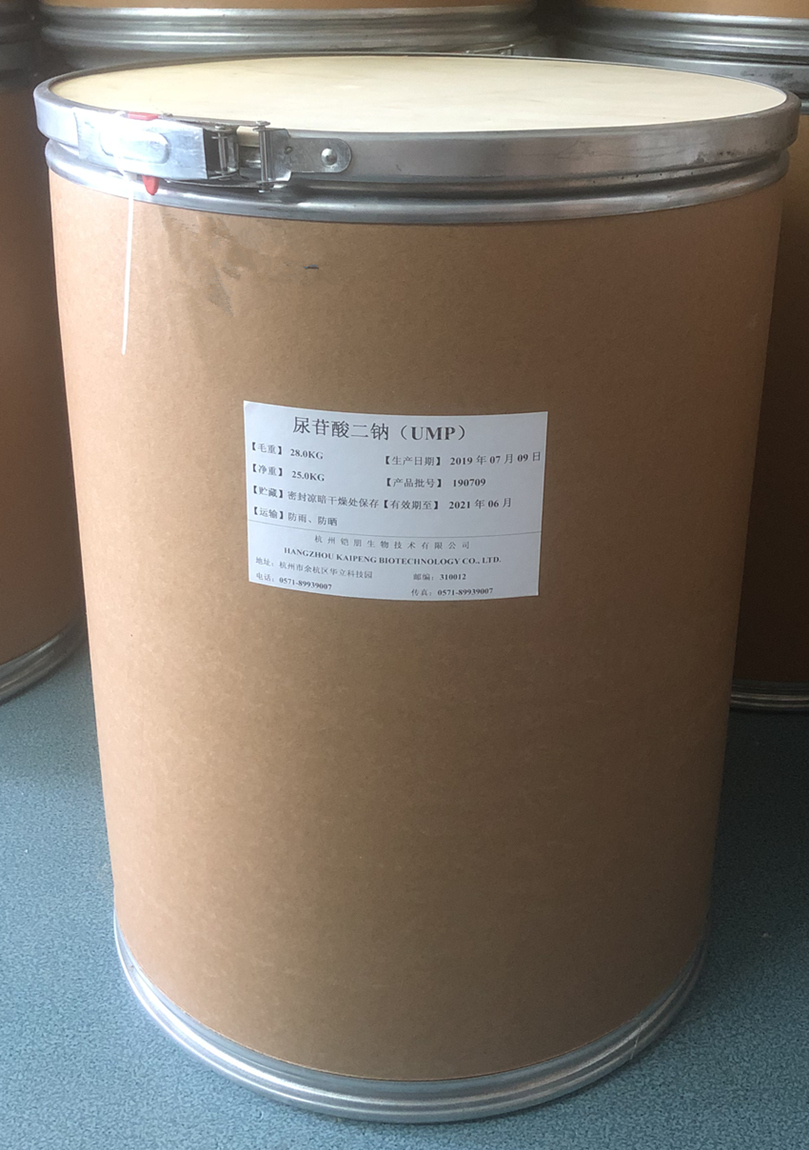
- Moisture barrier configuration: The standard configuration is a food-contact polyethylene liner heat-sealed inside an aluminium foil laminate bag, placed in a fibre drum with desiccant for long sea transit. Headspace humidity should be controlled at packing and water activity verified at receipt, since one wet liner will cause caking even when the drum average passes.
- Grade segregation and contamination control: Where the same plant produces several nucleotides, dedicated or validated-clean campaigns are necessary to avoid cross-contamination that would invalidate a related-substance certificate. Buyers should require a statement on campaign segregation and, for food grades, evidence that contact materials comply with the applicable food contact framework.
6.2 Dangerous Goods Identification and Transit Protocols
Disodium uridine-5'-monophosphate is not assigned a United Nations number and is not subject to IMO, IMDG, ADR or IATA dangerous goods provisions, so shipments move as general cargo on ordinary temperature-uncontrolled lanes. Classification under HS heading 2934 for nucleic acids and their salts should be applied consistently, with the destination-specific distinction between food-grade and reagent-grade declarations reconciled in advance with the importer's broker. Import into China additionally requires registration of the overseas manufacturer with the competent customs authority and conformity testing against the applicable GB method.
VII. Enterprise Global Expansion Strategy Guide
Successful programmes treat grade definition as a commercial act. Writing grade, hydration basis and documentation into the specification prevents later disputes, since nearly every disagreement traces to an ambiguous order.
- Specify the grade, the hydration basis and the impurity profile together: State whether assay is expressed on the dried, anhydrous or as-is basis, then set numerical limits for positional isomers, higher phosphates and free nucleobase separately. Require the loss-on-drying range to be printed on the certificate rather than a single maximum, so that dosing calculations within a regulated recipe remain defensible.
- Qualify at least one plant per region and verify food safety certification: Maintain one East Asian production source and one European or North American finishing or distribution partner, and confirm ISO 22000 or FSSC 22000 coverage before awarding volume. Validate each source against an in-house method for nucleotide identity, since relying on the supplier's own chromatogram removes the ability to detect a related-substance shift.
- Build the documentation package before the first shipment: Assemble the regulatory status statement for each intended market, allergen and genetically modified organism declarations, dietary certifications, results for heavy metals and microbiology per lot, and retention samples held under the stated storage condition. Where claims are made by downstream customers, ensure they are supported by their own dossier, because this material is supplied without any health or disease claim.
VIII. Conclusion
Disodium uridine-5'-monophosphate is best understood as three products that happen to share a CAS number. Each of the three has a distinct requirement set, and the cost difference between them is generated almost entirely by documentation and control rather than by chemistry. Organisations that specify it as an undifferentiated commodity discover that their low-cost material is unusable in higher-value applications.
Through 2026, expect tightening related-substance and documentation requirements in the European Union and China, stable but cost-sensitive savoury demand, and scarce qualified capacity for infant-nutrition supply. No health or disease claim is made for this material. It is offered as a food-sector raw material within the limits of applicable law and as a biochemical reagent, and each consignment should be declared, documented and used strictly according to that declared purpose.
IX. Industry Resource Connection and Supplier Ecosystem
Powered by Guidechem
This white paper is exclusively compiled by the Guidechem Intelligence Team based on global customs data, regulatory databases, and industry research. Guidechem is a leading global B2B chemical platform, dedicated to connecting global buyers with verified, high-quality manufacturers.
Relying on Guidechem's extensive global database, we have mapped the core participants in the current global Disodium Uridine-5'-monophosphate supply chain:
- China Shandong and Zhejiang nucleotide fermentation cluster: Large integrated fermentation and downstream plants that allocate capacity between several ribonucleotides, offering the most competitive tonnage pricing and increasingly complete documentation. Limitations typically concern religious dietary certification availability and consistency of English-language regulatory files.
- Japan and Korea ribonucleic acid processing specialists: Producers with long experience of enzymatic ribonucleic acid hydrolysis and chromatographic separation, supplying high-consistency material with conservative change control. Their strength is process discipline and impurity knowledge, and they are the usual benchmark when qualifying a new Chinese or European source.
- European and North American finishing and distribution: Regional specialists who re-pack, re-certify and hold inventory under food-safety-certified conditions, converting bulk imports into audited food- and reagent-grade supply. Their value is regulatory documentation and local responsiveness rather than primary production economics.
Disclaimer: The content of this white paper is compiled based on public market data and regulatory information available as of 2026. Global chemical regulations are subject to dynamic adjustments. In actual export operations, enterprises must consult professional regulatory advisors or relevant competent authorities to obtain the latest compliance guidance.



 EN
 Agricultural News
 Food News
 Industrial News
 Cosmetic News
 Pharmaceutical News
 Science News


 12YRS

