
I. Executive Summary
The substance catalogued under CAS 383-29-9 is bis(4-fluorophenyl) sulfone, also written 4,4′-difluorodiphenyl sulfone and abbreviated DFDPS (C12H8F2O2S, relative molecular mass 254.24). It is a crystalline difluorinated aromatic sulfone and, commercially, it is the monomer that defines poly(ether sulfone): the two aryl fluorides are activated by the strongly electron-withdrawing sulfone bridge, which allows them to be displaced by bisphenoxide nucleophiles in a step-growth polymerisation to give PESU/PES and related high-temperature thermoplastics.
Because the monomer determines the polymer, DFDPS behaves commercially like a polymer-grade raw material rather than like a fine chemical. Buyers specify isomer content, residual iron and chloride, colour and water with the same rigour they apply to a resin, and they qualify a supplier through a change-control and audit process that can run for years in membrane and medical applications. Global capacity is anchored in China, with Japanese and European integrated producers and a substantial North American conversion base in membrane casting and medical-device manufacture.
Three themes dominate 2026 sourcing decisions: isomer control, since 2,4′- and 3,4′-isomers introduce chain kinks that depress glass-transition temperature and achievable molecular weight; qualification support, since drinking-water, food-contact, medical and aerospace customers each require their own documentation set; and PFAS-adjacency, since a fluorinated aromatic monomer attracts buyer questionnaires and regulatory scoping even though it is structurally remote from perfluoroalkyl acids.
II. Product Deep Dive: Molecular Mechanisms and Production Evolution
2.1 Physicochemical Properties and Mechanisms
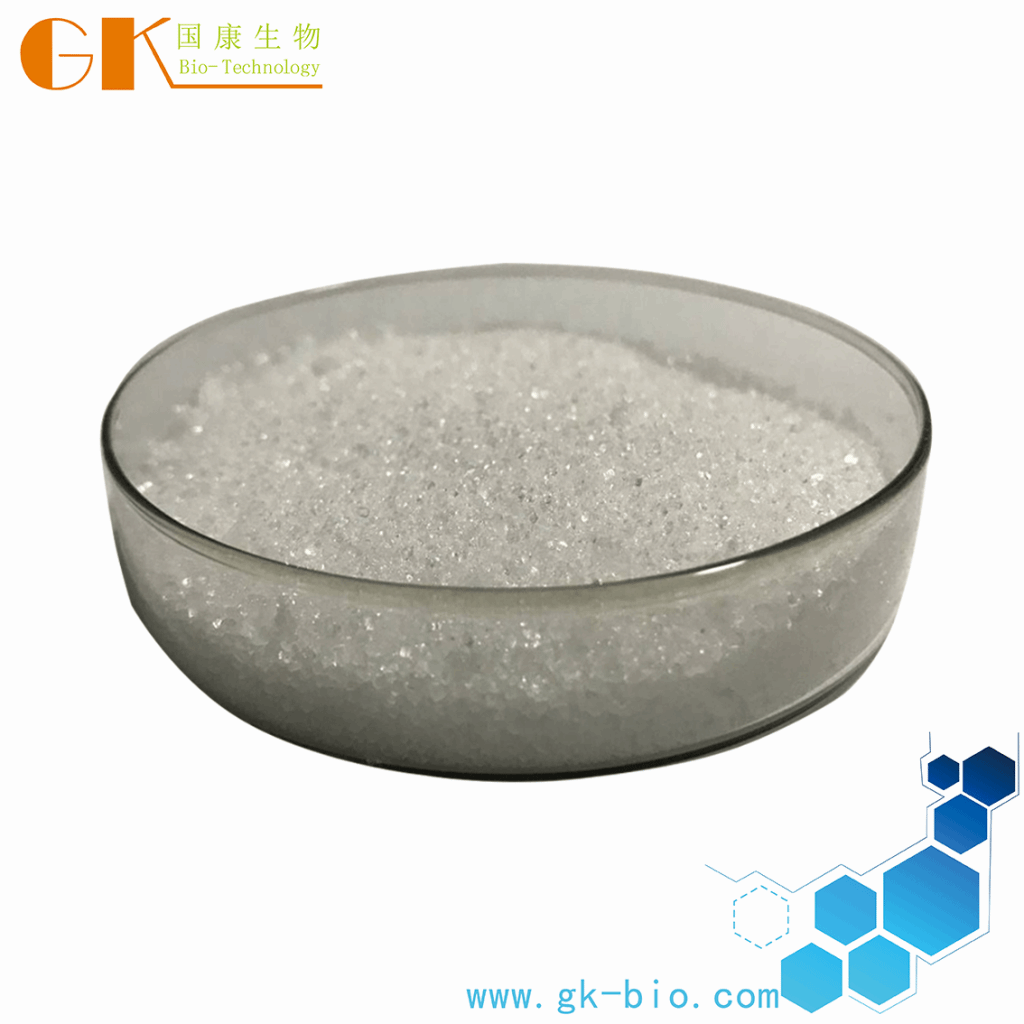
DFDPS is a white to off-white crystalline solid melting at roughly 98–100 °C, with high thermal and hydrolytic stability imparted by the sulfone bridge. That bridge is the functional heart of the molecule: it withdraws electron density from both rings, activating the para fluorides toward nucleophilic aromatic substitution, and it contributes the polarity and rigidity that give the resulting polymer its high glass-transition temperature, its resistance to hot water and steam, and its toughness.
- Sulfone-Activated Fluoride Displacement: Polymerisation proceeds by nucleophilic aromatic substitution in which a bisphenoxide, generated from a dihydroxy monomer such as bisphenol A or 4,4′-dihydroxydiphenyl sulfone with potassium carbonate, displaces fluoride in a dipolar aprotic medium at elevated temperature. Fluoride is a good leaving group in this addition-elimination mechanism, and the reaction is driven by precipitation of potassium fluoride. The practical consequence for raw-material specification is that the monomer must be free of species that consume base or terminate chains, which is why water, residual acid and protic impurities are tightly limited.
- Isomer Geometry and Polymer Architecture: Only the 4,4′-isomer gives a linear chain. The 2,4′- and 3,4′-isomers introduce angular discontinuities that lower the glass-transition temperature, reduce achievable molecular weight and soften the polymer relative to specification. Polymer-grade monomer is therefore specified on isomer content rather than on assay alone, typically with the 4,4′-isomer above 99.5% and individual isomers controlled, and the polymerisation yield and molecular-weight build are the ultimate functional test of that specification.
2.2 Synthesis and Manufacturing Technologies
Industrial manufacture belongs to the sulfonylation route class. In the dominant variant a 4-fluorobenzenesulfonyl chloride is reacted with fluorobenzene under Friedel-Crafts conditions, normally with a Lewis-acid catalyst; alternatives generate the electrophile from sulfur trioxide or fuming sulfuric acid and fluorobenzene. Both approaches are established bulk-chemical operations, and both are discussed here only at route-class level, since qualification depends on the impurity specification rather than on recipe detail.
- Friedel-Crafts Sulfonylation and Catalyst Management: The sulfonyl chloride route offers good selectivity but introduces chloride-bearing and Lewis-acid-derived residues, and the acidic work-up generates a sulfate- and chloride-containing aqueous stream that must be neutralised before treatment. Iron and other metal residues are the specification issue that separates polymer-grade from technical-grade monomer, because transition metals catalyse colour formation and side reactions during high-temperature polymerisation. Producers control this through catalyst selection, washing protocol and, critically, the finishing step.
- Isomer Separation, Finishing and Colour Control: The crude product contains positional isomers and traces of sulfonic acid, sulfonate and oligomeric material. Purification is by controlled crystallisation from a suitable solvent system, sometimes preceded by a washing or melt-crystallisation step, followed by drying under conditions that avoid caking. Colour — measured as yellowness or as a solution colour number — is a standard polymer-grade specification item, because monomer colour carries directly into resin colour, which matters for transparent medical components and for membrane housings.
2.3 Core Application Matrix
- Poly(ether sulfone) Resins for Hot-Water and Engineering Applications: The largest outlet. PESU made from DFDPS serves hot-water plumbing manifolds, boiler and heating components, pump and valve internals, water-meter housings and under-bonnet or electrical parts where resistance to hydrolysis at elevated temperature and dimensional stability are decisive.
- Membranes for Water Treatment and Hemodialysis: PES is a leading membrane polymer for ultrafiltration and microfiltration in municipal and industrial water treatment, for bioprocessing filtration, and for hollow-fibre hemodialyser membranes. This segment is the most specification- and qualification-intensive, because membrane performance depends on molecular-weight distribution, residual monomer and additive package, and because dialyser approval pathways are long.
- Medical Devices, Aerospace, EV and Hydrogen Hardware: Medical components rely on PES biocompatibility documented to ISO 10993 and USP Class VI and on steam-sterilisation resistance; aerospace interiors and electrical hardware use its flame-smoke-toxicity behaviour and low weight; and sulfonated PES derivatives, together with PES-based separators and housings, are used in electrolyser, fuel-cell and battery applications.
III. Global Market Supply-Demand Landscape and Export Trends
3.1 Demand Drivers and Market Shifts
Demand for the monomer follows PES resin demand, and the growth engines have shifted in the past five years. Water-security investment has expanded ultrafiltration and membrane bioreactor capacity in Asia and the Middle East, which increases PES hollow-fibre output and therefore monomer offtake. Hemodialysis volumes grow steadily with chronic kidney disease prevalence and with the shift toward home and portable dialysis. Electrification and hydrogen programmes add a smaller but fast-growing engineering-plastics stream. Construction-driven plumbing demand is comparatively cyclical and regional.
3.2 Capacity Distribution and Export Flows
China is now the largest monomer base and has added substantial PES resin capacity, with producers concentrated in Shandong, Jiangsu and Zhejiang and increasingly integrated from fluorobenzene through sulfonylation to polymerisation. Japan retains a strong position in integrated PESU production and, especially, in high-specification membrane and fibre technology. Europe holds integrated production anchored in Germany, historically associated with Ultrason-class PESU, alongside specialist compounders. North America has limited monomer capacity but a large conversion base: membrane casting, medical-device moulding and extrusion, and aerospace and fluid-handling component manufacture. Trade flows accordingly carry monomer and resin from China and Japan to North American and European converters, with resin and compound also moving within Asia.
3.3 Market Bifurcation and Pricing Dynamics
The market splits cleanly into technical grade and polymer grade. Technical-grade monomer, suitable for laboratory synthesis and non-critical uses, is priced against fluorobenzene and sulfonating-agent cost plus a modest conversion margin. Polymer-grade monomer, with isomer content above 99.5%, iron and chloride at parts-per-million limits, water and colour controlled and a documented change-control regime, commands a premium that reflects crystallisation yield loss and analytical overhead more than conversion cost. Contracts are usually annual with volume tiers, indexed or re-opener clauses on fluorine raw materials, and quarterly true-ups; buyers should expect tighter availability whenever resin producers build inventory ahead of a membrane-project award.
IV. In-depth Analysis of Global Compliance and Regulatory Barriers
DFDPS is a high-tonnage industrial monomer and is regulated as such, while the polymers and articles made from it carry their own sector-specific approvals. A supplier must therefore serve two compliance tracks: substance-level registration and classification, and article-level support for food-contact, drinking-water, medical and transport end uses.
4.1 European Market: REACH, CLP, and Sector-Specific Directives
- REACH Registration and PFAS Policy Exposure: As a high-volume substance the monomer requires full REACH registration with a complete dossier, and importers should confirm the registration holder, tonnage band and the exposure scenarios covering their use. Policy exposure is the live issue: the broad PFAS restriction proposal submitted to ECHA has driven scope assessments in which fluorinated monomers are examined alongside perfluoroalkyl substances, even though a diaryl sulfone bearing two aromatic carbon–fluorine bonds is not a perfluoroalkyl acid and does not share its persistence or bioaccumulation behaviour. Suppliers should monitor that process and engage through associations rather than wait for customers to raise it.
- CLP, Food-Contact and Drinking-Water Approvals: Classification and labelling must be consistent with the notified CLP position and reflected in the safety data sheet. Downstream, PES articles sold into Europe must comply with the plastics food-contact framework, including Regulation (EU) 10/2011 on plastic materials intended to come into contact with food, with supporting migration testing and a declaration of compliance; drinking-water components additionally face national schemes such as WRAS in the United Kingdom and NSF/ANSI-based acceptance elsewhere.
4.2 North American Market: TSCA, EPA, and FDA Regulations
- TSCA Inventory Status and PFAS Reporting Scope: The monomer is handled commercially in the United States and must be on the TSCA Inventory or covered by an exemption, with evidence held by the importer. EPA reporting under TSCA section 8(a)(7) has encouraged buyers to screen all fluorinated inputs; the correct supplier response is a documented structural statement that the fluorines are aromatic ring substituents in a diaryl sulfone, outside the perfluoroalkyl structural core those definitions target, supported by the CAS number and the TSCA status.
- FDA, NSF and Medical-Device Expectations: Food-contact articles rely on the applicable FDA clearances under Title 21 of the Code of Federal Regulations, and drinking-water components require NSF/ANSI certification for the specific end use. Medical devices made from PES must be supported by biocompatibility evidence to ISO 10993 and, where customers require it, USP Class VI testing, and device manufacturers expect their resin and monomer suppliers to maintain a change-control undertaking so that a raw-material change does not invalidate an existing device submission.
4.3 The Critical Hurdle: Quality Control and Safety Limits
Compliance Warning: The most damaging failure in this value chain is a silent specification drift in the monomer. A shift in isomer content, a rise in residual iron or chloride, or a change in residual solvent will not necessarily breach a nominal assay, but it will alter polymerisation kinetics, molecular-weight build and resin colour, and in a qualified membrane or medical application it can invalidate an approval that took years to obtain. Buyers should require individual isomer limits, metal and halide results with numeric limits, water and colour data, and a change-control clause with defined notification periods; any supplier unwilling to give all five should be treated as unsuitable for polymer-grade supply.
V. Green Trade Barriers and ESG in Manufacturing
Sulfonylation is an acid-intensive, energy-intensive bulk operation, and the customers downstream — water utilities, medical-device manufacturers and aerospace primes — all carry public ESG commitments that reach into their raw-material chains. Suppliers therefore face a growing expectation to quantify, reduce and report.
5.1 Carbon Footprint and Circular Economy
The footprint is concentrated in sulfonation and in the crystallisation and drying stages, with acid recovery and neutralisation close behind. Producers that recover and reconcentrate sulfuric acid rather than neutralising it, that recover crystallisation solvent, and that integrate steam supply efficiently report materially lower intensity per tonne. EU customers increasingly require verified emission data for carbon border adjustment purposes, and since the EU Emissions Trading System cost is felt directly by European polymer producers, imported monomer with a documented, lower footprint has a genuine commercial advantage rather than a merely reputational one.
5.2 Sustainable Sourcing and Traceability
Traceability expectations start with ISO 9001 and ISO 14001 certification and extend to batch-level retention, documented starting-material origin, waste and emission records, and — increasingly — product carbon footprint declarations per tonne. Long qualification cycles give traceability a commercial edge: a supplier who can produce a stable, version-controlled specification and impurity profile dating back several years lets a medical or membrane customer demonstrate continuity of supply in its own regulatory submissions.
VI. Supply Chain Resilience and Export Logistics
DFDPS is a stable crystalline solid, so it is logistically forgiving by fine-chemical standards. The practical risks are thermal: the melting point is close to temperatures reached inside containers in tropical transit, and a bag or drum that softens and cakes is expensive to recover at destination.
6.1 Packaging Standards and Moisture/Contamination Control
- Caking Prevention and Thermal Protection: Bulk material is shipped in lined fibre drums or in big bags with a moisture-barrier liner, and polymer-grade lots are frequently palletised with separators to dissipate heat. Buyers should require a maximum transit and storage temperature in the logistics specification and should insist on temperature monitoring for summer routes through tropical hubs, because a caked lot that must be broken up before charging introduces contamination and moisture.
- Dust Control and Foreign-Particle Exclusion: Fine crystalline monomer generates dust during handling and is charged into polymerisation reactors where foreign particles can initiate gels. Packaging should therefore be closed-system compatible, with antistatic liners where appropriate and with documented exclusion of fibre and metal contamination. Polymer-grade customers often specify the packaging configuration as part of the supply agreement, and deviations should be treated as a change.
6.2 Dangerous Goods Identification and Transit Protocols
The monomer is not normally transported as a dangerous good, but classification must be confirmed against the current safety data sheet and the relevant IMDG, ADR and IATA provisions for the specific grade and formulation, rather than assumed from the base substance. Sea freight in standard containers is typical for bulk, with ventilated or temperature-limited stowage on hot routes; air freight is used for qualification samples and for urgent resin-plant top-ups. Because polymer plants run continuously, supply resilience matters more than freight cost: prudent buyers hold several weeks of safety stock and qualify a second source before, not after, a resin-plant expansion.
VII. Enterprise Global Expansion Strategy Guide
Three priorities determine competitive position in this monomer.
- Master Polymer-Grade Specification Discipline: Isomer content, residual iron and chloride, water, residual solvent and colour are the five numbers that decide whether a lot is polymer grade. Investment in crystallisation control, metal-free finishing and validated analytical methods for isomers and trace metals is what converts a technical-grade producer into a qualified polymer supplier.
- Build a Qualification Support Function: Membrane and medical customers take years to qualify a material and cannot tolerate silent change. Suppliers who maintain standing dossiers — REACH and TSCA status, food-contact and drinking-water support letters, ISO 10993 and USP Class VI test reports on the corresponding resin, and a formal change-control undertaking — remove the largest obstacle to being designed into new applications.
- Stay Ahead of PFAS Policy with Evidence: Commission and publish persistence, bioaccumulation and toxicity reasoning appropriate to an aromatic diaryl sulfone, distinguish it clearly from perfluoroalkyl chemistry, and track the ECHA restriction process and EPA reporting scope. A supplier with a credible, evidence-based position protects its customers' specifications and avoids being displaced by precautionary substitution.
VIII. Conclusion
Bis(4-fluorophenyl) sulfone is the monomer that sets the properties of poly(ether sulfone), and its market behaves accordingly: specification-driven, contract-based and dominated by a small number of integrated producers feeding water-treatment, medical, plumbing, aerospace and electrochemical applications. In 2026 capacity is adequate in aggregate and tight at polymer grade, where isomer purity, trace metals and change-control discipline determine who supplies whom.
Buyers should qualify on those five specification numbers, on documented REACH, TSCA, food-contact and drinking-water support, and on the supplier's ability to hold a specification unchanged for years. Suppliers that combine crystallisation and finishing discipline with a qualification-support function, verified carbon data and a clear, evidence-based PFAS-adjacency position will win the long-lived membrane and medical design-ins that define value in this chain.
IX. Industry Resource Connection and Supplier Ecosystem
Powered by Guidechem
This white paper is exclusively compiled by the Guidechem Intelligence Team based on global customs data, regulatory databases, and industry research. Guidechem is a leading global B2B chemical platform, dedicated to connecting global buyers with verified, high-quality manufacturers.
Relying on Guidechem's extensive global database, we have mapped the core participants in the current global 4-Fluorophenyl sulfone supply chain:
- China — Shandong, Jiangsu and Zhejiang Integrated Monomer and PES Base: The largest and fastest-growing producing cluster, increasingly integrated from fluorobenzene through sulfonylation to polymerisation, and supplying both domestic resin expansion and export markets.
- Japan — Integrated PESU and Membrane Technology Producers: Long-established capability in high-specification polymerisation and in membrane and hollow-fibre technology, with strong process control and deep qualification experience in medical and water-treatment markets.
- EU and North America — German PESU Integration and US Conversion Base: European integrated production anchored in Germany alongside specialist compounders, and a North American base concentrated in membrane casting, medical-device moulding and aerospace and fluid-handling component manufacture.
Disclaimer: The content of this white paper is compiled based on public market data and regulatory information available as of 2026. Global chemical regulations are subject to dynamic adjustments. In actual export operations, enterprises must consult professional regulatory advisors or relevant competent authorities to obtain the latest compliance guidance.


 EN
 Agricultural News
 Food News
 Industrial News
 Cosmetic News
 Pharmaceutical News
 Science News


 1YR


