Guideview >  Articles >  Trends  > 2,2,2-Trifluoroethyl trifluoroacetate:Exports & Compliance White Paper 2026

2,2,2-Trifluoroethyl trifluoroacetate:Exports & Compliance White Paper 2026

Explore 2,2,2-Trifluoroethyl trifluoroacetate (CAS 407-38-5), a fluorinated ester reagent for synthesis and derivatization. The 2026 offer highlights documented purity, regulatory readiness and reliable global supply for specialty chemistry. Jackson5 MIN READOctober 8, 2026
2,2,2-Trifluoroethyl trifluoroacetate White Paper

I. Executive Summary

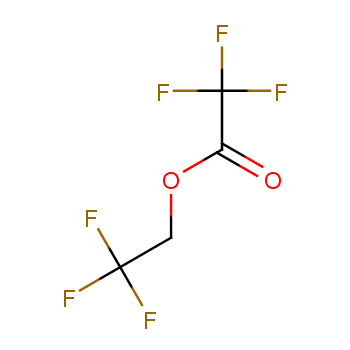
2,2,2-Trifluoroethyl trifluoroacetate, abbreviated TFETFA (CAS 407-38-5, C4H2F6O2, molar mass 196.04 g/mol), is a doubly fluorinated ester in which a trifluoroacetyl group is carried on a 2,2,2-trifluoroethyl residue. It is a colourless, dense, highly volatile liquid, boiling in the mid fifties Celsius with density close to 1.47 g per millilitre, and it serves as both an electrophilic trifluoroacetylating and derivatisation reagent and a low-boiling fluorinated solvent and C2 building block. Two trifluoromethyl groups make the ester carbonyl unusually electrophilic, so alcohols, amines and thiols are acylated under mild conditions.

The commercial structure is defined upstream. Both halves derive from the trifluoroacetic acid and trifluoroacetic anhydride chain, concentrated among electrochemical fluorination and halogen-exchange producers in Europe, the United States, Japan, China and India, where capacity rationalisation has made anhydride security a board-level concern downstream. Because it is low-boiling, moisture-sensitive and flammable and hydrolyses to trifluoroacetic acid, it carries a Class 3 transport profile, an acid-liberation hazard and a TFA regulatory question in most tenders.

That regulatory question is the dominant commercial variable in 2026. TFETFA contains two saturated trifluoromethyl carbons, so it falls inside the OECD per- and polyfluoroalkyl substance definition, inside the European universal restriction proposal under evaluation, and inside the structural triggers of the TSCA section 8(a)(7) reporting rule. Its hydrolysis product trifluoroacetic acid is itself under scrutiny: German authorities have advanced drinking-water guidance values for TFA and pressed for reprotoxicity and persistent, mobile, toxic classification, while TFA remains legally and chemically distinct from perfluorooctanoic acid under the Stockholm Convention. Suppliers who document fluorine mass balance, TFA fate and abatement performance convert that scrutiny into qualification advantage.

II. Product Deep Dive: Molecular Mechanisms and Production Evolution

2.1 Physicochemical Properties and Mechanisms

Reactivity follows directly from structure. The trifluoroacetyl group withdraws electron density strongly, so the ester carbonyl carbon is highly electrophilic and the 2,2,2-trifluoroethoxide leaving group is stabilised by the beta-fluorine effect; nucleophilic attack is therefore fast. The consequence is a reagent that trifluoroacetylates amines and alcohols under mild conditions and a solvent that is very volatile, weakly coordinating and dense, easy to strip from a reaction mass and hard to contain in a poorly sealed system.

  • Electrophilic Trifluoroacetyl Transfer: Attack by an amine, alcohol, thiol or phenoxide on the activated carbonyl displaces 2,2,2-trifluoroethanol and installs the trifluoroacetyl group. In analytical chemistry perfluoroacyl derivatives are more volatile, thermally stable and far more responsive to electron-capture detection than the parent analytes, which is why such esters remain standard derivatisation reagents in GC and GC-MS.
  • Hydrolysis Pathway and Acid Liberation: Contact with water cleaves the ester into trifluoroacetic acid and 2,2,2-trifluoroethanol, so water content and acidity expressed as trifluoroacetic acid are the two parameters that predict everything else. Thermal decomposition and residual acid fluoride carried through from the anhydride feedstock can additionally generate hydrogen fluoride and acid fluoride species, which is why the material is handled dry and why metallurgy and protective equipment are chosen for acid fluoride rather than ester exposure.

2.2 Synthesis and Manufacturing Technologies

At route-class level, TFETFA is made by esterification of 2,2,2-trifluoroethanol with a reactive trifluoroacetic acid derivative. Trifluoroacetic anhydride is the preferred acylating agent because it gives clean conversion without added water and without a dehydration step; acid-catalysed esterification with trifluoroacetic acid is cheaper but generates water that must be removed azeotropically. The upstream variable is anhydride, made by dehydrating trifluoroacetic acid.

  • Anhydride-Based Esterification and Feedstock Security: Because both halves of the molecule are fluorine-intensive and the acylating agent is the constrained input, commercial strategy is built around anhydride security. Producers either backward-integrate or contract anhydride on long-term allocated agreements, and price tracks anhydride availability more closely than the esterification step.
  • Anhydrous Finishing and Fluoride-Resistant Plant: The crude ester is finished by fractional distillation under dry inert gas and dried over molecular sieve before filling into pre-dried containers. Because of the acid fluoride and hydrogen fluoride potential, construction uses glass-lined or PTFE and PFA lined equipment with Hastelloy C-276 or Monel for critical metal parts and fluoropolymer seals; standard 316L stainless and nitrile gaskets are not acceptable for long service.

2.3 Core Application Matrix

  • Analytical Derivatisation Reagent: The largest established use is trifluoroacetylation of amines, alcohols, phenols and thiols before gas chromatographic analysis, where the perfluoroacyl derivative delivers volatility, thermal stability and strong electron-capture and mass-spectrometric response.
  • Fluorinated Building Block and Process Intermediate: In custom synthesis it installs trifluoroacetyl and trifluoroethyl functionality, or acts as a reactive fluorinated ester in transesterification and amidation sequences, for pharmaceutical, agrochemical and electronic-materials programmes.
  • Fluorinated Solvent and Specialty Formulation Component: Its low boiling point, high density and weak coordinating power suit it as a volatile fluorinated reaction medium, and it has been evaluated as a solvent and additive in electrolyte and coating formulation work.

III. Global Market Supply-Demand Landscape and Export Trends

3.1 Demand Drivers and Market Shifts

Demand has three engines. Analytical derivatisation provides a stable baseline and sustains the small-pack high-purity segment. Fluorinated intermediate demand is tied to pharmaceutical and agrochemical fluorine chemistry and electronic materials, and its volatility drives order-pattern swings. Third, research into fluorinated electrolyte solvents has created a pool that buys small lots but pays for documentation, low water and low metal content.

3.2 Capacity Distribution and Export Flows

Capacity is a function of trifluoroacetic anhydride access. European producers with integrated electrochemical fluorination and halogen-exchange assets supply anhydride into a captive derivatisation chain; Japanese fluorochemical houses combine anhydride capability with high-purity finishing for electronics-adjacent customers; Chinese producers in the Zhejiang, Jiangsu and Shandong belt have expanded trifluoroacetic acid and anhydride capacity substantially and now export both in volume; Indian producers in Gujarat have entered with cost-competitive derivatives. Export flows therefore run from a few anhydride hubs to many esterification and repackaging operations.

3.3 Market Bifurcation and Pricing Dynamics

Pricing is anhydride-cost-driven and bifurcated by grade. Technical material at 98 to 99 percent assay, sold in drums for intermediate synthesis and solvent use, competes on conversion economics and on water and acidity control. Reagent grades in glass or fluoropolymer-lined small packs with certified water, acidity, fluoride and metal content carry a substantial premium and sell as analytical consumables. A third tier is emerging: material sold with a documented PFAS position, trifluoroacetic acid degradation statement and abatement evidence, which commands a compliance premium independent of assay.

IV. In-depth Analysis of Global Compliance and Regulatory Barriers

Compliance operates on three levels at once. The first is transport and classification: a low-boiling flammable, corrosive liquid with an acid-liberation profile. The second is chemical inventory: REACH registration and CLP classification in Europe, TSCA status and reporting in the United States. The third, commercially decisive, is fluorine regulation: the molecule is a per- and polyfluoroalkyl substance by structural definition, and its hydrolysis product trifluoroacetic acid is the subject of an active European policy debate reshaping customer expectations for every TFA-releasing fluorinated compound.

4.1 European Market: REACH, CLP, and Sector-Specific Directives

  • REACH, CLP and the PFAS Restriction Proposal: The substance requires REACH registration at or above one tonne per year with dossier scope set by tonnage band. CLP classification typically covers flammability, skin corrosion or irritation, serious eye damage and specific target organ toxicity, and buyers must reconcile the supplier classification with their own mixture calculations. Two saturated trifluoromethyl carbons place it inside the definition underpinning the five-country Annex XV universal restriction proposal, so European customers now ask suppliers to state their view of the proposed derogation landscape for analytical, industrial and electronics uses and to document contingency plans.
  • Trifluoroacetic Acid Fate and Drinking-Water Scrutiny: Because hydrolysis and environmental degradation release trifluoroacetic acid, the German debate is directly relevant: authorities there have published health-based guidance values for TFA in drinking water and advanced proposals to classify it for reprotoxicity and as persistent, mobile and toxic, which would cascade into downstream obligations if adopted. TFA is not listed as a persistent organic pollutant and is chemically distinct from perfluorooctanoic acid, which is listed under the Stockholm Convention, and TFA formation from hydrofluoroolefins has been assessed under the Montreal Protocol process.

4.2 North American Market: TSCA, EPA, and FDA Regulations

  • TSCA Inventory, CDR and Section 8(a)(7) PFAS Reporting: The substance is an active TSCA inventory chemical and reportable under Chemical Data Reporting when volume thresholds are met. More consequentially, the per- and polyfluoroalkyl reporting rule under TSCA section 8(a)(7) captures substances containing saturated fully fluorinated moieties such as trifluoromethyl groups, so United States manufacturers and importers should assume reporting obligations for the historical lookback period unless a specific exemption applies, including impurity, byproduct and non-isolated intermediate exemptions, and should document the basis.
  • Use-Boundary Regulation and Facility Standards: Where material enters pharmaceutical manufacture, the framework is ICH Q7 for good manufacturing practice, ICH Q3C for residual solvent classification and ICH Q3D for elemental impurities, with the reagent treated as a process material rather than an approved substance. Where it is handled in bulk, facility standards govern: flammable liquid storage and handling under national fire codes, hazardous area classification where vapour can accumulate, and fluoride-compatible ventilation and scrubbing.

4.3 The Critical Hurdle: Quality Control and Safety Limits

Compliance Warning: Moisture ingress drives hydrolysis to trifluoroacetic acid, raising acidity and fluoride above specification and corroding containers from the inside; sealed containers of a liquid boiling near fifty-five Celsius can pressurise in hot transit; acid fluoride and hydrogen fluoride are potential decomposition and carry-through species, so transfer and sampling must be done in closed systems with HF-aware respiratory and skin protection; and fluorinated vent gas from reactors, dryers and vacuum systems requires alkaline scrubbing or thermal oxidation with hydrogen fluoride scrubbing rather than direct release. Specifications should require assay by GC, water by Karl Fischer, acidity as trifluoroacetic acid, fluoride by ion chromatography and metal content by ICP-MS for electronic and electrolyte applications.

V. Green Trade Barriers and ESG in Manufacturing

ESG pressure on fluorinated esters is now quantitative. Customers ask for fluoride mass balance, evidence that fluorinated vent gas is abated, trifluoroacetic acid monitoring in effluent and the abatement energy embedded in the product. These are answerable for a well-run plant and not for a trading operation, which is why fluorine-specific ESG data separates real producers from intermediaries.

5.1 Carbon Footprint and Circular Economy

The dominant contributions sit upstream and in abatement: hydrogen fluoride production from fluorspar, electrochemical fluorination electricity, and thermal oxidation and scrubbing of fluorinated vent streams. Tractable levers are heat integration in the esterification and distillation train, recovery of trifluoroethanol and unreacted anhydride, and abatement with calcium fluoride recovery. Buyers reporting Scope 3 emissions increasingly request cradle-to-gate figures with stated boundaries plus a fluoride mass balance.

5.2 Sustainable Sourcing and Traceability

Traceability runs from fluorspar and hydrogen fluoride through anhydride to ester. A credible tender response includes ISO 9001 and ISO 14001 certification, anhydride-origin documentation, a per- and polyfluoroalkyl substance declaration with structural reasoning, a TFA fate statement, effluent data and change-control commitments. For pharmaceutical and electronics customers this extends to validated methods and retention samples from every lot.

VI. Supply Chain Resilience and Export Logistics

Logistics is governed by three physical facts: the liquid boils in the mid fifties Celsius, it hydrolyses on contact with moisture, and its vapour is flammable. Every packaging and transit decision follows from those facts.

6.1 Packaging Standards and Moisture/Contamination Control

  • Dry, Pressure-Rated, Fluoropolymer-Compatible Containers: Bulk material moves in tightly sealed, pressure-rated or fluoropolymer-lined containers with fluoropolymer gaskets, dried and nitrogen-padded before filling. Small-pack reagent grades use amber glass or fluorinated HDPE bottles with PTFE-lined closures and secondary containment. Unlined steel drums, ordinary elastomer seals and moisture-diffusing plastic closures are unacceptable for long service.
  • Moisture Exclusion and Acidity Control at Filling: Filling is performed under dry inert gas, and water and acidity are tested on the filled container, not inferred from the bulk tank. Receiving sites should retest water and acidity before use, because a container opened in humid air degrades measurably within a single shift.

6.2 Dangerous Goods Identification and Transit Protocols

The substance is a flammable liquid, commonly consigned as UN 3272, esters, not otherwise specified, in Class 3 with a corrosive subsidiary risk depending on the recorded classification; the consignor must confirm the entry against the actual safety data sheet. Under IMDG, ADR and IATA the operational requirements are UN-specification packaging, segregation from oxidisers, strong bases, amines and water-reactive materials, hazmat documentation and trained-shipper handling, plus temperature-aware routing on hot lanes.

VII. Enterprise Global Expansion Strategy Guide

Competitive advantage here is built on anhydride security, fluorine transparency and handling competence. Customers are not buying a commodity ester; they are buying assured access to a constrained fluorinated reagent whose regulatory status is under active review.

  1. Secure Trifluoroacetic Anhydride and Dual-Source It: Contract anhydride on allocated long-term agreements or backward integrate, and qualify at least one non-Chinese and one Chinese anhydride chain.
  2. Sell a Fluorine Transparency Package: Provide a structural per- and polyfluoroalkyl substance declaration, a trifluoroacetic acid degradation pathway statement, fluoride mass balance, effluent monitoring data and abatement description,
  3. Compete on Handling Engineering, Not Just Assay: Offer closed-system transfer guidance, fluoropolymer-compatible packaging, nitrogen-padded pressure-rated containers and vent-gas abatement design support including alkaline scrubbing and thermal oxidation with hydrogen fluoride scrubbing,

VIII. Conclusion

TFETFA will remain commercially useful because its reactivity, volatility and fluorine content are difficult to replace together: it acylates quickly, strips easily and delivers a trifluoroethyl group in the same operation. Demand stays anchored by analytical derivatisation, extended by fluorinated intermediate synthesis and increasingly shaped by research into fluorinated solvents and electronic materials. Supply remains constrained by trifluoroacetic anhydride availability, and pricing will keep tracking that constraint rather than the esterification step.

The decisive variable is regulatory. Because the molecule is structurally a per- and polyfluoroalkyl substance and releases trifluoroacetic acid, European restriction outcomes and German and wider European TFA policy will set the terms of market access for the rest of this decade. Buyers should specify assay, water, acidity, fluoride and metals, require written fluorine and TFA position statements, and insist on dry, pressure-rated, fluoropolymer-compatible packaging with temperature-aware routing. Sellers combining anhydride security with transparent fluorine documentation and credible abatement will hold customers who cannot afford to requalify.

IX. Industry Resource Connection and Supplier Ecosystem

Powered by Guidechem

This white paper is exclusively compiled by the Guidechem Intelligence Team based on global customs data, regulatory databases, and industry research. Guidechem is a leading global B2B chemical platform, dedicated to connecting global buyers with verified, high-quality manufacturers.

Guidechem Global 2,2,2-Trifluoroethyl trifluoroacetate Supplier Ecosystem List

Relying on Guidechem's extensive global database, we have mapped the core participants in the current global 2,2,2-Trifluoroethyl trifluoroacetate supply chain:

  • China Fluorochemical Export Base: Zhejiang, Jiangsu and Shandong host integrated complexes with captive hydrogen fluoride and anhydride capacity plus extensive esterification and repackaging. Chinese suppliers dominate merchant export of trifluoroacetic derivatives and fluorinated esters, and the more advanced have invested in electronic-grade finishing, fluoride abatement and export documentation.
  • Japanese High-Purity Fluorine Cluster: Japanese fluorochemical producers combine trifluoroacetic acid and anhydride capability with high-purity finishing discipline developed for electronics materials. Their strengths are consistency, metal-ion control, small-lot flexibility and packaging quality, making them preferred for electronic and electrolyte-adjacent applications.
  • European Integrated Anhydride Producers: European producers with long-established electrochemical fluorination and halogen-exchange assets anchor the anhydride chain and supply captive and merchant derivatisation. Their proposition is regulatory proximity, mature REACH dossiers, established abatement infrastructure and shorter logistics lanes, which offsets a higher cost base.

Disclaimer: The content of this white paper is compiled based on public market data and regulatory information available as of 2026. Global chemical regulations are subject to dynamic adjustments. In actual export operations, enterprises must consult professional regulatory advisors or relevant competent authorities to obtain the latest compliance guidance.

Make Guideview Preferred Source on Google
Related News