
I. Executive Summary
Adenosine 5'-monophosphate disodium salt (5'-AMP disodium, CAS 4578-31-8) is one of the few nucleotide products that trades simultaneously in two completely different regulatory worlds. As a food ingredient it is a flavour nucleotide used for umami intensification and sodium-reduction strategies in savoury formulations; as a biochemical and pharmaceutical material it is an enzyme substrate, a metabolite standard and a phosphorylated intermediate for nucleotide programmes. Each world has its own specification philosophy, its own dossier and its own audit regime, and a supplier that blurs the two will fail qualification in both.
The specification topics that decide commercial outcomes are consistent across both markets even though the limits differ: assay by HPLC, the related-nucleotide profile (GMP, IMP, ADP, ATP and free adenosine), water of crystallisation and hygroscopic stability, chloride and inorganic phosphate, heavy metals and arsenic, residual solvent, and - for food grade - microbiological limits and sensory neutrality. For pharmaceutical or injectable-adjacent grades, endotoxin and bioburden limits replace sensory testing, and pharmacopoeial monographs rather than FCC or JECFA define the acceptance criteria.
No health, nutritional or disease-related claim is made for this material in this paper, and none should appear in commercial documentation. The commercial task for 2026 is grade architecture: hold a food-grade line certified to FSSC 22000 or ISO 22000 with EU, US FDA and China GB documentation, run a separate quality line for biochemical and pharmaceutical customers under ISO 9001 or ICH Q7-aligned practice, and keep the two streams physically and documentarily segregated.
II. Product Deep Dive: Molecular Mechanisms and Production Evolution
2.1 Physicochemical Properties and Mechanisms
5'-AMP is adenosine bearing a phosphate monoester on the 5'-hydroxyl of ribose. The free acid is C10H14N5O7P with a relative molecular mass of 347.22; the disodium salt is C10H12N5Na2O7P, and commercial material is often offered as a hydrate. The monoester carries two ionisable protons, so at neutral pH the molecule is dianionic and is isolated with two sodium counter-ions; that salt form, together with the water of crystallisation, defines the assay-on-dry-basis arithmetic that buyers and suppliers must agree before contracting.
- Salt form, solubility and hygroscopicity: the disodium salt is freely soluble in water and practically insoluble in ethanol and most organic solvents, which makes aqueous ion-exchange processing the natural route and makes moisture control the central packaging issue. Adenine gives the characteristic UV maximum near 259 nm used for HPLC-UV assay and for identity confirmation alongside LC-MS and 1H/31P NMR. The 5'-monoester is stable in neutral solution but hydrolyses under strongly acidic conditions to adenosine and inorganic phosphate, so pH excursions during processing and storage must be controlled.
- Dual mechanism of value: in food systems, 5'-ribonucleotides act synergistically with glutamate at the umami receptor level, allowing formulators to lower monosodium glutamate and sodium loads while retaining perceived savoury intensity. In biochemical systems the same molecule is the substrate and product of adenylate kinase, 5'-nucleotidase and AMP-activated protein kinase pathways, which is why assay developers and metabolite laboratories buy it as a defined reference material.
2.2 Synthesis and Manufacturing Technologies
Industrial supply divides into hydrolytic routes built on ribonucleic acid and synthetic routes built on adenosine. The choice determines the impurity fingerprint, and experienced buyers read the CoA to infer which route class they are being offered.
- RNA hydrolysis and fermentation-based routes: yeast ribonucleic acid, recovered from fermentation biomass, is cleaved with 5'-phosphodiesterase or nuclease P1 to give a mixture of 5'-AMP, 5'-GMP, 5'-CMP and 5'-UMP, which is then separated on anion-exchange resin, decolourised, concentrated and crystallised as the sodium salt. A variant phosphorylates fermentation-derived adenosine enzymatically. This class dominates food-grade tonnage because it is aqueous, scalable and avoids hazardous phosphorylating reagents.
- Chemical 5'-phosphorylation and salt-form finishing: adenosine is phosphorylated with phosphorus oxychloride in a trialkyl phosphate solvent system, quenched, hydrolysed and neutralised to the disodium salt, then purified by ion exchange, nanofiltration and crystallisation. The route gives tight control of the 5'-isomer and of related nucleotides, but requires residual-solvent control under ICH Q3C thinking, phosphate-containing waste-water treatment, and corrosion-resistant glass-lined or Hastelloy equipment.
2.3 Core Application Matrix
- Savoury flavour systems: incorporated into bouillon, soups, sauces, instant noodles, snack seasonings and meat analogues, typically in combination with disodium inosinate and disodium guanylate, to deliver umami intensity and to support sodium-reduction targets in reformulation programmes.
- Biochemical reagent and analytical standard: used as an enzyme substrate in kinase, nucleotidase and ATP-regeneration assays, as a metabolite calibrator in LC-MS/MS and NMR metabolomics, and as a reference material in cell-culture and energy-metabolism research.
- Pharmaceutical and nucleotide intermediate: purchased as a phosphorylated building block or comparative standard in antiviral and nucleotide-analogue development, in cofactor and ATP-related programmes, and in custom-synthesis campaigns where the CDMO provides route scouting, method validation and scale-up under ICH Q7 and Q11 principles.
III. Global Market Supply-Demand Landscape and Export Trends
3.1 Demand Drivers and Market Shifts
Food-side demand is driven by the global expansion of processed savoury foods, by sodium-reduction commitments that push formulators toward nucleotide synergy rather than added salt, and by the growth of plant-based meat and snack categories where savoury impact must be rebuilt from scratch. Biochemical and pharmaceutical demand is driven by metabolomics, cell-culture and assay-kit volumes and by nucleotide-analogue pipelines. The two demand curves are uncorrelated, which is precisely why nucleotide producers value a dual-market customer base.
3.2 Capacity Distribution and Export Flows
China holds the largest share of fermentation-derived nucleotide capacity and exports both food-grade and biochemical grades, with production clustered around fermentation and amino-acid complexes that control yeast RNA and adenosine feedstock internally. Japan retains the technology leadership position built on decades of nucleotide seasoning development and supplies high-specification material to premium food and reagent customers. Europe and North America import the bulk of tonnage and concentrate on blending, seasoning formulation, distribution, pharmacopoeial compliance and reference-material certification.
3.3 Market Bifurcation and Pricing Dynamics
Pricing is anchored to fermentation economics - yeast RNA availability, sugar and energy costs, and the co-product balance between 5'-GMP, 5'-IMP and 5'-AMP - rather than to phosphate chemistry. Food-grade tonnage trades as a commodity seasoning ingredient with tight margins and long contracts, while low-volume biochemical and pharmaceutical grades command multiples of that price for documentation, endotoxin testing and small-lot traceability. Suppliers that can fill both tiers from one plant smooth the commodity cycle.
IV. In-depth Analysis of Global Compliance and Regulatory Barriers
Because the same CAS number serves food and pharmaceutical channels, compliance is best understood as two parallel dossiers that must never be cross-quoted. Food dossiers prove purity against additive and flavouring legislation; pharmaceutical dossiers prove GMP pedigree and impurity control. Neither dossier supports a health claim, and none should contain one.
4.1 European Market: REACH, CLP, and Sector-Specific Directives
- Food additive and flavouring framework: food-grade use must sit inside Regulation (EC) No 1333/2008 on food additives and Regulation (EC) No 1334/2008 on flavourings, with purity criteria from Regulation (EU) No 231/2012, an E-number or flavouring listing appropriate to the actual intended use, and conformity with the general food-law duties of Regulation (EC) No 178/2002 including traceability and the food business operator registration.
- Chemical and quality regime: REACH (EC) No 1907/2007 status must be verified for the exact salt and hydrate, with SDS and CLP classification under Regulation (EC) No 1272/2008; food-contact and hygiene expectations are handled through FSSC 22000 or ISO 22000 certification and, where material is supplied as a pharmaceutical intermediate, through ICH Q7 and Q11-aligned GMP practice with written confirmation that no health claim is made.
4.2 North American Market: TSCA, EPA, and FDA Regulations
- FDA food-status and import controls: US food use requires a defensible status - FDA food-additive regulation, GRAS determination or prior-sanctioned flavouring position - supported by Food Chemicals Codex monograph compliance, FDA food facility registration, FSVP supplier verification for the importer, and correct labelling under 21 CFR labelling rules.
- TSCA and pharmaceutical-grade pathway: TSCA inventory or exemption status must be documented for chemical import, and where the customer is pharmaceutical the supplier moves to a DMF-supported or GMP-aligned campaign applying ICH Q7, Q11, Q1A stability and Q3D elemental-impurity assessment, with pharmacopoeial monograph compliance as the acceptance language.
4.3 The Critical Hurdle: Quality Control and Safety Limits
Compliance Warning: the recurring failure modes for CAS 4578-31-8 are specification ambiguity and channel confusion. First, water of crystallisation: without an agreed hydrate definition, a Karl Fischer method and an assay basis, the same lot can assay 98 percent or 92 percent depending on who measures it, and contract disputes follow. Second, related nucleotides: GMP, IMP, ADP and ATP must be limited and reported with a validated stability-indicating HPLC method, because a high ATP or ADP level signals incomplete conversion and changes both flavour performance and biochemical behaviour. Third, channel contamination: a food-grade lot shipped without heavy-metal, arsenic and microbial limits, or a pharmaceutical lot shipped without endotoxin and residual-solvent data, will be rejected at incoming inspection. Finally, any documentation implying a health, therapeutic or disease-prevention benefit is a regulatory violation in both the EU and the United States.
V. Green Trade Barriers and ESG in Manufacturing
Nucleotide production is fermentation- and water-intensive, so ESG scrutiny from multinational food customers arrives through supplier codes, Sedex or EcoVadis-style assessments and annual carbon questionnaires rather than through new chemical legislation.
5.1 Carbon Footprint and Circular Economy
The dominant contributors are fermentation aeration and steam for concentration and crystallisation, ion-exchange regeneration chemicals, and phosphate-bearing waste-water treatment. Credible programmes report Scope 1 and 2 energy, quantify Scope 3 feedstock and freight emissions, recover yeast biomass as a co-product stream rather than as effluent, and reduce specific water consumption per kilogram of nucleotide through counter-current washing and resin-regenerant recovery.
5.2 Sustainable Sourcing and Traceability
Buyers require documented non-GMO fermentation status, allergen statements, halal and kosher certification where the customer base needs it, vegan confirmation for plant-based product lines, and ISO 14001 environmental certification at the manufacturing site. Traceability means lot genealogy from yeast RNA or adenosine feedstock through to the packed drum, retained samples for the full shelf life, and supplier audit access - the elements that turn an ESG questionnaire from a risk into a qualification asset.
VI. Supply Chain Resilience and Export Logistics
5'-AMP disodium is a stable but hygroscopic crystalline solid, and the logistical risks are moisture uptake, caking, cross-contamination with other nucleotide or seasoning streams, and - for food grade - any break in the hygiene chain of custody.
6.1 Packaging Standards and Moisture/Contamination Control
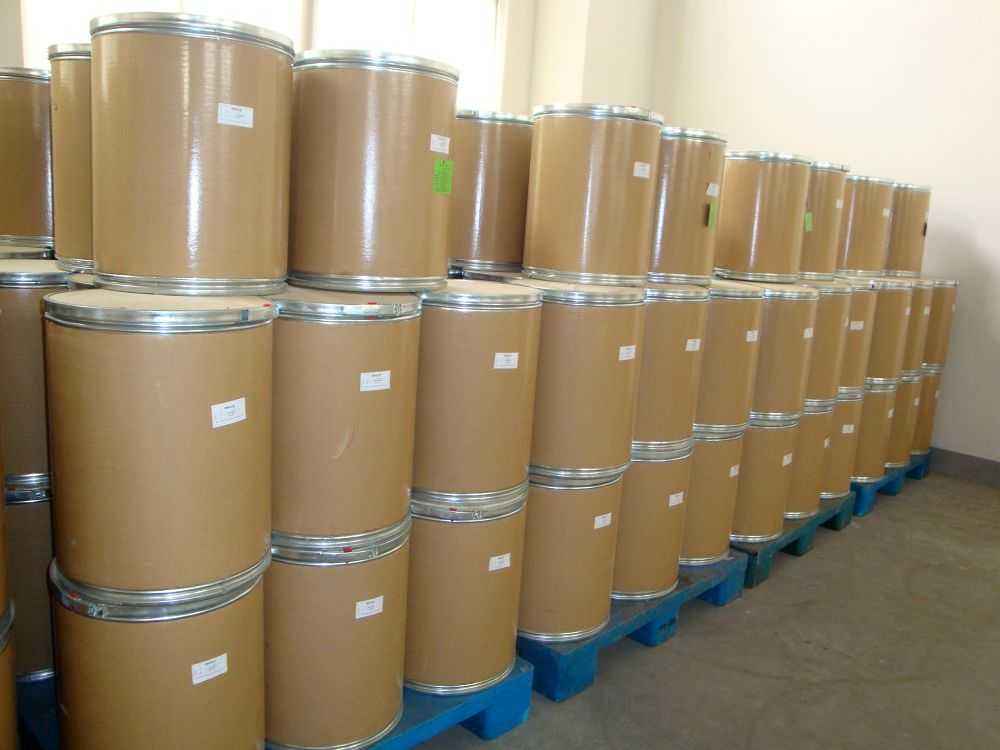
- Moisture-barrier food-contact packaging: food-grade material ships in fibre drums or cartons with food-contact-compliant polyethylene inner liners, documented under Regulation (EC) No 1935/2004 and Regulation (EU) No 10/2011 for plastics, plus desiccant or controlled low-humidity filling. Sealed liners, tamper evidence and a documented filling record are expected by FSSC 22000 auditors.
- Segregation and lot integrity: food-grade, biochemical-grade and pharmaceutical-grade lots must be filled and stored under physically separated, clearly identified campaigns with allergen and non-GMO segregation controls, validated cleaning between campaigns, and retention samples drawn from the commercial pack to support shelf-life and complaint investigation.
6.2 Dangerous Goods Identification and Transit Protocols
The disodium salt is ordinarily shipped as a non-hazardous substance for road, sea and air transport, but the SDS transport section must be confirmed lot by lot and the material must be declared correctly in customs documentation using its CAS number and salt-form description. Practical control points are container selection and moisture management: use lined or food-grade containers with desiccant, avoid container rain by pre-conditioning, specify cool and dry storage below 25 °C with relative humidity control, and use sealed temperature and humidity data loggers on long sea legs so that any caking claim can be attributed to a specific leg rather than argued after delivery.
VII. Enterprise Global Expansion Strategy Guide
Winning export business in 2026 depends less on new capacity than on the ability to answer a multinational customer's qualification file completely. The following priorities are the ones that change tender outcomes.
- Build a certified dual-grade architecture: certify the food line to FSSC 22000 or ISO 22000 and the biochemical line to ISO 9001, maintain EU additive and flavouring documentation, FCC and JECFA-aligned specifications, China GB food-standard conformity with a valid food-production licence, and keep both lines under a single change-control system so that grade-specific deviations never leak across.
- Own the specification and the method: publish a written specification covering assay, related nucleotides, water of crystallisation, heavy metals and arsenic, chloride and inorganic phosphate, residual solvent, microbial limits and - where applicable - endotoxin, each backed by a validated method, a chromatogram and a defined retest period.
- Professionalise customer qualification: operate KYC and end-use declaration, keep halal, kosher, vegan, allergen and non-GMO certificates current, offer pharmacopoeial or DMF-supported supply for pharmaceutical customers, and provide a structured tech-transfer and confidentiality package so that custom synthesis projects can start without re-litigating quality basics.
VIII. Conclusion
Adenosine 5'-monophosphate disodium salt rewards suppliers who treat it as two products sharing one molecule. The food business is a scale, certification and documentation business governed by additive and flavouring law and by the audit expectations of global food manufacturers; the biochemical and pharmaceutical business is a specification, traceability and GMP-pedigree business governed by pharmacopoeial and ICH expectations. Confusing the two is the most expensive mistake available in this market.
Through 2026, competitive advantage will come from fermentation cost position, dual certification, water and energy performance, and disciplined documentation that states purity facts without straying into health claims. Producers who can deliver a food-grade drum and a pharmaceutical-grade vial from the same qualified plant, with two clean dossiers, will hold the customers that matter.
IX. Industry Resource Connection and Supplier Ecosystem
Powered by Guidechem
This white paper is exclusively compiled by the Guidechem Intelligence Team based on global customs data, regulatory databases, and industry research. Guidechem is a leading global B2B chemical platform, dedicated to connecting global buyers with verified, high-quality manufacturers.
Relying on Guidechem's extensive global database, we have mapped the core participants in the current global Adenosine 5'-monophosphate disodium salt supply chain:
- China - fermentation-scale nucleotide manufacturing: Chinese producers operate integrated fermentation complexes controlling yeast RNA and adenosine feedstock in-house, run RNA hydrolysis and ion-exchange separation at multi-ton scale, and export food-grade and biochemical-grade disodium 5'-AMP to Asia, Europe and the Americas. Buyers should verify the China GB food-standard conformity, food-production licence scope and the site's FSSC 22000 or ISO 22000 certificate before committing volume.
- Japan - nucleotide technology leadership and premium specifications: the Japanese ecosystem, built on decades of nucleotide seasoning research, supplies high-purity material with tight related-nucleotide control and strong application support for savoury formulation and reagent customers. Korean producers provide a complementary regional source, and Japanese pharmacopoeial and food-standard practice sets the specification language that many global buyers adopt by default.
- European Union and North America - import, blending and compliance gatekeeping: EU and US participants import the majority of tonnage and add value through seasoning blending, distribution, FSVP and REACH or TSCA status management, FCC and pharmacopoeial conformance, and reference-material certification. These players define the documentation bar, and non-Asian producers rarely displace them on service even when they match them on price.
Disclaimer: The content of this white paper is compiled based on public market data and regulatory information available as of 2026. Global chemical regulations are subject to dynamic adjustments. In actual export operations, enterprises must consult professional regulatory advisors or relevant competent authorities to obtain the latest compliance guidance.




 EN
 Agricultural News
 Food News
 Industrial News
 Cosmetic News
 Pharmaceutical News
 Science News


 12YRS

