
I. Executive Summary
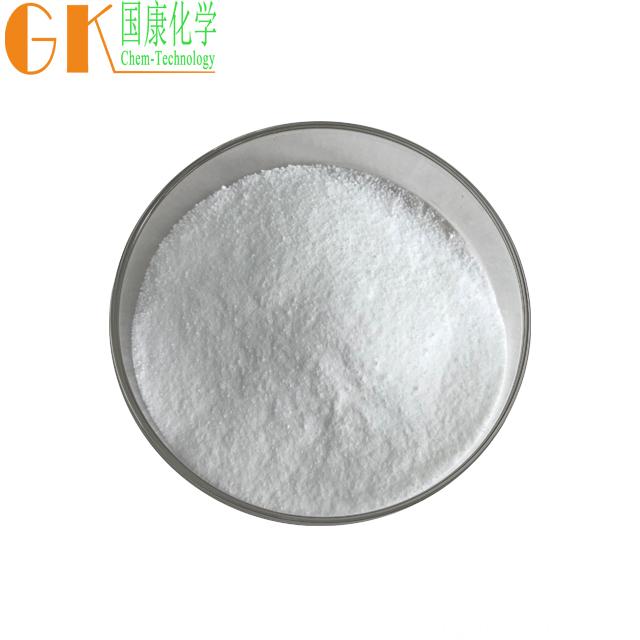
3,5-Dichlorobenzoic acid (CAS 51-36-5; C7H4Cl2O2; MW 191.01) serves two markets: a bulk aromatic carboxylic acid building block, and a high-assay analytical reference material sold against a stated measurement uncertainty. It is a white crystalline powder melting at about 184 to 188 degrees Celsius, with a pKa near 3.5.
Its supply base hangs off the chlorinated-toluene chain. Sibling dichlorotoluene isomers distil within a narrow band, so obtaining a clean 3,5-cut drives cost and pushes producers toward selective functionalisation or salt-selective finishing. Downstream demand is almost entirely carboxyl chemistry: benzoyl chloride, then amides and hydrazides for agrochemical, pharmaceutical and polymer syntheses.
Three variables decide a 2026 contract: which sibling isomers are specified, whether transition-metal residues satisfy an ICH Q3D assessment, and whether the lot ships as industrial or certified reference grade. This paper maps those variables onto the competing route families, REACH and CLP status, TSCA position, chlorinated-aromatic thermal-safety expectations and the China, India and European Union supply architecture.
II. Product Deep Dive: Molecular Mechanisms and Production Evolution
2.1 Physicochemical Properties and Mechanisms
Two features define how this molecule behaves in production: a ring effectively switched off toward further substitution, and a carboxyl group that is unusually acidic. Each dictates both the available route options and the analytical methods that must sit behind a certificate of analysis.
- Ring deactivation and regiochemical inertness: Two meta chlorine atoms withdraw enough electron density that further electrophilic substitution, whether nitration, halogenation or Friedel-Crafts acylation, becomes irrelevant under industrial conditions. The ring therefore survives side-chain oxidation and acid-chloride formation without generating new positional isomers, so isomer purity in the product is set almost entirely by the entering dichlorotoluene cut.
- Acidity, salting behaviour and solubility contrast: The pKa near 3.5 allows quantitative conversion to water-soluble sodium or potassium salts, while the free acid stays poorly soluble in cold water. That contrast drives every purification train: dissolve as a salt, wash organic-solubles away, carbon-treat, then re-precipitate with controlled acidification. Water and residual mineral acid must therefore both be specified, since one biases titrimetric assay and the other raises sulphated ash.
2.2 Synthesis and Manufacturing Technologies
Two route families dominate industrial supply, both starting from a dichlorinated aromatic and differing in oxidant chemistry, impurity spectrum and waste burden. A third organometallic family serves campaigns where isomer cleanliness outweighs cost.
- Liquid-phase catalytic side-chain oxidation: Oxidation of 3,5-dichlorotoluene with air or oxygen in acetic acid using cobalt and manganese acetates with bromide promotion is the standard high-volume route; nitric acid and legacy permanganate plants persist. Conversion is deliberately short of completion to limit ring attack, so crude material carries benzaldehyde, benzyl alcohol and benzyl acetate homologues that force buyers toward chromatographic impurity data rather than titration alone.
- Nitrile hydrolysis and carboxylation families: Hydrolysis of 3,5-dichlorobenzonitrile, made by Sandmeyer cyanation of 3,5-dichloroaniline or by controlled ring chlorination, reaches the acid through the primary amide, which is both the designed intermediate and the critical specified impurity because partial hydrolysis leaves a neutral species that survives acidification and co-crystallises. Smaller campaigns instead carboxylate an aryl Grignard or aryllithium with carbon dioxide, giving outstanding isomer cleanliness at costs that confine the method to reference-standard lots.
2.3 Core Application Matrix
- Agrochemical active-ingredient synthesis: Converted to the benzoyl chloride, the acid enters benzamide, benzoylurea and hydrazide families used in insecticide, acaricide and herbicide registrations. Because dossiers are impurity-sensitive, buyers typically require identification above 0.1 per cent, isomer-specific limits and a declaration covering residual catalyst metals.
- Pharmaceutical intermediates and API starting materials: The same acid chloride supplies benzamide and thioamide side chains in several therapeutic programmes. Once material enters a regulated synthesis it must be justified as a starting material under ICH Q11, backed by ICH Q7 records, a defined route, an ICH Q3D assessment and, where referenced, access to a Type II drug master file.
- Analytical reference material and degradation studies: Chlorinated benzoic acids regularly appear as transformation products in residue and environmental-fate work, sustaining demand from contract laboratories calibrating GC-MS and LC-MS/MS methods. This segment buys grams rather than tonnes and selects on ISO/IEC 17034 production discipline, ISO/IEC 17025 traceability and homogeneity evidence.
III. Global Market Supply-Demand Landscape and Export Trends
3.1 Demand Drivers and Market Shifts
Demand follows the agrochemical actives it feeds rather than general chemical output. Three shifts are visible: generic production of mature benzoylurea and benzamide actives has moved to Asia, compressing European toll margins; buyers have abandoned single sourcing after repeated stoppages tied to chlorination permitting and inspection campaigns in China; and the reference-material segment has decoupled from bulk pricing, with laboratories paying per gram what bulk users pay per kilogram.
3.2 Capacity Distribution and Export Flows
Capacity sits where chlorine, toluene and acetic acid are cheap and where chlorination permits exist. China leads, clustered in Shandong, Jiangsu and Zhejiang, where integrated complexes generate dichlorotoluene cuts internally; exports move to the European Union, India, Japan and Brazil, generally declared under tariff heading 2916.39. India concentrates in Gujarat and Maharashtra around batch oxidation and finishing, while European multipurpose plants upgrade purchased crude and re-export certified grades.
3.3 Market Bifurcation and Pricing Dynamics
Three tiers have separated. Bulk lots quote a nominal 98 to 99 per cent titrimetric assay with total-impurity limits only, and pricing tracks acetic acid, chlorine and energy. A second tier adds isomer-specific limits and heavy-metal ceilings; a third is certified reference material priced per gram. The gap reflects analytical burden and liability rather than raw material. Aromatic acids are not currently among the sectors covered by the European Union carbon border adjustment mechanism, so no direct border charge applies.
IV. In-depth Analysis of Global Compliance and Regulatory Barriers
Chemically unremarkable, the molecule is administered through three layers that must hold simultaneously: inventory and hazard-communication law, purity expectations attached to the customer's own filing, and occupational and environmental constraints on chlorinated aromatics. Ignoring one of them is the usual cause of a blocked shipment.
4.1 European Market: REACH, CLP, and Sector-Specific Directives
- REACH registration, tonnage bands and data sharing: Registered under REACH at a band requiring standard irritation, acute toxicity, ready biodegradability and aquatic toxicity endpoints, the substance reaches European customers either through an importer's own registration or through an Only Representative, so the first procurement step is to establish in writing whose registration covers which use. Because chlorinated aromatics draw scrutiny, read-across dossiers carry more compliance-check exposure, making supplier data quality a selection criterion.
- CLP classification, C and L inventory and mixture notification: Typical notifications include acute oral toxicity category 4, skin and serious eye irritation category 2, specific target organ toxicity single exposure category 3 and a chronic aquatic classification. These are supplier-specific and must be verified in the C and L inventory rather than copied forward. Any hazardous mixture placed on the Union market triggers poison-centre notification with a unique formula identifier, and an aquatic classification can pull consignments into UN3077 dangerous-goods rules.
4.2 North American Market: TSCA, EPA, and FDA Regulations
- TSCA inventory status and periodic reporting: The substance is active on the TSCA inventory, so imports need no premanufacture notice and no significant-new-use rule ordinarily attaches. Two obligations recur: quadrennial chemical data reporting above the applicable site-volume threshold, and the PFAS reporting rule under TSCA section 8(a)(7), which does not reach this molecule because it contains no perfluoroalkyl moiety. Proactive statement of that point matters, since automated questionnaire scans flag halogenated aromatics.
- ICH quality expectations in regulated supply chains: Where material enters a drug-substance or agrochemical synthesis bound for the United States, nominal grade is irrelevant without quality-system evidence: ICH Q7 practice from an agreed starting-material point onward, ICH Q11 justification of that starting material, an ICH Q3D assessment covering cobalt, manganese, chromium and nickel, and ICH Q3C residual-solvent declarations. Suppliers should expect on-site quality audits and change-control commitments.
4.3 The Critical Hurdle: Quality Control and Safety Limits
Compliance Warning: Assay by acid-base titration reads higher than a chromatographic mass balance on the same lot, because titration responds to every acidic species including isomeric dichlorobenzoic acids and residual mineral acid from precipitation. Demand that each certificate state the assay method, list sibling isomers individually rather than only as a total, report sulphated ash and heavy metals, quantify water by Karl Fischer titration and declare residual solvents.
V. Green Trade Barriers and ESG in Manufacturing
Environmental cost concentrates in three places: electricity for chlorine generation and drying, spent oxidant and metal-bearing streams, and thermal treatment of chlorinated residues. Buyers increasingly require suppliers to quantify all three.
5.1 Carbon Footprint and Circular Economy
Embedded emissions originate mainly upstream, in the chlor-alkali electrolysis supplying chlorine and in toluene refining, then accumulate through oxidation, solvent recovery and drying. Useful levers are process-side rather than offset-side: replacing stoichiometric chromium or permanganate chemistry with catalytic oxidation removes a metal-bearing waste stream. Where off-spec residues are burned, permitted hazardous-waste incineration with adequate residence time, quench and monitoring is mandatory, because polychlorinated dioxins and dibenzofurans form readily when chlorinated aromatics are heated below destruction conditions.
5.2 Sustainable Sourcing and Traceability
Being petrochemical-derived, the product falls outside the European Union Deforestation Regulation and conflict-minerals due diligence, removing two familiar questionnaire modules. What replaces them is chemical-specific: chain of custody back to the chlorination step, batch reconciliation from isomer cut to finished lot, and a declaration that no persistent organic pollutant has been intentionally introduced. Assessment runs through Together for Sustainability audits or EcoVadis scores, backed by ISO 9001 and ISO 14001 certification. Certificates are not the point; linking an incoming cut analysis to the outgoing certificate of analysis is.
VI. Supply Chain Resilience and Export Logistics
A stable, non-volatile crystalline solid with no meaningful reactivity hazard in transit, the acid creates logistics risk through contamination, caking and paperwork rather than through safety. Moisture pickup, dust migration into adjacent cargo and documents that fail to reconcile account for most claims.
6.1 Packaging Standards and Moisture/Contamination Control
- Bulk packing, liners and caking prevention: The standard presentation is a 25 kg fibre drum with an inner polyethylene liner beneath a sealed lid, palletised and stretch-wrapped; larger buyers take big bags. Because residual water depresses titrimetric assay and promotes caking on humid voyages, lots should ship with water verified by Karl Fischer titration into dry containers with desiccant, avoiding yard top-loading where rain ingress is common.
- Small packs for high-assay and certified material: At gram scale the requirement flips from moisture protection to demonstrable homogeneity. Typical presentation is amber glass with polypropylene caps and polytetrafluoroethylene-faced liners, labelled with batch-specific certified value, expanded uncertainty, storage statement and retest date. Sub-division must follow a stratified homogeneity design across the filling sequence rather than periodic grabs, or the certificate will not survive technical review.
6.2 Dangerous Goods Identification and Transit Protocols
The substance is not a dangerous good by intrinsic properties under the UN Model Regulations; whether a consignment travels as UN3077 environmentally hazardous solid depends entirely on the notified aquatic classification and packing group, so freight must be quoted against a declared classification. Where that applies, IMDG, ADR and IATA declarations and trained-forwarder acceptance add materially to cost. Shipments should travel dry and desiccated. Clearance most often stalls on tariff-code and CAS-number mismatches or on origin documents naming a site absent from the quality agreement.
VII. Enterprise Global Expansion Strategy Guide
Export advantage here rests on qualification depth rather than cost position. Buyers who pay the premium cannot requalify quickly, so the aim is to become deliberately hard to replace.
- Qualify a second route, not merely a second supplier: Most programmes duplicate geography instead of chemistry, leaving both plants exposed to the same dichlorotoluene bottleneck and catalyst-metal signature. Qualifying a supplier from a different route family buys genuine redundancy in feedstock risk and impurity profile, and strengthens the buyer's hand when specified impurities are negotiated.
- Move up the specification ladder deliberately: Investment returns more reliably in analytical capability than in reactor volume. Resolving individual sibling isomers, reporting catalyst metals at parts-per-million levels and issuing ICH Q3C solvent declarations turns a commodity quote into a technical proposal; extending that to ISO/IEC 17034 production with ISO/IEC 17025 traceability is the way into the top margin tier.
- Treat documentation as inventory: Shipments here are released by documents before they are released by logistics. Current safety data sheets in destination languages, an Only Representative covering all European uses, ISO 9001 and ISO 14001 certificates with correct scope and agreed change-control notifications remove days from each order cycle.
VIII. Conclusion
No technological discontinuity will reshape this molecule soon. What shifts is where value sits: bulk tonnage migrates to integrated producers controlling chlorine, toluene and acetic acid costs, while the profitable end consolidates among suppliers able to prove isomer purity, certify metal residues under ICH Q3D and deliver metrologically defensible reference material.
The actions follow directly. Specify the route family as well as the product, because it determines the impurity signature. Require the assay method and individual isomer limits on every certificate of analysis. Make dioxin-aware thermal management and permitted waste incineration a condition of supplier approval, confirm the European registration route and TSCA status in writing, and source volume and certification depth from whichever partner delivers each best.
IX. Industry Resource Connection and Supplier Ecosystem
Powered by Guidechem
This white paper is exclusively compiled by the Guidechem Intelligence Team based on global customs data, regulatory databases, and industry research. Guidechem is a leading global B2B chemical platform, dedicated to connecting global buyers with verified, high-quality manufacturers.
Relying on Guidechem's extensive global database, we have mapped the core participants in the current global 3,5-Dichlorobenzoic acid supply chain:
- China: integrated chlorinated-aromatics complexes in Shandong, Jiangsu and Zhejiang: Chinese producers dominate crude and semi-finished supply through integrated access to chlorine and toluene, with oxidation units inside complexes that also generate dichlorotoluene cuts. Strengths are scale, price and fast turnaround on standard 98 to 99 per cent grades; constraints are campaigns interrupted by environmental inspection, variable isomer control and uneven openness to batch-record audits.
- India: batch oxidation and finishing capacity in Gujarat and Maharashtra: Producers in the Ankleshwar, Vapi, Dahej and Tarapur belts run flexible batch oxidation with custom finishing and improving solvent recovery, strongest where Western documentation expectations meet near-Chinese cost levels. Constraints are dependence on consolidated feedstock streams, longer dossier assembly and port lead-time variability that argues for safety stock.
- European Union: high-specification finishing and certification in Germany, Italy and Switzerland: European plants compete on documentation rather than tonnage, upgrading purchased crude through controlled finishing and issuing metal-limited, isomer-controlled grades under ISO 9001. Their value is compliance certainty, short lead times, EU-domiciled registration and technical service; their costs reflect European energy and labour economics.
Disclaimer: The content of this white paper is compiled based on public market data and regulatory information available as of 2026. Global chemical regulations are subject to dynamic adjustments. In actual export operations, enterprises must consult professional regulatory advisors or relevant competent authorities to obtain the latest compliance guidance.



 EN
 Agricultural News
 Food News
 Industrial News
 Cosmetic News
 Pharmaceutical News
 Science News


 4YRS


