-
We detected your language preference as English. Would you like to switch to the English version for a better experience?
Switch to English
Stay here


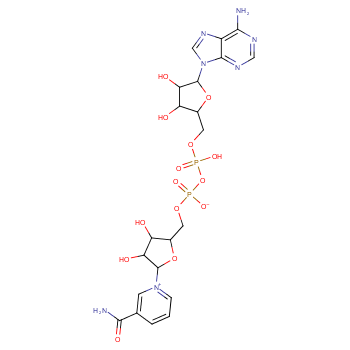
Nicotinamide adenine dinucleotide, CAS 53-84-9, denotes the oxidized beta-NAD+ coenzyme commonly supplied as a hydrate, rather than reduced NADH or phosphorylated NADP. It comprises nicotinamide and adenine ribonucleotides linked through a pyrophosphate bridge and acts as a central hydride-transfer cofactor. NAD+ also serves as a consumed substrate for enzymes including sirtuins, poly(ADP-ribose) polymerases, and CD38-family enzymes. Identity, oxidation state, hydration, counter-ion, and assay basis must be explicit because nearby coenzymes are not interchangeable.
B2B demand spans biochemical research, enzyme manufacturing, diagnostic and analytical reagents, cell-culture development, and regulated-product R&D. Commercial production favors microbial fermentation, extraction, or enzyme-catalyzed assembly and regeneration over lengthy total chemical synthesis. The most important quality variables are beta-anomer identity, NADH and nucleotide-related impurities, water, pH, residual proteins or nucleic acids, bioburden, endotoxin where relevant, and activity in a defined enzyme system. Stability is strongly affected by moisture, temperature, pH, light, and repeated opening.
Grades must be aligned to intended use: a laboratory reagent, an IVD raw material, a bioprocess cofactor, and material entering pharmaceutical development have different controls. REACH, CLP, TSCA, FDA, GHS, and regional biosourcing requirements should be mapped without assuming that biochemical identity creates an exemption. USP/Ph.Eur. language, cGMP status, ICH Q7/Q11 alignment, and DMF or CEP support may be claimed only where the applicable monograph, facility, and dossier actually cover the product. ISO 9001/14001 governance, traceability, cold-chain evidence, and Scope 1-3 Emissions data increasingly determine supplier qualification.
Oxidized NAD+ accepts a hydride at its nicotinamide ring to form NADH, enabling reversible electron transfer in dehydrogenase reactions. Its adenine-ribose-pyrophosphate portion anchors the cofactor in Rossmann-fold and other binding sites, while stereochemical recognition distinguishes beta-NAD+ from alpha and degraded forms. Separate enzyme families cleave the nicotinamide-ribose bond and consume NAD+ during deacylation, ADP-ribosylation, or calcium-signaling reactions. These biochemical roles make purity and functional activity critical, but they do not by themselves establish a therapeutic indication for supplied NAD+.
Commercial manufacture may recover NAD+ from controlled microbial biomass or use enzyme cascades that assemble and oxidize the dinucleotide from qualified precursors. Fermentation routes require strain and media control, cell disruption, removal of proteins and nucleic acids, and rapid stabilization of the oxidized cofactor. Enzymatic routes can improve selectivity but introduce enzyme, ATP-related, phosphate, and substrate impurities that must be cleared. Ion exchange, adsorption, membrane separation, and preparative chromatography are followed by concentration and freeze-drying under conditions that preserve beta-NAD+.
Demand is moving from general laboratory reagent toward higher-volume enzyme manufacturing, molecular diagnostics, cell-based systems, and development programs seeking tighter impurity and microbiological controls. Buyers increasingly specify molar assay, beta-anomer content, activity, origin, and cold-chain performance rather than accepting a nominal percentage. Growth in nicotinamide-cofactor research also increases confusion among NAD+, NADH, NADP+, NMN, and salts, making identity governance commercially important. Suppliers able to offer stable, application-specific grades and method transfer gain share over catalog vendors with limited process transparency.
Asia-Pacific and China provide substantial fermentation, nucleotide purification, and lyophilization capacity, often integrated with precursor manufacture. Europe contributes high-control biochemical, diagnostic, and specialty fermentation capabilities, while North America emphasizes life-science distribution, enzyme applications, and sponsor-facing development. Material usually moves by air in sealed, temperature-controlled parcels, although large biocatalysis programs may justify regional buffer stocks. Capacity qualification should include purification throughput, cold storage, microbial control, and an alternate plan for fermentation or chromatography interruption.
Price varies with assay basis, purity, origin, microbial controls, testing depth, package size, and grade rather than with molecular weight alone. Research reagent carries small-pack and documentation premiums, while biocatalysis grades trade on functional units and total process cost; diagnostic or GMP programs add validation, stability, audit, and change-control costs. Apparent discounts can disappear when water or inactive nucleotide content reduces usable moles. Contracts should define whether price is per gross mass, dry mass, NAD+ content, or verified activity and should separate storage, testing, and regulatory-support charges.
NAD+ is an endogenous coenzyme, but endogenous occurrence does not authorize unrestricted manufacture, import, claims, or human administration. Legal status turns on jurisdiction, source, intended use, grade, and presentation: research reagent, industrial cofactor, IVD component, food-related material, and drug substance are different regulatory propositions. Suppliers must avoid implying that biochemical importance establishes FDA approval or therapeutic efficacy. Quality agreements should map the applicable chemical, biological-origin, workplace, device, food, or pharmaceutical controls before manufacture.
Fermentation and biocatalytic production can reduce protecting-group and solvent burdens relative to total chemical synthesis, but they still consume media, water, electricity, filtration materials, and purification buffers. Environmental claims should account for biomass treatment, nutrient loading, cleaning solutions, cold storage, and chromatography waste. ISO 14001 can link these impacts to measurable reduction targets, while ISO 9001 ensures that sustainability changes do not shift identity or activity. Responsible sourcing also examines the origin of media components, enzymes, and nucleotide precursors.
Scope 1 emissions arise from site fuel, steam, and refrigerants; Scope 2 from aeration, agitation, purification, freeze-drying, and cold rooms; and Scope 3 Emissions from media, precursors, enzymes, resins, membranes, packaging, and air freight. Useful intensity metrics include energy and water per verified mole of NAD+, buffer salt use, chromatography yield, and discarded batch rate. Process intensification, membrane reuse, renewable power, and ambient-stable formulations can reduce burden when quality is bridged. Product carbon footprints should state boundaries, allocation, and whether potency correction is applied.
Traceability should connect production organism or enzyme source, cell-bank lineage where relevant, media and precursor lots, purification resins, membrane history, and final packaging. Qualification must address animal-origin statements, allergens, genetically modified organism controls, residual protein and DNA strategy, and supplier change notification. Batch genealogy should include hold times, temperatures, redox state, reprocessing, and storage. For regulated customers, the data package should support audit trails and technology transfer without claiming a compendial status that has not been demonstrated.
NAD+ is normally shipped as a dry powder or lyophilizate whose main risks are degradation and loss of activity rather than dangerous-goods classification. Moisture barriers, low temperature, light protection, and rapid customs clearance preserve the nucleotide profile. Lane qualification should consider summer heat, winter freezing, vibration, and delays, using monitors and stability-based excursion rules. Shipment documents must distinguish oxidized NAD+ from NADH, NADP+, precursors, mixtures, and solutions.
Dry NAD+ commonly falls outside ADR, IMDG, and IATA dangerous-goods classifications, but dry ice, refrigerants, or solvent-containing solutions require separate review. Packaging qualification should define payload, coolant, duration, monitor location, and acceptance limits for each lane. Temperature excursions should be evaluated against stability-indicating assay and related-substance data rather than appearance alone. Customs and carrier descriptions should remain scientifically precise and should not use medical claims to accelerate clearance.
Global growth requires application-specific grades and transparent assay economics. Suppliers should treat reproducible biochemical function, not catalogue purity, as the core value proposition. Regulatory claims must remain proportional to actual controls and intended use. Three priorities can convert technical capability into durable B2B relationships.
Nicotinamide adenine dinucleotide under CAS 53-84-9 is oxidized beta-NAD+, a central redox cofactor and signaling substrate with broad B2B utility. Its value depends on correct anomer and oxidation-state identity, usable molar content, controlled degradants, and preserved enzyme activity. Fermentation and biocatalysis offer scalable production when purification and source-related impurities are understood. Endogenous biological function does not confer approval for therapeutic, food, diagnostic, or consumer claims.
Buyers should contract against intended use, grade, assay basis, functional performance, microbial attributes, and stability rather than a generic NAD label. Suppliers need REACH, CLP, TSCA, FDA-boundary, GHS, and applicable sector expertise, supported by ISO 9001/14001 systems and robust cold-chain logistics. Pharmaceutical language such as cGMP, ICH, DMF, CEP, or USP/Ph.Eur. must be evidence-based and program-specific. Transparent traceability and Scope 1-3 Emissions data will increasingly separate strategic partners from commodity sellers.
Powered by Guidechem
This white paper is exclusively compiled by the Guidechem Intelligence Team based on global customs data, regulatory databases, and industry research. Guidechem is a leading global B2B chemical platform, dedicated to connecting global buyers with verified, high-quality manufacturers.
Relying on Guidechem's extensive global database, we have mapped the core participants in the current global Nicotinamide adenine dinucleotide supply chain:
Disclaimer: The content of this white paper is compiled based on public market data and regulatory information available as of 2026. Global chemical regulations are subject to dynamic adjustments. In actual export operations, enterprises must consult professional regulatory advisors or relevant competent authorities to obtain the latest compliance guidance.
|
 |
 |
 |
 EN
 Agricultural News
 Food News
 Industrial News
 Cosmetic News
 Pharmaceutical News
 Science News


 1YR

