-
We detected your language preference as English. Would you like to switch to the English version for a better experience?
Switch to English
Stay here


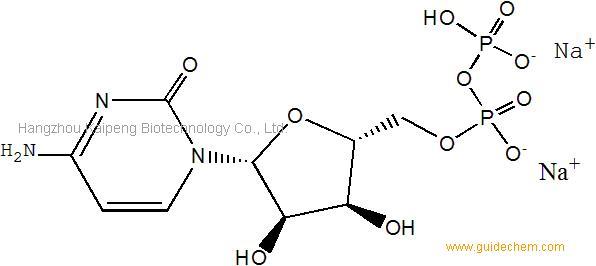
Cytidine-5'-diphosphate disodium salt (CAS 54394-90-0; abbreviated CDP-Na2; free-acid formula C9H15N3O11P2 with a relative molecular mass near 403, and about 447 as the disodium salt) is a cytidine nucleotide carrying two phosphate groups in the diphosphate oxidation state. It is purchased as a biochemical reagent, as a starting material for enzymatic nucleotide chemistry and as an analytical reference material. As supplied it is a research-use-only material with no approved therapeutic indication, and it is not a finished drug, dietary supplement or food product.
This paper is therefore written from a contract development and manufacturing standpoint, because that is how the material is actually transacted. Value is created in route selection, in purification to a defined salt form, in analytical method development and validation, and in the cold-chain and governance arrangements that keep a hydrolytically sensitive nucleotide intact. Buyers are typically biotech companies, diagnostics developers, contract research organisations and university laboratories, not consumers.
Three specification axes decide whether a lot is fit for purpose: nucleotide purity and the profile of related nucleotides such as cytidine monophosphate, cytidine triphosphate and free cytidine; the counter-ion and hydration state, since sodium stoichiometry and water content move the apparent assay by several percent; and the hygiene attributes, meaning endotoxin, bioburden and nuclease-free status, which are what distinguish research material from anything entering an injectable or enzymatic workflow. This document offers no dosing and makes no health or nootropic claims. Buyers should also expect to complete a know-your-customer process before first order, because responsible suppliers screen end use rather than simply fulfil transactions.
The molecule combines a cytosine base, a ribose sugar and a pyrophosphate-bearing chain whose two ionisable groups give it a strongly negative charge at neutral pH. That charge is the master variable: it dictates aqueous solubility, prevents passive membrane permeation, controls retention on anion exchangers, and governs how the material behaves in enzyme assays. The ultraviolet absorbance near 271 nanometres with a molar extinction coefficient around nine thousand makes quantification straightforward, but it also means that every nucleotide impurity in the sample contributes to the same signal.
At a route-class level, production divides into how the cytidine nucleoside or its monophosphate is obtained, and how selectively the second phosphate is installed. Fermentation and extraction provide the nucleoside backbone cheaply; the modern trend is enzymatic rather than chemical phosphorylation, because enzymatic conversion avoids hazardous phosphorus reagents, generates fewer positional isomers and aligns with customer expectations for cleaner impurity profiles.
Demand tracks three engines. The first is enzymatic nucleotide manufacturing, which is displacing older chemical routes and creating pull for cytidine nucleotides as both substrates and reference materials. The second is diagnostics and coupled-enzyme assay development, where nucleotide raw materials are consumed steadily in reagent production. The third is academic and pharmaceutical metabolism research around cytidine diphosphate choline biochemistry. Volumes are small but unit values are high, and specification creep is the norm rather than the exception. Demand is also strikingly inelastic at the bench, since the cost of a failed experiment or a halted assay validation dwarfs the price of the nucleotide itself.
Capability follows fermentation infrastructure rather than fine-chemical tradition. Chinese producers built large-scale nucleotide fermentation and yeast-extraction capacity and now dominate bulk intermediate supply. Japanese companies combine long nucleotide manufacturing history with high-purity reagent finishing and reference-material practice. The United States hosts strong reagent distribution alongside contract manufacturing for regulated campaigns, while European participants concentrate on certification, distribution and pharmaceutical-grade finishing. Material therefore often crosses borders twice: bulk intermediate east to west, finished vials west to everywhere.
The price structure is steeply tiered. Catalogue quantities sell on convenience, packaging and documentation, and can be priced per gram at multiples of bulk value. Project quantities in the tens of kilograms are negotiated against route yield, adenosine triphosphate regeneration cost and chromatography throughput. Adding low-endotoxin or certified reference-material attributes typically moves material into a different value band altogether, because the added cost is analytical labour, metrology and stability obligations rather than synthesis.
Governance, not chemistry, is the binding constraint for this material. It is a legitimate research reagent and manufacturing intermediate, but it sits near several regulated categories, so suppliers are expected to keep an explicit boundary: research-use-only labelling, no therapeutic or nootropic claims, no dosing information, and documented know-your-customer screening of every new counterparty. Buyers importing into jurisdictions that licence nucleotide materials for pharmaceutical use must confirm their own registration obligations before ordering. Written end-use declarations protect both sides and are now routine even for small research quantities.
Environmental performance here is mostly a fermentation and chromatography question. Enzymatic phosphorylation avoids hazardous phosphorus reagents and generates fewer hazardous aqueous streams than older chemical routes, but it introduces large volumes of salt-containing eluent and phosphate-rich wastewater that must be treated. Buyers increasingly ask which of those burdens sits inside the supplier's Scope 1 and 2 and which is unavoidable upstream.
Energy demand concentrates in fermentation aeration and sterilisation, in chromatographic concentration steps and, critically, in freeze-drying, since nucleotide lots are usually isolated by lyophilisation. The corresponding improvement levers are heat recovery, rationalised gradient design to cut eluent volume, and replacing freeze-drying with controlled crystallisation wherever the molecule permits it. Phosphate discharge deserves particular attention because effluent limits in several producing regions are tightening, and spent fermentation biomass is commonly valorised into feed or fertiliser streams rather than discarded. Those efficiency gains matter commercially because reagent customers now include environmental questions in supplier pre-qualification questionnaires alongside the customary quality ones.
Traceability for a research nucleotide means origin-of-process transparency rather than geographic certificates alone. Buyers request fermentation strain documentation without disclosure of proprietary detail, confirmation that no animal-derived media components were used, absence of intentionally added substances of concern, and declarations covering residual solvent class under ICH Q3C and metals screening under ICH Q3D where applicable. ISO 9001 and ISO 14001 certification, plus formal change control with prior notification, form the governance baseline customers audit against.
Nucleotide diphosphates degrade by hydrolysis to the monophosphate and inorganic phosphate, and the rate rises sharply at low pH and elevated temperature. Everything in the logistics design follows from that single reaction: dried presentation, cold storage, short ambient excursions backed by real stability data, and packaging that keeps water out of a vial the customer will open repeatedly.
The product itself is not classified as dangerous for transport, but the cold chain usually is: shipments on dry ice fall under UN 1845 as a Class 9 dangerous good with its own declaration, labelling and IATA packing instruction, even though the nucleotide inside is harmless. Practical measures include validated excursion budgets allowing short ambient transit, temperature loggers reviewed at receipt, sufficient dry ice for the worst-case transit plus contingency, and pre-agreed quarantine procedures for lots whose excursion exceeded the validated allowance. Because nucleotides are often imported for time-critical validation work, customs documentation should be prepared in advance so that a cold-chain consignment is not held at a border without refrigeration.
Suppliers win here by behaving like development partners. The sale rarely closes on availability; it closes when the supplier demonstrates a defensible route, a validated analytical method, a credible stability programme and a governance posture that reassures both the buyer's quality function and their compliance team.
Cytidine-5'-diphosphate disodium salt is a modest-volume, high-value nucleotide whose commercial difficulty lies almost entirely in specification fidelity. The chemical challenge is bounded; the operational challenge is to deliver a defined salt form, clean nucleotide profile and documented hygiene status that reproduce lot after lot. Those suppliers who treat salt stoichiometry, residual counter-ion and related nucleotides as first-class specification items consistently avoid the disputes that consume relationships in this category, and they tend to be named in project documentation rather than forgotten after a single purchase.
The boundary conditions should not be negotiable. This compound has no approved therapeutic indication as supplied and is offered strictly as a research-use-only reagent and manufacturing intermediate, with no dosing, no health claims and no consumer positioning. Within that boundary the opportunity is genuine: enzymatic nucleotide chemistry, diagnostics reagent demand and reference-material needs all favour partners who combine process competence with disciplined governance.
Powered by Guidechem
This white paper is exclusively compiled by the Guidechem Intelligence Team based on global customs data, regulatory databases, and industry research. Guidechem is a leading global B2B chemical platform, dedicated to connecting global buyers with verified, high-quality manufacturers.
Relying on Guidechem's extensive global database, we have mapped the core participants in the current global Cytidine-5'-diphosphate disodium salt supply chain:
Disclaimer: The content of this white paper is compiled based on public market data and regulatory information available as of 2026. Global chemical regulations are subject to dynamic adjustments. In actual export operations, enterprises must consult professional regulatory advisors or relevant competent authorities to obtain the latest compliance guidance.
|
 |
 |
 |
 EN
 Agricultural News
 Food News
 Industrial News
 Cosmetic News
 Pharmaceutical News
 Science News



 12YRS

