
I. Executive Summary
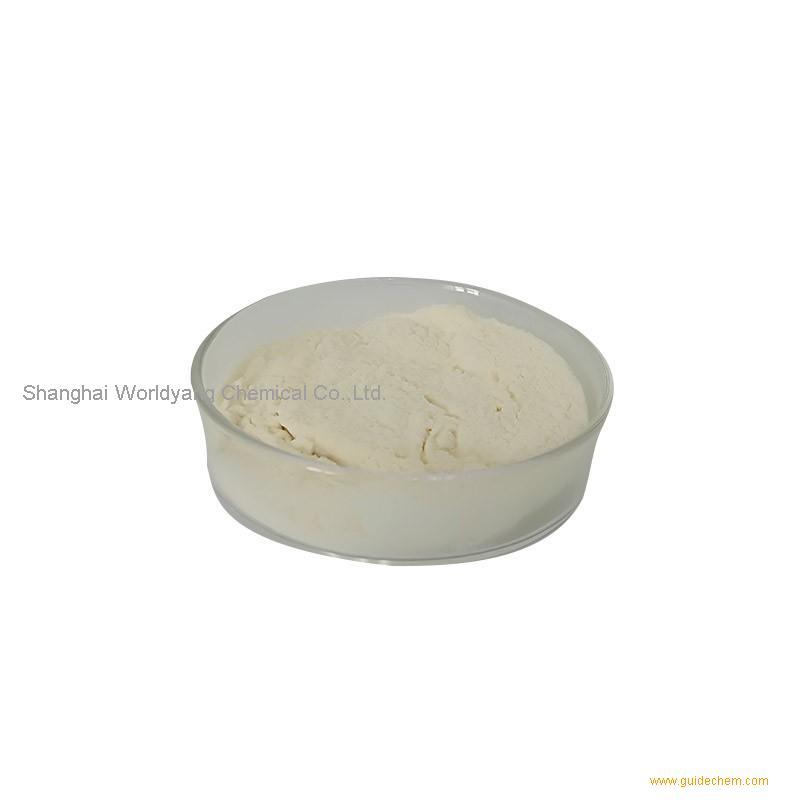
Aluminium isopropoxide (CAS 555-31-7, often abbreviated AIP) is the workhorse metal alkoxide of fine organic synthesis and advanced materials: a white, waxy to granular solid containing 13.2 % aluminium by weight, valued for its solubility in organic media and for the clean, hydride-free hydride-transfer chemistry it enables. Its commercial profile is unusual in that the same property that makes it useful — a highly polar Al–O bond that exchanges readily with alcohols — also makes it unstable in ordinary air. Value is therefore created or destroyed mainly in handling, packaging and stock rotation rather than in synthesis.
Production remains a direct alcoholysis of aluminium metal with isopropanol, activated historically by mercury salts, iodine or aluminium chloride. Choice of activator now separates the market: legacy mercury-activated processes leave trace mercury residues that conflict with customer restrictions and with mercury-supply governance, while mercury-free iodine or Lewis-acid routes command a premium from pharmaceutical and electronics customers. Whichever route is used, the reaction demands hydrogen management and anhydrous conditions.
For 2026 export planning, three themes dominate: water-driven hydrolysis that converts active alkoxide into inactive hydroxide with liberation of isopropanol; dust-explosion and occupational-exposure control for aluminium compounds; and the economics of an ageing product whose assay appears stable while its catalytic activity quietly decays. REACH and TSCA compliance are givens; competitive differentiation lies in demonstrating activity retention.
II. Product Deep Dive: Molecular Mechanisms and Production Evolution
2.1 Physicochemical Properties and Mechanisms
The nominal formula Al(OC3H7)3 understates a complicated reality. Aluminium alkoxides are molecular aggregates; commercial solid is typically an equilibrium mixture involving trimeric and tetrameric oligomers with bridging isopropoxide ligands, which explains both the broad melting behaviour reported around 118–135 °C and the dependence of dissolution and reactivity on thermal history. Once dissolved in hot isopropanol, toluene or xylene, the aggregate population shifts and the Lewis-acidic aluminium centres become available for catalysis.
- Hydride transfer, not hydride reagent: In Meerwein–Ponndorf–Verley reduction and its reverse Oppenauer oxidation, substrate and isopropanol coordinate to the same aluminium centre, and a six-membered cyclic transition state delivers hydride directly from the donor to the acceptor. Because no free hydride is generated, reductions are highly chemoselective — aldehydes and ketones react while isolated olefins, esters, nitro groups and many heteroaromatic systems are tolerated — which is why the reagent persists in fine-chemical campaigns despite the existence of metal hydrides.
- Lewis acidity and hydrolysis sensitivity: The aluminium centre accepts electron density from carbonyl oxygen, epoxide oxygen and ester groups, underpinning its role in ester interchange, ring-opening polymerisation and sol–gel condensation. Water is the reagent's defining enemy: hydrolysis precipitates aluminium hydroxide or oxyhydroxide and liberates free isopropanol, so the solid loses both solubility and activity. Buyers should treat moisture ingress, not nominal age, as the primary cause of failed batches.
2.2 Synthesis and Manufacturing Technologies
Industrial manufacture reacts aluminium metal — ingots, turnings or atomised powder — with an excess of anhydrous isopropanol under reflux, liberating hydrogen and requiring an activator to disrupt the passive oxide film on the metal. Crude product is filtered hot from solids, stripped of excess alcohol and solidified into flake, granulate or powder under dry inert gas. Every unit operation must exclude moisture, which is why plants are configured with sealed centrifuges, dry nitrogen pads and glove-box or nitrogen-swept packing lines.
- Metal alcoholysis with an activator package: Mercury(II) chloride historically gave the fastest initiation and remains referenced in older literature, but it introduces measurable mercury residues and a hazardous waste stream, so modern plants prefer iodine, aluminium chloride or pre-formed alkoxide seeding. Route selection drives the impurity profile — residual iodine, chloride or mercury — that appears in the certificate of analysis and that downstream users must report to their own customers, particularly where ICH Q3D elemental boundaries apply to the API step.
- Salt metathesis and finishing controls: An alternative and cleaner-by-design route reacts aluminium chloride with sodium isopropoxide, giving the alkoxide with sodium chloride as the only stoichiometric by-product; it is favoured where mercury- and iodine-free credentials are contractually required. Either way, finishing determines performance: filtration removes metal fines, controlled cooling sets crystal habit and dissolution rate, and packaging must occur at low dew point with aluminium speciation, free isopropanol content and insoluble-hydrolysis residue reported per lot.
2.3 Core Application Matrix
- Selective reduction and oxidation in fine chemistry: MPV reduction of aldehydes and ketones and Oppenauer oxidation remain the flagship uses, prized where halogenated solvents are unwanted and where neighbouring reducible functionality must survive. Pharmaceutical intermediate producers value the reagent because work-up yields aluminium salts that are readily hydrolysed and removed, leaving a clean impurity picture apart from aluminium itself.
- Catalysis, polymers and materials precursors: The alkoxide catalyses transesterification and ring-opening polymerisation of lactones and epoxides, and serves as a soluble alumina source in sol–gel processing for catalyst supports, ceramic and aerogel bodies, anti-reflective and protective oxide coatings, and zeotype aluminosilicate frameworks where homogeneity of aluminium distribution governs final properties.
- Coatings, inks and formulation aids: In printing inks, paints and water-repellent treatments it functions as a gelling, crosslinking or thickening additive that reacts with hydroxyl and carboxyl functionality to build structure and improve water resistance; grease and lubricant formulators use analogous chemistry to modify thickener rheology.
III. Global Market Supply-Demand Landscape and Export Trends
3.1 Demand Drivers and Market Shifts
Demand is split between established fine-chemical consumption and fast-growing materials applications. Sol–gel-derived alumina for catalyst supports, polishing abrasives, separators coatings and battery-related ceramic layers has added volume that did not exist a decade ago, while contract manufacturers continue to specify the alkoxide for chemoselective carbonyl reductions. A third driver is substitution: users replacing older-initiator or metal-hydride systems with aluminium alkoxide to reduce halide and transition-metal residues.
3.2 Capacity Distribution and Export Flows
Capacity follows cheap aluminium metal and isopropanol as much as chemistry know-how, so Chinese producers dominate export tonnage, with established European and Japanese specialists retaining high-purity and electronics-facing niches and Indian producers serving agrochemical and intermediate demand. Shipments move overwhelmingly by sea in sealed drums; air freight is reserved for low-tonnage, high-specification lots and requires dangerous-goods acceptance under the applicable packing instruction. Regional warehousing near customer clusters shortens the critical time between drum opening and use.
3.3 Market Bifurcation and Pricing Dynamics
Prices bifurcate along two axes: metal grade (standard technical material versus low-metal-impurity, filtered and certified lots for electronic or pharmaceutical use) and provenance of the activator package, with mercury-free material carrying a premium. Aluminium metal and isopropanol input costs set the floor, but the real spread reflects packaging quality and activity guarantees. Buyers comparing offers should normalise on aluminium speciation and hydrolysis residue, since two quotes at identical nominal assay can differ substantially in usable yield.
IV. In-depth Analysis of Global Compliance and Regulatory Barriers
Regulatory treatment divides into three layers that exporters must satisfy simultaneously. First, chemical-inventory and registration obligations under REACH and TSCA, including correct identification of the substance and of its hydrolysis products in exposure scenarios. Second, classification, labelling and worker-protection duties driven by flammability, reactivity with water and aluminium-dust exposure. Third, downstream product rules where the alkoxide contributes to a regulated article, for example indirect food-contact and pharmaceutical impurity control. Missing any layer blocks the shipment, even when the analysis is perfect.
4.1 European Market: REACH, CLP, and Sector-Specific Directives
- REACH registration and exposure-scenario discipline: Manufacturers and importers must confirm registration and tonnage-band coverage and issue extended safety data sheets whose exposure scenarios cover hydrolytic release of isopropanol and aluminium-containing particulates. Downstream users integrating those scenarios into their own risk assessments increasingly request quantitative dust and airborne-metal data, so suppliers able to provide measured particle-size distribution and dustiness indices advance through qualification faster.
- CLP classification and ATEX obligations: Grades are classified on the basis of measured burning-rate and self-heating tests, typically landing in flammable-solid categories, sometimes with self-heating or water-reactive language; because these classifications are largely self-assigned, the labels on two nominally identical drums can differ and must be reconciled with the current safety data sheet before transport documents are issued. Handling installations fall under ATEX workplace and equipment directives, obliging documented zone assessment, earthing and explosion-vent design.
4.2 North American Market: TSCA, EPA, and FDA Regulations
- TSCA inventory status and EPA duties: Importers must verify that the substance carries an active TSCA Inventory designation rather than an inactive one, and must hold appropriate certification for each import. Because hydrolysis liberates isopropanol, releases are interpreted through volatile organic compound rules and reporting obligations; residual metals from the activator package should be declared so that customers can satisfy their own toxic-substance reporting.
- Downstream product-contact expectations: Where the alkoxide enters a pharmaceutical intermediate step, users expect ICH Q7-aligned documentation, ICH Q3D-style elemental screening for aluminium and activator-derived metals, and clear statements on residual solvent class per ICH Q3C. For food-contact and coating applications, customers ask for extractives data and for confirmation that no mercury-intentional chemistry was employed.
4.3 The Critical Hurdle: Quality Control and Safety Limits
Compliance Warning: Specify and test activity, not appearance. A drum can show compliant aluminium percentage while its catalytic performance has decayed through partial hydrolysis, giving low conversion and erratic exotherms in MPV reductions. Fix purchase limits for aluminium content, free isopropanol, insoluble hydrolysis residue, iron and activator-derived metals including mercury and iodine, water by Karl Fischer, particle size and — critically — a retained-sample activity test correlated to the customer's own reaction. Combine that with a defined retest interval and first-expiry-first-out rotation, because shelf life for this material is a functional property governed by packaging integrity rather than a calendar date assumed from production.
V. Green Trade Barriers and ESG in Manufacturing
ESG scrutiny on this molecule is unusually concrete. Mercury-activated production conflicts with Minamata-consistent mercury governance and with customer restricted-substance lists, hydrogen evolution during alcoholysis raises energy and safety questions, and aluminium carries an embedded-carbon debate driven by smelting electricity. Customers increasingly audit all three.
5.1 Carbon Footprint and Circular Economy
The largest carbon contribution upstream is primary aluminium, so producers using recycled or low-carbon-smelted metal can document a materially different footprint, and several buyers now request cradle-to-gate breakdowns. Within the plant, recovering isopropanol from reaction and cleaning streams, capturing hydrogen for energy recovery instead of venting, and reprocessing off-spec hydrolysed material into alumina rather than landfill offer measurable gains under ISO 14001 and ISO 50001 energy management.
5.2 Sustainable Sourcing and Traceability
Traceability requires declaring aluminium source and recycled content, confirming the absence of intentional mercury, and documenting lot genealogy through filtration and packing. Because hydrolysed residues contain recoverable aluminium, responsible producers route them to alumina recovery instead of disposal. Customers supplying battery, electronics or pharmaceutical chains expect this evidence packaged for CSRD-style Scope 3 reporting and for their own restricted-substance declarations.
VI. Supply Chain Resilience and Export Logistics
Logistics quality determines whether the material arrives as active alkoxide or as partially hydrolysed filler. Moisture ingress can occur at four points — packing dew point, drum closure torque, container rain during tropical transits, and customer-side drum opening in humid ambient air — and any one of them is sufficient to degrade a lot before use.
6.1 Packaging Standards and Moisture/Contamination Control
- Barrier packaging under inert gas: Standard practice is a polyethylene liner inside a steel or fibre drum, with the alkoxide sealed in aluminium-foil laminate bags and nitrogen-padded, then closed with gasketed, tamper-evident lids. Small packs for laboratory and campaign use are frequently double-bagged with desiccant outside the product contact layer, provided the desiccant cannot abrade through the film.
- Dust control and transfer hygiene: Because the powder forms explosible clouds, transfers should use grounded equipment, local extraction and low-dust spouts, and plants should document zone classification, cleaning regimes and earthing checks. Once opened, drums should be resealed immediately and stored in low-humidity rooms; a partially used drum held open for days is the commonest source of erratic customer results.
6.2 Dangerous Goods Identification and Transit Protocols
Classification and shipping entries must be read directly from the current safety data sheet and the multimodal dangerous-goods lists rather than inferred, since burning-rate and self-heating test outcomes vary between producers and some grades ship with water-reactive subsidiary language. Grades are typically consigned within the flammable-solid class, and sea freight preferentially in dry, ventilated containers away from hold heat sources. Consignments should carry intact seals, despatch dates and batch identifiers so customers can apply first-expiry-first-out rotation without opening drums to check condition.
VII. Enterprise Global Expansion Strategy Guide
Growth here comes from selling performance reliability to customers whose own processes cannot tolerate activity drift. Three moves convert that insight into contracts.
- Sell an activity guarantee, not an assay: Establish a standardised benchmark reaction with defined conversion and impurity endpoints, run it against every retained lot, and publish acceptance criteria. Pair it with a contractual retest interval, small-pack formats for occasional users, and guidance on storage below controlled humidity, shifting the discussion from price to usable yield.
- Qualify mercury-free routes early: Secure iodine- or metathesis-based production before customers demand it, document nested mercury data by ICP-MS, and pre-position supply from two plants with segregated packaging lines so that a single plant upset cannot strand downstream campaigns.
- Build regional technical stock: Hold material in temperature- and humidity-controlled warehouses close to customer clusters with lot-specific retained samples, provide dust-explosion and handling documentation to support their ATEX assessments, and bundle REACH and TSCA statements plus safety-phrase translations into a single onboarding package.
VIII. Conclusion
Aluminium isopropoxide occupies a resilient niche where its chemistry is genuinely difficult to replace: selective hydride transfer without metal-hydride hazards, and a soluble alumina source for sol–gel and coating systems. Both demand drivers — fine-chemical selectivity and advanced materials growth — point toward stable or expanding demand through 2026.
The winners will be those who treat stability as the product specification. That means mercury-free production, quantitatively documented activity retention, barrier packaging validated against real transit conditions, and defensible dust-explosion and exposure controls. Buyers who evaluate offers on delivered activity rather than nominal aluminium percentage will consistently capture better process economics.
IX. Industry Resource Connection and Supplier Ecosystem
Powered by Guidechem
This white paper is exclusively compiled by the Guidechem Intelligence Team based on global customs data, regulatory databases, and industry research. Guidechem is a leading global B2B chemical platform, dedicated to connecting global buyers with verified, high-quality manufacturers.
Relying on Guidechem's extensive global database, we have mapped the core participants in the current global Aluminium isopropoxide supply chain:
- China — integrated aluminium-alcohol base: The principal export engine, combining access to aluminium metal and isopropanol with large alcoholysis reactors and established anhydrous finishing lines. Participants compete on scale, filtration quality and ability to offer mercury-free grades, increasingly supporting both sol–gel materials customers and fine-chemical intermediates.
- European Union and Japan — high-purity and electronics niches: Established specialists focused on tightly specified lots for catalysts, ceramics, coatings and electronics, with strong dust-explosion engineering, REACH dossiers and long-standing qualification relationships that make supplier switching slow and sticky.
- India and North America — intermediates demand and distribution: Indian producers serve agrochemical and pharmaceutical intermediate consumption with cost-competitive technical grades, while North American activity is weighted toward import, repackaging, technical support and warehousing that shortens lead times for campaign-based buyers.
Disclaimer: The content of this white paper is compiled based on public market data and regulatory information available as of 2026. Global chemical regulations are subject to dynamic adjustments. In actual export operations, enterprises must consult professional regulatory advisors or relevant competent authorities to obtain the latest compliance guidance.



 EN
 Agricultural News
 Food News
 Industrial News
 Cosmetic News
 Pharmaceutical News
 Science News



 14YRS


