Guideview >  Articles >  Trends  > Guanosine 5'-monophosphate disodium salt:Exports & Compliance White Paper 2026

Guanosine 5'-monophosphate disodium salt:Exports & Compliance White Paper 2026

Discover Guanosine 5'-monophosphate disodium salt, CAS 5550-12-9, a nucleotide for flavor and research use. Find 2026-ready documentation, purity consistency and stable supply for food and biochemical applications. Quentin5 MIN READOctober 8, 2026
Guanosine 5'-monophosphate disodium salt (GMP-Na2) White Paper

I. Executive Summary

Guanosine 5'-monophosphate disodium salt (GMP-Na2, disodium guanylate), CAS 5550-12-9, is a purine 5'-nucleotide supplied typically as a hydrate with a molecular weight near 407 g/mol on the anhydrous basis. It is best known as the second half of the I+G umami system, in which it is blended with disodium inosinate to produce a savoury intensity far greater than either nucleotide alone, but its commercial footprint also spans biochemical reagents, diagnostic and molecular-biology applications, cell-culture media and cosmetics raw materials. Each of those outlets sits under a different regulatory track, and confusing them is the commonest source of rejected shipments.

Two production philosophies compete. The classical route hydrolyses yeast ribonucleic acid with phosphodiesterase and related enzymes to a mixed 5'-nucleotide stream from which GMP is separated by ion exchange; the modern route ferments guanosine or the nucleotide directly from carbohydrate feedstock using engineered strains and then phosphorylates or purifies it. Route choice determines the impurity profile, the investment profile and the sustainability story a producer can credibly tell, and it is therefore the first question a professional buyer should ask.

Quality and compliance hinge on attributes specific to this molecule: assay and nucleotide purity by HPLC, related substances including guanosine, guanine, GDP and GTP and positional isomers, cross-contamination by other 5'-nucleotides, heavy metals, water content in a strongly hygroscopic solid, microbial limits, and — for cell-culture and diagnostic grades — bacterial endotoxin. This paper addresses sourcing managers, regulatory officers and formulators in the food, pharmaceutical, diagnostic and cosmetic industries, and makes no therapeutic or physiological-efficacy claim for the material.

II. Product Deep Dive: Molecular Mechanisms and Production Evolution

2.1 Physicochemical Properties and Mechanisms

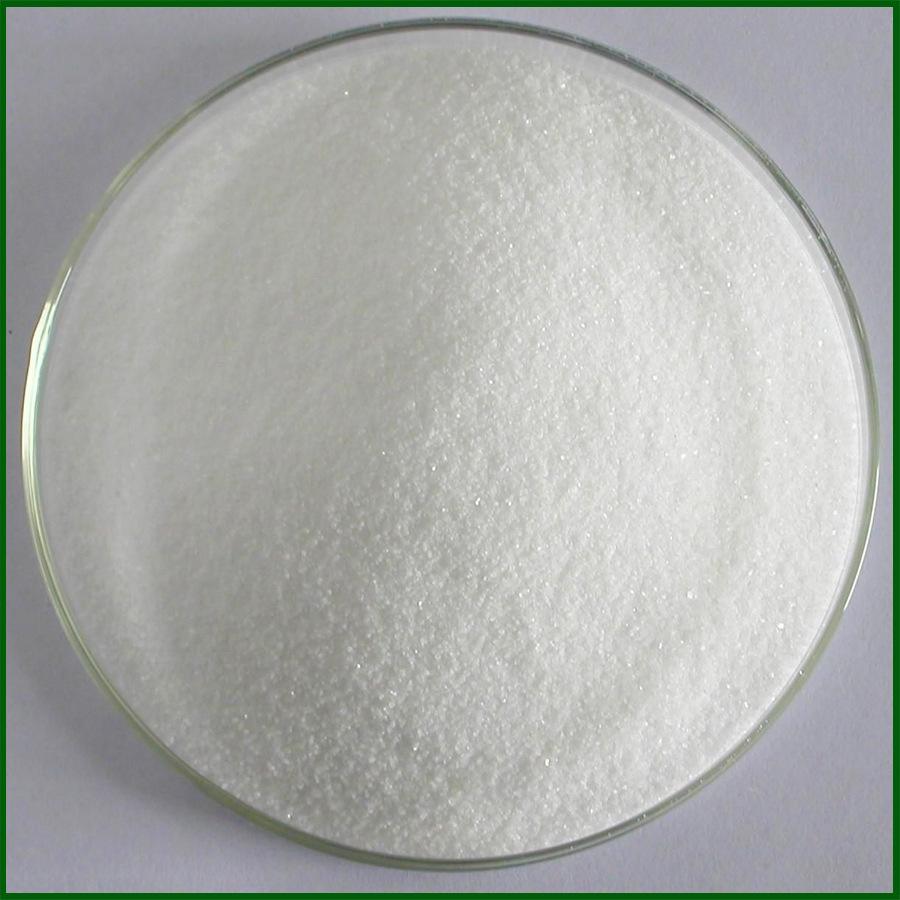
GMP-Na2 is the disodium salt of guanosine 5'-monophosphate: a guanine base, a ribose sugar and a single phosphate ester, carrying two sodium counter-ions. It is a white to off-white crystalline or spray-dried powder, freely soluble in water and practically insoluble in most organic solvents, and it is markedly hygroscopic, taking up moisture rapidly when packaging is compromised. Aqueous solutions are near-neutral to mildly alkaline and are susceptible to enzymatic and thermal dephosphorylation, so solution hold times and storage temperature are specification-relevant.

  • Umami synergy mechanism: GMP binds to the T1R1/T1R3 umami taste receptor, and in combination with disodium inosinate the mixture produces a strongly non-linear intensity response, so a 1:1 I+G blend delivers several times the savoury impact predicted from either component alone.
  • Stability and handling behaviour: The solid is hygroscopic and cakes if exposed to humidity, while the phosphate ester can hydrolyse to guanosine and inorganic phosphate under heat and low pH. Control of water content is therefore both a quality attribute and a packaging design constraint.

2.2 Synthesis and Manufacturing Technologies

Manufacturing divides into the enzymatic hydrolysis route and the fermentation route, with chemical phosphorylation of guanosine retained for smaller, higher-purity lots. The hydrolysis route starts from a renewable biological feedstock and yields all four 5'-nucleotides, so its economics depend on selling the co-products; the fermentation route targets guanosine or GMP specifically and rewards strain performance and downstream purification efficiency.

  • Yeast-RNA enzymatic hydrolysis: Ribonucleic acid recovered from yeast biomass — frequently a brewing or fermentation by-product — is depolymerised with phosphodiesterase preparations that cleave to 5'-monophosphates, followed by ion-exchange separation of GMP from AMP, CMP and UMP, decolourisation with activated carbon, concentration and crystallisation or spray drying of the disodium salt. Co-product markets, notably for AMP-derived inosinate, determine unit economics; residual protein and pigment drive the decolourisation load.
  • Fermentation and phosphorylation routes: Carbohydrate-fed strains accumulate guanosine, which is then converted to the 5'-monophosphate chemically or enzymatically, or engineered strains accumulate the nucleotide directly. Downstream processing relies on biomass separation, ultrafiltration and nanofiltration, ion exchange and crystallisation, with membrane steps serving as the principal barrier to endotoxin and microbial load.

2.3 Core Application Matrix

  • Food seasoning systems: The dominant outlet is I+G blends for soups, sauces, bouillon, snack seasonings, processed meat and savoury convenience foods, where the nucleotide allows substantial reduction of monosodium glutamate while retaining perceived savoury intensity. Food-grade material must meet the applicable food-additive purity specification, be produced under a food-safety management system, and be documented for use level and labelling.
  • Pharmaceutical, diagnostic and reagent uses: GMP-Na2 serves as a biochemical reagent, a substrate and reference material in enzymology, a starting material or intermediate in nucleotide chemistry, and a component of diagnostic and molecular-biology reagent formulations. These grades are specified on nucleotide purity, endotoxin and trace metals rather than on flavour performance, and they are supplied with analytical documentation rather than food-contact declarations.
  • Cell culture and cosmetics: In cell-culture media the nucleotide is used as a defined supplement, requiring low endotoxin and documented trace-metal content; in cosmetics it appears as a conditioning or humectant ingredient under the applicable cosmetic-ingredient framework. Neither use may be presented with therapeutic claims, and cosmetic declarations must follow the relevant inventory or notified-ingredient rules.

III. Global Market Supply-Demand Landscape and Export Trends

3.1 Demand Drivers and Market Shifts

Food demand is the volume engine, driven by the global growth of savoury convenience food, by reformulation programmes that reduce monosodium glutamate or salt while protecting perceived taste, and by the expansion of plant-based and meat-analogue products where nucleotides mask off-notes. Non-food demand grows more slowly but at much higher value per kilogram: cell-culture media for biologics manufacturing, diagnostic reagent kits and nucleotide chemistry all specify tighter impurity and endotoxin limits and pay accordingly.

3.2 Capacity Distribution and Export Flows

Capacity is concentrated in East Asia, where fermentation infrastructure, carbohydrate feedstock and seasoning-industry demand coincide. Chinese producers operate large integrated nucleotide plants serving domestic seasoning manufacturers and exporting bulk I+G and single nucleotides; Japanese and Korean producers, historically the originators of industrial nucleotide seasoning, retain technology leadership and premium positioning. Export flows run from these plants to seasoning blenders, food manufacturers and reagent distributors worldwide, with the European Union and North America importing mainly for blending and for high-specification non-food use.

3.3 Market Bifurcation and Pricing Dynamics

The market splits on grade, not geography. Food-grade tonnage is a commodity priced against feedstock and energy costs and against competing nucleotides, with blend ratio and assay determining real value. Reagent, diagnostic and cell-culture grades are priced on documentation: endotoxin limits, trace-metal data, microbial limits, and full chromatographic purity with identified related substances. Buyers who purchase food-grade material for non-food applications, or vice versa, routinely discover that the certificate of analysis does not answer the questions their own regulators ask.

IV. In-depth Analysis of Global Compliance and Regulatory Barriers

The defining compliance feature of this molecule is dual-track regulation: the same substance is a regulated food additive in one transaction and an industrial or reagent chemical in the next, and the obligations differ completely. A supplier must therefore declare the intended use at enquiry stage, and a buyer must obtain documentation appropriate to that use, because a food additive declaration will not satisfy a pharmaceutical or cosmetic customer's documentation requirements, and a reagent certificate will not pass a food-import control.

4.1 European Market: REACH, CLP, and Sector-Specific Directives

  • Food-additive authorisation and purity specification: Disodium guanylate is authorised as a food additive in the European Union and must satisfy the Union purity specification for food additives, in addition to the general conditions of use and labelling under the food-additive framework. Importers must be established food business operators, and consignments are subject to official controls.
  • REACH and CLP for non-food uses: Quantities placed in food are treated differently from industrial uses under REACH, so a producer serving reagent, cosmetics or diagnostic customers must confirm its registration position for the non-food tonnage and appoint an only representative where it exports from outside the EU. CLP classification and safety-data-sheet obligations apply independently, and cosmetic use additionally requires compliance with the EU cosmetic-products framework and its ingredient rules.

4.2 North American Market: TSCA, EPA, and FDA Regulations

  • FDA food-additive and import-verification framework: Food-grade imports must rely on the applicable FDA authorisation and food-chemical specification, with the manufacturing facility registered and the US importer operating a foreign-supplier verification programme that documents hazard analysis and supplier approval.
  • TSCA inventory and non-food uses: Chemical-inventory obligations under TSCA generally do not attach to material used as a food additive, but reagent, cosmetic and industrial placements fall within chemical-inventory scope and require the substance to be listed or covered by an exemption.

4.3 The Critical Hurdle: Quality Control and Safety Limits

Compliance Warning: This substance must be sold on the correct regulatory track: food-grade material under food-additive authorisation and purity specification, and reagent or cosmetic material under chemical and sector rules with appropriate documentation. No therapeutic, physiological or health-efficacy claim may be made for it, and no dosing or consumption guidance belongs in B2B documentation. The recurring specification failures are heavy metals — particularly lead and arsenic — above food limits; water content above the declared range because the material is strongly hygroscopic; microbial counts or bacterial endotoxin above the limit required for cell-culture or diagnostic use; and undeclared cross-contamination by other 5'-nucleotides, which changes both the assay and the flavour performance of an I+G blend.

V. Green Trade Barriers and ESG in Manufacturing

Nucleotide manufacture is fermentation- and water-intensive, and its environmental profile is dominated by carbohydrate feedstock, energy for concentration and drying, and phosphate-rich wastewater. Customers in food and biologics supply chains increasingly request quantitative environmental data, so producers who can document abatement convert sustainability from a questionnaire obstacle into a qualification advantage.

5.1 Carbon Footprint and Circular Economy

The largest levers are energy efficiency in evaporation, crystallisation and spray drying, recovery of process water, and valorisation of spent fermentation biomass as animal feed or biogas substrate rather than as waste. The yeast-RNA route carries a genuine circular-economy argument because it upgrades a fermentation by-product, while direct fermentation scores on yield and selectivity. Buyers should request a mass-and-energy balance per tonne and wastewater phosphate data; both discriminate between producers more sharply than any marketing claim.

5.2 Sustainable Sourcing and Traceability

Traceability must reach the carbohydrate feedstock and the production strain, and buyers should expect documented statements on genetically modified processing aids, on the absence of viable production organisms, and on allergen and dietary-status certification where relevant. Food customers typically require a food-safety certification such as FSSC 22000 or ISO 22000 alongside ISO 9001 and ISO 14001, while cell-culture customers ask for animal-component-free declarations and full downstream traceability including membrane and resin histories.

VI. Supply Chain Resilience and Export Logistics

The product is not hazardous in transport but is unforgiving of humidity, heat and light, so logistics quality rather than hazard management determines whether a lot arrives in specification.

6.1 Packaging Standards and Moisture/Contamination Control

  • Moisture and light protection: Food-grade material is packed in polyethylene-lined fibre drums or kraft bags, frequently with an aluminium-foil laminate inner liner and desiccant, then stretch-wrapped on pallets; light-protective and opaque outer packaging limits discolouration. Low-endotoxin and reagent grades are supplied in smaller, sealed containers to minimise the number of openings and the associated moisture and microbial ingress.
  • Documentation and identity: Each lot should carry a certificate of analysis stating assay on a defined basis, related substances, heavy metals, water content, pH, clarity and microbial results, plus endotoxin where required, together with grade declaration, storage condition and retest date. Food-grade consignments additionally require the additive designation and any dietary-status or food-safety documentation the importer needs for clearance.

6.2 Dangerous Goods Identification and Transit Protocols

Disodium guanylate is not assigned a dangerous-goods classification for transport, and consignments move as general cargo by sea or air, with classification confirmed against the current safety data sheet rather than assumed. The operational requirements are cool, dry, light-protected storage, humidity-indicating cards and, for high-specification lots, logger-verified temperature records. Customs description matters: the same substance may be entered as a food additive or as a chemical raw material, and the importer of record must select the correct heading and supporting declaration for the declared end use.

VII. Enterprise Global Expansion Strategy Guide

Successful exporters treat grade definition as a commercial strategy rather than a paperwork step. The priorities below reflect how professional buyers in food, diagnostic and cell-culture channels actually qualify a nucleotide supplier.

  1. Segment the product by grade: Operate distinct food-grade, reagent-grade and low-endotoxin lines with separate specifications, packaging and documentation, and qualify customers into the right track at enquiry stage. Grade segmentation protects food margins from being pulled down by reagent-grade service expectations while capturing the higher value of documented non-food grades.
  2. Certify the systems buyers audit: Maintain a food-safety certification alongside ISO 9001 and ISO 14001, hold dietary-status and, where applicable, kosher and halal certification, and build a customer-facing dossier covering strain identity, processing aids, allergen status and trace-metal data. Certification converts an enquiry into a qualification, and its absence is rarely compensated for by price.
  3. Build resilience into the offer: Publish a mass-and-energy balance and wastewater-phosphate profile, offer dual-site or buffer-stock arrangements for blend customers, and invest in membrane-based endotoxin control to reach cell-culture specification. Producers who can supply both I+G blend components from one plant hold a structural advantage in the seasoning market.

VIII. Conclusion

Guanosine 5'-monophosphate disodium salt is a mature industrial nucleotide whose competitive dynamics are set by grade discipline rather than by chemistry. The molecule is well understood, the routes are established, and the umami synergy that drives its largest application is a fixed fact of taste physiology; what distinguishes suppliers is whether they can deliver the right grade, with the right documentation, arriving within water and endotoxin specification after a humid transit.

For buyers, the checklist is short and decisive: declare the end use before quoting, require the grade-appropriate specification with identified related substances and heavy metals, verify food-authorisation or chemical-inventory status for that end use, and demand moisture-protective packaging with documented transit conditions. For suppliers, durable advantage lies in grade segmentation, certification coverage and honest environmental disclosure. Neither side benefits from blurring the food and non-food tracks, or from implying a health benefit the regulation does not permit.

IX. Industry Resource Connection and Supplier Ecosystem

Powered by Guidechem

This white paper is exclusively compiled by the Guidechem Intelligence Team based on global customs data, regulatory databases, and industry research. Guidechem is a leading global B2B chemical platform, dedicated to connecting global buyers with verified, high-quality manufacturers.

Guidechem Global Guanosine 5'-monophosphate disodium salt (GMP-Na2) Supplier Ecosystem List

Relying on Guidechem's extensive global database, we have mapped the core participants in the current global Guanosine 5'-monophosphate disodium salt (GMP-Na2) supply chain:

  • China — integrated fermentation and seasoning base: Large integrated plants in Shandong, Jilin, Guangdong and Inner Mongolia combine carbohydrate fermentation, nucleotide downstream processing and I+G blending, supplying domestic seasoning manufacturers and exporting bulk nucleotides. Chinese capacity sets the global price floor for food-grade material and increasingly supplies documented non-food grades as well.
  • Japan — nucleotide seasoning technology leadership: Japanese producers developed industrial nucleotide seasoning and retain leadership in strain development, enzymology, purification and taste science, with strong positions in high-purity reagent and diagnostic grades. Buyers specifying tight endotoxin, trace-metal or related-substance limits typically benchmark against Japanese material.
  • Korea — fermentation scale and export reach: Korean fermentation houses operate large nucleotide and amino-acid complexes with mature export logistics and food-safety certification, supplying seasoning blenders and food manufacturers across Asia, the Americas and Europe. They are frequently chosen where buyers need scale plus audited food-safety systems.

Disclaimer: The content of this white paper is compiled based on public market data and regulatory information available as of 2026. Global chemical regulations are subject to dynamic adjustments. In actual export operations, enterprises must consult professional regulatory advisors or relevant competent authorities to obtain the latest compliance guidance.

Make Guideview Preferred Source on Google
Related News