
I. Executive Summary
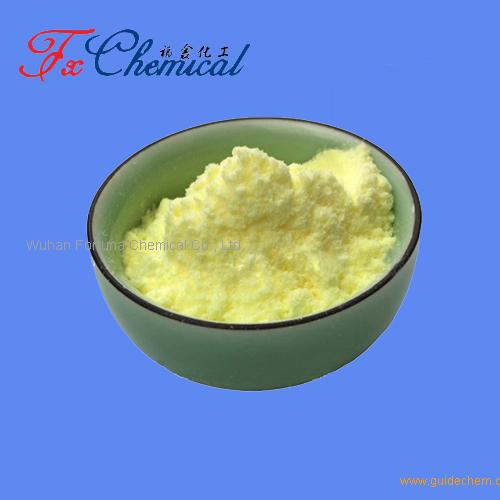
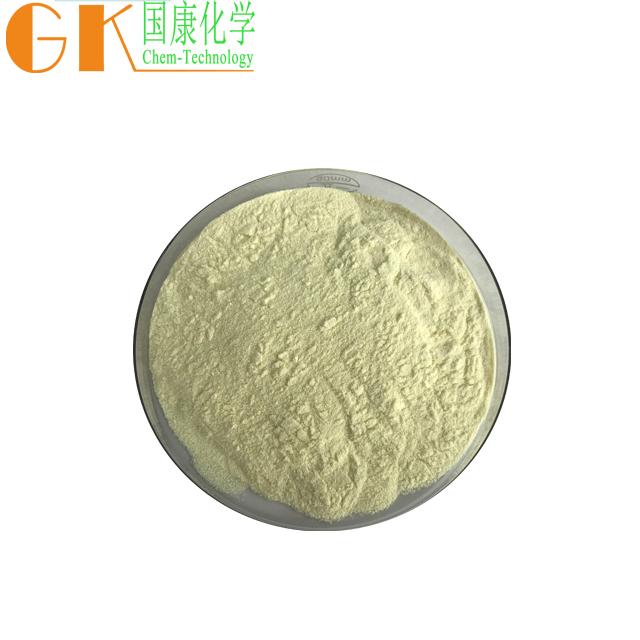
Ethyl 2-(triphenylphosphoranylidene)propionate (CAS 5717-37-3) is a stabilised Wittig ylide of nominal formula C23H23O2P and molecular weight 362.40 g/mol, supplied as a pale yellow to off-white crystalline solid with a reported melting region around 158-162 °C. The ester conjugated with the ylidic carbon delocalises the carbanion, making the reagent isolable and handleable rather than generated in situ, and shifting olefination toward the E-alkene. It is a synthetic reagent and process intermediate, not an active substance, and carries no therapeutic indication.
Industrial demand comes from chain extension and olefination in pharmaceutical, agrochemical, fragrance and materials programmes, where the reagent converts aldehydes into alpha,beta-unsaturated esters with a defined methyl substituent. Supply splits between catalogue reagent volumes for research use and custom-synthesis campaigns run by CDMOs, governed by different quality systems: research-use-only material sold on appearance and assay, versus GMP-aligned campaigns with validated methods and full batch genealogy. Buyers moving between the two underestimate the documentation step.
This white paper addresses process chemists, sourcing managers and CDMO partners. It covers the ylide preparation route class at route-class level, E-selectivity and the isomer-control specification that follows, oxide removal and its effect on purification cost, phosphorus waste treatment, air and moisture sensitivity with exothermic handling at scale, thermal-stability screening, assay strategy including oxide content, and the ICH, REACH, CLP and TSCA framework.
II. Product Deep Dive: Molecular Mechanisms and Production Evolution
2.1 Physicochemical Properties and Mechanisms
Two features control how this reagent behaves: resonance stabilisation by the ester, and the steric and electronic bias it imposes on the oxaphosphetane intermediates of the Wittig reaction. Both are well understood and both have direct commercial consequences, because they determine isomer ratio, purification burden and the specification a buyer should write.
- Resonance Stabilisation and Reagent Handleability: Delocalisation of the ylidic carbanion into the ester carbonyl lowers nucleophilicity relative to unstabilised ylides, which is why the reagent can be isolated, stored and weighed rather than generated in situ under inert conditions. The trade-off is reduced reactivity toward hindered or electron-rich carbonyl partners, so campaign design must balance the convenience of an isolable reagent against the slower conversion it delivers.
- E-Selectivity and Isomer-Control Specification: Stabilised ylides react through a reversible, thermodynamic pathway that favours the E-alkene, typically giving E/Z ratios in the 80:20 to 95:5 band depending on substrate, solvent and salt content. Because the Z-isomer becomes a process impurity in every downstream stage, buyers should specify the isomer ratio of the product and the analytical method used to determine it rather than accepting a single assay figure.
2.2 Synthesis and Manufacturing Technologies
At route-class level the reagent is made in two stages: quaternisation of triphenylphosphine with an alpha-halo ester to give the phosphonium salt, followed by deprotonation with a base to liberate the ylide. Neither stage is exotic, but both are operationally sensitive, and the choices made in each determine the triphenylphosphine oxide burden carried into purification.
- Phosphonium Salt Formation and Base Selection: Salt formation is a straightforward substitution whose rate and completeness depend on solvent polarity, temperature and the leaving group, while the deprotonation step is where exotherm and salt load are set. Base choice drives the counter-ion and the inorganic burden, and therefore the washing and filtration load; weaker bases in biphasic systems avoid the handling problems of strong alkoxides and hydrides at scale.
- Triphenylphosphine Oxide Removal and Waste Treatment: Every mole of olefination product generates a mole of triphenylphosphine oxide, a high-melting, persistent, phosphorus-containing solid that dominates purification cost and waste volume. Removal strategies include crystallisation, selective precipitation as a complex, and chromatography, each with different solvent intensity. The phosphorus-containing waste stream must be treated as chemical waste under local rules rather than sent to ordinary effluent, which materially affects cost.
2.3 Core Application Matrix
- Pharmaceutical and Fine-Chemical Chain Extension: The reagent installs a substituted acrylate unit onto aldehydes, giving alpha,beta-unsaturated esters used as Michael acceptors, hydrogenation substrates or precursors to saturated esters. Process chemists value it because the new double bond's geometry is predictable, simplifying downstream stereochemical control.
- Agrochemical, Fragrance and Materials Intermediates: The same olefination delivers cinnamate-type structures used in fragrance and flavour intermediates, in agrochemical active-ingredient routes and in liquid-crystal and polymer building blocks. Here the constraint is usually cost per kilogram rather than documentation, so oxide recovery and solvent reuse decide competitiveness.
- Custom-Synthesis Campaigns and Reference Material: CDMOs supply the reagent as part of integrated route development, either as isolated material for the customer's own campaigns or as a consumed intermediate inside a contracted synthesis. Characterised lots are also used as analytical reference material for reaction monitoring, where the triphenylphosphine oxide content and water content matter more than volume.
III. Global Market Supply-Demand Landscape and Export Trends
3.1 Demand Drivers and Market Shifts
Demand follows pharmaceutical and agrochemical process-development pipelines rather than consumer cycles, so it is project-driven and lumpy. Two shifts are visible. First, designers weigh the Wittig option against Horner-Wadsworth-Emmons chemistry, which avoids a stoichiometric phosphorus by-product, so ylide demand concentrates where phosphonates give the wrong geometry. Second, buyers push purification and waste responsibility upstream, raising the value of low-oxide grades.
3.2 Capacity Distribution and Export Flows
Production is concentrated where phosphorus and fine-chemical chemistry overlap. Chinese producers in the Shandong, Jiangsu and Zhejiang fine-chemical parks supply catalogue and campaign quantities with integrated access to triphenylphosphine. Indian CDMOs around Hyderabad and Bengaluru run custom ylide campaigns with strong process-development capability and competitive cost. European producers in Germany and Switzerland focus on high-specification reagent and toll-campaign supply, while North America concentrates catalogue distribution and method development.
3.3 Market Bifurcation and Pricing Dynamics
Price is driven less by raw materials than by purification and waste. Triphenylphosphine is a commodity, so the cost inflection points are the isolation steps needed to reach the specified oxide content, their solvent intensity, and phosphorus-waste disposal. Research-use-only material is priced as a reagent; GMP-aligned campaign material with validated methods and genealogy carries a premium, and buyers specifying the wrong tier either overpay or inherit an unusable impurity profile.
IV. In-depth Analysis of Global Compliance and Regulatory Barriers
As a reagent and process intermediate, this substance sits at the intersection of chemical-inventory law and pharmaceutical quality systems. Catalogue supply is governed by REACH, CLP, TSCA and hazard communication, while campaign supply additionally attracts ICH expectations. Suppliers serving both channels must keep two documentation sets and state which applies to a quotation.
4.1 European Market: REACH, CLP, and Sector-Specific Directives
- REACH, CLP and the Triphenylphosphine Oxide Footprint: REACH registration is required at the applicable tonnage band, and CLP classification must address skin and eye irritation and any acute toxicity indicated by the data set. Obligations do not stop at the reagent: the oxide generated in use has its own registration status, so suppliers and users must account for it in inventory and waste declarations.
- ICH Q7, Q11 and Q3D for Campaign Supply: Where the reagent feeds a GMP campaign, ICH Q7 governs the quality system from the point at which material enters the API synthesis and ICH Q11 governs route and starting-material justification. ICH Q3D assessment focuses on metal residues from bases and catalysts, and residual solvents must follow ICH Q3C. A supplier unable to support that assessment cannot supply a filed route.
4.2 North American Market: TSCA, EPA, and FDA Regulations
- TSCA Inventory and GHS Hazard Communication: The substance is listed on the TSCA inventory, and suppliers must maintain accurate safety data sheets and labels under the GHS-aligned Hazard Communication Standard. Because classifications differ between suppliers, buyers should verify the incoming SDS classification matches the one they apply before material enters the plant.
- FDA Expectations and RUO Versus GMP Campaign Framing: Research-use-only material is not intended for clinical manufacture and is documented accordingly, while GMP-campaign material must be produced under a quality system supporting the applicant's filing. Conflating them is the commonest cause of qualification failure, since a research-grade lot cannot be retro-documented into a regulatory chain.
4.3 The Critical Hurdle: Quality Control and Safety Limits
Compliance Warning: Stabilised ylides of this type are sensitive to air and moisture, and failure is progressive: hydrolysis returns triphenylphosphine oxide, so a lot opened repeatedly or stored without inerting loses strength while still looking correct. Specify nitrogen packing with a moisture barrier and a Karl Fischer water limit, require assay by quantitative NMR or HPLC rather than appearance, and set an explicit oxide-content limit. On scale, treat ylide formation and the olefination itself as exothermic operations requiring addition control, calorimetric characterisation before scale-up, and DSC or adiabatic calorimetry screening of both the reagent and the reaction mass. Isomer ratio must be specified alongside assay, and residual solvents and elemental impurities controlled under ICH Q3C and Q3D for campaign supply.
V. Green Trade Barriers and ESG in Manufacturing
The sustainability profile of this chemistry is dominated by stoichiometry rather than by energy. A Wittig olefination generates one mole of triphenylphosphine oxide per mole of product, so process mass intensity is structurally high regardless of how efficiently the plant operates. Buyers with Scope 3 reporting commitments increasingly ask for solvent intensity, oxide recovery and disposal data before awarding campaigns.
5.1 Carbon Footprint and Circular Economy
Energy demand is concentrated in solvent removal and the isolation steps needed to meet oxide specifications, with Scope 3 dominated by triphenylphosphine and solvent supply. Against phosphonate-based olefination, the comparison is usually decided by total waste mass rather than carbon alone. For European customers, ISO 14001 certification and documented solvent recovery are now baseline expectations, and plant energy data supports reporting and the cost argument under the EU Emissions Trading System.
5.2 Sustainable Sourcing and Traceability
Traceability covers the triphenylphosphine origin, since its purity sets the metal background feeding ICH Q3D assessment; the solvent and base history setting the ICH Q3C residual-solvent profile; and the fate of phosphorus waste, which must reach licensed treatment. Buyers should require a documented route family and a change-control commitment, because switching triphenylphosphine supplier or base can shift the impurity profile without changing the CAS number.
VI. Supply Chain Resilience and Export Logistics
This is a moisture-sensitive solid shipped in small to medium quantities rather than a bulk chemical, and the dominant risk is invisible degradation during storage and transit rather than damage in transit. Packaging specification therefore matters more than freight class: buyers should require inert-atmosphere packing, a moisture barrier and a water limit at goods-in.
6.1 Packaging Standards and Moisture/Contamination Control
- Inert, Dry and Light-Protected Packaging: Standard packing is amber glass or aluminium-laminate barrier bags inside sealed drums, closed under nitrogen or argon with desiccant and a humidity indicator, and stored cool and dry. Because repeated opening is the commonest cause of degradation, buyers should specify sub-pack sizes matched to campaign consumption rather than purchasing one large container and sampling from it over months.
- Shelf Life, Re-Test and Goods-In Testing: With sealed inert packing the reagent is normally stable for a year or more cool and dry, but the retest interval should come from stability data. Goods-in testing should cover assay by quantitative NMR or HPLC, oxide content, Karl Fischer water, residual solvents and appearance, since rising oxide with unchanged appearance signals hydrolytic ageing.
6.2 Dangerous Goods Identification and Transit Protocols
Transport classification must be assigned from measured data rather than inferred from analogy, and where triggered the material moves under ADR, IMDG or IATA provisions with UN-specification packaging. Air freight of research quantities requires sealed barrier packing and, where specified, temperature-controlled shippers. Import documentation should state intended use, since research-use-only and GMP-campaign consignments are handled differently by customs and quality units.
VII. Enterprise Global Expansion Strategy Guide
The commercial logic for suppliers and buyers alike is to compete on specification and documentation depth rather than on nominal reagent price, because purification and waste dominate total cost of ownership.
- Sell the Specification, Not Just the Reagent: Publish assay method and basis, triphenylphosphine oxide limit, Karl Fischer water limit, residual-solvent profile and isomer-ratio data, and support them with calorimetric screening results. Buyers comparing offers on purity percentage alone cannot distinguish fresh material from aged material, so a transparent oxide specification becomes the differentiator.
- Engineer Oxide Removal and Phosphorus Waste Up Front: Treat triphenylphosphine oxide as a designed-out cost rather than a purification afterthought: invest in crystallisation or selective precipitation, solvent recovery and, where volumes justify it, oxide recovery or reuse. Document disposal through licensed treatment and quote waste handling explicitly, since phosphorus waste is a line item buyers increasingly evaluate during supplier selection.
- Separate RUO and GMP Channels Cleanly: Run distinct documentation tracks for research-use-only catalogue supply and for ICH Q7 and Q11 aligned campaigns, with validated methods, impurity qualification and batch genealogy on the latter. Quote the applicable tier at enquiry stage, require an end-use declaration where appropriate, and pre-agree change-control notification periods so a raw-material change cannot silently invalidate a customer filing.
VIII. Conclusion
Ethyl 2-(triphenylphosphoranylidene)propionate remains a workhorse reagent wherever a defined E-configured alpha,beta-unsaturated ester is needed and where phosphonate alternatives give the wrong geometry or poor conversion. Its commercial position is stable rather than growing, defended on convenience and stereochemical predictability rather than cost. The competitive pressure is stoichiometric: one mole of oxide per mole of product is a liability no plant efficiency removes.
For buyers, specify assay basis, oxide limit, water, residual solvents and isomer ratio, match packaging to consumption, and declare research-use-only versus GMP-campaign needs at enquiry stage. For suppliers, defensible margin comes from oxide-removal engineering, licensed phosphorus-waste handling, calorimetric data for scale-up, and clean separation of the two documentation channels. Those that deliver this will retain their place where the Wittig step is the most reliable way to set an alkene geometry.
IX. Industry Resource Connection and Supplier Ecosystem
Powered by Guidechem
This white paper is exclusively compiled by the Guidechem Intelligence Team based on global customs data, regulatory databases, and industry research. Guidechem is a leading global B2B chemical platform, dedicated to connecting global buyers with verified, high-quality manufacturers.
Relying on Guidechem's extensive global database, we have mapped the core participants in the current global Ethyl 2-(triphenylphosphoranylidene)propionate supply chain:
- China: Integrated Phosphorus and Fine-Chemical Base: Chinese producers in the Shandong, Jiangsu and Zhejiang fine-chemical parks supply catalogue reagent volumes and custom campaign quantities, with integrated access to triphenylphosphine and to the solvent and base infrastructure the route needs. This corridor sets the global price floor for research-grade material and increasingly competes on oxide specification and waste documentation for campaign work.
- India: Process-Development-Led CDMO Capacity: Indian CDMOs around Hyderabad and Bengaluru combine ylide campaign capability with strong process development, analytical method validation and tech-transfer discipline. Their strength is taking a Wittig step from laboratory procedure to robust plant campaign, including calorimetric characterisation and impurity qualification, which makes them the natural partner for scale-up rather than for catalogue supply.
- Europe and North America: High-Specification Reagent and Method Hub: European producers in Germany and Switzerland focus on high-specification reagent supply and documented toll campaigns, competing on specification depth, ISO 9001 and ISO 14001 systems and regulatory support. North America concentrates research-scale catalogue distribution, analytical-method development and the GMP-campaign documentation that governs filed routes, setting the qualification bar against which imported material is assessed.
Disclaimer: The content of this white paper is compiled based on public market data and regulatory information available as of 2026. Global chemical regulations are subject to dynamic adjustments. In actual export operations, enterprises must consult professional regulatory advisors or relevant competent authorities to obtain the latest compliance guidance.


 EN
 Agricultural News
 Food News
 Industrial News
 Cosmetic News
 Pharmaceutical News
 Science News


 6YRS

