
I. Executive Summary
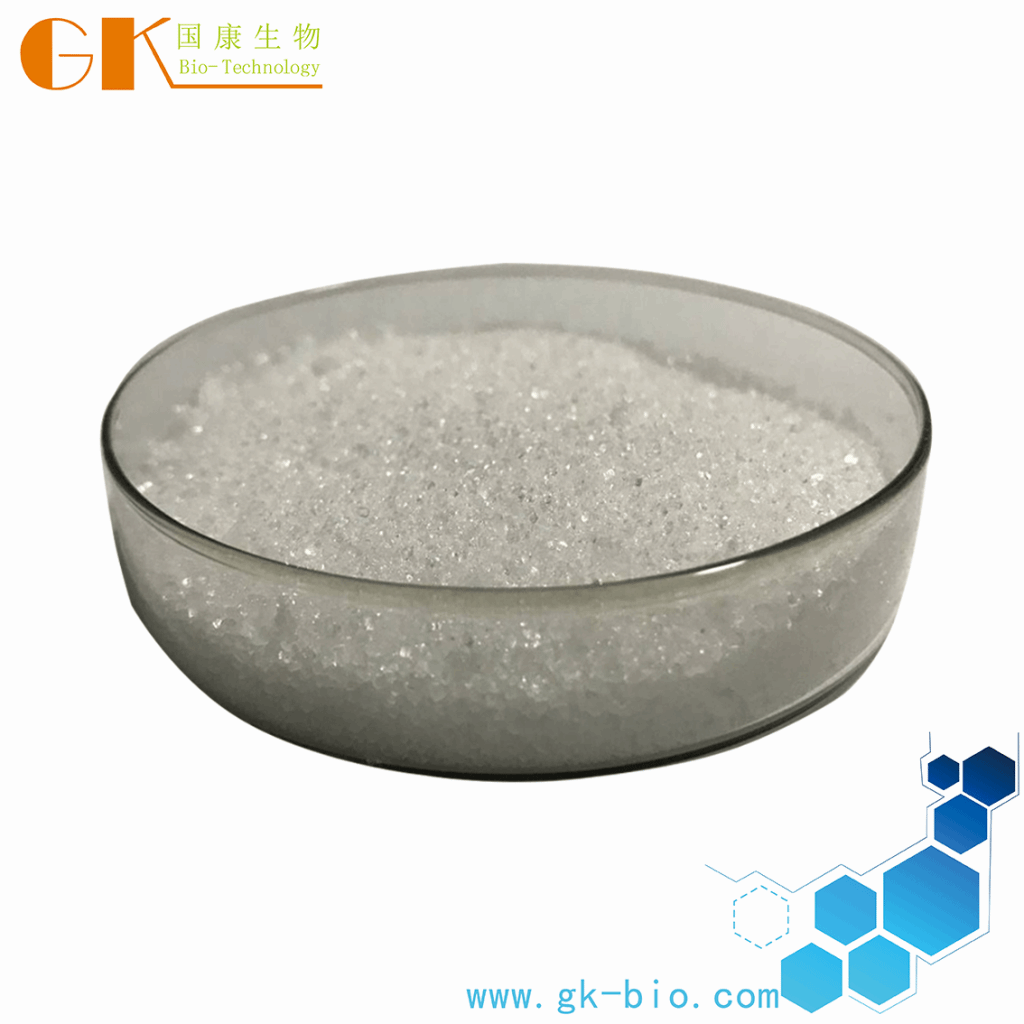
Zirconium basic carbonate (CAS 57219-64-4) is a hydrated, essentially amorphous zirconium carbonate-oxide supplied as a white powder with a zirconia equivalent typically around 40 percent. It is a working industrial intermediate: it dissolves in ammonium or potassium carbonate to give the complexes used as coating crosslinkers, and calcines cleanly to zirconia for catalysts, ceramics and electronic materials. Global trade is therefore driven by three engines — emission-control and petrochemical catalysis, water-resistant paper and packaging coatings, and advanced ceramics.
Two features dominate the commercial conversation. The first is specification: buyers purchase on zirconia equivalent, loss on ignition, and on the impurities that separate a technical grade from a catalyst or electronic grade — sulfate and chloride from the salt route, iron and titanium from the mineral, and alkali or silica residues surviving washing. Particle size distribution and specific surface area then determine whether the lot behaves correctly in a coating formulation or a calcination programme.
The second is regulatory. Zirconium chemistry starts from zircon sand, a naturally occurring radioactive material containing trace uranium and thorium series nuclides, so every serious supplier must produce a radioactivity certificate alongside the certificate of analysis and must understand the destination country's NORM rules for product, waste and transport. Layered on top are REACH and CLP in Europe, TSCA in the United States, and downstream rules where derived zirconium salts enter cosmetics or food-contact paper.
II. Product Deep Dive: Molecular Mechanisms and Production Evolution
2.1 Physicochemical Properties and Mechanisms
The material is best described as a hydrated zirconium carbonate-oxide rather than a stoichiometric salt: an amorphous, high-surface-area solid insoluble in water and alkali but readily soluble in mineral acids and, importantly, in ammonium or potassium carbonate solution to form anionic zirconium carbonate complexes. On heating it decomposes through loss of carbon dioxide and water to zirconium dioxide, which is why it functions as a low-temperature, highly reactive zirconia precursor.
- Composition and Specification Envelope: Commercial grades are sold on zirconia equivalent, typically 38 to 42 percent, with loss on ignition, sulfate, chloride, iron, titanium, sodium and silica as the routine control set. Technical grades tolerate broader impurity bands; catalyst grades tighten iron, titanium and alkali because these poison or sinter active phases; electronic grades additionally control hafnium and trace transition metals. Particle size distribution by laser diffraction and BET surface area are functional parameters: they govern dissolution kinetics and calcination behaviour.
- Functional Mechanism in Use: In coating applications the powder is converted to ammonium or potassium zirconium carbonate, which crosslinks hydroxyl- and carboxyl-bearing binders — starch, polyvinyl alcohol, styrene-butadiene and acrylic latexes — through zirconium-carboxylate and zirconium-hydroxyl coordination. On drying, the complex decomposes to an insoluble zirconium oxide network, delivering wet-rub and water resistance without formaldehyde-releasing chemistry. In catalysis the same decomposition is exploited deliberately: controlled calcination yields zirconia whose oxygen-ion mobility, in ceria-zirconia solid solutions, provides the oxygen-storage function of automotive three-way catalysts.
2.2 Synthesis and Manufacturing Technologies
Industrial production is a two-echelon process: convert zircon sand into a soluble zirconium salt, then precipitate or carbonate that salt into the basic carbonate. The first echelon determines the impurity and radioactivity profile; the second determines particle morphology, surface area and washability, and it is where most product-grade differentiation is created.
- Zircon Conversion and Impurity Partitioning: Zircon sand is opened either by caustic soda fusion followed by acid leaching, or by carbochlorination to zirconium tetrachloride followed by hydrolysis and conversion, giving zirconium oxychloride or zirconium sulfate as the working intermediate. Silica is removed as insoluble residue, and iron and titanium are controlled by leaching and by sulfide or oxidative precipitation. Hafnium, chemically near-identical to zirconium, remains at roughly one to two percent unless solvent extraction or extractive distillation is installed for hafnium-free nuclear-grade material.
- Precipitation, Carbonation and Finishing: The zirconium salt solution is neutralised with sodium carbonate, sodium bicarbonate or ammonia to give a hydrous zirconium oxide-carbonate, or carbonated directly with carbon dioxide under pressure. pH, temperature, ageing time and mixing intensity are the levers for particle size, agglomerate strength and surface area; the precipitate is then washed to drive down chloride or sulfate and alkali, dewatered, dried by spray, flash or tray drying, and milled to specification. Washing efficiency is the largest cost driver at high purity, because each impurity decade removed costs water, time and yield.
2.3 Core Application Matrix
- Catalysts, Catalyst Supports and Emission Control: Calcination to zirconia and ceria-zirconia mixed oxides for automotive three-way catalysts and oxygen-storage components, for selective catalytic reduction and diesel oxidation systems, and for petrochemical or fine-chemical supports where zirconia's acid-base and redox behaviour is used directly.
- Crosslinker Precursor for Paper, Board, Inks and Coatings: Conversion to ammonium or potassium zirconium carbonate for insolubilising starch, polyvinyl alcohol and latex binders in paper and paperboard coating, inks, paint and textile finishes — a segment gaining share as converters replace fluorinated chemistries with zirconium-based systems.
- Ceramics, Electronics and Advanced Materials: Precursor to yttria-stabilised zirconia, lead zirconate titanate and barium zirconate titanate dielectrics, zirconia-toughened alumina, refractories, thermal barrier coatings, solid oxide fuel cell electrolytes and polishing grades, where reactivity, purity and particle morphology matter more than bulk price.
III. Global Market Supply-Demand Landscape and Export Trends
3.1 Demand Drivers and Market Shifts
Three demand engines pull in different directions. Emission-control legislation in China, India, Europe and North America sustains ceria-zirconia and SCR volumes; electronics and solid-oxide fuel cell programmes pull high-surface-area, high-purity grades; and the fastest-moving segment is packaging, where restrictions on per- and polyfluoroalkyl substances in food-contact paper have pushed converters toward zirconium-crosslinked barrier systems. That last driver has shifted buying from price-only tendering to joint formulation work, because crosslinker performance must be demonstrated in the customer's own coating.
3.2 Capacity Distribution and Export Flows
Zirconium chemicals capacity is concentrated in China, where integrated salt and carbonate plants in Shandong and Jiangsu convert imported zircon sand at scale and export globally; Japan and South Korea hold the high-purity catalyst and electronic grades; and Europe retains technology-led producers in the United Kingdom, France and Norway. Feedstock is geographically separate: mineral sands from Australia, South Africa, Mozambique and Indonesia set the cost floor and the radioactivity baseline for the whole chain. Trade is bagged bulk moving by container, so freight cost per tonne and port radiation screening are practical constraints rather than abstractions.
3.3 Market Bifurcation and Pricing Dynamics
Pricing is anchored to zirconia equivalent and to zircon sand feedstock cost, which is volatile because mineral sands are a co-product business tied to titanium dioxide demand. The spread between technical and catalyst grades is set by iron, titanium and alkali limits; the step to electronic grade adds hafnium control, tighter particle-size distribution and much heavier analytical and packaging costs, and can multiply unit value. Buyers should compare quotations on delivered zirconia content and on the documented impurity and radioactivity package.
IV. In-depth Analysis of Global Compliance and Regulatory Barriers
Compliance here has three layers. The first is ordinary chemical-inventory compliance — REACH and CLP in Europe, TSCA in the United States, national inventories elsewhere. The second is downstream end-use regulation attaching to the derived zirconium salts when they enter cosmetics, food-contact paper or construction products. The third, which most often surprises buyers, is radiation: zircon is a naturally occurring radioactive material, and the product inherits a trace uranium and thorium signature that must be measured, documented and managed.
4.1 European Market: REACH, CLP, and Sector-Specific Directives
- REACH Registration, CLP Classification and SDS Discipline: Non-EU producers must register through an only representative, and the substance identity on the dossier must match the commercial material, including hydration state. Classification must follow the harmonised entry where one exists and otherwise a defensible self-classification notified to the C and L Inventory — many zirconium salts carry no harmonised classification, so the practical assessment rests on dust exposure and residual acidity, and any hazard statement must be consistent with the SDS issued under Annex II of Regulation 2020/878.
- NORM Under the Euratom Basic Safety Standards: Directive 2013/59/Euratom requires member states to identify industries processing naturally occurring radioactive materials and to apply graded controls on worker exposure, discharges and waste. For a zirconium chemical plant that means a documented radioactivity baseline, routine measurement of uranium and thorium series activity in product, residues and effluent, and classification of filter cake and spent liquor before disposal. Where derived zirconia enters construction materials, the building-product activity concentration index may also apply, so producers should report radium, thorium and potassium activity concentrations rather than a pass or fail statement.
4.2 North American Market: TSCA, EPA, and FDA Regulations
- TSCA Inventory and Import Certification: Zirconium carbonate is an existing TSCA substance, so imports normally travel with a positive certification under Section 13, but the certification must match the substance identity on the invoice and the SDS. Importers should also confirm whether any significant-new-use rule or reporting obligation applies to the specific form placed on the market, particularly a nanoform or surface-treated variant.
- Occupational, Sector and Consumer-Product Interfaces: Zirconium compounds are of low systemic toxicity, but insoluble dust requires control against occupational exposure limits expressed as zirconium, with local exhaust ventilation, dust-tight transfer and housekeeping rather than reliance on respirators alone. Sector rules attach downstream: zirconium-derived antiperspirant actives are regulated as over-the-counter drug ingredients in the United States, food-contact paper and board must satisfy the applicable provisions, and NORM is supervised through state radiation-control programmes rather than through TSCA.
4.3 The Critical Hurdle: Quality Control and Safety Limits
Compliance Warning: Treat radioactivity as a specification parameter, not as an afterthought. Every lot should be accompanied by gamma-spectrometric results for uranium series, thorium series and potassium-40 activity concentrations, reported in becquerels per gram and compared explicitly against the customer's purchase limit, against transport exemption levels used in the destination country and against any building-material index that applies downstream. Because radionuclide partitioning varies with the zircon source and with the conversion route, a certificate issued for one plant or one sand blend does not cover another. Pair that with verified zirconia equivalent, sulfate, chloride, iron and titanium figures, because radioactivity compliance alone will not release a lot that fails its chemical specification.
V. Green Trade Barriers and ESG in Manufacturing
The environmental profile is dominated by the mineral-sands front end and by the salt load of the precipitation step. Buyers in catalysis and packaging increasingly ask for documented emissions, water and radiation performance during supplier qualification, so producers that publish measured figures rather than general statements hold a commercial edge.
5.1 Carbon Footprint and Circular Economy
Energy demand concentrates in zircon opening — caustic fusion or carbochlorination — and in drying and calcination, while the precipitation step generates large volumes of saline or sulfate liquor. Practical reductions include heat recovery from drying and calcination off-gas, counter-current washing with water reuse, recovery and reuse of alkali, and capture of on-site carbon dioxide for the carbonation step. Producers serving European customers should also be prepared for the cost of energy and emissions compliance passed through the chain, and for requests to report figures as primary data for Scope 3 accounting.
5.2 Sustainable Sourcing and Traceability
Traceability begins with the sand: buyers increasingly want the mining or beach-sands operation identified, with radiation baseline data, tailings and rehabilitation practice and evidence of legal and ethical operation in the source country. ISO 9001 and ISO 14001 certification, responsible-sourcing assessments and EcoVadis-style ratings are routine questionnaire items, and some buyers extend responsible-minerals due diligence to mineral sands even though tin, tantalum, tungsten and gold rules do not formally apply. Documented residue destinations complete the picture.
VI. Supply Chain Resilience and Export Logistics
This is a conventional bagged bulk commodity with two non-conventional risk factors: moisture uptake and caking during long sea transits, and radiation screening or documentation checks at ports and borders. Both are manageable if designed for rather than discovered at destination.
6.1 Packaging Standards and Moisture/Contamination Control
- Bagging, Lining and Pallet Configuration: Product is normally packed in multiwall paper bags with a polyethylene liner or in flexible intermediate bulk containers with liners, palletised and stretch-wrapped with edge protection. Because the powder is fine and will cake if it cycles through humidity, the liner should be sealed, pallets stored under cover, and containers stuffed dry with dunnage that allows air movement. Desiccant and moisture-indicator cards are cheap insurance on long equatorial routes.
- Labelling, Documentation and Dust Control: Each unit carries chemical name, CAS number, zirconia equivalent, lot number, net mass, country of origin, hazard labelling consistent with the SDS, and any radiation declaration required by the destination. Dust generation during loading and unloading is controlled by enclosed transfer, local extraction and good housekeeping, and documentation sets — certificate of analysis, radioactivity certificate and SDS — should be issued per lot and referenced on the commercial invoice so that customs and the receiving quality team work from the same numbers.
6.2 Dangerous Goods Identification and Transit Protocols
Zirconium basic carbonate is normally shipped as non-dangerous goods, with classification under the carbonate headings of Chapter 28 rather than as a hazardous material, and sea transport in containers is the default. The qualification is radiological: if measured activity concentrations exceed the exemption or consignment thresholds applied by the flag state, transit country or destination, the consignment may be treated as Class 7 material or as NORM subject to declaration, so exporters should carry per-lot activity data. ADR or RID provisions are engaged only for the road and rail legs in Europe.
VII. Enterprise Global Expansion Strategy Guide
For a producer, differentiation is achieved by solving the customer's actual problem — consistent zirconia delivery and predictable crosslinking or calcination behaviour — and by removing compliance friction. Three moves deliver most of the value.
- Sell Specification and Application Engineering: Publish a real specification grid — zirconia equivalent, loss on ignition, sulfate, chloride, iron, titanium, sodium, silica, particle size distribution and surface area — tied to named end uses, and support it with application data: dissolution behaviour in ammonium or potassium carbonate, crosslinker performance in starch and latex coatings, and calcination profiles. Customers qualify on reproducibility of these parameters, not a generic assay.
- Build the NORM Assurance Package: Establish routine gamma-spectrometric measurement by lot, report uranium series, thorium series and potassium-40 activity concentrations with measurement uncertainty, and compare them against customer limits, transport exemption levels and any downstream building-material index. Add worker dose assessment, waste and residue classification, and transparent identification of the zircon source blend, so port checks and audits are answered with data rather than assurances.
- Tier the Product and Pre-Clear Downstream Markets: Operate clearly separated technical, catalyst and electronic grades with dedicated washing and finishing, and pre-build the downstream file for targeted segments: food-contact documentation for paper and board, cosmetic-use status checks for zirconium-derived antiperspirant salts including aerosol restrictions in some markets, and current REACH, CLP and TSCA positions. Dual-source zircon sand to protect both cost and the radioactivity baseline.
VIII. Conclusion
Zirconium basic carbonate is a mature industrial intermediate whose centre of gravity is shifting from commodity catalyst feedstock toward performance applications — PFAS-free barrier coatings, high-surface-area catalyst supports and electronic ceramic precursors — where specification discipline and technical service decide the order. Producers able to hold zirconia equivalent, impurity levels and particle morphology within tight bands across lots will capture that shift; those competing only on headline price will be trapped in the cyclical technical-grade segment.
The compliance message is equally direct. Because the chain begins with a naturally occurring radioactive material, a radioactivity certificate belongs next to the certificate of analysis, and the radiation position must be established per source blend and per destination jurisdiction. Combined with ordinary REACH, CLP and TSCA discipline and with market-specific downstream checks for cosmetics and food-contact uses, that documentation is what converts a competitive product into a qualified, repeat-order supply position.
IX. Industry Resource Connection and Supplier Ecosystem
Powered by Guidechem
This white paper is exclusively compiled by the Guidechem Intelligence Team based on global customs data, regulatory databases, and industry research. Guidechem is a leading global B2B chemical platform, dedicated to connecting global buyers with verified, high-quality manufacturers.
Relying on Guidechem's extensive global database, we have mapped the core participants in the current global Zirconium basic carbonate supply chain:
- China — Integrated Zirconium Chemicals Core: Chinese producers operate the largest concentration of zirconium salt and carbonate capacity, clustered in Shandong and Jiangsu, converting imported zircon sand through oxychloride and sulfate routes and exporting bagged material worldwide. This cluster sets global technical-grade pricing and lead time, and its more advanced members have moved into catalyst and electronic grades with tighter washing, classification and analytical control, increasingly supplying per-lot radioactivity data.
- Japan and South Korea — High-Purity Catalyst and Electronic Grades: Japanese and Korean zirconia specialists hold the technology position in high-surface-area and high-purity grades, supplying catalyst manufacturers, electronic ceramics and advanced materials producers where particle morphology, surface area and trace-metal control justify a substantial premium. Their plants typically run tighter source qualification and more extensive radioactivity documentation, and they are the benchmark against which catalyst buyers qualify alternative sources.
- European Union — Technology, Compliance and Downstream Hub: European producers in the United Kingdom, France and Norway serve catalyst, ceramic and specialty markets from a smaller base but with strong application engineering and mature REACH, CLP and Euratom NORM compliance practice, which makes them the preferred qualification pathway for risk-averse buyers. The region also concentrates the downstream converters — paper and board coaters moving away from fluorinated chemistry, catalyst formulators and cosmetic manufacturers — whose sector rules ultimately determine which specification and documentation set a supplier must meet.
Disclaimer: The content of this white paper is compiled based on public market data and regulatory information available as of 2026. Global chemical regulations are subject to dynamic adjustments. In actual export operations, enterprises must consult professional regulatory advisors or relevant competent authorities to obtain the latest compliance guidance.



 EN
 Agricultural News
 Food News
 Industrial News
 Cosmetic News
 Pharmaceutical News
 Science News


 1YR


