
I. Executive Summary
Cyclic AMP, formally 3 prime, 5 prime cyclic adenosine monophosphate, is identified by CAS 60-92-4. It is the canonical second messenger converting hormonal signals into intracellular response, sitting at the centre of the receptor, adenylyl cyclase, protein kinase A axis. Because G protein coupled receptors dominate approved targets, its concentration is among the most measured quantities in discovery. Commercial material is a research reagent, not a finished consumer product.
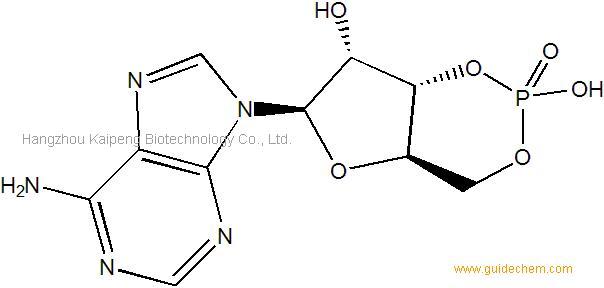
Chemically the molecule is simple yet demanding to produce at fit for purpose quality. Its formula is C10H12N5O6P with a molecular weight of 329.21 grams per mole, defined by a cyclic phosphate diester bridging two ribose oxygens. That renders the phosphate strongly anionic, giving soluble salts but poor membrane permeability and weak stability at pH extremes. Buyers therefore discriminate between lots on isomer identity, counterion, water content, and endotoxin status.
This paper adopts the perspective of a contract development and manufacturing organization serving pharmaceutical clients. It examines route scouting between chemical cyclization and biocatalytic conversion, impurity control, the boundary between research use only and cGMP campaigns, and technology transfer. It stops deliberately at the edge of the research supply chain. No therapeutic, diagnostic, or consumer claim is implied.
II. Product Deep Dive: Molecular Mechanisms and Production Evolution
2.1 Physicochemical Properties and Mechanisms
The distinguishing element is a cyclic phosphate ring bridging two ribose hydroxyls of adenosine. Transmembrane adenylyl cyclase generates it from adenosine triphosphate with release of pyrophosphate. Phosphodiesterases then hydrolyse it back to 5 prime adenosine monophosphate and terminate the signal. Being deprotonated at physiological pH, the molecule acts only inside cellular pools shaped by localized catabolism.
- Second messenger architecture and effector coupling: Elevated cytosolic levels are decoded by the regulatory subunits of cyclic AMP dependent protein kinase and by exchange factors directly activated by cyclic AMP. Phosphorylation of the cyclic AMP response element binding protein then converts a transient pulse into sustained transcriptional change. Because fidelity depends on compartmentalization rather than bulk concentration, experiments must account for local phosphodiesterase activity.
- Permeability limits, analog tools, and measurement endpoints: The doubly charged phosphate blocks passive diffusion, which is why membrane permeable surrogates such as dibutyryl and 8 bromo derivatives were developed as tools. Endpoints have migrated from radioisotopic binding assays to time resolved fluorescence transfer, proximity based luminescence, and encoded biosensors. Every one of these formats consumes bulk material as calibrator or positive control.
2.2 Synthesis and Manufacturing Technologies
Two manufacturing philosophies compete, and the choice sets impurity burden, footprint, and achievable specification. Chemical synthesis cyclizes the monophosphate under dehydrating conditions, producing target alongside the isomeric 2 prime, 3 prime species. Biocatalysis instead uses adenylyl cyclase to close the ring in water, giving exclusive regioselectivity. Developers balance purity tier, volume, and polishing capability.
- Chemical phosphorylation, cyclization, and chromatographic polishing: The classical sequence employs phosphorus oxychloride in trialkyl phosphate followed by controlled quench, ring closure, and selective hydrolysis, but carries low atom economy and an acidic waste stream. Because both ribose hydroxyls are competent nucleophiles, positional isomers and dimers must be reduced by anion exchange and crystallization. Trace multivalent cations catalyse ring opening, so metal free contact surfaces are mandatory.
- Biocatalytic conversion with cofactor economy and membrane purification: Immobilized adenylyl cyclase converts fermentation derived adenosine triphosphate in aqueous buffer near neutral pH, avoiding the isomer burden entirely. Regeneration through acetate kinase or polyphosphate kinase allows cheaper monophosphate to be recycled rather than consumed stoichiometrically. Downstream processing then combines ultrafiltration, nanofiltration, ion exchange, and crystallization or lyophilization.
2.3 Core Application Matrix
- G protein coupled receptor screening and mechanistic pharmacology: Agonist and inverse agonist campaigns routinely quantify cytosolic accumulation, making this nucleotide the universal calibrator for Gs and Gi coupled targets. Because assay windows are narrow, lot to lot drift in true content propagates into false structure activity relationships. Material certified by net content rather than nominal purity therefore lowers total programme cost.
- Reference standards, calibrators, and labeled internal standards: Both immunoassay and mass spectrometry workflows require characterized standards whose assigned content is traceable and stability supported. Custom isotopologues bearing carbon thirteen and nitrogen fifteen labels are prepared from labeled adenosine and supplied as matched internal standards. Regulated laboratories preferentially select suppliers able to deliver both under one quality agreement.
- Synthetic precursor for analog libraries and delivery research: The free acid is the starting material for ester prodrug analogs, phosphorothioate diastereomers distinguishing kinase from exchange factor pathways, and spacer modified affinity resins. It also serves as a hydrophilic model payload in liposome and hydrogel release studies. Variant applications impose different solvent and metal limits, so early specification dialogue avoids rework.
III. Global Market Supply-Demand Landscape and Export Trends
3.1 Demand Drivers and Market Shifts
Demand for research nucleotides tracks screening intensity rather than macroeconomic production indices. In 2026 three durable currents dominate. Renewed investment in G protein coupled receptor programmes spans metabolic disease and neuroscience, including adenosine driven signaling as an immunosuppressive tumour circuit. Migration of discovery work to external contract research organizations concentrates purchasing into audited framework agreements. Continued replacement of radioisotopic assays by homogeneous fluorescent formats raises per plate calibration consumption.
3.2 Capacity Distribution and Export Flows
Annual global consumption is measured in kilograms rather than tonnes, and that shapes supply strategy. Upstream adenosine and its triphosphate come from integrated Asian fermentation parks, particularly in China. cGMP capable biocatalysis and high specification crystallization remain concentrated in Western Europe, North America, and Japan. Bulk intermediate therefore moves east to west for polishing, with lead times set by analytical release rather than reaction time.
3.3 Market Bifurcation and Pricing Dynamics
The market divides into a catalog tier priced per milligram and a development tier priced per gram, separated by two orders of magnitude. Price is driven less by the molecule than by the evidence package. Certificates disclosing assigned content, impurity assignment, counterion, water, solvents referenced to ICH Q3C, and endotoxin command premiums. Buyers accept them because qualification hours fall, and tenders now add ESG weight.
IV. In-depth Analysis of Global Compliance and Regulatory Barriers
Although traded as a laboratory reagent, this nucleotide carries a non trivial compliance posture, because one lot may be resold into jurisdictions with divergent rules. Suppliers therefore need documentation letting downstream users inherit clean provenance without repeating studies. Importers must verify registration coverage, confirm that intended use matches registered descriptors, and keep Harmonized System coding current. Incorporation into a therapeutic product changes the legal characterization entirely.
4.1 European Market: REACH, CLP, and Sector-Specific Directives
- REACH registration status and tonnage band verification: European importers must confirm that their tonnage band and use pattern are covered by an existing registration rather than assuming coverage. Research directed supply may rely on the product and process oriented research and development regime, but that requires notification and defined conditions. Low volume producers may operate below thresholds, leaving the obligation with the importer.
- CLP notification, safety data sheets, and poison centre filing: Classification must derive from actual toxicological data rather than an unrelated catalog entry, and resulting hazard classes must be notified to the European Chemicals Agency inventory. Safety data sheets need issuing in the official language of each destination Member State with current revision dating. Downstream mixtures attract separate poison centre notification obligations often overlooked until a shipment is detained.
4.2 North American Market: TSCA, EPA, and FDA Regulations
- TSCA inventory status and research exemption boundaries: United States importers should verify active inventory designation and confirm the absence of applicable significant new use rules before scaling. Small quantities destined exclusively for research may fall within the research and development exemption. That relief carries recordkeeping, labelling, and personnel conditions, and penalties attach to the importer of record, so written confirmation is essential.
- FDA boundary between research use only and regulated status: Material labelled research use only must carry no representation of clinical utility, since intended use is inferred from the totality of labelling and promotion. If the nucleotide becomes a component of an in vitro diagnostic offered clinically, device quality system obligations apply to the finished article manufacturer. Developing it as a drug substance instead requires a Type II drug master file supported by cGMP manufacture.
4.3 The Critical Hurdle: Quality Control and Safety Limits
Compliance Warning: The dominant failure mode here is silent specification drift rather than deliberate non conformity, because positional isomer content, hydrolytic degradation to the monophosphate, residual trifluoroacetate, and adventitious nuclease or endotoxin all corrupt experiments without changing appearance. Procurement teams should therefore require a certificate of analysis disclosing chromatography purity with related impurities, identity by mass spectrometry and phosphorus thirty one nuclear magnetic resonance, declared counterion, water content, and solvents referenced to ICH Q3C, heavy metals, and endotoxin for cell based lots, together with storage under desiccation at minus twenty degrees Celsius and a retest interval justified by ICH Q1A principles.
V. Green Trade Barriers and ESG in Manufacturing
Although volumes are modest, environmental performance increasingly decides supplier selection because customers cascade disclosed reduction targets downstream. Even a kilogram campaign may be asked for energy intensity, solvent recovery, and waste classification evidence. The aqueous biocatalytic route offers a narrative that chemical cyclization cannot match, especially where phosphorus discharge is constrained. Coherent environmental data converts compliance cost into commercial advantage.
5.1 Carbon Footprint and Circular Economy
Process mass intensity is the most honest comparator between routes because it exposes the burden of chromatographic polishing. Biocatalytic conversion eliminates phosphorus oxychloride and chlorinated solvents, cutting direct emissions and purchased solvent impact under Scope 3. Remaining hotspots are lyophilization energy, make up solvent, and cold chain distribution. Scope 1, 2, and 3 reporting under ISO 14001 is now a routine tender requirement.
5.2 Sustainable Sourcing and Traceability
Traceability begins with adenosine fermented on documented non animal substrates. That enables credible animal component free and transmissible spongiform encephalopathy statements now required by cell culture customers. Where chemical routes are retained, sourcing of phosphate derived reagents matters because phosphorus faces resource scrutiny. ISO 9001 and ISO 14001 certification supplies the audit substrate, while waste water phosphorus is best managed by precipitation.
VI. Supply Chain Resilience and Export Logistics
Logistics are governed less by hazard classification than by stability engineering, since moisture uptake and ring opening destroy value in transit. Robust design manages water activity, temperature excursion, and oxygen exposure at once and validates them by shipping studies. Because order sizes span milligrams to kilograms, packaging must be tiered. Lane qualification across summer and winter profiles is now standard in quality agreements.
6.1 Packaging Standards and Moisture/Contamination Control
- Primary containment and closure selection: High value lots suit amber Type I glass vials with polytetrafluoroethylene lined closures, while bulk quantities travel in high density polyethylene bottles with induction sealed liners. Each container is over wrapped in foil laminate containing desiccant and a humidity indicator. Aliquoting prevents cumulative moisture uptake from repeated opening.
- Contamination control and lot level documentation: Filling of cell culture sensitive lots should occur in controlled environments with nitrogen headspace displacement and routine environmental monitoring to exclude nuclease. Serialized labels must display lot number, net content, storage statement, and a link to the specific analytical certificate. Tamper evident seals and identically stored retention samples support investigation.
6.2 Dangerous Goods Identification and Transit Protocols
Most consignments move as non dangerous goods under the United Nations model regulations and the maritime and air transport codes. That position must be reaffirmed against current supplier classification rather than assumed across the category. A complete safety data sheet must accompany every shipment, and Harmonized System coding should be confirmed per destination. Refrigerated or dry ice pack outs require validation against worst case seasonal profiles.
VII. Enterprise Global Expansion Strategy Guide
Suppliers seeking durable positions should stop competing on price and monetize certainty instead. For the research client, real cost means failed experiments and repeated qualification. Strategy therefore begins with analytical depth, continues with a campaign architecture separating research from regulated execution, and ends with inventory on the customer's critical path. Those executing these steps convert a commodity relationship into a development partnership.
- Sell characterized lots rather than declared purity: Provide every batch with assigned related impurities, identity by mass spectrometry and phosphorus thirty one nuclear magnetic resonance, declared counterion, water content, and optional endotoxin reporting. Publish assignable uncertainties so client laboratories can propagate them into validation protocols. Price transparency explicitly, because customers pay premiums once they count saved qualification hours.
- Operate a dual track research use only and cGMP campaign model: Maintain separated or campaign dedicated suites backed by cleaning validation with swab and rinse limits, supported by a transfer package covering process description, in process controls, analytical methods, deviation history, and model batch records. This structure lets a client escalate from exploratory to regulated supply without restarting route development. Pre agreed quality agreements and annual reviews shorten the regulatory ramp.
- Embed into the assay value chain with regional inventory: Establish framework agreements with contract research organizations and screening reagent platforms, offering kit compatible aliquots and consignment stock. Complement them with bonded inventory in Rotterdam, the United States northeast, and East China so emergency resupply avoids intercontinental freight. Report on time in full and temperature excursion metrics, since reliability outweighs unit price.
VIII. Conclusion
Cyclic AMP remains the reference second messenger against which intracellular signaling is taught and measured. Value here is migrating from the ability to synthesize the ring toward the ability to prove what is in the vial. Suppliers internalizing that shift move from commodity synthesis to characterization science. Those selling on declared purity alone are confined to price driven tender.
Across 2026 the strongest position combines aqueous biocatalytic manufacture, validated orthogonal analytics, clean separation between research and cGMP execution, defensible ESG reporting, and regional inventory. This paper keeps a strict boundary between research supply and finished consumer products. Nothing here is a claim of human benefit. Any party progressing into regulated applications must complete its own qualification and seek professional advice per market.
IX. Industry Resource Connection and Supplier Ecosystem
Powered by Guidechem
This white paper is exclusively compiled by the Guidechem Intelligence Team based on global customs data, regulatory databases, and industry research. Guidechem is a leading global B2B chemical platform, dedicated to connecting global buyers with verified, high-quality manufacturers.
Relying on Guidechem's extensive global database, we have mapped the core participants in the current global Cyclic AMP supply chain:
- North America: Documented quality tier: The region hosts reagent distributors and specialized nucleotide development organizations running mature quality systems, with strength in analytical certificates, animal component free declarations, and audit readiness. Capacity is comparatively small but thoroughly documented, and pricing reflects embedded service rather than chemistry. Buyers prioritize change control, contingency stock, and responsiveness over headline unit cost.
- Europe: Biocatalysis and specialist finishing tier: Western European producers are notable for enzyme technology, membrane purification, and ISO 9001 and ISO 14001 certification, serving customers needing defensible REACH and CLP positioning. Offerings emphasize low solvent intensity and rigorous retest dating. Lead times can be longer, but documentation depth usually reduces total qualification cost.
- Asia-Pacific and China: Integrated fermentation and scaling tier: This region supplies most upstream adenosine and triphosphate from integrated fermentation complexes and increasingly offers finished research grade nucleotide at competitive cost. cGMP capable suites are expanding steadily. Export lots show aggressive lead times and improving documentation, though buyers should verify registration coverage and method transparency before qualification. Japanese and Korean participants occupy the upper niche for labeled variants.
Disclaimer: The content of this white paper is compiled based on public market data and regulatory information available as of 2026. Global chemical regulations are subject to dynamic adjustments. In actual export operations, enterprises must consult professional regulatory advisors or relevant competent authorities to obtain the latest compliance guidance.




 EN
 Agricultural News
 Food News
 Industrial News
 Cosmetic News
 Pharmaceutical News
 Science News


 12YRS

