-
We detected your language preference as English. Would you like to switch to the English version for a better experience?
Switch to English
Stay here


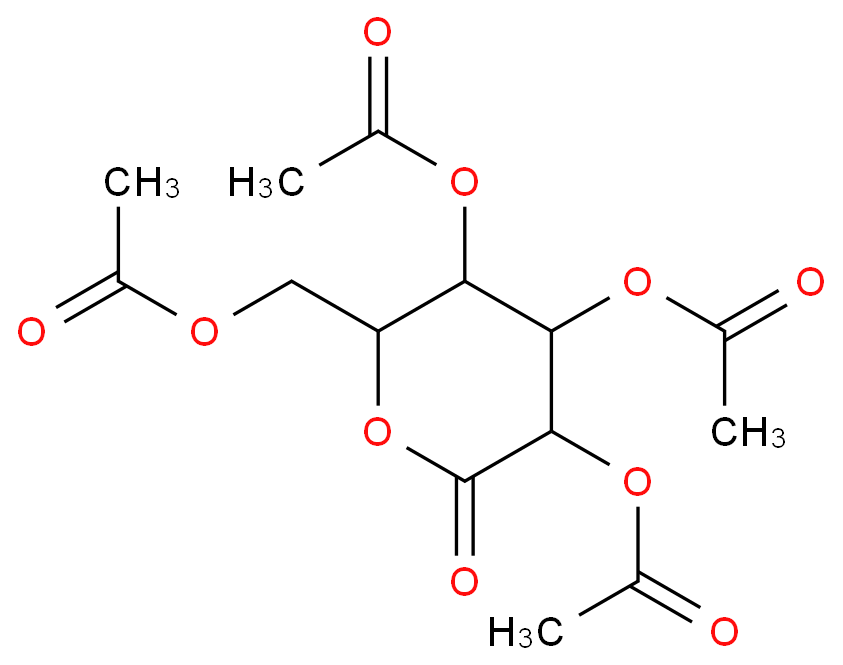
D-Gluconic acid delta-lactone, 2,3,4,6-tetraacetate (CAS 61259-48-1), often abbreviated to tetraacetyl gluconolactone, is the fully acetylated derivative of glucono-delta-lactone: molecular formula C14H18O10 with a relative molecular mass near 346. Acetylating the four available hydroxyls converts a water-soluble carbohydrate acid derivative into a lipophilic, organo-soluble, hydrolytically cleavable protected sugar. It is used both as a peracetylated synthetic intermediate and, in some markets, as a personal-care raw material, and this paper deliberately makes no therapeutic, exfoliating or anti-ageing claim about either use.
Commercially the material behaves like a custom-manufactured specialty rather than like a catalogued bulk product. Feedstock is cheap and widely available because gluconolactone is produced by oxidation of glucose from starch, but value is added in three places: control of the degree of acetylation, removal of the acylating reagents and their amine bases to specification levels, and prevention of hydrolysis during isolation and storage. Those three steps decide whether a producer is selling an intermediate or a certified ingredient.
For 2026 sourcing, the decisive issues are specification architecture and regulatory perimeter. Buyers should require a certificate that resolves the acetate distribution rather than quoting one purity figure, demand quantitative limits for residual acetic anhydride, acetic acid and pyridine, and fix a water specification that preserves the molecule in transit. On the regulatory side, the same drum can enter European cosmetic supply under Regulation (EC) No 1223/2009, United States supply under the MoCRA framework, or Chinese supply under the NMPA regime, and each requires different prior work. Buyers should also expect no end-use or formulation advice for anything consumer-bound, because maintaining that boundary protects supplier and customer alike.
Acetylation changes almost every handling property. The parent lactone is polar, freely water-soluble and slowly hydrolyses to gluconic acid; the tetraacetate is lipophilic, soluble in common organic media and retains a strained lactone whose slow ring opening releases acidity and acetic acid over time. That dual character is exactly why the molecule is useful and exactly why it fails: any water that reaches the drum starts a reaction whose products accelerate further degradation.
Manufacture is a classical acylation problem executed at specialty scale. Two decisions dominate economics and customer acceptance: which acylating system is used, and whether any nitrogenous base is required. Because cosmetic and personal-care customers react strongly to amine residues, the pyridine-free variants increasingly define which supplier wins the higher-value business even where they cost more to run. Whichever variant is chosen, the acylation itself is strongly exothermic, so legitimate scale-up relies on reaction calorimetry and controlled addition rather than on literature batch times.
Demand comes from two directions that impose different requirements. Synthetic customers want a reliable protected sugar at predictable cost and are relatively indifferent to residual-base narratives beyond toxicity limits. Ingredient customers want the opposite: documentation, absence of trace pyridine, low odour and a defensible origin story for renewable content. As personal-care formulators increasingly audit raw-material dossiers themselves, that documentary pull is reshaping which producers capture the premium band, and it has lengthened contracting cycles, because customers now qualify the dossier alongside the drum and prefer multi-year arrangements once satisfied.
There is no dedicated continuous asset. Production runs in multipurpose acetylation plants, and capability follows acetylating chemistry rather than geography: Chinese and Indian manufacturers supply much of the kilogram-to-tonne intermediate volume, while European and North American participants concentrate on high-specification lots, pyridine-free processing and ingredient-grade documentation. Both clusters depend on commodity acetic anhydride supply, so any disruption in that precursor chain transmits immediately into lead times.
The market splits between intermediate lots priced close to conversion economics and ingredient lots priced on documentation. The gap reflects real cost: analytical resolution of the acetate distribution, headspace testing for residual pyridine, microbial and heavy-metal testing, and the capex of pyridine-free processing are all genuine activities. Buyers frequently underestimate that spread and then find that switching suppliers is itself a qualification exercise. Larger campaigns usually amortise route development over several years of repeat business.
Three regulatory layers apply simultaneously. First, ordinary chemical law: registration, classification, labelling and transport documentation. Second, end-sector law, which for this molecule means cosmetics regulation wherever it is used as an ingredient. Third, precursor control, since the acylating reagent is a monitored substance in several jurisdictions. Suppliers who handle only the first layer discover the other two at the customer's audit.
The bio-based origin of the polyol core gives this molecule a strong starting sustainability narrative, and that narrative must be handled carefully. Acetylation is a chemical modification, so any natural-origin claim must be calculated rather than asserted, typically under ISO 16128, and must reflect that a substantial part of the final mass derives from petrochemical-derived acetyl groups. Buyers increasingly check that arithmetic themselves.
Emissions concentrate in glucose production from starch, in acetic anhydride manufacture and in the energy required for quench, washing and drying of a hydrolysis-sensitive solid. Because the short routes generate significant aqueous acetate streams, effluent treatment and acetate recovery dominate site-level improvement plans, while modern multipurpose plants also recover acetic acid from quench streams. Scope 1 and 2 figures should be reported separately from the agricultural upstream, and, where a customer requests a cradle-to-gate number, allocation between the gluconate-derived and acetyl-derived portions should be stated explicitly.
Traceability centres on two inputs. Glucose derived from maize raises questions about genetically modified origin under EU legislation, whereas potato, tapioca or non-GMO identity-preserved programmes support stronger claims but cost more. Because the final molecule is chemically modified, ISO 16128 natural and natural-origin percentages should be calculated and certified rather than implied. Halal, kosher and vegan confirmations are routinely requested for personal-care grades, together with ISO 22716-aligned good manufacturing practice evidence.
Stability, not hazard, drives every logistics decision for this material. The molecule survives ordinary freight perfectly well if water is excluded, and degrades predictably if it is not, so packaging and dwell-time management carry more weight than any transport classification question. Suppliers should also plan around acetic anhydride availability, since precursor tightness rather than demand usually determines lead times.
Fresh material is generally not classified as dangerous for transport, but that conclusion must rest on the specific classification dossier rather than on habit, and lots that have hydrolysed can acquire acetic acid character sufficient to change their regulatory treatment. Practical controls therefore include avoiding prolonged exposure above about thirty degrees Celsius, using temperature logging on long summer sea legs, keeping containers away from heat sources at port, and re-determining water and acid value on arrival before the lot is accepted into inventory. Purchasing teams should track acetic anhydride availability upstream, because precursor tightness rather than demand usually determines achievable delivery dates.
Suppliers who win in this category act as development partners and regulatory documentalists as much as producers. The commercial question customers ask is rarely about availability; it is whether a supplier can support a responsible person in Europe, a facility registration in the United States and an ingredient filing in China without repeated re-requests for the same data.
Tetraacetyl gluconolactone is a small, cleverly protected carbohydrate derivative whose commercial difficulty lies in three measurable things: how completely and cleanly it is acetylated, how thoroughly the acylating system is removed, and how much water entered between reactor and customer. Those are all ordinary analytical and packaging questions, but they are exactly where most disputes and most rejected lots originate, and they explain why material of nominally identical purity behaves differently in a customer process.
The boundary is clear and should stay clear. No therapeutic, exfoliating or anti-ageing claim is made here, and any statement about product performance belongs to the finished brand that has substantiated it. Within that boundary the opportunity is real: pyridine-free processing, honest natural-origin calculation and pre-built market-access dossiers are what separate suppliers competing on price from suppliers embedded in customer formulations.
Powered by Guidechem
This white paper is exclusively compiled by the Guidechem Intelligence Team based on global customs data, regulatory databases, and industry research. Guidechem is a leading global B2B chemical platform, dedicated to connecting global buyers with verified, high-quality manufacturers.
Relying on Guidechem's extensive global database, we have mapped the core participants in the current global D-Gluconic acid delta-lactone, 2,3,4,6-tetraacetate supply chain:
Disclaimer: The content of this white paper is compiled based on public market data and regulatory information available as of 2026. Global chemical regulations are subject to dynamic adjustments. In actual export operations, enterprises must consult professional regulatory advisors or relevant competent authorities to obtain the latest compliance guidance.
|
 |
|
|
 EN
 Agricultural News
 Food News
 Industrial News
 Cosmetic News
 Pharmaceutical News
 Science News


 9YRS

