-
We detected your language preference as English. Would you like to switch to the English version for a better experience?
Switch to English
Stay here


Bis(hydrogenated tallow alkyl)methyl amine, registered under CAS 61788-63-4 and traded as di(hydrogenated tallow) methyl amine, is the di-long-chain tertiary amine that anchors the global dialkyl quaternary ammonium chain. It is a UVCB substance of hydrogenated tallow origin whose alkyl groups sit predominantly in the C16-C18 band, supplied as an off-white waxy solid or as a heated liquid. Its commercial weight lies almost entirely in what it becomes: quaternisation with methyl chloride or dimethyl sulfate converts it into di(hydrogenated tallow) dimethyl ammonium compounds, the cationic actives behind fabric softeners and organophilic clays. In 2026 the molecule behaves less like a commodity oleochemical and more like a specification-critical intermediate tied to fabric-care regulation and drilling activity.
Technically, buyers qualify this amine on four axes: alkyl-chain distribution, iodine value as the proxy for residual unsaturation, total amine value and tertiary-amine assay, and the residual primary and secondary amine fraction. Each axis maps directly to downstream performance. Chain distribution governs softening efficiency and the rheology of the finished organoclay gel. Iodine value governs oxidative and colour stability during molten storage. Amine value governs stoichiometry in the quaternisation reactor. The primary and secondary amine fraction governs both quaternisation yield and the nitrosamine precursor burden that detergent and personal-care customers now audit line by line.
On the compliance side, exporters face a stacked agenda: REACH registration and a CLP classification that is corrosive to skin and chronically hazardous to the aquatic environment, EU Detergent Regulation 648/2004 biodegradability expectations for derived surfactants, TSCA inventory status in the United States, GHS-aligned hazard communication, and, for tallow-derived technical grades, the EU animal by-products framework of Regulation 1069/2009 and Regulation 142/2011. Layered on top are deforestation due diligence under EUDR 2023/1115, RSPO chain-of-custody claims, and the historical DHTDMAC phase-out, which remains the cautionary case study every cationic surfactant buyer cites in supplier audits.
The reactivity of this molecule is the reactivity of a sterically loaded tertiary amine. Two long hydrogenated alkyl chains and one methyl group surround a nitrogen whose lone pair remains available for alkylation, but which is hindered enough that quaternisation must be run at elevated temperature under vigorous agitation, usually with a polar co-solvent such as isopropanol or propylene glycol to keep the reaction mass fluid and the kinetics commercially acceptable.
Commercial routes converge on two families: fatty-nitrile chemistry and direct amination of fatty alcohol or alkyl halide. In the nitrile family, hydrogenated tallow fatty acid is converted to the nitrile with ammonia over a dehydration catalyst at high temperature and then hydrogenated. Process control at the hydrogenation stage decides whether the product skews primary, secondary or tertiary.
Demand is being pulled in two directions at once. Fabric-care volumes in Western Europe and North America are structurally flat to declining as liquid detergents with built-in softening gain share and as unit-dose formats cut per-wash dosage, while organoclay and industrial cationic demand rises with drilling programmes and with electrification-linked growth in grease and lubricant additive packages. The net effect is a shift in the buyer mix from consumer-goods formulators toward industrial and oilfield compounders.
Capacity sits where rendered tallow and palm stearin are available at scale. Malaysia and Indonesia host the largest integrated oleochemical amine complexes, fed by palm-derived fractions and by imported tallow. China has built substantial captive capacity tied to domestic quaternisation and organoclay output. The United States retains tallow-linked amines anchored to its rendering industry, while Europe increasingly acts as importer and downstream converter rather than primary amine producer.
The market has bifurcated cleanly. Commodity hydrogenated-tallow amine competes essentially on feedstock, tracking tallow and palm stearin quotations plus freight, with thin conversion margins. Above it sits a narrower tier of low-iodine-value, tightly specified, low-secondary-amine grades sold into personal-care and high-performance organoclay applications, where qualification cycles are slow, switching costs are real, and pricing reflects documented lot-to-lot consistency rather than spot chemistry.
Three regulatory layers determine market access. The first is substance-level: REACH registration and CLP classification in the European Union, and TSCA inventory status in the United States. The second is product-level: what the downstream quaternary compound must demonstrate under detergent and biodegradability rules. The third is origin-level: whether the tallow or vegetable feedstock can be traced under animal by-product and deforestation regimes.
Environmental scrutiny of this amine is essentially scrutiny of its feedstock and of its hydrogen balance. Tallow is a rendered co-product, which gives it a favourable allocation story, but it also pulls the material into animal by-product controls and, where vegetable fractions are blended, into deforestation due diligence. ISO 14001 certification of the amine plant is now table stakes in Western tenders.
The dominant contributors are the hydrogen and steam demand of the hydrogenation step, the high-temperature nitrile or amination stage, and the energy needed to keep the product molten through storage and transit. Exporters serving European customers are being asked for cradle-to-gate figures that include Scope 3 feedstock emissions, and for evidence of steam and energy efficiency improvements at the amine plant.
Two parallel documentation streams are now standard. Where the alkyl chain is tallow-derived, buyers require traceability under Regulation 1069/2009 and Regulation 142/2011 confirming Category 3 origin and technical-only end use, plus halal or kosher certification where the derived quat enters personal-care or food-adjacent applications. Where palm-derived fractions are blended, RSPO chain-of-custody certification and EUDR 2023/1115 geolocation and legality due diligence are required.
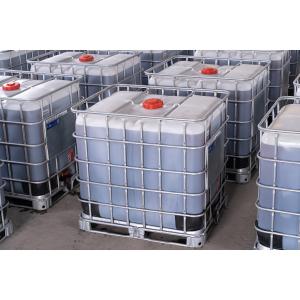
This is a molten-handled, oxidation-sensitive, environmentally classified material. The logistics design problem is therefore threefold: keep it liquid without overheating, keep it away from air, and keep it out of the water in the event of an incident.
Classification depends on the exact hazard profile of the grade, but long-chain tertiary amines are commonly consigned as corrosives or irritants under UN 2735 or UN 3267 entries, or as environmentally hazardous substances under UN 3077 or UN 3082, under IMDG, ADR and IATA rules. Aquatic chronic classification triggers marine pollutant marking and, in European road transport, ADR tank and driver-instruction requirements. Heated tanks additionally require temperature logging and a documented maximum holding time at temperature.
Exporters who win in this category in 2026 sell documented consistency and documentation itself, not merely tonnes. The following priorities reflect what actually decides tender outcomes for di-long-chain tertiary amines.
Bis(hydrogenated tallow alkyl)methyl amine is a mature molecule whose commercial trajectory in 2026 is being reshaped less by chemistry than by documentation. The DHTDMAC episode demonstrated that cationic surfactants can lose market access on environmental persistence grounds, and the current agenda of animal by-product traceability, deforestation due diligence, aquatic chronic classification and nitrosamine scrutiny applies that same lesson further upstream, at the amine.
For exporters, the practical implication is that the competitive unit is no longer the tonne of amine but the qualified, fully documented lot with a stable chain distribution, a low iodine value, a controlled secondary amine fraction and an unbroken feedstock pedigree. Suppliers who deliver that consistently, under ISO 9001 and ISO 14001 systems, and who can move molten product safely under nitrogen across long distances, will hold pricing power long after commodity amine margins compress.
Powered by Guidechem
This white paper is exclusively compiled by the Guidechem Intelligence Team based on global customs data, regulatory databases, and industry research. Guidechem is a leading global B2B chemical platform, dedicated to connecting global buyers with verified, high-quality manufacturers.
Relying on Guidechem's extensive global database, we have mapped the core participants in the current global Amines, bis(hydrogenated tallow alkyl)methyl supply chain:
Disclaimer: The content of this white paper is compiled based on public market data and regulatory information available as of 2026. Global chemical regulations are subject to dynamic adjustments. In actual export operations, enterprises must consult professional regulatory advisors or relevant competent authorities to obtain the latest compliance guidance.
|
 |
 |
 |
 EN
 Agricultural News
 Food News
 Industrial News
 Cosmetic News
 Pharmaceutical News
 Science News


 4YRS


