
I. Executive Summary
Quaternary ammonium compounds, benzylbis(hydrogenated tallow alkyl)methyl, chlorides, CAS 61789-73-9, is a di(hydrogenated tallow) benzyl methyl ammonium chloride: a cationic surfactant of the UVCB type whose alkyl chains derive from hydrogenated tallow and are dominated by hexadecyl and octadecyl homologues. It is supplied as a paste or flake, typically at 75 to 80 per cent active matter in isopropanol and water, and it is used industrially as a fabric softener active, an organoclay modifier for bentonite and hectorite, a corrosion inhibitor and a component of biocide formulations. This paper is written for industrial buyers and gives no consumer guidance and no dosing.
The questions that decide a purchase are impurity questions, not performance questions. The molecule is made by benzylating a tertiary amine with benzyl chloride, a genotoxic alkylating aryl chloride whose residue is the most contested specification in the class. Free tertiary amine and amine hydrochloride, residual benzyl alcohol, isopropanol content and, where methylation is used, methylating-agent residues complete the picture. Assay is not a single number either: cationic active matter is measured by two-phase titration and the impurity set by chromatography.
This white paper reviews the quaternisation route class, the impurity and analytical package that distinguishes a defensible supply, and the compliance regime governing cationic surfactants: REACH and CLP, the detergent biodegradability framework and the DHTDMAC precedent, the Biocidal Products Regulation and EPA antimicrobial registration, animal by-product rules, RSPO and EUDR for the feedstock, and the heated-bulk logistics paste and flake grades require.
II. Product Deep Dive: Molecular Mechanisms and Production Evolution
2.1 Physicochemical Properties and Mechanisms
The substance is a permanently cationic, strongly hydrophobic ammonium salt. Its chains come from hydrogenated tallow and are predominantly saturated C16 and C18 homologues with a low iodine value, which distinguishes it from unsaturated tallow and oleyl quaternaries. It disperses in water under shear, dissolves in isopropanol and non-polar solvents, and adsorbs onto negatively charged surfaces.
- Chain distribution and physical form: Because the feedstock is a natural fat, the product is a distribution rather than a single compound: chain lengths from C14 to C18 with C16 and C18 dominant, and a residual unsaturation level set by hydrogenation depth. That distribution determines melting behaviour, viscosity, dispersibility and the Krafft point. Specify hydrogenation through iodine value and homologue distribution through GC of the derived amines.
- Substantivity and clay exchange: The cation adsorbs strongly onto negatively charged substrates: cellulosic and protein fibres, metal oxides, and the platelets of smectite clays. In organoclay manufacture the quaternary displaces the inorganic exchange cations on bentonite or hectorite and converts a hydrophilic mineral into an organophilic one, with chain distribution and the benzyl group together setting gallery spacing and rheology. The same substantivity underlies its corrosion-inhibitor use.
2.2 Synthesis and Manufacturing Technologies
The route is a quaternisation; the quality questions arise either in the amine feedstock or in the quaternisation step.
- Amine feedstock route classes: The tertiary amine is built from hydrogenated tallow by two sequences. In the nitrile route the fatty acid is converted to the nitrile with ammonia and hydrogenated to the primary amine, then taken to the secondary and tertiary amine by hydrogenation or disproportionation. In the alcohol route the fatty alcohol is aminated with methylamine over a copper or nickel catalyst. Where a methyl group is installed, producers use reductive methylation or the Eschweiler-Clarke reaction with formaldehyde and formic acid, so those residues belong on the impurity panel.
- Menshutkin quaternisation, solvent and finishing: The tertiary amine is quaternised with benzyl chloride in isopropanol, water or a mixed solvent, with rate and completeness governed by stoichiometry, temperature and solvent polarity. The engineering problems are completeness of conversion, because residual tertiary amine and its hydrochloride survive into the product; hydrolysis of benzyl chloride to benzyl alcohol, which leaves a diagnostic residue; exotherm control in a viscous medium; and colour, which builds with temperature and trace iron. Finishing is adjustment of active matter and solvent, filtration, and in better plants a stripping step.
2.3 Core Application Matrix
- Fabric softener and textile softening actives: The distearyl-type quaternary deposits on fibre surfaces and delivers softness and antistatic behaviour. Supply into this segment is governed by detergent and biodegradability legislation and by impurity limits.
- Organoclay modification of bentonite and hectorite: Exchange of the clay's inorganic cations for the quaternary produces organophilic bentonite and hectorite used as rheology modifiers in drilling fluids, coatings, greases and composites. Chain distribution and active matter drive exchange efficiency.
- Corrosion inhibition and biocide formulation: The cation films metal surfaces in corrosion-inhibiting formulations and is a component of biocidal formulations where the active must itself be registered.
III. Global Market Supply-Demand Landscape and Export Trends
3.1 Demand Drivers and Market Shifts
Demand splits into three streams: detergent and fabric-care softening, where volumes are large and regulated through detergent legislation; organoclays, where demand follows drilling, coatings and composites activity and specifications are rheological; and industrial uses such as corrosion inhibition and biocide formulation, where volumes are smaller and registration-driven. The first is mature and price-competitive, the second is the most technically demanding, and the third carries the heaviest regulatory load. Environmental pressure on distearyl quaternaries is the structural force across all three, and it has already reshaped this market once.
3.2 Capacity Distribution and Export Flows
The oleochemical feedstock chain sets the geography. Southeast Asia, principally Malaysia and Indonesia, dominates tallow and palm-derived fatty acid, fatty alcohol and fatty amine capacity, and much quaternisation capacity sits there or in China. The United States has substantial domestic tallow and amine capacity for its own market; Europe retains high-specification quaternisation and the REACH dossiers, frequently quaternising imported amine. Export flows run from Southeast Asia and China westward, with the amine often shipped separately.
3.3 Market Bifurcation and Pricing Dynamics
Pricing follows tallow more closely than anything in the surfactant industry itself; tallow is a co-product of meat processing and its price is volatile and seasonally driven, and it tracks the wider vegetable oil complex. On top of feedstock cost sit isopropanol, a meaningful share of a paste grade, and the analytical and documentation package, where suppliers differentiate. The market therefore bifurcates between commodity paste sold on active matter and a documented, low-residue grade sold into regulated detergent and biocidal supply chains, and the spread between the two has widened as impurity expectations have tightened.
IV. In-depth Analysis of Global Compliance and Regulatory Barriers
This substance sits at the intersection of four regimes: chemical control under REACH and TSCA, detergent and environmental legislation, biocidal product legislation where the use is antimicrobial, and feedstock rules covering animal by-products and deforestation.
4.1 European Market: REACH, CLP, and Sector-Specific Directives
- REACH registration for a UVCB substance: The substance is registered as a UVCB, an unknown or variable composition substance, so the dossier stands or falls on how tightly the identity is defined: the starting fatty amine, the chain-length distribution, the degree of hydrogenation and the named process must be described well enough to match what ships. Importers should confirm the registration number, the tonnage band and that their supply falls within the registered composition, because a change of hydrogenation level or feedstock origin can move material outside the dossier.
- Detergent Regulation 648/2004, the DHTDMAC precedent and CLP: In detergents, Regulation (EC) No 648/2004 requires surfactants to meet its biodegradability test, with buyers also looking to OECD 301 data; it provides a derogation where a surfactant fails but passes a targeted risk assessment. The defining case for this class is the voluntary phase-out of di(hydrogenated tallow) dimethyl ammonium chloride in Western Europe in the 1990s, driven by persistence and aquatic toxicity rather than a ban, which is why cationic surfactants are assessed as carefully as they are. Under CLP these substances typically carry acute and chronic aquatic classification.
4.2 North American Market: TSCA, EPA, and FDA Regulations
- TSCA inventory, CDR and EPA action on quaternaries: The substance is listed on the TSCA Chemical Substance Inventory as a UVCB entry; importers should confirm status by CAS and synonym, since related quaternaries are listed separately, and file the Section 13 certification at entry. EPA has acted across quaternary ammonium compounds, including reregistration and tolerance work on didecyl dimethyl ammonium chloride and benzalkonium chloride, so buyers supplying biocidal uses should expect the supplier to hold or reference a registration.
- EPA antimicrobial registration and FDA food-contact positions: Where the quaternary is sold as an antimicrobial active, the US requirement is FIFRA registration for the specific product and use, with EPA data requirements and an approved label; being on the TSCA Inventory says nothing about that. Buyers should establish at enquiry whether the use is surfactant or antimicrobial, because the two carry different documentation.
4.3 The Critical Hurdle: Quality Control and Safety Limits
Compliance Warning: Residual benzyl chloride is the specification that decides whether this substance is saleable into regulated detergent and biocidal supply chains. Benzyl chloride is a genotoxic alkylating aryl chloride treated in ICH M7 terms as requiring a compound-specific assessment rather than a default threshold; buyers set limits in the single-digit parts-per-million range or below and require a validated GC or GC-MS method with a limit of quantitation under that limit and a batch result. Because benzyl chloride hydrolyses to benzyl alcohol, a high benzyl alcohol result alongside a low benzyl chloride result usually indicates hydrolysis rather than a clean process, so both should be reported. A supplier quoting only cationic active matter by two-phase titration has said nothing about the impurity that matters.
V. Green Trade Barriers and ESG in Manufacturing
Two ESG themes govern this chain: what the fat is and where it came from, and what happens to the cation after use.
5.1 Carbon Footprint and Circular Economy
The footprint is dominated by the oleochemical feedstock rather than by the quaternisation step: agricultural emissions and land-use change in the oil or tallow chain, hydrogenation energy, and steam for drying and flaking together account for most of the cradle-to-gate figure. Because the feedstock is agricultural, buyers doing Scope 3 accounting under the GHG Protocol will find supplier-specific feedstock data matters more than process data. Useful levers are isopropanol recovery, heat integration on hydrogenation and drying, and certified feedstock with a mass-balance claim.
5.2 Sustainable Sourcing and Traceability
Tallow is an animal by-product, so EU Regulation 1069/2009 and its implementing Regulation 142/2011 govern sourcing, transport and processing, and suppliers must show category status and approved handling. Where the chain is palm-derived or blends in palm, RSPO certification and the due-diligence obligations of the EU Deforestation Regulation 2023/1115 apply, with geolocation and legality evidence required. Halal and kosher certification is frequently requested, and ISO 9001 and ISO 14001 certification is now a baseline tender requirement rather than a differentiator.
VI. Supply Chain Resilience and Export Logistics
This is a paste or flake product containing solvent; its logistics are governed by temperature, by the flammability of isopropanol, and by the aquatic classification a cationic surfactant of this type carries.
6.1 Packaging Standards and Moisture/Contamination Control
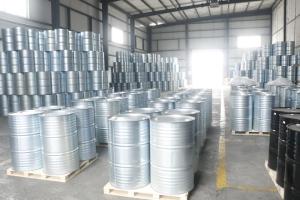
- Heated bulk and paste handling: Paste grades are viscous at ambient temperature and are handled warm, typically between 50 and 60 degrees Celsius, which requires heated ISO tank containers or drums with heating blankets and a documented maximum holding temperature, because overheating degrades the quaternary and builds colour. Flake grades avoid that problem but are dusty and hygroscopic.
- Solvent content and compatibility: Isopropanol in a paste grade sets the flash point and therefore the flammability assessment and the packaging, so buyers should obtain the measured flash point rather than a generic figure. Contact materials should be stainless or lined steel, and the product kept away from oxidisers, anionic surfactants and anionic thickeners, because the cation complexes and precipitates with anionic species.
6.2 Dangerous Goods Identification and Transit Protocols
Classification is supplier-specific and must be read from Section 14 of the lot safety data sheet. Where the aquatic chronic classification applies, drummed solid travels as UN 3077, Class 9, Packing Group III, and liquid or paste as UN 3082, Class 9, Packing Group III, under IMDG, ADR and IATA with marine pollutant marking. Paste consignments containing isopropanol may additionally attract flammable liquid classification depending on the measured flash point, which is why that number belongs on the certificate of analysis. Bulk moves in heated tank containers; drummed material ships ambient.
VII. Enterprise Global Expansion Strategy Guide
Three moves determine whether supply of this quaternary holds up under customer audit.
- Make benzyl chloride the defining specification: Set a limit with a validated method and a batch result, require benzyl alcohol reported alongside it, and make both contractual.
- Build the feedstock dossier once and reuse it: Assemble animal by-product documentation, RSPO and EUDR evidence, halal and kosher certificates as needed and ISO 9001 and 14001 certificates into one supplier pack, because every customer in the detergent chain asks for the same set.
- Establish intended use before quoting: Determine at enquiry whether the use is surfactant, organoclay or antimicrobial, because only the last requires an EPA-registered product or a Biocidal Products Regulation supply chain, and quoting the wrong documentation set wastes the qualification cycle.
VIII. Conclusion
This substance is a mature industrial cationic surfactant whose commercial risk sits in chemistry and compliance rather than in performance. Benzyl chloride residue, free amine and amine hydrochloride, solvent content and the aquatic classification are the attributes that decide whether a supply is defensible, and all of them are measurable and should be specified. The impurity question is not academic: genotoxic residue control is why the distearyl quaternary class was re-engineered once already.
On the supply side, Southeast Asia and China dominate amine and quaternisation capacity, the United States serves its own market from domestic tallow, and Europe holds the specification and documentation high ground. The structural trend is towards documented, low-residue grades sold with a full feedstock dossier and away from commodity paste sold on active matter. Buyers who build that dossier into their specification now will find qualification cycles shortening rather than lengthening as deforestation and animal by-product rules bite.
IX. Industry Resource Connection and Supplier Ecosystem
Powered by Guidechem
This white paper is exclusively compiled by the Guidechem Intelligence Team based on global customs data, regulatory databases, and industry research. Guidechem is a leading global B2B chemical platform, dedicated to connecting global buyers with verified, high-quality manufacturers.
Relying on Guidechem's extensive global database, we have mapped the core participants in the current global Quaternary ammonium compounds, benzylbis(hydrogenated tallow alkyl)methyl, chlorides supply chain:
- Southeast Asia: oleochemical amine and quaternisation base: Malaysia and Indonesia dominate the fatty acid, fatty alcohol and fatty amine capacity feeding this chemistry, with integrated complexes and increasing downstream quaternisation. Their advantage is feedstock integration and scale; the qualification questions are RSPO and EUDR evidence and the depth of the residual analysis.
- China: large-scale merchant cationic surfactant capacity: China holds extensive merchant capacity for fatty amines and quaternary ammonium compounds, serving domestic demand and export, and competes on cost and speed of specification matching. Buyers should qualify the analytical package as carefully as the price.
- European Union and North America: specification, registration and documentation: European and North American producers hold the REACH dossiers, the TSCA positions, the ISO and Responsible Care certifications and the capability to support single-digit parts-per-million limits. They are where buyers go for a documented, low-residue grade.
Disclaimer: The content of this white paper is compiled based on public market data and regulatory information available as of 2026. Global chemical regulations are subject to dynamic adjustments. In actual export operations, enterprises must consult professional regulatory advisors or relevant competent authorities to obtain the latest compliance guidance.



 EN
 Agricultural News
 Food News
 Industrial News
 Cosmetic News
 Pharmaceutical News
 Science News


 4YRS


