
I. Executive Summary
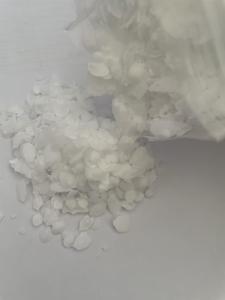
Dicoco amines (bis(coco alkyl) amines, CAS 61789-76-2) are oleochemical secondary amines produced from coconut or palm-kernel fatty acid cuts. Supplied as a pale waxy solid or low-melting paste with a broad C8 to C18 alkyl distribution dominated by C12 and C14 chains, the material is an intermediate whose value lies in the secondary amine nitrogen: it is quaternised to cationic surfactants, neutralised to emulsifier and collector salts, or converted to amidoamines and dithiocarbamates. Because the alkyl distribution is inherited from the coconut cut, no two grades are identical, which shapes specification and registration.
Production begins from coconut or palm-kernel fatty acid or methyl ester. The dominant route class converts fatty acid to fatty nitrile with ammonia over a metal oxide catalyst, then hydrogenates it, with ammonia partial pressure and catalyst selectivity deciding whether primary, secondary or tertiary amine predominates. The alternative class aminated fatty alcohol with ammonia over a copper or nickel catalyst. Both finish in distillation to set chain cut, colour and amine value.
Buying decisions turn on amine value and the secondary-to-primary amine ratio, chain-cut distribution, iodine value, water content and nitrosamine risk assessment. The nitrosamine question needs a clear boundary: secondary amines are nitrosamine precursors, but formation depends entirely on the downstream process. Nitrosamine control in the finished article rests with the manufacturer placing it on the market, which must validate that its process creates no nitrosating conditions and must test the finished product; none are described here. Buyers should also expect REACH and TSCA coverage and GHS classification as corrosive and aquatic hazardous.
II. Product Deep Dive: Molecular Mechanisms and Production Evolution
2.1 Physicochemical Properties and Mechanisms
The chemistry is that of a lipophilic secondary amine. The nitrogen carries one hydrogen and two long alkyl chains, so it is nucleophilic and basic, forms salts with acids, and can be alkylated to a quaternary ammonium cation. Because the two chains together contribute roughly 24 to 32 carbon atoms, the molecule is strongly surface-active as an ammonium salt, which is why it is a platform intermediate.
- Amine Value and Secondary-to-Primary Ratio: Total amine value, in milligrams of potassium hydroxide per gram, is the master specification because it fixes the charge for quaternisation or neutralisation. Buyers pair it with the secondary amine assay and the residual primary and tertiary amine content, because primary amine consumes alkylating agent differently and tertiary amine indicates over-alkylation.
- Chain-Cut Distribution, Iodine Value and Oxidation: The coconut cut is dominated by lauric and myristic chains with meaningful caprylic, capric and oleic content, setting melting range, solubility and the performance of the derived quaternary compound. Iodine value measures residual unsaturation, which governs colour and odour stability; low-iodine hydrogenated or distilled grades are specified wherever appearance stability matters.
2.2 Synthesis and Manufacturing Technologies
Two route classes supply commercial material, both oleochemical. The nitrile route dominates at scale; alcohol amination is chosen where the producer already holds fatty alcohol capacity or needs a specific chain cut. In both cases the secondary amine arises from catalytic conversion rather than stoichiometric alkylation, so the product always contains a distribution of primary, secondary and tertiary amine controlled by catalyst selection and distillation.
- Fatty Nitrile Hydrogenation with Controlled Selectivity: Fatty acid reacts with ammonia over a metal oxide catalyst at elevated temperature to give the fatty nitrile, which is hydrogenated over nickel or cobalt. Suppressing ammonia during hydrogenation shifts selectivity from primary toward secondary amine through dehydrogenation and condensation of the intermediate imine. Catalyst choice and hydrogen pressure set the final ratio, and the crude is distilled to strip primary amine.
- Fatty Alcohol Amination and Finishing: Fatty alcohol reacts with ammonia or a lower alkyl amine over a copper, nickel or supported metal catalyst at elevated temperature and pressure, with water of reaction removed to drive conversion. Finishing includes short-path distillation for colour and odour, filtration, nitrogen blanketing and, where specified, hydrogenation to lower iodine value.
2.3 Core Application Matrix
- Quaternary Ammonium Compounds and Organoclays: Quaternisation with methyl chloride or dimethyl sulfate gives dicoco dimethyl ammonium compounds used as fabric-softening actives, as organophilic modifiers converting bentonite and hectorite into organoclays for drilling fluids, paints and greases, and as antistatic actives. The coconut cut gives better solubility in liquid concentrates than longer-chain distearyl quats.
- Flotation Collectors and Bitumen Emulsifiers: Neutralised with acetic or hydrochloric acid, the amine becomes a cationic collector rendering silica, phosphate, potash and feldspar surfaces hydrophobic for froth flotation, and a cationic emulsifier allowing bitumen to coat acidic aggregate. Chain cut and neutralising acid are tuned to ore type and emulsion break behaviour.
- Corrosion Inhibitors, Lubricant Additives and Biocides: As a filming amine it protects refinery, boiler and pipeline surfaces, and it is a building block for amidoamines, imidazolines and dithiocarbamates in lubricant and fuel additive packages. Derived quaternary ammonium compounds used as biocides are approved under the EU Biocidal Products Regulation by the biocide supplier, not the amine producer.
III. Global Market Supply-Demand Landscape and Export Trends
3.1 Demand Drivers and Market Shifts
Four demand engines drive consumption. Home and fabric care in emerging markets sustains cationic softener actives, although esterquat substitution erodes the share of conventional dialkyl quats in Western Europe. Organoclay demand tracks drilling fluids, coatings rheology modifiers and greases. Road infrastructure sustains cationic bitumen emulsifiers. Mining sustains phosphate and potash flotation collectors. Overlaying these is a shift from tallow-derived to vegetable-derived amines.
3.2 Capacity Distribution and Export Flows
Capacity follows the lauric feedstock. Indonesia, Malaysia and the Philippines host integrated complexes that fractionate coconut and palm kernel oil and convert the lauric cut to fatty acid, alcohol and amine on one site, giving advantages in feedstock cost and heated bulk logistics. China has built substantial fatty amine and quaternary capacity that imports lauric feedstock and exports derivatives. The United States and Europe retain capacity oriented to formulated products, biocides and specialties.
3.3 Market Bifurcation and Pricing Dynamics
Pricing is a pass-through of lauric oil. Coconut and palm kernel oil prices, their spread against crude palm oil, Indonesian export policy, freight and energy dominate the cost curve, so producers quote on formula or index-linked terms and buyers hedge feedstock rather than molecule. Within that, the market bifurcates: commodity collector and emulsifier grade competes on amine value and price, while low-colour quaternisation grade with documented RSPO chain of custody earns a premium.
IV. In-depth Analysis of Global Compliance and Regulatory Barriers
Compliance differs from that of discrete molecules because this is a UVCB, so identification and classification are built on the manufacturing route and feedstock cut. Buyers must verify that the supplier registration, safety data sheet and classification describe the same identity as the material delivered, and re-check whenever route or feedstock changes.
4.1 European Market: REACH, CLP, and Sector-Specific Directives
- REACH Registration and CLP Classification of a UVCB: The substance is registered under Regulation (EC) No 1907/2006 as an UVCB whose identity is defined by the fatty amine route and the coconut-derived alkyl distribution, so buyers should confirm that the dossier identity matches the delivered cut. Under Regulation (EC) No 1272/2008 the profile reflects skin corrosivity, acute oral toxicity and high aquatic hazard with acute and chronic categories; the environmental classification of amine surfactants remains an active technical discussion.
- Detergent Regulation, Biodegradability and Biocides: Surfactants derived from the amine must satisfy the biodegradability requirements of Regulation (EC) No 648/2004, demonstrated with OECD 301 or equivalent data. Where the derived quaternary ammonium compound is sold as a biocidal active, approval and authorisation fall under Regulation (EU) 528/2012 and belong to the biocide supplier.
4.2 North American Market: TSCA, EPA, and FDA Regulations
- TSCA Inventory Status and Chemical Data Reporting: The substance is listed on the TSCA inventory under its UVCB amine designation, so importers rely on that listing rather than a premanufacture notice. Chemical Data Reporting applies at statutory thresholds, any significant new use rule must be screened against the intended conversion, and importers must retain certification at entry.
- FIFRA Registration of Derived Quaternary Actives and GHS: Quaternary ammonium compounds derived from this amine and sold as antimicrobial pesticides require registration of the active substance and of the product under the Federal Insecticide, Fungicide, and Rodenticide Act, and that compliance rests with the biocide registrant. At the workplace, hazard communication under the Occupational Safety and Health Administration standard governs labelling and corrosive handling controls.
4.3 The Critical Hurdle: Quality Control and Safety Limits
Compliance Warning: Two limits govern acceptance. The first is composition: total amine value must sit in a narrow band with a declared secondary amine assay and maximum primary and tertiary amine, because deviation changes the quaternisation charge and leaves residual amine in the finished surfactant. The second is nitrosamines. Secondary amines are recognised nitrosamine precursors, so buyers must hold a documented nitrosamine risk assessment covering the amine, its conversion and the finished formulation. Whether nitrosamines can form depends entirely on the downstream process and matrix; control and testing of nitrosamines in the finished article is the responsibility of the manufacturer placing that article on the market, which must validate that no nitrosating conditions arise and verify the finished product by a validated method. No nitrosating conditions are described here.
V. Green Trade Barriers and ESG in Manufacturing
Few commodity intermediates sit as close to land-use policy as lauric oleochemicals. Because the feedstock is coconut or palm kernel oil, buyers inherit the deforestation and smallholder-inclusion questions attached to oil palm, and European customers now treat certified feedstock and geolocation traceability as conditions of supply.
5.1 Carbon Footprint and Circular Economy
The cradle-to-gate footprint is dominated by agriculture and by hydrogenation and distillation energy. Kernel crushing, esterification and fractionation add process energy, while the nitrile route carries a further high-temperature catalytic step and consumes hydrogen whose footprint depends on whether it is grey, blue or green. Buyers should request cradle-to-gate figures with a stated allocation rule for co-produced fatty acids and alcohols, plus ISO 14001 evidence; methane capture at palm oil mill effluent treatment is the largest agricultural lever for integrated suppliers.
5.2 Sustainable Sourcing and Traceability
Traceability expectations now have a legal edge. Regulation (EU) 2023/1115 imposes due diligence, including geolocation and a legality statement, for oil palm derived commodities, so palm-kernel-based material falls in scope while coconut oil itself is not listed, a distinction buyers must apply when blends are used. Roundtable on Sustainable Palm Oil certification is the instrument most buyers accept, but the model matters: identity-preserved and segregated material give physical traceability, whereas mass balance and book-and-claim credits do not.
VI. Supply Chain Resilience and Export Logistics
Logistics are governed by physical state and oxidation rather than by extreme hazard. The product is a low-melting waxy solid that must be handled hot to be pumped, and it darkens on prolonged air contact, so the chain is designed around temperature maintenance, nitrogen blanketing and tank cleanliness. Buyers should treat colour at discharge and temperature logs as acceptance criteria.
6.1 Packaging Standards and Moisture/Contamination Control
- Heated Bulk and Drum Deliveries: Bulk volumes move in heated, insulated road tankers and ISO-tank containers with temperature logging; smaller volumes ship in lined steel drums or heated intermediate bulk containers. Discharge requires controlled reheating with a limit on maximum bulk temperature and heating time, since excessive thermal history accelerates colour formation.
- Nitrogen Blanketing and Materials Compatibility: Storage and transit should be under a dry nitrogen pad, and carbon steel and stainless steel are the normal materials of construction while copper and brass are avoided because they catalyse degradation and discolouration. Tanks and iso-containers must be dedicated or covered by documented cleaning validation, since cargo carry-over frequently causes off-specification colour.
6.2 Dangerous Goods Identification and Transit Protocols
Classification follows the corrosive and aquatic hazard profile. Liquid consignments are typically carried as amines, liquid, corrosive, under UN 2735 in Class 8, while solid or pasty consignments fall under the corresponding solid amine entry, and material meeting aquatic chronic criteria additionally attracts marine pollutant status for sea carriage under the International Maritime Dangerous Goods Code. Under the European ADR and RID agreements the shipment requires UN-specification packaging, corrosive labelling and segregation from acids and oxidisers. The decisive controls are thermal: agreed heating medium, temperature recording and discharge procedures preventing localised overheating.
VII. Enterprise Global Expansion Strategy Guide
Producers compete on feedstock position, selectivity control and certification breadth. Three moves consistently separate durable suppliers from transactional ones.
- Sell Composition Certainty: Publish a chain-cut distribution by carbon number, total and secondary amine value with tolerance, primary and tertiary amine limits, iodine value, colour and residual catalyst metals, and hold an ISO 17025 accredited method for each. Provide certificate-of-analysis data by lot, because customers quaternising to a fixed active content need the actual amine value of each delivery.
- Make Certification a Product Feature: Maintain Roundtable on Sustainable Palm Oil certification with a stated supply chain model, geolocation data and due-diligence statements aligned to Regulation (EU) 2023/1115, and offer halal and kosher certification where required. Buyers increasingly cannot list a supplier whose claims stop at a certificate number.
- Contract Against Lauric Volatility: Quote on index-linked terms tied to coconut and palm kernel oil, hedge hydrogen and freight, and offer dual-qualified grades from both nitrile and alcohol routes so that a feedstock disruption in one chain does not stop supply.
VIII. Conclusion
Dicoco amines are a workhorse oleochemical intermediate whose economics are inseparable from the lauric oil market and whose technical value rests on the selectivity of a single catalytic step. The commercial question is whether the producer can deliver a consistent chain cut, a tight secondary-to-primary ratio and stable colour under nitrogen blanketing, at a price that tracks coconut and palm kernel oil.
The compliance frontier is equally clear. UVCB identity under REACH, aquatic classification under CLP, biodegradability evidence under the detergent framework and biocide responsibility under Regulation (EU) 528/2012 and FIFRA define what can be sold and by whom, while nitrosamine risk assessment defines downstream handling. Suppliers who document all of that and prove deforestation-free feedstock will keep access to multinational customers.
IX. Industry Resource Connection and Supplier Ecosystem
Powered by Guidechem
This white paper is exclusively compiled by the Guidechem Intelligence Team based on global customs data, regulatory databases, and industry research. Guidechem is a leading global B2B chemical platform, dedicated to connecting global buyers with verified, high-quality manufacturers.
Relying on Guidechem's extensive global database, we have mapped the core participants in the current global Dicoco amines supply chain:
- Southeast Asian Lauric Oleochemical Ecosystem: Indonesia, Malaysia and the Philippines host integrated complexes that fractionate coconut and palm kernel oil and convert the lauric cut to fatty acid, alcohol, methyl ester and amine on one site, giving advantages in feedstock cost and heated bulk logistics. This region sets the marginal global price for dicoco amines.
- China Fatty Amine and Quaternary Ecosystem: Chinese producers import lauric feedstock and operate large fatty nitrile, hydrogenation and quaternisation capacity, supplying domestic detergent, textile and oilfield markets and export customers in flotation and bitumen emulsifiers. The ecosystem competes on scale and on the breadth of derivative conversion available from a single site.
- United States and European Oleochemical Ecosystem: United States and European producers concentrate on higher-specification quaternisation grades, biocide actives and formulated specialties, holding the regulatory dossiers and certification schemes that downstream customers require. They typically import intermediate amine where feedstock economics favour it and compete on documentation and supply reliability.
Disclaimer: The content of this white paper is compiled based on public market data and regulatory information available as of 2026. Global chemical regulations are subject to dynamic adjustments. In actual export operations, enterprises must consult professional regulatory advisors or relevant competent authorities to obtain the latest compliance guidance.



 EN
 Agricultural News
 Food News
 Industrial News
 Cosmetic News
 Pharmaceutical News
 Science News


 4YRS


