-
We detected your language preference as English. Would you like to switch to the English version for a better experience?
Switch to English
Stay here


Tallow amine (CAS 61790-33-8), a UVCB primary amine distilled from hydrogenated tallow nitrile and dominated by C16 and C18 chains, is one of the least visible but most load-bearing intermediates in heavy industry. Its cationic surface activity drives asphalt emulsification for road construction, mineral flotation selectivity, pipeline corrosion inhibition and derivatisation into quaternary ammonium compounds, amine oxides and ethoxylated co-formulants, while its anhydrous solid form and land animal origin shape a logistics and compliance profile unlike any oleochemical commodity.
Through 2026 the molecule's economics are governed by rendering rather than petrochemicals. Availability follows beef slaughter volumes, with export-grade tallow flowing from Australia, New Zealand, Brazil, the United States and Europe into oleochemical centres, so nitrile capacity is usually the binding constraint. Meanwhile animal-origin status has become a qualification gate: by-product rules, religious claims and cattle-linked due diligence decide which customers can accept the material at all.
Buyers need a dual strategy. Technically, qualify on amine value, primary amine content, iodine value and congealing point. Commercially, secure provenance documents at renderer level, because no downstream certificate can recreate the slaughter-origin evidence that European authorities, certifiers and sustainability teams request independently.
The commercial product is a pale, waxy solid supplied as flake or molten, usually above fifty degrees Celsius, with amine values in the low two hundreds of milligrams of potassium hydroxide per gram. Because the nitrogen is a free primary amine rather than a quaternary salt, the material protonates in acidic water to form surface-active cations, which is exactly what makes it valuable in bitumen emulsions and flotation circuits and what makes it corrosive and oxygen-sensitive in storage.
Production follows the classical sequence: split or purchased tallow fatty acids are converted to nitriles with ammonia at high temperature over a dehydration catalyst, then hydrogenated to primary amines. Purity is an operating discipline rather than a separation problem, because the catalysts that hydrogenate nitriles also promote coupling to secondary and tertiary amines unless ammonia partial pressure is held high.
Demand tracks public infrastructure rather than consumer confidence. Road budgets set consumption of cationic bitumen emulsions, mining investment drives flotation volumes, and both resist substitution because few products deliver comparable adhesion and selectivity at the same cost. Downward pressure is qualitative: where specifications permit either origin, tenders may be lost to non-animal alternatives.
Rendering follows cattle production, while nitrile and amine conversion concentrates in oleochemical parks. China imports tallow and palm into coastal amine plants; Southeast Asian sites pivot between tallow and palm-kernel streams; Indian manufacturers serve domestic and export markets. Finished amine then moves in heated tanks or as dry flake, producing two very different logistics economics.
Pricing anchors to tallow quotations, themselves volatile because they follow slaughter throughput, fuel demand for rendered fats and export policy in Australia and Brazil, then adds hydrogenation energy, catalyst and freight. A clear bifurcation separates documented material moved under heat and segregation from cheaper unqualified lots unusable in regulated or halal-conscious applications. Offers should therefore be normalised for molten delivery, heating charges and provenance files.
Two compliance layers superimpose here. Ordinary chemical law governs inventory, classification, labelling and derivative-specific restrictions; and rendered-animal origin imposes hygiene, categorisation and origin rules unrelated to toxicity. Suppliers satisfying the first but ignoring the second see cargo rejected at customs rather than in the laboratory.
Sustainability questions arrive earlier and harder for animal-derived chemistry than for petrochemical analogues. Customers now ask three things at once: whether emissions allocation to a co-product of beef production has been calculated transparently, whether cattle-derived input carries deforestation risk, and whether a non-animal alternative would serve equally well. Answering requires feedstock-level evidence rather than factory-level certification.
Because rendered tallow is a co-product rather than a crop, its greenhouse gas profile depends on allocation: treating it as valorised slaughterhouse material gives a low footprint, whereas allocating livestock emissions gives a very different picture. Disclosures should state the allocation rule and report cradle-to-gate results consistent with ISO 14067 for upstream Scope 3 integration. Competition from fuel producers complicates this further, since diverting material changes price and indirect emissions.
Traceability expectations now range from traceability pilots to hard legal duties. Since cattle are among the commodities covered by Regulation (EU) 2023/1115, operators placing cattle-derived inputs on the European market should establish due diligence covering origin, geolocation and legality, verifying against the current product scope and phased application dates before assuming coverage. Buyers should also note that switching to vegetable-derived amines does not escape scrutiny; it merely exchanges animal-origin concerns for palm-linked deforestation risk. Finally, halal certification from recognised bodies can be obtained where slaughter sources are approved, whereas kosher status is far rarer and vegan claims require an entirely non-animal route.
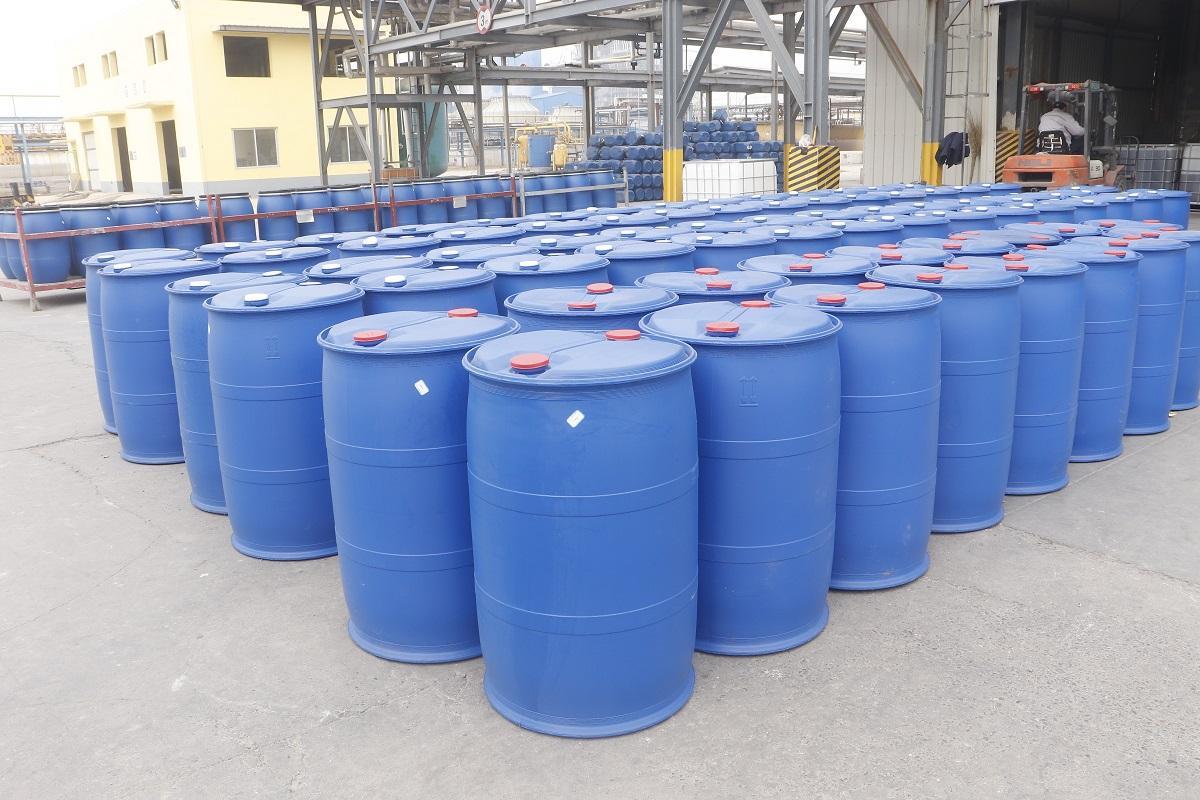
Logistics decisions here start with physical form. The product solidifies near ambient temperature, oxidises and darkens if held hot too long, and is corrosive, so exporters choose between molten movement in heated tanks and flaked solid in bags, each with distinct cost structures, contamination risks and failure modes that experienced buyers price explicitly rather than treat as freight detail.
Consignments are generally classified as corrosive, with the appropriate UN number depending on physical state — the solid form commonly travelling as amines, solid, corrosive, not otherwise specified and molten material as amines, liquid, corrosive, not otherwise specified — and the chronic aquatic classification typically adding marine pollutant status under the IMDG Code. Classification must nonetheless be confirmed per lot against the current safety data sheet, and packaging, labelling, segregation and emergency response documentation prepared accordingly: acid-compatible segregation, spill kits relying on inert absorbent rather than water flushing, and clear instructions that responders avoid copper-alloy fittings. European road movement follows ADR, with the additional administrative burden that animal-origin consignments must carry their own commercial and health documentation.
Because the chemistry is mature and largely price-transparent, differentiation comes from provenance and application support.
Tallow amine occupies an unusual position: technically irreplaceable in several heavy-industrial niches, yet structurally exposed on origin rather than on performance. Demand from road building, mining and corrosion control is resilient because no substitute matches its adhesion and selectivity at comparable cost, and because feedstock availability is tied to the immense global beef industry rather than to a discretionary chemical value chain. Its risks therefore sit at the edges: at the slaughterhouse that determines its legal category, at the renderer that must be approved, and at the border where documentation is checked before chemistry.
For exporters through 2026 the winning posture combines upstream control with downstream optionality. Secure tallow from approved establishments with complete documentation, hold a qualified non-animal grade for customers excluding animal input, and price explicitly for heating, dedicated tanks, hazard classification and provenance files. Buyers applying the same logic will find that the cheapest quotation for a C16 to C18 amine frequently omits exactly those elements, and that in this category the omitted elements are the ones that determine whether a shipment can be used at all.
Powered by Guidechem
This white paper is exclusively compiled by the Guidechem Intelligence Team based on global customs data, regulatory databases, and industry research. Guidechem is a leading global B2B chemical platform, dedicated to connecting global buyers with verified, high-quality manufacturers.
Relying on Guidechem's extensive global database, we have mapped the core participants in the current global Tallow amine supply chain:
Disclaimer: The content of this white paper is compiled based on public market data and regulatory information available as of 2026. Global chemical regulations are subject to dynamic adjustments. In actual export operations, enterprises must consult professional regulatory advisors or relevant competent authorities to obtain the latest compliance guidance.
|
 |
 |
 |
 |
 EN
 Agricultural News
 Food News
 Industrial News
 Cosmetic News
 Pharmaceutical News
 Science News


 4YRS


