
I. Executive Summary
(Hydrogenated tallow alkyl)amine, ethoxylated, CAS 61790-82-7, is the amine ethoxylate known commercially as PEG hydrogenated tallow amine or POE tallow amine. It is a UVCB substance: the hydrophobic tail reflects hydrogenated tallow's fatty-acid distribution and the two polyoxyethylene chains on nitrogen follow a distribution rather than one chain length. It works as an emulsifier, agrochemical adjuvant and tank-mix surfactant, textile auxiliary, antistatic agent, industrial cleaner component and corrosion inhibitor. Bought on specification and delivered in bulk, its economics turn on feedstock, freight and documentation rather than novelty.
Six quality attributes decide whether a lot performs: ethylene oxide unit distribution and resulting cloud point, amine value and the primary/secondary/tertiary amine split, free amine content, colour and oxidation stability, pH in solution, and viscosity and pour point. Two impurity issues dominate compliance. Residual ethylene oxide and its by-product 1,4-dioxane are tightly constrained in Europe and flagged under California Proposition 65, and buyers now require routine testing by a named method. Separately, secondary amine residues are nitrosamine precursors, so the nitrosamine question attaches to this chemistry even though formation belongs to the formulator's process.
The commercial picture is defined by substitution: In European agrochemical formulation, tallow amine ethoxylates sit in a scrutinised co-formulant class: authorisation runs through the plant-protection framework, a list of non-accepted co-formulants excludes certain substances, and formulators are reformulating toward alternatives. Detergent uses add biodegradability expectations, and animal-by-product and deforestation rules govern feedstock. Suppliers combining tight dioxane control with certified origin and a complete co-formulant dossier retain access; those competing on price alone increasingly do not.
II. Product Deep Dive: Molecular Mechanisms and Production Evolution
2.1 Physicochemical Properties and Mechanisms
As a UVCB, this substance has no single structure: alkyl groups track the hydrogenated tallow fatty profile, dominated by saturated C16 and C18 chains, and each nitrogen carries two polyoxyethylene chains of distributed length. Hydrogenation removes the unsaturation that would otherwise drive colour and odour on storage. The balance between hydrophobic alkyl and polyoxyethylene chains sets hydrophilic-lipophile behaviour, and thus whether the material emulsifies, wets, disperses or solubilises.
- Ethoxylate Chain Distribution and Cloud Point: Ethoxylation produces a distribution of chain lengths, and both average and width matter: the average sets nominal hydrophilicity, the width sets the cloud point at which the solution turns turbid as hydrogen bonding to water fails. Two lots with the same nominal EO number but different widths behave differently in concentrated electrolyte formulations, which is why buyers specify cloud point directly.
- pH-Dependent Charge and Amine-Type Speciation: The nitrogen is tertiary ideally, but commercial product contains primary, secondary and tertiary species quantified as amine value and amine-type split. Protonation at low pH gives cationic character and strong adsorption onto negatively charged surfaces, which is what makes the material an effective antistatic agent, corrosion inhibitor and adjuvant improving foliar retention. At neutral to alkaline pH it behaves essentially nonionically, so the final system's pH window governs performance.
2.2 Synthesis and Manufacturing Technologies
Manufacture follows an established oleochemical route class: convert hydrogenated tallow fatty acid to the fatty amine, then ethoxylate and finish. Discussion stays at route-class and control-strategy level. Two operations separate good producers from average ones: hydrogenation quality at the feedstock stage, governing colour and oxidation stability, and post-ethoxylation stripping, governing the residual ethylene oxide and 1,4-dioxane figures customers now audit.
- Hydrogenated Tallow Amine Feedstock Route Class: Fatty acid from hydrogenated tallow is converted through the nitrile to the primary amine, with hydrogenation upstream to remove unsaturation. Critical controls are iodine value after hydrogenation, chain-length distribution, and residual ammonia and catalyst metals, since all carry into the surfactant's colour, odour and elemental profile. Producers serving regulated markets document the animal-by-product status of the tallow and, where chains are palm-derived instead, certified origin.
- Controlled Ethoxylation and Post-Reaction Stripping: Ethylene oxide is added to the amine under basic catalysis at controlled temperature and pressure, chain-length distribution governed by catalyst, temperature and oxide-to-substrate ratio, with ethylene oxide handling treated as a major process hazard. The product is then stripped, typically under vacuum with steam or inert gas, to bring residual ethylene oxide and 1,4-dioxane to specification. Stripping is energy-intensive and the main reason two nominally identical products differ in price: low single-digit ppm dioxane costs real steam, time and analytical effort.
2.3 Core Application Matrix
- Agrochemical Emulsifier and Adjuvant: The largest single use is in emulsifiable concentrates and as a tank-mix adjuvant, where cationic character under acidic conditions improves wetting, spreading and retention on leaf surfaces and helps solubilise the active in spray solution. This is also the application under greatest regulatory pressure, since the co-formulant is assessed alongside the active substance.
- Textile Auxiliary and Antistatic Agent: In fibre processing and finishing the material acts as lubricant, emulsifier and durable antistatic agent, adsorbing onto fibre surfaces and dissipating charge. Buyers care about colour, odour and compatibility with downstream dyeing and finishing auxiliaries.
- Industrial Cleaner Component and Corrosion Inhibitor: In institutional and industrial cleaners it contributes detergency and soil emulsification, and in metal-treatment and circulated-water systems it adsorbs on metal surfaces to inhibit corrosion. Requirements here emphasise biodegradability, aquatic classification and coherence with detergent labelling obligations.
III. Global Market Supply-Demand Landscape and Export Trends
3.1 Demand Drivers and Market Shifts
Underlying demand is stable, tied to crop-protection volumes, textile output and institutional cleaning. What changes is composition rather than volume: European agrochemical formulators are reducing reliance on tallow amine ethoxylates as a scrutinised co-formulant class, replacing them with alternatives. Demand therefore shifts geographically and by application even where tonnage holds, and suppliers dependent on one European agrochemical customer face concentrated risk.
3.2 Capacity Distribution and Export Flows
Capacity follows oleochemical feedstock and ethoxylation investment. Southeast Asia, particularly Malaysia and Indonesia, hosts integrated oleochemical complexes with large ethoxylation trains, exporting both fatty amine and ethoxylate. China has built substantial surfactant ethoxylation capacity serving domestic agrochemical and textile demand and increasingly exporting. The United States benefits from abundant domestic tallow and supplies home and Latin American markets, while European capacity is mature, tightly regulated and focused on speciality and low-dioxane grades. Bulk flows move by heated tank container and chemical tanker along oleochemical trade lanes.
3.3 Market Bifurcation and Pricing Dynamics
The market splits by specification and feedstock provenance. Standard grades with relaxed dioxane limits and uncertified origin compete on price and serve cleaning and textile uses. Low-dioxane grades with certified feedstock, animal-by-product documentation and a co-formulant dossier command a premium from agrochemical and detergent formulators facing European scrutiny. Quotations therefore move with both oleochemical and petrochemical markets.
IV. In-depth Analysis of Global Compliance and Regulatory Barriers
Compliance has three layers: chemical law governing the substance, sector rules governing the formulations it is sold into, and feedstock rules governing the fat it is made from. A supplier can satisfy the first and still lose the business on the second or third.
4.1 European Market: REACH, CLP, and Sector-Specific Directives
- REACH Registration of a UVCB and CLP Aquatic Classification: Registration must define the substance properly as a UVCB, with composition tied to fatty-chain distribution and ethoxylation range rather than a single structure. Classification turns on aquatic hazard, and fatty amine ethoxylates are strongly coloured by aquatic chronic classifications, driving environmental labelling, exposure scenarios and, where applicable, transport marking as an environmentally hazardous substance. Suppliers should expect registration-identity questions whenever nominal EO number or feedstock origin changes.
- Agrochemical Co-formulant Rules and Detergent Obligations: Plant-protection products require authorisation under the EU framework regulation, and a list of non-accepted co-formulants is maintained under the implementing regulation with its annex, placing tallow amine ethoxylates under active substitution pressure in new and renewal dossiers. In parallel, detergent applications must satisfy the EU Detergent Regulation's biodegradability requirements, demonstrated by ready-biodegradability testing to the OECD 301 series.
4.2 North American Market: TSCA, EPA, and FDA Regulations
- TSCA Inventory Position for UVCB Ethoxylates: United States supply requires correct TSCA inventory positioning, and UVCB ethoxylates are listed under definitions keyed to alkyl and ethoxylation range, so identity matching is rarely a simple synonym lookup. Importers should confirm their product falls within the listed definition and otherwise secure the appropriate notice or exemption before shipment.
- California Proposition 65 and Customer Impurity Specifications: Both ethylene oxide and 1,4-dioxane appear on the Proposition 65 list, so US-facing customers require warning assessment and, in practice, impurity data even where no warning is needed. Major agrochemical and detergent buyers impose their own residual limits well below any general threshold and increasingly ask for evidence of routine testing frequency rather than a one-off certificate. Suppliers showing a documented testing schedule with method references win these programmes.
4.3 The Critical Hurdle: Quality Control and Safety Limits
Compliance Warning: Residual ethylene oxide and 1,4-dioxane are the decisive acceptance criteria. 1,4-Dioxane is on the EU candidate list of substances of very high concern as a carcinogen, is captured by the REACH restriction entries covering carcinogens in mixtures supplied to the general public under Annex XVII, and a dedicated restriction on 1,4-dioxane in ethoxylated surfactants has been under assessment with limit scenarios from low single-digit to low tens of ppm. Purchasers should require a stated specification for both, supported by routine testing at a defined frequency using a named method such as headspace GC-MS. Secondary amine residues are also recognised as nitrosamine precursors, so suppliers should provide a nitrosamine risk assessment; this paper deliberately provides no nitrosating conditions, and nitrosamine control in finished formulations belongs to the formulator's own validated process.
V. Green Trade Barriers and ESG in Manufacturing
ESG scrutiny of a tallow-derived ethoxylate concentrates on the feedstock: where the fat came from, whether its production drove deforestation, and whether by-product rules were respected. ISO 14001 and ISO 9001 certification is baseline; the real questions concern land use, traceability and aquatic toxicity.
5.1 Carbon Footprint and Circular Economy
The footprint is dominated upstream: rendered fat carries land-use, feed and processing emissions that land in Scope 3, while hydrogenation, ethoxylation and vacuum stripping carry the Scope 1 and 2 load. Using a rendered by-product is itself a circular-economy argument, since tallow is a co-product of meat production rather than a dedicated crop. Credible reporting separates the scopes, reports energy per tonne of ethoxylate and documents ready biodegradability data.
5.2 Sustainable Sourcing and Traceability
Traceability obligations are concrete. Tallow-derived grades must comply with EU animal by-product rules, including the framework regulation and its implementing regulation, governing sourcing, processing and the material categories permissible for technical use. Where chains come partly from palm, certified sustainable sourcing and the EU deforestation regulation require geolocated, deforestation-free supply with due diligence statements. Halal and kosher certification is required by some food-adjacent and personal-care customers, and mass-balance documentation must show which chain lengths came from which origin.
VI. Supply Chain Resilience and Export Logistics
This is a bulk liquid or paste commodity whose logistics are governed by viscosity, oxidation and aquatic classification. Material moves heated, under nitrogen, in equipment dedicated to surfactant service; arrivals turn on temperature history and headspace control rather than distance.
6.1 Packaging Standards and Moisture/Contamination Control
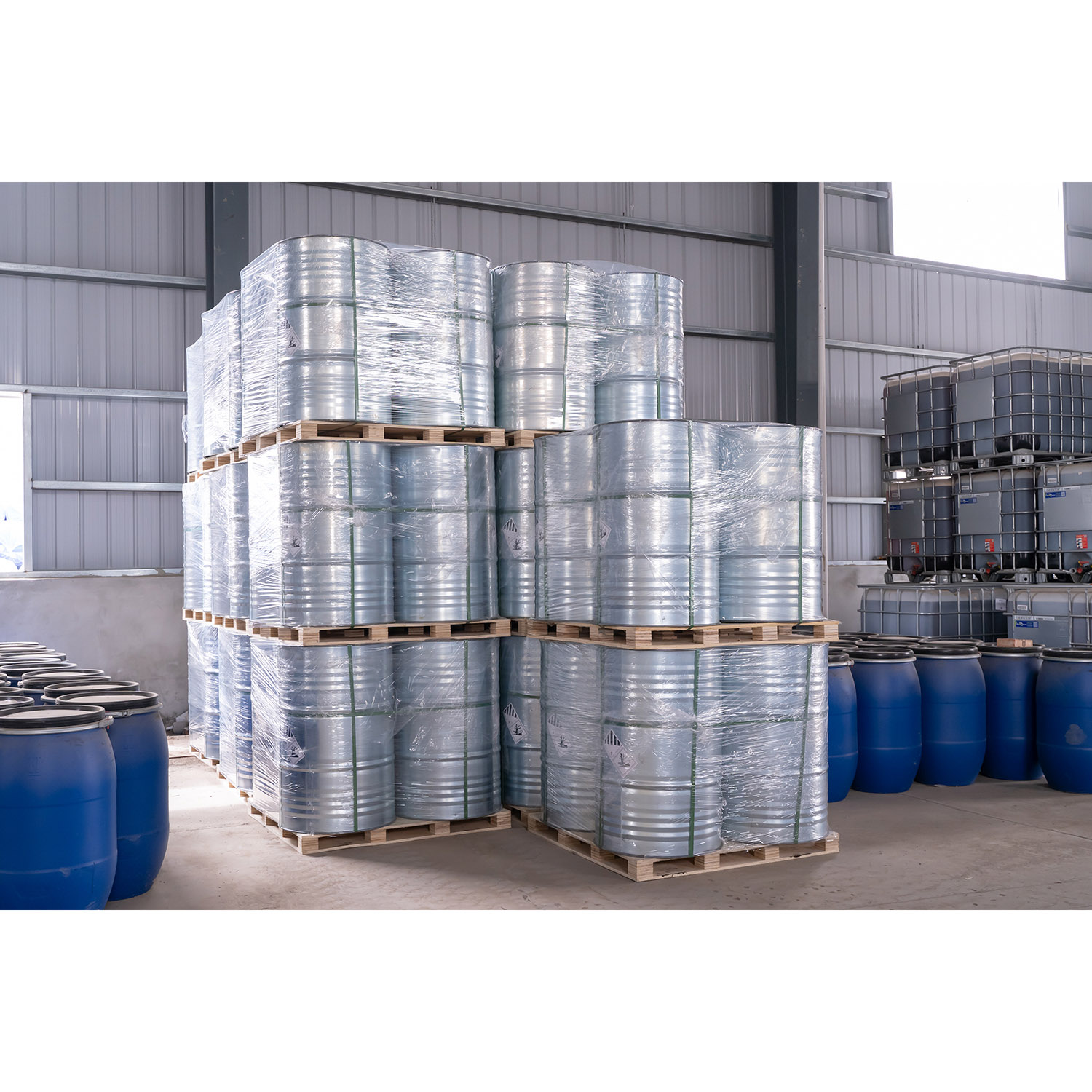
- Heated Bulk Handling with Nitrogen Blanketing: Commercial volumes move in heated tank containers, road tankers or ISO tanks held above the pour point, with nitrogen blanketing. Oxygen exposure drives colour, odour and peroxide formation, so blanketing and temperature control are quality controls as much as safety measures. Drums should be filled warm, closed under nitrogen and stored within a stated band.
- Dedicated, Cleaned Equipment and Moisture Control: Amine ethoxylates pick up contamination readily, so tanks and drums must be dedicated or validated-cleaned and moisture excluded, since water shifts cloud point, as-is amine value and viscosity. Packaging specifications should state water content at release, filling temperature and headspace gas.
6.2 Dangerous Goods Identification and Transit Protocols
Many grades are not dangerous for transport, but aquatic chronic classification commonly triggers environmentally hazardous substance treatment with marine pollutant marking and corresponding documentation under the IMDG Code, ADR or IATA. Heated bulk transit requires declared carrying temperature, heating at the receiving terminal and a procedure if material cools below its pour point. Resilience comes from contracting heating capacity in advance and confirming that transport-document classification matches the current safety data sheet.
VII. Enterprise Global Expansion Strategy Guide
Suppliers and buyers should invest in three capabilities, in this order: impurity control with documented testing, a sector dossier matched to the application, and certified feedstock traceability. Each is a gate rather than a differentiator, and missing one removes a supplier from consideration.
- Lead with Dioxane and Ethylene Oxide Control: Publish the specification, the method, typically headspace GC-MS, and the testing frequency, and show lot-traceable results. Add a nitrosamine risk assessment covering secondary amine residues while making clear that finished-product nitrosamine control sits with the formulator's validated process.
- Build the Sector Dossier: Prepare the co-formulant documentation needed for plant-protection product authorisation, including the position against the list of non-accepted co-formulants, plus the ready-biodegradability and surfactant documentation required under the EU Detergent Regulation.
- Certify Feedstock and Dual-Source: Maintain animal-by-product documentation for tallow grades and certified deforestation-free status for any palm-derived chains, and pair a Southeast Asian or Chinese bulk source with a US or European supplier for continuity. Diversification also hedges substitution risk, since reformulation will not proceed at the same pace everywhere.
VIII. Conclusion
PEG hydrogenated tallow amine is a mature workhorse surfactant whose competitive position now rests less on performance, which is well understood, than on impurity control and documentation. Residual ethylene oxide and 1,4-dioxane determine market access, the nitrosamine precursor question determines whether awkward questions are asked, and feedstock provenance determines whether the product can be sold into European chains. Price matters within that frame and not outside it.
The outlook is stable underlying demand, continued substitution pressure in European agrochemical formulation, tightening expectations on dioxane and steadily stricter feedstock traceability as deforestation and animal-by-product rules bite. Suppliers treating testing frequency, sector dossiers and certified origin as core attributes, and buyers verifying them, will still be trading here as scrutiny deepens.
IX. Industry Resource Connection and Supplier Ecosystem
Powered by Guidechem
This white paper is exclusively compiled by the Guidechem Intelligence Team based on global customs data, regulatory databases, and industry research. Guidechem is a leading global B2B chemical platform, dedicated to connecting global buyers with verified, high-quality manufacturers.
Relying on Guidechem's extensive global database, we have mapped the core participants in the current global (Hydrogenated tallow alkyl)amine, ethoxylated (PEG hydrogenated tallow amine) supply chain:
- Southeast Asian Oleochemical Complex: Malaysia and Indonesia host integrated fat-splitting, fatty amine and ethoxylation capacity close to tallow and palm feedstock, exporting bulk ethoxylates worldwide. Strengths are scale, integration and cost; qualification focuses on dioxane specification, feedstock certification and aquatic classification coherence.
- China Surfactant Ethoxylation Base: Large, fast-moving capacity serving domestic agrochemical, textile and detergent demand and increasingly exporting. Buyers value responsiveness and price but should verify UVCB identity matching, testing frequency for residual ethylene oxide and dioxane, and amine-value consistency between lots.
- United States and European Speciality Producers: Mature capacity with abundant domestic tallow in the US and stricter European oversight, focused on low-dioxane, fully documented grades for agrochemical and detergent formulators and on the dossiers European authorisation and detergent rules require.
Disclaimer: The content of this white paper is compiled based on public market data and regulatory information available as of 2026. Global chemical regulations are subject to dynamic adjustments. In actual export operations, enterprises must consult professional regulatory advisors or relevant competent authorities to obtain the latest compliance guidance.



 EN
 Agricultural News
 Food News
 Industrial News
 Cosmetic News
 Pharmaceutical News
 Science News


 4YRS


