
I. Executive Summary
Tallow amine ethoxylate (CAS 61791-26-2, "amines, tallow alkyl, ethoxylated") is a UVCB nonionic surfactant produced by reacting tallow-derived fatty amines, predominantly C16 to C18 chains with significant oleic unsaturation, with ethylene oxide. The number of ethylene oxide units, typically between two and thirty, sets the hydrophilic-lipophilic balance, the cloud point and the physical form, so the same CAS number covers products ranging from oily liquids to soft pastes and waxes. It is bought for three properties: emulsification, substantivity to negatively charged surfaces, and antistatic performance.
Three issues dominate sourcing decisions in 2026. The first is provenance: because the hydrophobic chain comes from rendered animal fat, EU buyers must be able to document animal-by-product status under Regulation (EC) 1069/2009 and Regulation (EU) 142/2011, transmissible spongiform encephalopathy risk status, and halal or kosher certification where religious or vegetarian claims attach to the finished formulation. The second is residue chemistry: residual ethylene oxide and 1,4-dioxane generated during ethoxylation are audited by ISO 17280 or equivalent methods. The third is substitution demand created by the REACH restriction on nonylphenol ethoxylates, which pulls this chemistry into APEO-free reformulation programmes.
This white paper sets out the manufacturing routes, the specification parameters that matter, the compliance framework across Europe and North America, the ESG profile of a rendered-fat-derived surfactant, and the heated-transport realities that decide whether an import programme succeeds.
II. Product Deep Dive: Molecular Mechanisms and Production Evolution
2.1 Physicochemical Properties and Mechanisms
The molecule combines a long hydrophobic alkyl chain, a nitrogen atom that can be protonated, and a polyether chain that hydrates. That triad gives a surfactant whose behaviour changes with pH and with ethylene oxide chain length, which is why formulators specify both parameters rather than simply ordering by CAS number.
- Ethylene oxide number, HLB and cloud point: Increasing ethylene oxide content raises water solubility, raises the cloud point and shifts the product from emulsifier toward detergent and dispersant. Buyers should note that conventional ethoxylation yields a statistical distribution of chain lengths around the average, so two "10 EO" products from different catalysts differ measurably in cloud point, viscosity and low-temperature behaviour.
- pH-dependent cationic character: At acidic pH the amine nitrogen is protonated and the molecule behaves as a cationic surfactant with strong substantivity to negatively charged fibres, pigments, metals and mineral surfaces; at neutral to alkaline pH it behaves essentially as a nonionic. This dual character is exactly what makes the chemistry effective as a levelling agent, an antistatic additive and, in its acidified form, as an asphalt emulsifier.
2.2 Synthesis and Manufacturing Technologies
Manufacture has two distinct stages: conversion of rendered tallow into a fatty amine, and controlled ethoxylation of that amine. The first stage determines the chain-length and unsaturation profile and the animal-origin documentation; the second determines the ethylene oxide distribution and the residue profile that customers test for.
- From tallow to fatty amine: Rendered tallow is hydrolysed or transesterified to fatty acids or esters, converted to fatty nitriles by reaction with ammonia over a dehydrating catalyst at high temperature, and hydrogenated to primary tallow amine, with secondary amine obtained by controlled deammoniation and disproportionation. Iodine value, chain-length distribution and residual glycerol or unsaponifiables are carried through into the surfactant, so amine quality is the upstream determinant of final colour and odour.
- Ethoxylation, distribution control and stripping: Ethylene oxide is added under pressure with an alkaline catalyst, giving the broad Poisson-type distribution familiar from conventional ethoxylation; narrow-range catalysts, including alkaline-earth and double-metal-cyanide systems, compress that distribution and deliver sharper cloud points, lower free alcohol or amine and lower viscosity. Because ethylene oxide is flammable, carcinogenic and prone to runaway, addition is controlled by heat-removal capacity and rigorous oxide-in-vapour monitoring, and the finished product is vacuum-stripped to reduce residual ethylene oxide and 1,4-dioxane to contracted levels.
2.3 Core Application Matrix
- Textile emulsifier, levelling and antistatic agent: In dyehouses the product emulsifies oils and acts as a levelling and dispersing auxiliary for acid, disperse and cationic dyeing systems; in fibre spin finishes and in plastics and polyurethane foam it functions as an antistatic additive, migrating to the surface and dissipating charge through the hydrated polyether chain.
- Agrochemical adjuvant: As an emulsifier and wetting component in emulsifiable concentrate, suspension concentrate and tank-mix systems, it helps build stable emulsions and improves spreading and uptake on waxy leaf surfaces. Adjuvant supply into pesticide formulations must be checked against the relevant EPA inert-ingredient listings in the United States and against national authorisation rules in Europe.
- Asphalt emulsifier and industrial cleaning: In acidified form it is a workhorse cationic emulsifier for bitumen emulsions used in road construction, chip seals and surface treatments, where it controls breaking behaviour and aggregate adhesion; in industrial and institutional cleaning it contributes degreasing and soil suspension in alkaline and solvent-assisted formulations.
III. Global Market Supply-Demand Landscape and Export Trends
3.1 Demand Drivers and Market Shifts
The dominant demand driver is substitution rather than growth in end markets. Restrictions on alkylphenol ethoxylates have forced textile, leather and cleaning formulators to qualify alternatives, and fatty amine ethoxylates are among the beneficiaries because they deliver strong emulsification and substantivity at low treat rates. Offsetting that pull is substitution in the other direction: formulators seeking to drop animal-derived inputs, or needing a lower pour point, are evaluating vegetable-oil-derived and coconut-derived amine ethoxylates and alcohol ethoxylates, particularly where a vegan or palm-certified label is commercially valuable.
3.2 Capacity Distribution and Export Flows
Ethoxylation capacity is globally distributed but feedstock is not. China has built large ethoxylation capacity in Jiangsu, Shandong and Zhejiang serving domestic textile, agrochemical and cleaning demand, importing tallow and tallow amine or substituting vegetable feedstocks. Europe's base in Germany, the Netherlands, Belgium and Italy is oleochemical-anchored, closely tied to REACH UVCB registrations and to brand chemical-management programmes. Southeast Asia, particularly Malaysia and Indonesia, and India combine oleochemical feedstock with growing ethoxylation capacity and serve both domestic consumption and export markets.
3.3 Market Bifurcation and Pricing Dynamics
Pricing follows tallow, which itself tracks palm oil and competing lauric oils, and ethylene oxide, which tracks ethylene and steam-cracker economics. Commodity grades with five to fifteen ethylene oxide units are traded on price and availability, while narrow-range and low-residue grades are sold on performance and documentation, and the spread between them has widened as brand audits became routine. Because the product is often shipped hot and in relatively small lots, delivered cost is sensitive to freight, heating surcharges and tank availability rather than to the molecule alone.
IV. In-depth Analysis of Global Compliance and Regulatory Barriers
This surfactant is regulated along three independent axes that buyers frequently conflate: the animal-origin axis, which is a sanitary and traceability regime; the substance axis, which is REACH and TSCA chemical registration with UVCB-specific identity rules; and the residue axis, which governs ethylene oxide and 1,4-dioxane in the product and sometimes in the finished article. A supplier can be fully compliant on two axes and still fail an audit on the third.
4.1 European Market: REACH, CLP, and Sector-Specific Directives
- Animal by-products, TSE and deforestation-free sourcing: Because the hydrophobic chain derives from rendered bovine or ovine fat, European supply must be traceable to Category 3 material processed in approved or registered establishments under Regulation (EC) 1069/2009 and the processing and documentation provisions of Regulation (EU) 142/2011, with commercial documents and TRACES movement records where required. Buyers also verify the country-of-origin transmissible spongiform encephalopathy risk status recognised by WOAH, and are increasingly required to perform deforestation-free due diligence on cattle-derived material under Regulation (EU) 2023/1115, whose product scope and phased application dates have been amended and must be confirmed with the competent authority before shipment.
- REACH UVCB registration, detergent biodegradability and APEO substitution: As a UVCB substance the registration must cover the specific composition, including ethylene oxide range and amine substitution, and the classification is typically driven by aquatic toxicity with skin and eye irritation also notified. Where the surfactant is used in detergents, the biodegradability requirements of Regulation (EC) 648/2004 apply, and fatty amine ethoxylates have faced scrutiny for not meeting ready-biodegradability expectations in some test systems, which constrains detergent use and pushes formulators toward documented alternatives. Separately, REACH Annex XVII entry 46a restricts nonylphenol ethoxylates to 0.01 % by mass in textile articles, which is the driver behind APEO-free substitution programmes; tallow amine ethoxylates are chemically unrelated to alkylphenol ethoxylates, but suppliers must still prove APEO absence by structure and by test.
4.2 North American Market: TSCA, EPA, and FDA Regulations
- TSCA active status and EPA 1,4-dioxane and ethylene oxide controls: The substance is an existing UVCB entry on the TSCA inventory and is used commercially without a new-chemical submission, but the residues associated with ethoxylation are actively regulated: EPA has issued TSCA section 6(a) risk management for 1,4-dioxane affecting downstream product streams, and ethylene oxide itself is a listed carcinogen with its own air-emission and risk-management programme. Occupational exposure to ethylene oxide at the producing plant is governed by the OSHA standard at 29 CFR 1910.1047, and importers should expect questions on Chemical Data Reporting where thresholds are met.
- Proposition 65, pesticide-adjuvant and food-contact clearances: Ethylene oxide and 1,4-dioxane are both listed under California Proposition 65, so downstream US customers assess warning obligations on the basis of residue levels. Where the material is used as a pesticide adjuvant, the applicable EPA inert-ingredient listings and any state registration of adjuvants must be confirmed before supply, and where the surfactant is used in food-contact paper or packaging, clearance must be verified against the applicable FDA indirect food additive listings.
4.3 The Critical Hurdle: Quality Control and Safety Limits
Compliance Warning: Do not accept a generic certificate of analysis for this substance. The specification must fix average ethylene oxide number and its acceptable range, amine value or tertiary amine content, water content, colour, pH of a defined solution, residual ethylene oxide and 1,4-dioxane by named methods with ISO 17280 or an equivalent validated GC method for dioxane, and heavy metals where required. Buyers must also obtain a written APEO-free statement, animal-origin and TSE documentation with country of origin, and the aquatic classification with M-factors, because the same substance can be shipped as general cargo or as a marine pollutant purely on the basis of that classification.
V. Green Trade Barriers and ESG in Manufacturing
Rendered tallow is simultaneously the strongest sustainability argument for this surfactant and its greatest reputational exposure. Using a slaughterhouse co-product instead of virgin vegetable or petrochemical feedstock is a genuine circular-economy benefit; it also binds the product to cattle supply chains, religious dietary rules and deforestation scrutiny.
5.1 Carbon Footprint and Circular Economy
Because the hydrophobic chain is waste-derived, cradle-to-gate product carbon footprints calculated to ISO 14067 are typically favourable relative to petrochemical surfactants, and bio-based carbon content can be reported and certified. The ethylene oxide portion remains fossil-derived and energy-intensive, so steam-cracker energy costs and, in Europe, the EU Emissions Trading System price transmit into this product. Suppliers serving brand-driven customers increasingly provide Scope 1 and Scope 2 data under the GHG Protocol plus Scope 3 screening and, where certification is required, mass-balance chain-of-custody under ISCC PLUS or RSB.
5.2 Sustainable Sourcing and Traceability
Traceability expectations now run from the rendering plant to the ethoxylation reactor. Buyers ask for country of origin, species, Category 3 classification, establishment approval numbers, and halal or kosher certification where the finished formulation carries a dietary claim; brand programmes add ZDHC MRSL conformance, bluesign input verification and, for textile customers, APEO-free test reports. Companies uncomfortable with bovine origin are qualifying vegetable-derived amine ethoxylates under the same certificate-of-analysis discipline, which is why most serious suppliers now qualify both feedstock routes in parallel.
VI. Supply Chain Resilience and Export Logistics
Physical form drives every logistics decision. Lower ethoxylates are waxy or pasty at ambient temperature with pour points that can exceed ambient conditions in temperate climates, while higher ethoxylates are viscous liquids; either way, product that has cooled must be reheated carefully and uniformly before transfer.
6.1 Packaging Standards and Moisture/Contamination Control
- Heated storage, nitrogen blanketing and oxidation control: Bulk shipments move in insulated or steam-coiled ISO tank containers and road tankers held within a defined temperature band, typically well below the thermal degradation threshold, with circulation or gentle heating before discharge. Headspaces should be nitrogen-blanketed and temperatures strictly limited, because amine oxidation and polyether degradation darken the product, raise odour and shift amine value.
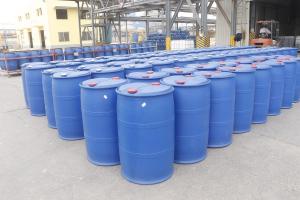
- Drums, IBCs and shelf-life management: Smaller volumes are shipped in lined steel drums or in IBCs compatible with hot filling, with moisture exclusion during filling because water shifts the amine value and promotes haze. Material should be stored dry, in closed containers, away from strong oxidisers and acids, with stock rotation and a defined retest interval covering amine value, water, colour and dioxane.
6.2 Dangerous Goods Identification and Transit Protocols
Fatty amine ethoxylates are frequently classified for aquatic acute and chronic toxicity, and where those classifications meet the marine-pollutant criteria the consignment becomes an environmentally hazardous substance: UN 3082, Class 9, packing group III for liquids, or UN 3077 for solids, with IMDG marine-pollutant marking, appropriate ADR and RID tank codes, and IATA provisions for air freight of samples. Because it is shipped hot, transport documentation should state the maximum loading temperature, the heating medium limitations and the requirement for temperature recording, and receivers must have heated discharge facilities and compatible hose and gasket materials ready before the vehicle arrives.
VII. Enterprise Global Expansion Strategy Guide
Three moves determine whether a supplier is treated as a strategic partner or a spot vendor.
- Sell one integrated documentation package: Bundle the certificate of analysis covering ethylene oxide number, amine value, water, residual ethylene oxide and dioxane, with an APEO-free statement, animal-by-product and TSE documentation with country of origin, aquatic classification with M-factors, and ZDHC or bluesign input verification where relevant. Customers audit all three axes at once, and suppliers who answer them in a single package shorten qualification cycles dramatically.
- Invest in narrow-range ethoxylation and stripping: Narrow ethylene oxide distribution and verified low residual ethylene oxide and 1,4-dioxane are the two parameters that convert a commodity surfactant into a specified one. They also protect the supplier as brand limits tighten, because the capital cost of stripping and narrow-range catalysis is difficult for transactional traders to replicate.
- Dual-qualify tallow and vegetable feedstocks: Maintaining qualified animal-derived and vegetable-derived amine ethoxylate grades under a common specification, with certified bio-based content and chain of custody, lets a supplier serve brand customers who reject animal inputs and cost-sensitive customers who prefer tallow economics, and insulates the business from feedstock shocks and from changes in deforestation-due-diligence scope.
VIII. Conclusion
Tallow amine ethoxylate is a technically versatile surfactant whose commercial future depends on how well suppliers manage provenance and residues rather than on its intrinsic performance. Alkylphenol ethoxylate restrictions continue to create substitution demand, while animal-origin scrutiny, deforestation due diligence and aquatic toxicity classifications continue to raise the documentary bar. The suppliers that win will be those that can prove both where the fat came from and what the ethoxylation left behind.
For buyers, qualification should proceed on four documents: a full specification with ethylene oxide number range and residue methods, an APEO-free and dioxane test report, animal-origin and TSE traceability with country of origin, and the aquatic classification with transport implications. Add confirmation of heated storage and discharge capability at both ends, and the product becomes straightforward to import at scale.
IX. Industry Resource Connection and Supplier Ecosystem
Powered by Guidechem
This white paper is exclusively compiled by the Guidechem Intelligence Team based on global customs data, regulatory databases, and industry research. Guidechem is a leading global B2B chemical platform, dedicated to connecting global buyers with verified, high-quality manufacturers.
Relying on Guidechem's extensive global database, we have mapped the core participants in the current global Tallow amine ethoxylate supply chain:
- China — large-scale ethoxylation hub: Jiangsu, Shandong and Zhejiang host extensive ethoxylation capacity serving textile, agrochemical and cleaning formulators, importing tallow amine or substituting vegetable feedstocks. These producers compete on scale and lead time; buyers should scrutinise ethylene oxide distribution data, dioxane results and animal-origin documentation depth.
- Europe — oleochemical and REACH-anchored producers: Germany, the Netherlands, Belgium and Italy combine oleochemical feedstock with UVCB registrations, brand chemical-management certification and narrow-range ethoxylation know-how. This ecosystem sets the residue and documentation expectations that exporters into the region must meet.
- Southeast Asia and India — feedstock-advantaged oleochemicals: Malaysia and Indonesia anchor oleochemical and ethoxylation capacity close to fat and oil supplies, while India adds a large domestic textile and agrochemical demand base and growing export capability, making the corridor strategically important for both tallow and vegetable-derived grades.
Disclaimer: The content of this white paper is compiled based on public market data and regulatory information available as of 2026. Global chemical regulations are subject to dynamic adjustments. In actual export operations, enterprises must consult professional regulatory advisors or relevant competent authorities to obtain the latest compliance guidance.



 EN
 Agricultural News
 Food News
 Industrial News
 Cosmetic News
 Pharmaceutical News
 Science News


 4YRS


