
I. Executive Summary
N-tallow dipropylenetriamine (CAS 61791-57-9) is a UVCB fatty polyamine of the tallow-alkyl triamine family, supplied as an amber, waxy to viscous material normally handled above 45 °C. Its structure, a C16–C18 tallow alkyl chain bonded to a bis(3-aminopropyl) backbone carrying two secondary and one primary nitrogen, gives the surface activity, film persistence and metal affinity behind its use as a bitumen adhesion promoter, an asphalt emulsifier intermediate and a corrosion-inhibitor building block. Grades are defined by oligomer distribution, amine-type split and total alkalinity, with amine value typically specified between 330 and 440 mg KOH/g.
Three forces pull demand in 2026. Road rehabilitation across India, Southeast Asia, the Gulf and Latin America keeps cationic bitumen emulsions and warm-mix asphalt growing, with anti-strip additives competing on retained tensile-strength ratio. Oilfield, refinery and water-treatment formulators convert the triamine into imidazolines, amidoamines and quaternary ammonium derivatives, so the real volume story is the derivative family behind it. Epoxy, lubricant and fuel-additive houses add a third, less cyclical demand leg.
Commercially, the buying decision turns on the documentation: a REACH-registered UVCB identity, CLP classification consistent with the oligomer split, TSCA inventory confirmation, nitrosamine risk assessment covering secondary-amine content, animal by-product traceability for the tallow chain, and heated-bulk logistics that deliver on specification after a long voyage. Suppliers who treat that file as part of the product, rather than as paperwork requested by the buyer, are the ones winning multi-year framework contracts.
II. Product Deep Dive: Molecular Mechanisms and Production Evolution
2.1 Physicochemical Properties and Mechanisms
The molecule behaves as a polyamine surfactant. Protonated under acidic to neutral conditions, it adsorbs onto negatively charged mineral and metal-oxide surfaces and orients its hydrophobic tallow tail outward to build a water-repellent, oil-wetting film. That single mechanism explains stripping resistance in asphalt, film persistence on steel and collector action in flotation. Standard grades carry an iodine value of 25–45 g I2/100 g on the alkyl portion and hydrogenated grades below 3, with a melt range near 35–50 °C and a cloud point near 30–40 °C, which is why heated handling is non-negotiable across the whole logistics chain.
- Multi-nitrogen anchoring: Two secondary nitrogens and one terminal primary nitrogen give three anchoring sites per molecule, so the adsorbed layer resists displacement by water far better than a fatty monoamine of the same chain length, and the nitrogen lone pairs bind directly to silanol and siloxane sites on siliceous aggregates.
- Oligomer distribution and amine-type split: Commercial material is a reaction mixture containing the target triamine plus residual N-tallow propylenediamine and higher tetra-amine oligomers. Buyers should specify triamine assay, primary-to-secondary amine ratio, total alkalinity and residual acrylonitrile limits, because these drive both performance and the nitrosatable secondary-amine load.
2.2 Synthesis and Manufacturing Technologies
Industrial production runs through a cyanoethylation and hydrogenation cascade built on a tallow-derived primary amine, obtained either by hydrogenation of tallow nitrile or by catalytic amination of tallow alcohol. That upstream choice fixes the chain distribution, the iodine value and the trace-metal profile of every derivative that follows.
- Cyanoethylation of tallow amine: Tallow primary amine reacts with controlled acrylonitrile charges in a Michael addition to give the N-cyanoethyl intermediate, and a second charge extends the chain to the bis-nitrile. Temperature and stoichiometry set the diamine, triamine and tetramine ratio, and unreacted acrylonitrile must be stripped to low ppm because it is a CLP driver.
- Catalytic nitrile hydrogenation and finishing: The nitrile intermediate is hydrogenated over Raney nickel or cobalt under ammonia partial pressure, which suppresses secondary and tertiary amine formation. Finishing covers catalyst filtration to sub-ppm nickel, light-ends stripping, Karl Fischer drying below 0.5 percent water and short-path fractionation for low-colour grades, since Gardner colour and odour are set by trace oxidation products formed during hot finishing.
2.3 Core Application Matrix
- Bitumen adhesion promotion and asphalt emulsification: Neutralised with hydrochloric or phosphoric acid, the triamine becomes a cationic emulsifier and anti-strip agent that raises retained tensile strength on siliceous aggregates, and remains the benchmark for cationic slow-set and medium-set emulsions and chip seals.
- Corrosion inhibition and derivative chemistry: Condensation with fatty acids yields imidazolines and amidoamines; neutralisation or alkylation yields amine salts and quats for oilfield, refinery and cooling-water inhibitor packages, where film persistence under shear and brine is the performance currency.
- Mineral flotation, epoxy, lubricant and fuel additives: As a collector in potash and phosphate flotation, a co-hardener in epoxy formulations and an ashless dispersant in lubricant and fuel additive packages, the molecule delivers chelation and surface activity from one backbone.
III. Global Market Supply-Demand Landscape and Export Trends
3.1 Demand Drivers and Market Shifts
Three shifts define demand. Road agencies specify higher reclaimed-asphalt content and lower production temperatures, which raises the moisture-sensitivity penalty and the required dose per tonne of mix. Corrosion-inhibitor formulators are consolidating onto fewer, better-documented polyamine intermediates. Hardened-tallow grades are gaining share wherever colour stability and odour matter more than price.
3.2 Capacity Distribution and Export Flows
Capacity sits in three belts: the Southeast Asian oleochemical corridor across Malaysia and Indonesia, the Chinese east-coast fine-amine belt in Jiangsu, Shandong and Zhejiang, and the North American Gulf Coast with the world's deepest tallow-rendering base. Europe converts rather than produces, importing intermediates into animal-by-product-approved plants. Flows run from Asia into the Gulf, Africa and India, and from North America into Europe and Latin America.
3.3 Market Bifurcation and Pricing Dynamics
The market is bifurcating. Commodity technical-grade triamine trades on tallow fat price, acrylonitrile, energy and freight through index-linked quarterly contracts. Specification-driven grades with hydrogenated chain, low Gardner colour, controlled secondary-amine content, nitrosamine screening and ISCC or RSPO mass-balance feedstock command a durable premium on annual frameworks. Dual qualification across a standard and a hardened chain is now standard practice among large emulsion producers.
IV. In-depth Analysis of Global Compliance and Regulatory Barriers
Because 61791-57-9 is a UVCB substance whose identity depends on the route, the regulatory file is the product. Registration, classification, labelling and transport entries must be consistent with the oligomer split, the tallow origin and the residual monomer profile, and mismatch between the safety data sheet and the certificate of analysis is the most common cause of rejected European and North American shipments, and it is usually discovered at the port rather than in the laboratory.
4.1 European Market: REACH, CLP, and Sector-Specific Directives
- REACH registration and CLP classification: The substance is registered under REACH as a UVCB fatty amine derivative and must ship with a safety data sheet carrying the entries typical of polyamine surfactants: Skin Corrosion category 1 with H314, Serious Eye Damage category 1 with H318, Acute Toxicity category 4 with H302, Skin Sensitisation category 1 with H317, and Aquatic Acute 1 with H400 plus Aquatic Chronic 1 with H410. Where registrant data support it, Specific Target Organ Toxicity after repeated exposure is also notified, and Section 14 carries UN 3259 or UN 2735.
- Detergents, biocides and animal by-products: Where the amine or its quats enter detergents or disinfectants, Regulation (EC) 648/2004 requires ultimate aerobic biodegradability by an OECD 301 series test, and a cationic surfactant failing the pass level cannot be placed on the EU market. Derived quats sold as biocidal actives fall under Regulation (EU) 528/2012, where the active substance and its Article 95 listed supplier hold the approval, not this intermediate. Tallow grades additionally require Category 3 material from approved establishments under Regulations (EC) 1069/2009 and (EU) 142/2011, with commercial documents and TRACES NT entries on import. Suppliers should also state in writing whether the fat is beef, mixed or blended, and whether it has ever entered the feed chain.
4.2 North American Market: TSCA, EPA, and FDA Regulations
- TSCA inventory status and reporting: 61791-57-9 is listed on the TSCA Inventory under the UVCB convention for tallow alkyl amine derivatives, so ordinary imports need no premanufacture notice. What matters is that the importer's identity matches the Inventory description, that Chemical Data Reporting obligations are met when tonnage triggers apply, and that any route change is assessed before the first shipment.
- Hazard communication, transport and release control: Under the OSHA Hazard Communication Standard the label and safety data sheet must carry the GHS corrosive, acute toxic and environmental hazard pictograms, while the DOT Hazardous Materials Regulations govern movement as a Class 8 corrosive. Sites handling heated bulk must document spill control, stormwater exclusion and Clean Water Act reporting.
4.3 The Critical Hurdle: Quality Control and Safety Limits
Compliance Warning: Nitrosamine risk assessment is a contractual prerequisite, not a formality. The two secondary nitrogens in the triamine backbone are nitrosatable in principle, and every finished formulation containing this material must be assessed by its own manufacturer for N-nitrosamine formation under that manufacturer's validated process conditions. Nitrosamine control in finished products is the downstream manufacturer's responsibility, resting on their validated process, their nitrite and nitrate raw-material limits and their finished-product testing. The intermediate supplier's obligation is narrower and specific: declare secondary-amine content, keep nitrite and nitrate out of the manufacturing process, avoid nitrosating conditions entirely, and provide no instruction, formulation or condition that would generate nitrosamines downstream.
V. Green Trade Barriers and ESG in Manufacturing
A tallow-derived polyamine sits at the intersection of bio-based carbon accounting, animal by-product traceability and deforestation-free supply chains. Buyers score suppliers on all three at once, and a gap in any one disqualifies an otherwise competitive offer.
5.1 Carbon Footprint and Circular Economy
The molecule carries a high bio-based carbon share from its tallow chain, measurable against ASTM D6866 or EN 16640 and reportable under ISCC PLUS or RSB mass balance. Against that sits the carbon cost of high-pressure hydrogenation, ammonia use and heated logistics. Credible reporting covers Scope 1 process emissions, Scope 2 electricity and steam, and Scope 3 feedstock and freight, under ISO 14001 with ISO 14064 or GHG Protocol accounting.
5.2 Sustainable Sourcing and Traceability
Where palm-derived or blended feedstock is used, RSPO Segregated or Mass Balance certification and an EUDR 2023/1115 due-diligence statement are routine conditions; the Regulation's cattle line also brings bovine fat into scope, so EU operators must hold geolocation data for birth, rearing and slaughter. The animal by-product requirements are an approved rendering establishment, a Category 3 declaration, consignment commercial documents and TRACES NT pre-notification.
VI. Supply Chain Resilience and Export Logistics
This is a heated, oxidisable, hygroscopic and carbon-dioxide-sensitive cargo. Almost every quality claim in the fatty-polyamine trade traces to a logistics failure: overheating against a steam coil, an air leak, carbon dioxide ingress during transfer, or a tank previously carrying a nitrite or nitrate salt. Controlling those four variables does more for delivered quality than any reformulation of the product itself.
6.1 Packaging Standards and Moisture/Contamination Control
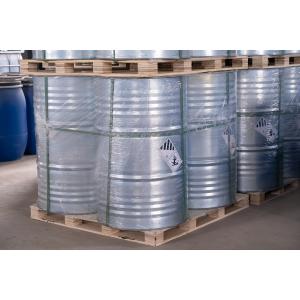
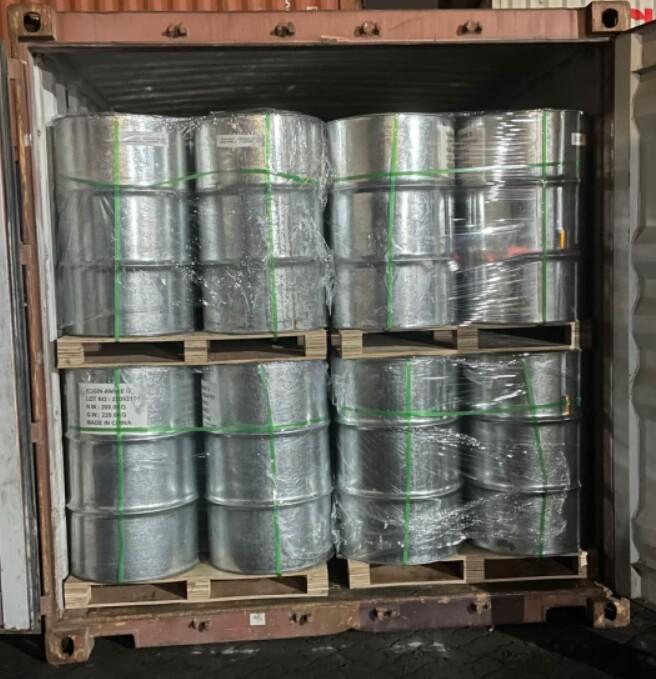
- Nitrogen blanketing and headspace control: Tanks, drums and tank containers must be padded with dry nitrogen at slight positive pressure. Carbon dioxide ingress forms carbamate crust and haze, while oxygen drives Gardner colour and odour upward, so loading, sampling and discharge should run under nitrogen.
- Materials of construction and heated equipment: Use 316L or 304 stainless steel or lined carbon steel with PTFE or EPDM gaskets and avoid copper, brass and galvanised surfaces. Bulk moves in heated ISO tank containers held between 55 and 75 °C with a written maximum skin temperature; drums need nitrogen closure and a re-melt protocol that heats the whole drum rather than only the coil zone.
6.2 Dangerous Goods Identification and Transit Protocols
Consignments travel as Class 8 corrosives under ADR, RID, IMDG and 49 CFR, as UN 3259 or UN 2735 depending on physical state at loading, in packing group II or III, with the elevated-temperature carriage provisions applied to heated movements. Air freight is restricted and normally cargo-aircraft-only. Best practice adds nitrogen blanketing, temperature logging, a tank-cleaning certificate showing no prior nitrite, nitrate or oxidising cargo, and SQAS-assessed contractors.
VII. Enterprise Global Expansion Strategy Guide
Winning export share requires a supplier to act as chemist, compliance officer and logistics operator at once. The three moves below separate framework winners from spot participants.
- Build the feedstock file before the price file: Secure a documented tallow chain of approved Category 3 establishments, a beef or mixed-origin declaration, EUDR geolocation and RSPO or ISCC mass-balance certificates, published as a standard data pack. European tenders eliminate incomplete feedstock files before price is discussed.
- Sell the analytical package, not the name: Offer a specification stating triamine assay, oligomer split, primary and secondary amine ratio, amine value, iodine value, Gardner colour, water, residual acrylonitrile, nickel and nitrite and nitrate limits, plus an LC-MS/MS nitrosamine screen.
- Position inventory and toll finishing near demand: Hold heated, nitrogen-blanketed buffer stock in Southeast Asia, the Gulf and northern Europe, and qualify toll conversion for acid salts, imidazolines and quats close to the customer, which removes re-melt risk and builds switching costs.
VIII. Conclusion
N-tallow dipropylenetriamine is a mature molecule in structurally growing end uses. Its economics follow the fats and oils complex, but its commercial value is set by documentation quality: a consistent UVCB identity, a defensible nitrosamine position, a compliant animal by-product chain and reliable heated-bulk delivery. Price is the tie-breaker, not the qualifier.
Buyers should qualify two chains, a standard tallow grade and a hydrogenated grade, against two suppliers in different regions, write secondary-amine and nitrosamine clauses into supply agreements, and audit heated-bulk handling annually. Suppliers make margin in the derivative family behind the intermediate and the compliance file in front of it.
IX. Industry Resource Connection and Supplier Ecosystem
Powered by Guidechem
This white paper is exclusively compiled by the Guidechem Intelligence Team based on global customs data, regulatory databases, and industry research. Guidechem is a leading global B2B chemical platform, dedicated to connecting global buyers with verified, high-quality manufacturers.
Relying on Guidechem's extensive global database, we have mapped the core participants in the current global N-tallow dipropylenetriamine supply chain:
- Southeast Asia, Malaysia and Indonesia, integrated oleochemical hub: The Klang Valley, Pasir Gudang and Medan corridor combines fractionation, nitrile hydrogenation and amine finishing with nearby palm, palm-kernel and tallow blending, giving the region the lowest conversion cost and the shortest route to ISCC and RSPO mass-balance documentation, and it is the dominant export base serving Asian and Gulf emulsion producers.
- China, fast-scaling fine-amine conversion base: Jiangsu, Shandong and Zhejiang host dedicated cyanoethylation and hydrogenation trains that can switch between tallow, coconut and petrochemical chains within days, backed by domestic acrylonitrile and hydrogen supply, and increasingly ship ISO-tank volumes into India, Turkey and Latin America, competing on cost and on responsiveness to custom oligomer splits.
- North America, feedstock-anchored and compliance-driven: The United States combines the world's deepest tallow-rendering base with mature fatty-amine hydrogenation assets on the Gulf Coast and in the Midwest, giving producers a structural feedstock advantage and disciplined animal by-product documentation, while European buyers set the audit standard the chain follows.
Disclaimer: The content of this white paper is compiled based on public market data and regulatory information available as of 2026. Global chemical regulations are subject to dynamic adjustments. In actual export operations, enterprises must consult professional regulatory advisors or relevant competent authorities to obtain the latest compliance guidance.


 EN
 Agricultural News
 Food News
 Industrial News
 Cosmetic News
 Pharmaceutical News
 Science News


 4YRS


