-
We detected your language preference as English. Would you like to switch to the English version for a better experience?
Switch to English
Stay here


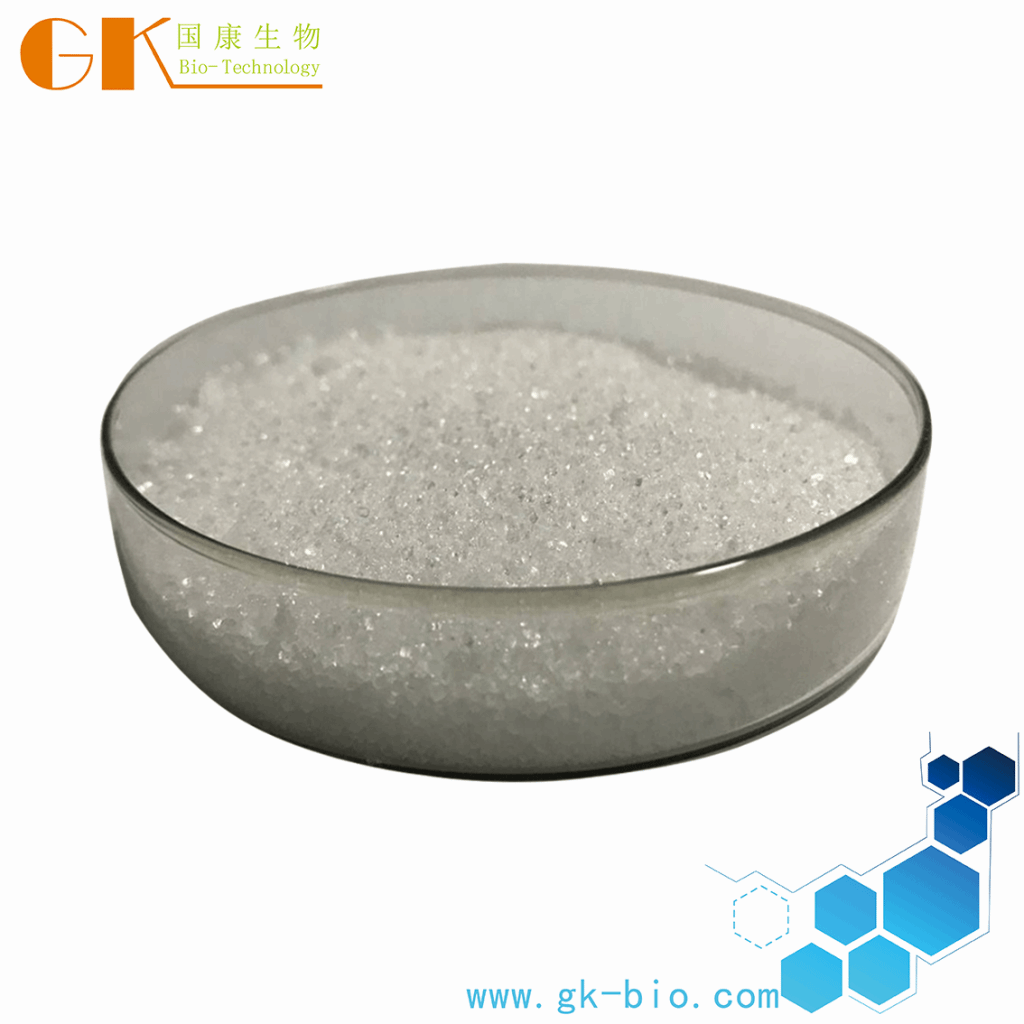
5-Hydroxyisophthalic acid (CAS 618-83-7) is a white to off-white crystalline powder of molecular weight 182.13 g/mol, carrying two carboxylic acid groups in a meta relationship and a phenolic hydroxyl group at the 5-position. It is an archetypal functional monomer: a rigid, trifunctional, thermally robust aromatic that can be condensed into polyesters and polyamides, deprotonated into a multitopic linker for coordination chemistry, or used as a substituted aromatic intermediate in pharmaceutical and colourant synthesis. Its commercial importance lies not in volume but in the performance it imparts at low incorporation levels.
Quality requirements diverge sharply by end use, and this is the defining commercial fact of the category. Polymer-grade material is judged on high-performance liquid chromatographic purity and on the profile of related substances, because residual isophthalic acid behaves as a chain terminator and residual sulfonated species introduce ionic contamination. Electronic- and coordination-chemistry grades are judged on a different axis entirely: sulphated ash, alkali and transition-metal content, and insoluble matter. A supplier that offers both needs two specifications, two certificates of analysis templates and two production protocols.
In 2026 the strongest demand signal comes from advanced materials. Metal-organic framework and covalent organic framework research, coordination polymer programmes and high-temperature polymer development have moved the molecule from a niche intermediate toward a strategic monomer, and they have raised expectations for batch-to-batch consistency in metal content. Exporters who can document inorganic purity at part-per-million levels, alongside conventional organic purity, are positioned for the most durable margins.
The value of the structure follows from geometry and from functionality. The meta arrangement of the carboxyl groups introduces a kink into any chain built from them, which suppresses close packing and crystallisation and thereby lowers melting point and improves solubility and processability. The phenolic hydroxyl adds a third reactive site and, critically, a site whose acidity and coordination behaviour differ from those of the carboxyl groups, enabling selective chemistry and hierarchical assembly.
Commercial manufacture belongs to two established route families. Both convert a pre-existing isophthalic acid derivative bearing a displaceable or transformable group at the 5-position into the phenol. The engineering challenge in each is not the transformation itself but the separation of the product from inorganic salt, from unreacted starting acid and from coloured by-products, followed by drying a high-melting, hydrogen-bonded solid to a consistent loss-on-drying specification.
Two independent engines drive demand. The first is structural: continuing substitution of metal and glass by high-temperature polymers in electrical, automotive and electronics applications. The second is research-led: expanding framework-materials programmes that consume kilograms rather than tonnes but insist on very tight inorganic specifications. The two engines reward different capabilities, and suppliers frequently underestimate how different the two customer conversations are.
Capacity requires high-temperature fusion or diazotisation equipment, acid-proof washing and drying trains, and analytical capability for both organic and inorganic specification. Production clusters in Asian fine-chemical and monomer parks, with additional high-purity capacity in Japan and Europe. Export flows follow polymer and electronics manufacturing geography, moving from Asia into European and North American compounders and into global research institutions, with lead times strongly influenced by plant campaigns rather than by continuous output.
Pricing is best read as a ladder tied to specification. Polymer grade competes on organic purity and price. Electronic and framework grade, defined by sulphated ash, individual transition-metal limits and insoluble matter, sits substantially higher and is frequently sold under annual agreements with change control. Between them sits a research grade that competes on documentation. Prices track isophthalic acid and caustic costs, energy for high-temperature steps and drying, and the rising cost of compliant saline effluent management.
As a monomer and intermediate, the substance faces conventional chemical-control obligations plus application-specific expectations where the finished article contacts food, drinking water or electronics. Exporters should treat regulatory work as a portfolio: one file for the substance, and separate statements for each application sector the customer serves.
The environmental profile of this chemistry is dominated by salt. Alkali fusion generates large quantities of sulphite and sulphate-bearing aqueous streams, and washing to electronic-grade specifications multiplies water consumption. Both facts now appear in customer sustainability assessments, particularly among electronics-sector buyers with published supply-chain emissions targets.
The largest energy consumers are the high-temperature fusion or hydrolysis step, the washing and drying train, and effluent treatment. Producers that recover and reuse wash water, that recover inorganic by-products where a market exists, and that use high-efficiency drying reduce both emissions and unit cost. Buyers increasingly request product-level or at least site-level emissions figures and Scope 1 and Scope 2 disclosure.
Traceability should link aromatic feedstock, fusion or hydrolysis campaign, washing protocol and packaging lot, with retained samples and defined re-test intervals. ISO 9001 and ISO 14001 certification, documented effluent permits and a written responsible-sourcing policy are the standard evidence set. Because the product is a dry powder with consistent melting and spectral behaviour, identity confirmation by infrared spectroscopy remains a valuable check at goods-in.
Logistics are straightforward physically but consequential for quality. The product is a stable, high-melting, non-volatile solid that requires no temperature control, yet it is hygroscopic enough and dusty enough that moisture pickup, caking and cross-contamination during handling are recurring causes of customer complaint.
Where classification data place the substance outside the transport hazard classes it is not regulated as a dangerous good, but this must be established from measured data rather than assumed, and the material remains a hazardous chemical under workplace communication rules because of its irritant profile. Shipments should travel dry and well protected, with pallets wrapped against liner abrasion, clear irritant labelling in destination-market languages, and documentation that states the lot-specific sulphated ash and metal results so that the consignee can release the batch without delay.
Because the end markets are so different, the winning strategy is specification architecture rather than production scale. Three moves matter most for exporters.
5-Hydroxyisophthalic acid is a functional monomer whose commercial value scales with the performance of the materials made from it rather than with the tonnage sold. Its competitive position rests on a rare combination: a rigid kinked trifunctional aromatic that improves thermal and processing behaviour in high-performance polymers and simultaneously serves as a robust multitopic linker in framework materials. Suppliers who understand that they are selling specification architecture will keep the profitable tiers of this market.
The 2026 priorities are specific and achievable. Fix individual limits for isophthalic acid, 5-sulfoisophthalic acid and nitro-bearing related substances; add sulphated ash, individual transition metals and insoluble matter to the certificate of analysis; confirm REACH and TSCA coverage in every customer file; and document the effluent and salt-management route. Buyers should qualify at least one polymer-grade and one high-purity source, because the two grades are rarely economical from the same campaign.
Powered by Guidechem
This white paper is exclusively compiled by the Guidechem Intelligence Team based on global customs data, regulatory databases, and industry research. Guidechem is a leading global B2B chemical platform, dedicated to connecting global buyers with verified, high-quality manufacturers.
Relying on Guidechem's extensive global database, we have mapped the core participants in the current global 5-Hydroxyisophthalic acid supply chain:
Disclaimer: The content of this white paper is compiled based on public market data and regulatory information available as of 2026. Global chemical regulations are subject to dynamic adjustments. In actual export operations, enterprises must consult professional regulatory advisors or relevant competent authorities to obtain the latest compliance guidance.
|
 |
 |
|
 EN
 Agricultural News
 Food News
 Industrial News
 Cosmetic News
 Pharmaceutical News
 Science News


 14YRS


