-
We detected your language preference as English. Would you like to switch to the English version for a better experience?
Switch to English
Stay here


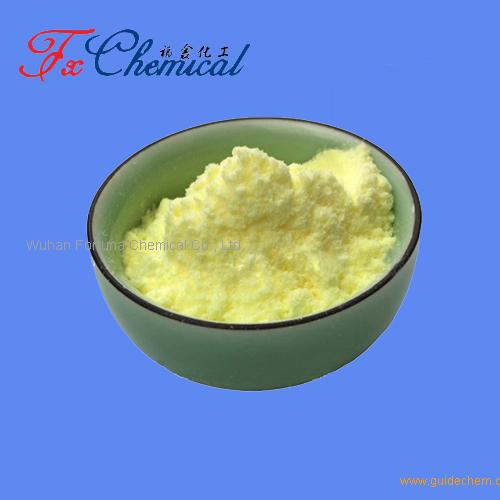
4-Nitrobenzoic acid, traded globally as p-nitrobenzoic acid or PNBA (CAS 62-23-7, C7H5NO4, molar mass 167.12 g/mol), is a high-melting nitroaromatic carboxylic acid supplied as a pale yellow crystalline powder. Its commercial position is defined less by volume than by function: it is the dominant industrial entry point to para-aminobenzoic acid and to the benzocaine, procaine-type local anaesthetic and folate value chains, and a workhorse intermediate for azo dyes and agrochemicals. The para relationship between nitro and carboxyl is also what makes it difficult: no direct nitration of benzoic acid can deliver the para isomer, so every tonne of PNBA is downstream of toluene nitration, isomer separation, and side-chain oxidation. The 2026 market is shaped by consolidation of nitration capacity into audited chemical parks, migration of API finishing to India, and tightening specifications on isomers, moisture, and residual metals.
Technically, PNBA sourcing is an exercise in isomer discipline. The carboxyl group is meta-directing, so the industry nitrates toluene, separates p-nitrotoluene from the ortho isomer by vacuum distillation and melt crystallisation, then oxidises the methyl group. Residual meta- and ortho-nitrobenzoic acid, dinitrated species, and unconverted p-nitrotoluene therefore form the natural impurity fingerprint, quantified individually rather than as a single assay figure. Regulated pharmaceutical buyers typically require assay of 99.0 percent or better, individual isomer limits of 0.1 to 0.3 percent, Karl Fischer moisture at or below 0.5 percent, and controlled insolubles, chloride, sulfate, and heavy metals. Moisture and free-acid control are not cosmetic: water drives caking and liner corrosion, and residual mineral acidity accelerates colour formation and complicates downstream esterification.
Compliance-wise, PNBA addresses two regulatory audiences at once. As an industrial intermediate it carries a self-classification for acute oral toxicity and skin, eye, and respiratory irritation under CLP and GHS, is registered under EU REACH, and is active on the US TSCA Inventory. As a pharmaceutical intermediate it is judged against ICH Q7, ICH M7, Q3C, and Q3D, because the aromatic nitro group is a recognised structural alert for mutagenicity. Nitroaromatic chemistry also carries a process-safety obligation: nitration is a designated key-supervised hazardous process in China, and buyers increasingly request calorimetry evidence before approving a supplier.
PNBA melts at roughly 239 to 243 °C with decomposition, has a true density near 1.6 g/cm³, is sparingly soluble in cold water, and dissolves readily in ethanol, acetone, hot acetic acid, and aqueous alkali. The two functional groups are electronically coupled, and that coupling dictates both handling and reactivity.
Two process families dominate, and both start from toluene because benzoic acid nitration is electronically incapable of giving the para product in useful selectivity. The choice between them drives cost, waste profile, and impurity spectrum.
Demand is pulled by three downstream sectors with very different specification cultures. Generic topical anaesthetics and dental formulations consume steady, price-sensitive volumes of benzocaine and procaine hydrochloride. Food fortification and premix manufacturers drive inelastic, quality-driven folic acid demand. The dye and pigment sector is the swing buyer, absorbing technical-grade tonnage when construction and textile activity is strong and retreating quickly in downturns. Progressive restriction of residual aromatic amines in consumer textiles has also made traceability of the PNBA to PABA conversion chain a procurement question rather than a purely technical one.
Effective nitration capacity is concentrated in China, where provincial safety rectification and the designation of nitration as a key-supervised hazardous process have closed marginal units and pushed surviving producers into audited chemical parks with distributed control systems and emergency relief. China is both the largest producer and consumer, exporting technical and pharmaceutical grades to India, the European Union, Japan, Korea, and Brazil. India is the principal importer of PNBA and PABA for conversion into local-anaesthetic and vitamin active substances, with Gujarat, Maharashtra, and Hyderabad combining imported intermediates with domestic finishing. Europe retains limited upstream nitration but significant regulatory stewardship capacity.
The market is clearly bifurcated. Technical grade at 99.0 percent assay is a commodity priced against toluene, nitric acid, and mixed-acid disposal cost, trading on thin margins with quarterly renegotiation. Pharmaceutical grade, with individual isomer limits, controlled heavy metals, residual solvent data, and ICH M7 documentation, commands a substantial premium and is sold on annual contracts with audit rights. Pricing is also exposed to the ortho and para nitrotoluene balance: when ortho-nitrotoluene demand weakens, producers shift the nitration mix and para availability tightens independently of PNBA demand. Spot-only buyers face allocation during nitric acid turnarounds and seasonal production windows.
The regulatory burden on PNBA is unusual because industrial and pharmaceutical frameworks apply simultaneously. A shipment destined for a dye house is judged on classification, labelling, and packaging; the same molecule destined for an active substance plant is additionally judged on genotoxic impurity control, elemental impurities, and the quality system behind it. Exporters who prepare only one of those two dossiers lose business at review.
Environmental performance has moved from a corporate reporting exercise to a procurement filter. Nitration and nitric acid oxidation generate nitrogen oxides, nitrous oxide, spent acid, and nitroaromatic wastewater, and multinational buyers now score suppliers on how those streams are abated before they score them on price.
The dominant Scope 1 contributors are nitrous oxide from nitric acid oxidation, with a hundred-year global warming potential near 273 times that of carbon dioxide, and the steam demand of mixed-acid reconcentration and drying; nitrous oxide abatement is now a differentiator in European tenders. Although organic chemicals are not directly covered by the EU Carbon Border Adjustment Mechanism in its current phase, European importers are being asked for verified product-level carbon footprints under ISO 14067, and CSRD reporting under ESRS E2 on pollution is pushing those requests down the chain.
Traceability expectations run from the toluene and nitric acid back to the nitrotoluene isomer split and forward to the reduction step. Buyers serving textile and consumer-goods brands require documented control of regulated aromatic amines and conformance with the ZDHC Manufacturing Restricted Substances List and OEKO-TEX criteria, which makes lot-level genealogy and retained samples essential. European and North American purchasers increasingly require ISO 14001 certification and a current EcoVadis scorecard.
PNBA is a stable solid with a long shelf life when kept dry and cool, so its logistics risks are dominated by moisture ingress, dust, contamination, and regulatory documentation rather than temperature excursions. Freight economics nevertheless matter, because a nitroaromatic solid attracts carrier scrutiny where shippers present incomplete classification evidence.
On the basis of the prevailing self-classification for irritation and acute oral toxicity, PNBA generally is not assigned a UN number and is not subject to the IMDG Code, ADR, RID, or IATA Dangerous Goods Regulations, but that conclusion is defensible only when it rests on a documented classification report covering the specific grade and particle size shipped. Exporters must still provide a 16-section safety data sheet in the language of destination and GHS labelling. Ocean freight should move in dry, food-free containers with desiccant, stowed away from heat and segregated from oxidisers, strong alkalis, and foodstuffs. Pharmaceutical grades additionally require tamper-evident seals and lot genealogy on the certificate of analysis.
For producers and exporters, the strategic question in 2026 is how to escape commodity pricing. The routes that work consistently are specification upgrading, safety transparency, and regional presence.
p-Nitrobenzoic acid remains structurally indispensable despite being a mature molecule, because the para nitro and carboxyl arrangement cannot be reached economically without toluene nitration and isomer separation. That constraint fixes the cost floor, concentrates capacity in jurisdictions willing to supervise nitration, and makes isomer control rather than nameplate assay the real measure of supplier quality. Demand from generic local anaesthetics, folate nutrition, and azo pigments is stable but increasingly specification-driven, and the commercial prize has shifted from tonnage to documentation.
The exporters who will win the 2026 cycle are those who treat thermal safety data, ICH-aligned impurity packages, and nitrous oxide abatement as saleable assets rather than compliance overhead. Buyers should reciprocate by qualifying on isomer-resolved specifications, dual-sourcing across chemical parks, and indexing contracts to feedstock rather than spot price. Where the chemistry is fixed, competitive advantage comes from how rigorously the surrounding quality, safety, and ESG system is evidenced.
Powered by Guidechem
This white paper is exclusively compiled by the Guidechem Intelligence Team based on global customs data, regulatory databases, and industry research. Guidechem is a leading global B2B chemical platform, dedicated to connecting global buyers with verified, high-quality manufacturers.
Relying on Guidechem's extensive global database, we have mapped the core participants in the current global p-Nitrobenzoic acid supply chain:
Disclaimer: The content of this white paper is compiled based on public market data and regulatory information available as of 2026. Global chemical regulations are subject to dynamic adjustments. In actual export operations, enterprises must consult professional regulatory advisors or relevant competent authorities to obtain the latest compliance guidance.
|
 |
 |
 |
 EN
 Agricultural News
 Food News
 Industrial News
 Cosmetic News
 Pharmaceutical News
 Science News



 2YRS

