-
We detected your language preference as English. Would you like to switch to the English version for a better experience?
Switch to English
Stay here


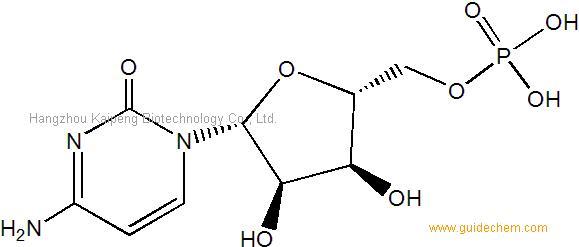
Cytidylic acid, commonly 5'-cytidine monophosphate or 5'-CMP, CAS 63-37-6, is the free-acid form of a pyrimidine ribonucleotide. It is traded for food and pharmaceutical processing, nucleic-acid research, analytical work, and selected cosmetic formulations. Buyers must distinguish it from disodium CMP, positional 2'- or 3'-CMP isomers, mixtures generated by nonspecific RNA hydrolysis, and hydrated materials because these differences change molecular-mass calculations, pH, solubility, formulation behavior, and legal identity.
The supply base uses yeast fermentation followed by RNA recovery and enzyme-controlled hydrolysis, or starts from cytidine and introduces the 5'-phosphate through enzymatic or chemical phosphorylation. The best route is application-specific. RNA valorization offers scale but demands separation from other nucleotides; focused phosphorylation can simplify the nucleotide profile but requires control of regioisomers, residual reagents, solvents, enzymes, inorganic phosphate, and conversion into the correct protonation state.
For 2026 procurement, grade and end use must be contractually separated. Food authorization depends on the positive list, permitted form, use category, and limit in the destination; pharmaceutical-intermediate or reagent use requires an appropriate quality system; cosmetic use requires finished-product safety and claims review. REACH and TSCA status do not replace sector authorization. This paper makes no therapeutic, disease-prevention, cognitive, developmental, or cosmetic-efficacy claim and provides no consumer guidance.
5'-CMP has molecular formula C9H14N3O8P and molecular mass about 323.20 g/mol. The molecule joins cytosine to ribose and carries phosphoric acid at the 5' position. It is a highly polar solid and is generally water-soluble, but the free acid produces a more acidic solution and can show different dissolution behavior from the disodium salt. Water content, ionic strength, temperature, and conversion to counterion salts must be controlled when comparing lots.
Manufacturing evolution favors selective biocatalysis and improved membrane or chromatographic separation. In the fermentation pathway, yeast supplies RNA that is recovered and cleaved under conditions favoring 5'-mononucleotides. In the phosphorylation pathway, cytidine is converted at the 5'-hydroxyl and purified before controlled acidification. Both approaches need mild concentration and drying because prolonged heat, extreme pH, or contaminated process water can increase color and degradation products.
Demand is supported by nucleotide premixes, biotechnology research, diagnostics, pharmaceutical synthesis, and sophisticated personal-care formulation. Free-acid demand is narrower than demand for easily handled sodium salts, but it remains valuable where sodium contribution, pH design, or downstream salt formation matters. Customers increasingly require low unknown-impurity profiles, route disclosure, microbiological data, and application-specific documentation. Unsubstantiated wellness or cognitive positioning creates regulatory risk and is not a durable demand strategy.
China, Japan, and other East Asian producers anchor nucleotide fermentation and separation, while India contributes fine-chemical and custom-synthesis capability. European and North American channels emphasize compendial, diagnostic, and research packaging, often sourcing upstream material internationally. Exporters may convert CMP-Na2 or another process salt to free acid late in purification; buyers should therefore request the full route, ion-exchange or acidification controls, residual counterions, and repacking history rather than infer origin from the final label.
The market divides into food-volume, fine-chemical intermediate, and high-documentation research or pharmaceutical grades. Price premiums are driven by positional-isomer separation, low cytidine and CDP/CTP, water and counterion control, trace metals, residual-solvent data, low bioburden or endotoxin where required, and stability support. Comparisons should normalize assay to the stated basis and include the cost of pH adjustment, dissolution, requalification, audits, customs documentation, and the risk that a sodium-salt lot was mislabeled as free acid.
The governing question is not whether 5'-CMP is “natural” or occurs in biological systems, but whether the exact substance, manufacturing process, grade, use, dose in the finished product, and claims comply with destination law. Food, drug, research, and cosmetic routes should have separate regulatory matrices. Industrial chemical inventory status under REACH or TSCA is only one layer and should never be presented as authorization for ingestion or therapeutic use.
Sustainability evaluation should compare complete routes rather than favor “fermentation” or “chemical” labels. Fermentation requires carbohydrate feed, aeration, biomass handling, RNA recovery, and water-intensive purification. Chemical phosphorylation may use activating reagents and organic solvents but avoid upstream biomass. Enzymatic phosphorylation can reduce harsh reagents while adding enzyme and cofactor burdens. Buyers increasingly request site-level energy, water, effluent, waste, and Scope 1–3 information with a clearly stated allocation method.
High-yield RNA isolation, valorization of companion nucleotides, membrane concentration, heat recovery, efficient drying, and renewable electricity can lower cradle-to-gate impact. Solvent and resin reuse must be supported by impurity carryover studies and sanitation controls, especially for food or low-bioburden grades. Carbon declarations should include cytidine or yeast feedstock, phosphorylation inputs, utilities, acidification and demineralization, wastewater treatment, packaging, and transport rather than report only direct reactor energy.
Traceability should capture biological source, media, enzymes, processing aids, cytidine origin, phosphorylation reagents, ion-exchange resins, acids, water system, and packaging. Food dossiers may require allergen, GMO, animal-origin, irradiation, and contaminant statements; regulated life-science customers also expect genealogy and change control. Phosphorus- and nitrogen-bearing effluent should be quantified and treated to permit, with controls for high organic load, cleaning chemicals, residual solvents, and microbial biomass instead of relying on dilution.
Supply planning should account for campaign production, chromatography capacity, and the possibility that vendors primarily stock sodium salt rather than free acid. Dual-source qualification must compare solution pH, residual sodium, water, polymorphic or amorphous character where relevant, related-substance fingerprints, and matrix performance. Contracts should fix route and site, minimum remaining shelf life, sampling procedure, excursion rules, retained samples, and advance notice before changes to enzymes, feedstock, purification, or drying.
5'-CMP is commonly transported as a non-dangerous solid, subject to confirmation from the current composition-specific SDS and each mode's rules. Quality risks remain: humidity, high temperature, odors, package damage, and microbial contamination. Shippers should use clean dry equipment, separate food grade from chemicals with strong odor or allergen risk, record container seals, protect from weather during transloading, and provide accurate customs identity, CAS, country of origin, net weight, storage condition, and any food or pharmaceutical documentation.
Global suppliers should position free 5'-CMP by controlled identity and application, not by broad wellness language. Separate food, pharmaceutical-intermediate, research, and cosmetic specifications; define which quality system governs each campaign; and prevent distributors from translating “nucleotide” into unapproved benefit claims. Technical support should emphasize salt-form selection, analytical comparability, lawful use, and formulation compatibility.
Cytidylic acid is a well-defined 5'-nucleotide, but reliable procurement requires more than a CAS match. The free-acid form differs materially from CMP-Na2 in formula basis, sodium contribution, pH, and solution behavior. Route-specific controls for cytidine, positional isomers, CDP, CTP, other nucleotides, inorganic ions, water, metals, residual solvents, and microbiological quality determine suitability for the intended process.
The strongest 2026 programs connect positive-list analysis, GMP or food-safety controls, REACH and TSCA review, defensible packaging, and route traceability to a clearly bounded application. Free 5'-CMP may serve food processing, regulated synthesis, research, and cosmetic development only within their respective legal frameworks. It is not a finished medicine, and suppliers should make no therapeutic, disease, cognitive, or cosmetic-performance promise.
Powered by Guidechem
This white paper is exclusively compiled by the Guidechem Intelligence Team based on global customs data, regulatory databases, and industry research. Guidechem is a leading global B2B chemical platform, dedicated to connecting global buyers with verified, high-quality manufacturers.
Relying on Guidechem's extensive global database, we have mapped the core participants in the current global Cytidylic acid (5'-CMP) supply chain:
Disclaimer: The content of this white paper is compiled based on public market data and regulatory information available as of 2026. Global chemical regulations are subject to dynamic adjustments. In actual export operations, enterprises must consult professional regulatory advisors or relevant competent authorities to obtain the latest compliance guidance.
|
 |
 |
 |
 EN
 Agricultural News
 Food News
 Industrial News
 Cosmetic News
 Pharmaceutical News
 Science News



 12YRS

