
I. Executive Summary
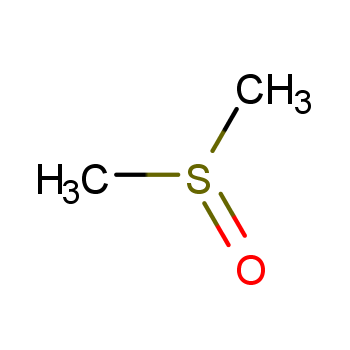
Dimethyl sulfoxide is a dipolar aprotic solvent of exceptional dissolving power, miscible with water and with most organic liquids, melting near 18.5 °C and boiling near 189 °C. Pharmaceutically it is unusual in being simultaneously a solvent, a cryoprotectant, a transdermal penetration enhancer and, in one approved indication, an active ingredient. That combination makes purity, documentation and handling discipline unusually consequential for buyers.
Commercial demand divides into four streams: pharmaceutical and bioprocessing use as solvent, excipient and cryoprotectant; topical and veterinary formulations exploiting penetration enhancement; industrial use as a reaction, spinning and extraction medium; and electronics use as a high-purity stripper. Each stream imposes a different specification, from bulk solvent to sterile, endotoxin-tested cryopreservation grade to parts-per-billion electronic grade. The category is therefore defined less by a single price than by a ladder of grades whose certification costs dominate unit economics.
This paper serves solvent buyers, formulation scientists, regulatory affairs teams and investors. It explains penetration and cryoprotection mechanisms, modern oxidation and purification routes, the application matrix, global capacity and pricing, and the compliance perimeter spanning EU REACH and CLP, US TSCA and FDA, and Asia-Pacific controls. Later sections address solvent penetration and combustibility hazards, emissions accounting and cold-climate logistics, and a practical expansion playbook.
II. Product Deep Dive: Molecular Mechanisms and Production Evolution
2.1 Physicochemical Properties and Mechanisms
DMSO is a colourless, viscous, hygroscopic liquid with very low vapour pressure, good thermal stability at moderate temperature and strong hydrogen-bond acceptance. Its high dielectric constant and donor number allow it to dissolve polar and many non-polar solutes and to accelerate nucleophilic substitution, which is why it is a workhorse reaction medium. The defining practical property, however, is its capacity to cross biological membranes and to carry dissolved substances with it.
- Membrane Transport and Penetration Enhancement: DMSO disrupts intercellular lipid packing in the stratum corneum, fluidises and partially extracts lipids and interacts with keratin, opening pathways for co-administered actives. Transport is strongly concentration-dependent and generally requires high weight fractions to be effective. The same property means any impurity dissolved in the solvent can be carried across skin, so solvent purity is a safety parameter rather than a commercial nicety.
- Cryoprotection and Radical Scavenging: In cell and gene therapy, five to ten percent DMSO depresses the freezing point, reduces ice-crystal formation and moderates solute concentration effects during controlled-rate cooling, preserving membrane integrity. Infusion reactions and the dimethyl sulfide odour are the recognised tolerability constraints. The sulfoxide group additionally scavenges hydroxyl radicals, supporting investigation of antioxidant and anti-inflammatory roles that remain adjunctive rather than established therapy.
2.2 Synthesis and Manufacturing Technologies
Industrial manufacture oxidises dimethyl sulfide to the sulfoxide, the sulfide being obtained either as a recovered by-product of kraft pulping or by catalytic reaction of methanol with hydrogen sulfide. Oxidant choice defines the environmental profile, because classical nitrogen dioxide mediated oxidation requires scrubbing and generates nitrogenous effluent while hydrogen peroxide routes produce only water as co-product. Electronic and pharmaceutical grades add adsorption, membrane and filtration steps to reach trace metal and particle specifications.
- Oxidation Routes and By-Product Management: Nitrogen dioxide catalysed oxidation with oxygen is efficient and widely practised but requires careful absorption and abatement of nitrogen oxides. Hydrogen peroxide oxidation avoids nitrogenous by-products and simplifies effluent treatment at higher reagent cost. Both routes must control over-oxidation to dimethyl sulfone and residual dimethyl sulfide, because trace sulfide drives the characteristic odour that pharmaceutical and electronics customers reject.
- Purification, Grade Ladders and Deuterated Product: Vacuum distillation separates water, sulfide and sulfone, while molecular sieve or azeotropic drying and melt crystallisation produce anhydrous grades with water controlled at trace levels. Electronic grades add sub-micron filtration, ion exchange and metal control at parts-per-billion levels, and pharmaceutical grades are finished under GMP with microbial and endotoxin control. Deuterated DMSO for nuclear magnetic resonance is produced by catalytic hydrogen-deuterium exchange and commands a separate, much higher price tier.
2.3 Core Application Matrix
- Pharmaceutical Solvent, Excipient and Cryoprotectant: DMSO solubilises poorly water-soluble actives in injectable and topical formulations, serves as a reaction solvent in API synthesis under ICH Q7 controls, and is the standard cryoprotectant in cell and gene therapy manufacturing. Supply into these uses requires USP or Ph.Eur. monograph compliance, ICH Q3C Class 3 residual solvent control and, for cell therapy, ancillary material qualification under USP <1043>.
- Transdermal and Veterinary Penetration Enhancement: Topical human and veterinary formulations exploit DMSO to deliver anti-inflammatories, analgesics and antimicrobials through skin, and to improve hoof and udder treatments in production animals. Regulatory acceptance attaches to the finished product authorisation rather than to the solvent itself. Because the solvent also transports co-solutes, formulators must qualify every impurity and container extractable that could be carried across the barrier.
- Industrial Reaction, Polymer and Electronics Processing: Beyond pharma, DMSO is a reaction medium for agrochemical and fine chemical synthesis, a spinning solvent for acrylic fibres and polysulfone membranes, an extraction solvent for aromatics and butadiene, and a photoresist stripper in semiconductor manufacture. Electronics grades are specified on trace metals, particles and water rather than on assay alone.
III. Global Market Supply-Demand Landscape and Export Trends
3.1 Demand Drivers and Market Shifts
Demand is driven by growth in injectable and biologic therapies, by expansion of cell and gene therapy manufacturing where DMSO remains the dominant cryoprotectant, and by continued substitution away from halogenated and amide solvents in reaction chemistry. Electronics demand tracks semiconductor fab capacity and is markedly cyclical. Countervailing pressure comes from occupational exposure reviews, from odour complaints in downstream formulations, and from reformulation programmes seeking DMSO-free cryopreservation to avoid infusion reactions.
3.2 Capacity Distribution and Export Flows
Capacity is tied to pulp and paper integration in North America and Northern Europe, where dimethyl sulfide recovery confers a structural feedstock advantage, and to merchant chemical parks in Asia-Pacific, particularly China, where methanol-hydrogen sulfide routes support standalone plants. Trade flows therefore run bulk solvent from integrated producers to regional converters, with high-purity grades distributed through validated pharmaceutical and electronics channels.
3.3 Market Bifurcation and Pricing Dynamics
Pricing is anchored to methanol, sulfur and energy costs and to pulp mill operating rates, with grade premiums reflecting certification rather than chemistry. Bulk industrial solvent trades cyclically, while pharmaceutical and electronic grades carry substantial premiums justified by validation, documentation, container systems and audit exposure. Because the solvent moves in bulk, freight and heated-transport costs in cold climates materially affect delivered cost. Buyers should contract specification, packaging and temperature conditions explicitly and qualify at least two geographic sources.
IV. In-depth Analysis of Global Compliance and Regulatory Barriers
DMSO sits at the intersection of chemical-substance law, pharmaceutical law and occupational safety. As a high-volume registered chemical it is well characterised, but its membrane-transport property means authorities scrutinise not only the solvent itself but also what it carries. Pharmaceutical buyers additionally face residual solvent and ancillary material rules that depend on the finished product's route of administration.
4.1 European Market: REACH, CLP, and Sector-Specific Directives
- REACH Registration and Continuing Substance Evaluation: DMSO is registered under REACH at high tonnage, with standard obligations covering exposure scenarios, extended safety data sheets and downstream communication. It has also attracted substance evaluation attention for developmental and reproductive endpoints, so buyers should monitor whether that process yields harmonised classification or candidate listing, since either would alter documentation and potentially authorised-use expectations. Importers should confirm registration covers the specific grade and use.
- CLP, Occupational Exposure and Excipient GMP: A GHS-aligned safety data sheet and classification review are required regardless of harmonised status, and the assessment must address irritancy and the solvent's ability to transport co-solutes through skin. Occupational controls should reflect recognised exposure limits and glove permeation data, since common glove materials perform poorly against DMSO. Pharmaceutical customers additionally expect excipient GMP proportionate to a formalised risk assessment of the finished medicinal product.
4.2 North American Market: TSCA, EPA, and FDA Regulations
- TSCA, Chemical Data Reporting and VOC Treatment: DMSO is active on the TSCA Inventory, and high-volume producers and importers are subject to periodic Chemical Data Reporting obligations. Its very low vapour pressure places it outside most volatile organic compound definitions, a genuine compliance advantage in coatings, cleaning and formulation work relative to conventional solvents. Agricultural formulation use additionally requires acceptability as an inert ingredient under the applicable pesticide rules.
- FDA Status Across Drug, Biologic and Excipient Uses: DMSO is the active ingredient of an approved intravesical product for interstitial cystitis and appears as an excipient in parenteral and topical products supported by USP monograph compliance and the inactive ingredient framework. Residual solvent control follows ICH Q3C Class 3 limits under USP <467>. In cell and gene therapy it is treated as an ancillary material qualified under USP <1043>, and unapproved DMSO products promoted for human therapy have attracted regulatory challenge.
4.3 The Critical Hurdle: Quality Control and Safety Limits
Compliance Warning: Purity in this solvent is a toxicological control rather than a marketing specification, because DMSO transports dissolved substances across intact skin and mucous membranes. Pharmaceutical and cryopreservation buyers must specify assay, water content, residual dimethyl sulfide and sulfone, acidity, ultraviolet absorbance, elemental impurities and, for cell therapy, sterility and endotoxin with full traceability. Industrial grade must never be substituted into pharmaceutical or cell therapy use, and every impurity carried by the solvent must be assessed as if it were dermally or systemically administered. Certificates of analysis must be batch-specific with stated methods, and container and closure compatibility must be proven.
V. Green Trade Barriers and ESG in Manufacturing
DMSO's environmental profile is unusually favourable on emissions and unusually demanding on energy. Its negligible vapour pressure means minimal fugitive emissions compared with chlorinated or hydrocarbon solvents, and where dimethyl sulfide originates from pulp mill recovery the product represents genuine by-product valorisation. Distillation is nevertheless energy-intensive because of the high boiling point, and oxidation routes generate aqueous effluent requiring treatment. Buyers increasingly request solvent recovery rates, energy sourcing and emission data as part of qualification.
5.1 Carbon Footprint and Circular Economy
A credible inventory separates Scope 1 emissions from process energy and on-site oxidation, Scope 2 emissions from purchased steam and power, and Scope 3 emissions covering dimethyl sulfide supply, oxidant inputs, packaging and distribution. The highest-return measures are heat-integrated vacuum distillation, mechanical vapour recompression, recovery of spent solvent by distillation rather than disposal, and switching to peroxide-based oxidation where effluent permits. Environmental management certified to ISO 14001 and energy management to ISO 50001 provide the governance customers recognise.
5.2 Sustainable Sourcing and Traceability
Traceability should cover dimethyl sulfide origin, including whether it derives from pulp mill recovery or merchant synthesis, oxidant identity, distillation and filtration records, container material and cleaning history, and complete lot genealogy to release. Pharmaceutical and electronics buyers increasingly audit these records and expect documented solvent recovery and waste treatment routes. Certification to ISO 9001 and ISO 14001, together with audit accessibility, now forms part of routine qualification.
VI. Supply Chain Resilience and Export Logistics
Logistics are governed by hygroscopicity, freezing behaviour and material compatibility rather than by hazard classification. DMSO is normally not assigned a dangerous-goods number for transport, but it solidifies near 18.5 °C, so winter distribution requires heated or insulated equipment and documented re-melting procedures. It is strongly hygroscopic, so containers must be sealed under dry nitrogen and sampled with dry techniques. Finally, it is an aggressive solvent that attacks many plastics and elastomers, making closure and gasket selection a specification item rather than a packaging detail.
6.1 Packaging Standards and Moisture/Contamination Control
- Container Compatibility and Dry Sealing: Suitable containers include stainless steel, lined carbon steel, high-density polyethylene and polypropylene, with polytetrafluoroethylene or equivalent gaskets, while polyvinyl chloride, natural rubber and many common elastomers should be avoided because DMSO extracts and softens them. Packaging should be closed under dry nitrogen with moisture-tight seals, since absorbed water changes specification and can affect downstream reactions. Sample ports and transfer lines must use compatible materials and dedicated, cleaned equipment.
- Segregation, Temperature and Documentation: DMSO must be segregated from strong oxidisers, halogenating agents, acyl and alkyl halides and alkali metals, with which it reacts violently or exothermically. Shipments through cold climates require heated or insulated tank containers and documented re-melting and homogenisation procedures before use. Documentation should comprise a batch certificate of analysis, destination-format safety data sheet, certificate of origin, container material declaration and, for pharmaceutical supply, a statement of monograph compliance.
6.2 Dangerous Goods Identification and Transit Protocols
DMSO generally falls outside dangerous-goods classification for road, sea and air transport because its flash point is high, yet it remains a combustible liquid whose flash point is approached when the product is transported heated to avoid freezing, and heated consignments must be assessed accordingly. It decomposes exothermically at elevated temperature, particularly in the presence of acids, bases or halides, so distillation to dryness and hot storage in contaminated equipment are prohibited. Handlers must recognise that the solvent penetrates intact skin rapidly and carries dissolved substances into systemic circulation, and that nitrile and latex gloves provide poor protection, so butyl rubber or multilayer laminate gloves and splash protection are required.
VII. Enterprise Global Expansion Strategy Guide
Advantage in DMSO comes from grade strategy, assurance of supply and documented safety stewardship rather than from commodity price. Producers able to certify pharmaceutical, cryopreservation and electronic grades while controlling odour and trace metals defend margin. Three moves offer the highest return to manufacturers, converters and investors.
- Build Certified Grade Capability: Invest in cleanroom filling, sub-micron filtration, validated water and trace-metal control, and sterility and endotoxin testing for cryopreservation grades, alongside USP and Ph.Eur. monograph compliance and ICH Q7 documentation. Support cell and gene therapy customers with ancillary material packages aligned to USP <1043>. Certification converts bulk solvent volume into qualified, higher-margin supply.
- Engineer Energy and Odour Performance: Adopt peroxide-based oxidation where effluent permits, heat-integrated vacuum distillation and mechanical vapour recompression, and spent solvent recovery and reuse programmes. Control reduced sulfur emissions and residual dimethyl sulfide to remove the odour complaints that disqualify solvent from pharmaceutical and electronics tenders. Report Scope 1, 2 and 3 emissions under ISO 14001 and ISO 50001 governance, since these figures now appear in buyer scorecards.
- Contract the Physical and Safety Envelope: Specify container material, closure compatibility, dry nitrogen sealing, water limits and heated transport in the supply agreement rather than leaving them to convention. Provide customers with glove permeation data, oxidiser segregation guidance and thermal stability limits, and train distributors on the penetration hazard. Maintain regulatory watch across REACH substance evaluation, CLP, TSCA reporting and FDA expectations, routing findings into change control.
VIII. Conclusion
DMSO is a rare case in which a bulk solvent is also a pharmacologically active, membrane-active material, and that duality defines its commercial risk. Its dissolving power, cryoprotective behaviour and penetration enhancement make it difficult to substitute in pharmaceutical and bioprocessing applications, while its origin from pulp mill by-products gives it a defensible circular story. Yet the same transport property that makes it useful also makes impurity control, glove selection and container compatibility safety-critical. Companies that engineer the full envelope rather than the assay alone will lead the category.
Buyers should specify assay, water, residual sulfide and sulfone, trace metals, sterility and endotoxin as appropriate to use, and should qualify two geographic sources given the solvent's dependence on pulp and methanol markets. Suppliers combining ISO 9001 and ISO 14001 governance with ICH Q7 documentation, USP <1043> support and transparent Scope 1 to 3 accounting will be preferred partners. As cell and gene therapy capacity expands and halogenated solvents retreat, disciplined and well-documented DMSO supply is positioned to grow.
IX. Industry Resource Connection and Supplier Ecosystem
Powered by Guidechem
This white paper is exclusively compiled by the Guidechem Intelligence Team based on global customs data, regulatory databases, and industry research. Guidechem is a leading global B2B chemical platform, dedicated to connecting global buyers with verified, high-quality manufacturers.
Relying on Guidechem's extensive global database, we have mapped the core participants in the current global Dimethyl sulfoxide supply chain:
- North America Supplier Ecosystem: This tier is anchored by producers integrated with kraft pulp mills, giving a structural feedstock advantage in dimethyl sulfide recovery, together with converters supplying pharmaceutical, cryopreservation and electronics grades. Differentiation rests on validation support, ancillary material packages and odour control. Competition is on qualification capability and supply assurance rather than bulk price.
- Europe Supplier Ecosystem: This tier combines pulp-integrated production in the north with specialist converters operating under strict solvent emissions and occupational exposure rules. Strength lies in REACH and CLP documentation depth, excipient risk assessment competence and ISO 14001-certified environmental performance. Producers increasingly compete on heat-integrated distillation and peroxide-based oxidation.
- Asia-Pacific and China Supplier Ecosystem: This tier supplies growing bulk and electronic-grade volume from merchant plants using methanol-hydrogen sulfide routes, supported by integrated chemical parks. Strengths are scale, cost efficiency and proximity to electronics and API manufacturing clusters. The strategic priority is reaching pharmaceutical and electronic specifications, including trace metals, particles and odour control.
Disclaimer: The content of this white paper is compiled based on public market data and regulatory information available as of 2026. Global chemical regulations are subject to dynamic adjustments. In actual export operations, enterprises must consult professional regulatory advisors or relevant competent authorities to obtain the latest compliance guidance.


 EN
EN
 Agricultural News
 Food News
 Industrial News
 Cosmetic News
 Pharmaceutical News
 Science News

 1YR
1YR


