-
We detected your language preference as English. Would you like to switch to the English version for a better experience?
Switch to English
Stay here


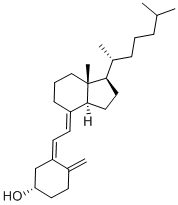
Vitamin D3, chemically identified as cholecalciferol with CAS Registry Number 67-97-0, is a fat-soluble secosteroid hormone precursor that anchors the global bone-health, immune-support, and fortified-food value chains. As a high-volume nutraceutical active and a listed pharmaceutical ingredient, Vitamin D3 sits at the confluence of dietary-supplement demand, pediatric and geriatric therapeutics, and mandatory food-fortification programs spanning Europe, North America, and the Asia-Pacific region. The compound's dual regulatory status—simultaneously a food additive and a drug substance—makes it a uniquely strategic molecule for B2B suppliers serving overlapping but distinctly regulated channels.
Global consumption of Vitamin D3 has expanded steadily as epidemiological evidence links insufficiency to rickets, osteoporosis, cardiovascular risk, and immune dysfunction, driving fortification mandates in dairy, infant formula, and staple foods. Manufacturing capacity remains concentrated in China for lanolin-derived and fermentation routes, with Europe retaining leadership in high-purity pharmaceutical-grade crystallization and analytical standardization. Buyers increasingly demand not only assay purity but also full traceability, non-GMO and vegan (lichen or algal) provenance, and verified low heavy-metal profiles to satisfy infant-nutrition and clinical specifications.
This white paper provides procurement leaders, formulators, and regulatory affairs teams with a comprehensive 2026 assessment of Vitamin D3's molecular behavior, commercial synthesis pathways, application matrix, regional supply dynamics, and the compliance and ESG frameworks governing cross-border trade. We examine REACH and EFSA food-additive authorizations, USP/Ph.Eur. monographs, FDA dietary-supplement and GRAS considerations, and the accelerating carbon-accountability requirements reshaping sourcing from lanolin and fermentation feedstocks alike.
Cholecalciferol is a 9,10-seco(5Z,7E)-5,7,10(19)-cholestatriene-3β-ol, a colorless to white crystalline powder that is lipophilic, photosensitive, and thermally sensitive, requiring protection from light, oxygen, and elevated temperature throughout storage and handling. Its biopotency derives from hepatic 25-hydroxylation to calcifediol and subsequent renal 1α-hydroxylation to the active hormone calcitriol, which binds the nuclear vitamin D receptor (VDR) to regulate calcium and phosphate homeostasis and modulate innate and adaptive immunity.
Industrial Vitamin D3 is produced through two principal routes that B2B buyers must distinguish by purity ceiling, sustainability profile, and provenance claims. The traditional lanolin route extracts 7-dehydrocholesterol from sheep-wool grease, then subjects it to controlled ultraviolet-B irradiation inducing the photochemical ring-opening to previtamin D3 and thermal isomerization to cholecalciferol. The emerging fermentation route cultivates engineered yeast or microalgae such as Schizochytrium to biosynthesize 7-dehydrocholesterol, enabling a vegan, non-GMO, and animal-free supply increasingly specified by Western brands.
Demand for Vitamin D3 is structurally reinforced by aging populations in Japan, Europe, and North America where osteoporosis management and healthy-aging supplementation are mainstream, alongside a post-pandemic surge in immune-health positioning that elevated baseline consumption in consumer wellness. Pediatric fortification mandates and revised national dietary-reference intakes have pushed formulators toward higher-potency, better-stabilized grades, while the vegan and clean-label movement has redirected premium segment volume toward fermentation-derived, animal-free D3 that commands a persistent price premium over lanolin material.
China dominates global Vitamin D3 capacity through integrated lanolin and fermentation producers that export both bulk active and stabilized beadlets to Europe, North America, and Southeast Asia, while India has expanded formulation and premix conversion for its domestic and African export markets. Europe retains a high-value niche in pharmaceutical-grade crystallization, analytical reference standards, and specialty vegan D3, and the United States operates largely as a formulation and distribution hub importing bulk active under FDA and dietary-supplement GMP oversight. Regional capacity shifts increasingly favor Southeast Asia as a premix-conversion and re-export zone serving halal and APAC consumer markets.
The market exhibits clear bifurcation between low-cost feed and food-grade material trading on commodity assays and a premium pharmaceutical-plus-vegan tier differentiated by dossier support, traceability, and documented impurity profiles. Pricing is sensitive to lanolin feedstock availability, energy costs for energy-intensive UV and distillation steps, and consolidation among Chinese upstream suppliers that periodically constrains spot availability. Buyers mitigating risk increasingly adopt dual-sourcing across lanolin and fermentation routes and negotiate annual indexed contracts to insulate formulation margins from spot volatility.
Vitamin D3 traverses three overlapping regulatory regimes—food additive, dietary supplement, and medicinal—so exporters must align dossiers to the intended application channel before shipment. Misclassification is a leading cause of customs detention and market-access denial, underscoring the need for channel-specific certificates of analysis, stability data, and authorized-use documentation across jurisdictions.
ESG scrutiny of Vitamin D3 centers on feedstock provenance, energy intensity of photochemical and distillation processes, and the animal-welfare implications of lanolin sourcing. Buyers executing responsible-procurement mandates now request product-level carbon footprints, conflict-free and cruelty-free declarations, and evidence of circular-economy practices across the value chain from wool grease recovery to solvent recovery and waste valorization.
The lanolin route benefits from utilizing a by-product of wool processing, yet its UV irradiation, vacuum distillation, and crystallization trains are energy-intensive, prompting leading producers to install renewable electricity and solvent-recovery loops that cut Scope 1-2 emissions. Fermentation routes shift the burden to biomass feedstock and bioprocess optimization but offer superior Scope 3 transparency for brands marketing carbon-neutral supplements. Quantifying cradle-to-gate emissions and reporting under ISO 14064 and aligned ESG frameworks is becoming a de-facto market-access requirement for EU and North American customers.
Traceability from raw sheep-wool grease or fermentation substrate through to finished beadlet is essential for verifying non-GMO status, animal-free claims, and absence of prohibited solvents. Digital batch records, blockchain-enabled lot tracking, and third-party certifications such as ISO 9001 and ISO 14001 provide the audit trail that infant-nutrition and clinical buyers require, while halal and kosher certifications broaden APAC and Middle Eastern market access. Supplier ESG scorecards increasingly gate long-term supply agreements.
Vitamin D3 is not classified as a dangerous good in its stable finished forms, but its oxygen-, light-, and heat-labile nature imposes stringent logistics discipline to preserve labeled potency from plant to blender. Cold-chain is generally unnecessary, yet controlled-temperature, low-humidity, and opaque packaging are mandatory to prevent oxidative and photolytic degradation during multimodal transit.
Finished Vitamin D3 typically falls outside ADR, IMDG, and IATA dangerous-goods classifications, simplifying overland and ocean freight, though concentrated solutions in flammable solvents may trigger relevant controls and require accurate SDS disclosure. Exporters should nevertheless maintain GHS-aligned documentation, monitor transit temperature and humidity, and insure high-value pharma-grade shipments against degradation, selecting freight forwarders experienced in temperature-sensitive nutraceutical cargo.
Suppliers seeking durable global share in Vitamin D3 should pursue channel-specialized positioning rather than competing purely on commodity price, building dossier depth and provenance assurance that justify premium positioning in regulated markets.
Vitamin D3 is a structurally simple yet commercially sophisticated molecule whose value lies at the intersection of nutrition science, pharmaceutical quality, and sustainable sourcing. Enterprises that master impurity control, stabilization technology, and transparent provenance will capture the premium tiers, while commodity players compete on scale and feedstock access in a capacity-weighted global market.
Looking to 2026 and beyond, the decisive competitive frontier is ESG-led differentiation—verified carbon footprints, animal-free fermentation routes, and end-to-end traceability—combined with resilient dual-region supply that insulates customers from concentration risk. Buyers and suppliers aligned on these principles will navigate regulatory complexity and pricing volatility with the greatest confidence.
Powered by Guidechem
This white paper is exclusively compiled by the Guidechem Intelligence Team based on global customs data, regulatory databases, and industry research. Guidechem is a leading global B2B chemical platform, dedicated to connecting global buyers with verified, high-quality manufacturers.
Relying on Guidechem's extensive global database, we have mapped the core participants in the current global Vitamin D3 supply chain:
Disclaimer: The content of this white paper is compiled based on public market data and regulatory information available as of 2026. Global chemical regulations are subject to dynamic adjustments. In actual export operations, enterprises must consult professional regulatory advisors or relevant competent authorities to obtain the latest compliance guidance.
|
 |
 |
 |
 |
 |
 EN
 Agricultural News
 Food News
 Industrial News
 Cosmetic News
 Pharmaceutical News
 Science News


 14YRS

