-
We detected your language preference as English. Would you like to switch to the English version for a better experience?
Switch to English
Stay here


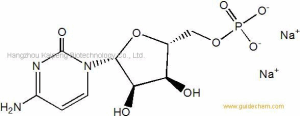
Cytidine 5'-monophosphate disodium salt, or CMP-Na2, CAS 6757-06-8, is the sodium salt of a pyrimidine nucleotide used across food fortification, pharmaceutical and diagnostic development, cell culture, research, and selected cosmetic formulations. Its B2B market is not a single grade: food, compendial, low-bioburden, low-endotoxin, diagnostic, and research specifications require different facilities, release tests, claims, and change-control packages.
Commercial supply is shaped by two manufacturing families. Fermentation-derived yeast RNA can be isolated and enzymatically hydrolyzed into 5'-nucleotides, while enzyme-mediated or chemical phosphorylation starts from cytidine and builds the phosphate ester with subsequent salt formation. The route determines the related-substance pattern: residual cytidine, CDP, CTP, positional phosphate isomers, other nucleotides, inorganic phosphate, enzymes, process salts, solvents, metals, and microbial markers all deserve route-specific controls.
In 2026, successful export depends on regulatory segregation. Infant-formula use must comply with destination-specific positive lists and use limits, including EU formula rules and China's currently effective nutrition-fortifier framework; FCC or USP statements require conformance to the current applicable monograph, not a supplier's generic “food/pharma grade” label. No therapeutic, disease-prevention, cognitive-enhancement, or developmental-benefit claim should be attached to bulk CMP-Na2. Buyers should instead contract for identity, purity, contaminant, microbiological, stability, packaging, and traceability performance.
CMP-Na2 combines cytosine, ribose, and a 5'-phosphate neutralized with sodium. The commonly referenced anhydrous formula is C9H12N3Na2O8P, with molecular mass about 367.16 g/mol, but commercial material may contain defined or variable water; assay calculations must state the hydration and dried basis. It is a polar, water-soluble solid whose ionic form generally provides easier dissolution and a higher solution pH than free cytidylic acid, although concentration, temperature, and counterion load affect performance.
Route selection balances feedstock economics, isomer control, environmental load, and grade expectations. Yeast-RNA processing can leverage renewable fermentation feedstock and enzymatic cleavage but creates a multi-nucleotide separation challenge. Cytidine phosphorylation offers a more focused feed stream but requires tight regioselectivity and control of phosphorylation reagents, solvents, and inorganic residues. Enzymatic phosphorylation can improve selectivity under milder conditions while introducing enzyme, cofactor, bioburden, and reaction-economics considerations.
Demand comes from nucleotide-premix producers, infant-nutrition companies, pharmaceutical developers, diagnostics manufacturers, cell-culture suppliers, and specialty cosmetic formulators. Growth favors suppliers able to segregate food and life-science quality systems and demonstrate consistent related-substance fingerprints. Customers increasingly request source transparency, non-GMO or fermentation declarations, lower microbial load, and electronic traceability. Marketing is becoming more conservative as regulators scrutinize unapproved health, immunity, intelligence, and developmental claims.
East Asian fermentation and nucleotide manufacturers provide much of the scalable feedstock and purification expertise, while Europe and North America contain major infant-nutrition, diagnostic, and cell-culture customers with demanding vendor-qualification systems. Material moves as standalone CMP-Na2 or in controlled nucleotide blends. Export dossiers should disclose the actual manufacturing site, synthesis family, salt and hydration state, repacking history, and whether food-safety or pharmaceutical quality oversight applies to the delivered lot.
Price tiers reflect scale and assurance rather than assay alone. Food-grade volume lots compete on fermentation yield, isolation efficiency, microbial compliance, and premix compatibility. Pharmaceutical, diagnostic, and cell-culture lots command premiums for low unknown impurities, endotoxin control where relevant, trace metals, method validation, stability, audit access, and regulatory support. Hydration-state differences can distort price-per-kilogram comparisons, so buyers should normalize to active anhydrous content and include testing, cold storage, qualification, and rejected-batch risk in landed cost.
Regulatory status follows intended use. The same CAS may be lawful as a laboratory reagent yet unsuitable for infant formula, cosmetics, or a GMP process. Before purchase, the importer should map product category, positive-list entry, specifications, site registration or licensing, claims, label language, and post-market duties. REACH or TSCA inventory status addresses industrial chemical placement; it does not authorize food, drug, diagnostic, or cosmetic use.
CMP-Na2 has a comparatively manageable hazard profile, yet fermentation, biomass treatment, membrane separation, chromatography, evaporation, and drying can be water- and energy-intensive. ESG-qualified buyers ask for water balance, chemical oxygen demand, nitrogen and phosphorus loads, solvent inventory, biomass disposal, and electricity source. A route described as “bio-based” is not automatically lower impact; yield, purification burden, cleaning frequency, and wastewater treatment determine the credible result.
Manufacturers can reduce footprint through high-solids fermentation, enzyme reuse where hygienically validated, membrane concentration, heat integration, efficient crystallization, and renewable electricity. Recovery of co-produced nucleotides improves RNA-feedstock utilization, but each stream needs identity and contamination controls. Product carbon footprints should define allocation among CMP, AMP, GMP, UMP, and other coproducts and include purchased glucose or yeast feed, utilities, treatment chemicals, drying, packaging, and outbound refrigerated logistics where specified.
Traceability should reach fermentation organism or cytidine source, media inputs, enzymes and processing aids, phosphorylation reagents, water system, sodium source, and final package. Food customers commonly need allergen, GMO, animal-origin, irradiation, and melamine-risk statements; pharmaceutical customers need material genealogy and change control. Suppliers should track phosphorus-rich effluent and avoid uncontrolled nutrient discharge, while buyers should verify that recycled water or solvents cannot introduce cross-contaminants into high-purity campaigns.
Resilience begins with dual qualification by route, not simply by nominal purity. A yeast-RNA source and a phosphorylation source may show different minor peaks, sodium content, color, microbial profile, and solution behavior. Quality agreements should define comparability protocols, approved site and route, notification periods, minimum remaining shelf life, excursion handling, and right to audit. For infant-nutrition customers, continuity planning must also address formula registrations and premix revalidation before any supplier switch.
CMP-Na2 is commonly shipped as a non-dangerous solid under major transport codes, but the shipper must confirm the current SDS and actual formulation rather than assume a universal status. Moisture and heat protection remain quality requirements even when no dangerous-goods class applies. Use clean, dry vehicles; avoid odoriferous or allergenic co-loads for food grade; document seals and temperature where contracted; and maintain sanitary handling, customs description, country-of-origin, and food-contact packaging evidence.
Exporters should create separate commercial and quality pathways for food, pharmaceutical or diagnostic, cell-culture, cosmetic, and RUO customers. One master specification rarely serves all markets. Claims, sample labels, certificates, manufacturing controls, audit depth, and complaint investigation must match the destination sector, while sales materials should clearly reject therapeutic, disease, cognition, or developmental promises.
CMP-Na2 is a technically mature nucleotide whose procurement complexity comes from route-dependent impurities and sharply different end-use rules. Fermentation and yeast-RNA hydrolysis offer scale and coproduct integration; enzymatic or chemical phosphorylation offers a focused cytidine route. Each demands a suitable analytical fingerprint and controls for water, metals, microbial quality, residual reagents, and related nucleosides and nucleotides.
The strongest 2026 supply agreements distinguish food authorization from compendial quality and research supply, verify EU and Chinese formula rules at the finished-product level, and treat FCC, USP, GMP, low-bioburden, and low-endotoxin as evidence-based specifications. Hygroscopicity, light protection, shelf life, and source traceability deserve explicit logistics terms. Above all, CMP-Na2 should be sold on compositional quality and lawful function, never with unapproved therapeutic or cognitive claims.
Powered by Guidechem
This white paper is exclusively compiled by the Guidechem Intelligence Team based on global customs data, regulatory databases, and industry research. Guidechem is a leading global B2B chemical platform, dedicated to connecting global buyers with verified, high-quality manufacturers.
Relying on Guidechem's extensive global database, we have mapped the core participants in the current global Cytidine 5'-monophosphate disodium salt (CMP-Na2) supply chain:
Disclaimer: The content of this white paper is compiled based on public market data and regulatory information available as of 2026. Global chemical regulations are subject to dynamic adjustments. In actual export operations, enterprises must consult professional regulatory advisors or relevant competent authorities to obtain the latest compliance guidance.
|
 |
 |
 |
 EN
 Agricultural News
 Food News
 Industrial News
 Cosmetic News
 Pharmaceutical News
 Science News


 12YRS

