
I. Executive Summary
Sodium sulfathiazole (CAS 6791-71-5) is the water-soluble sodium salt of sulfathiazole, a short-acting sulfonamide antibacterial of the para-aminobenzenesulfonamide class. It is not a commodity intermediate: it is a pharmacologically active substance supplied as a pharmaceutical or veterinary active ingredient, and in 2026 it is traded almost entirely through regulated channels under marketing authorisations, established names and residue legislation. Buyers are therefore not comparing prices alone; they are comparing dossiers, GMP history and the integrity of the distribution chain.
The decisive regulatory fact is that human and veterinary tracks have fully diverged. In the European Union, veterinary medicinal products are governed by Regulation (EU) 2019/6, which restricts antimicrobial use to justified therapy, excludes routine prophylaxis and growth promotion, and ties residues to the maximum residue limits of Regulation (EU) No 37/2010. In the United States, the FDA Center for Veterinary Medicine administers new animal drug approvals, tolerances in 21 CFR 556, the veterinary feed directive framework and the GFI guidance series on medically important antimicrobials. Both systems make end-use legitimacy a contractual matter, not a formality.
This white paper is written for licensed pharmaceutical manufacturers, veterinary marketing-authorisation holders and institutional procurement teams. It deliberately contains no therapeutic, dosing or treatment guidance for humans or animals; the material is supplied only to licensed entities with a documented end use, and suppliers are expected to operate know-your-customer screening and end-use declarations as a condition of sale.
II. Product Deep Dive: Molecular Mechanisms and Production Evolution
2.1 Physicochemical Properties and Mechanisms
Sulfathiazole is 4-amino-N-(1,3-thiazol-2-yl)benzenesulfonamide; the sodium salt is formed by deprotonation of the sulfonamide nitrogen, which converts a sparingly soluble free acid into a freely water-soluble salt suitable for solutions, soluble powders and intramammary or intrauterine dosage forms made by licensed formulators. Because that salt is only stable at alkaline pH, the pH window of any aqueous system is a critical quality attribute rather than a convenience.
- Antifolate mechanism and resistance: Sulfonamides act as structural analogues of para-aminobenzoic acid and competitively inhibit dihydropteroate synthase, blocking microbial folate synthesis and producing bacteriostasis. Resistance arises through altered target enzymes, overproduction of para-aminobenzoate and horizontally transferred sul genes, which is why the class is now evaluated within antimicrobial resistance stewardship rather than on efficacy alone.
- Salt stability and pH-dependent precipitation: Aqueous solutions of the sodium salt are strongly alkaline and revert to the poorly soluble free sulfonamide if acidified, if carbon dioxide is absorbed or if incompatible salts are introduced. Specification control therefore centres on pH, clarity and colour of solution, assay, and the level of free sulfathiazole generated on standing, alongside light protection because the aromatic amine is photo-labile.
2.2 Synthesis and Manufacturing Technologies
Industrial manufacture follows the classical sulfonamide sequence of electrophilic aromatic substitution, sulfonyl chloride formation, amine coupling, deprotection and salt formation. The chemistry is well understood; what distinguishes a GMP supplier is control of the sulfonyl chloride intermediate, of the aminothiazole coupling stoichiometry and of the polymorphic and impurity profile of the isolated salt, all under ICH Q7 and EU GMP Part II.
- Chlorosulfonation and sulfonyl chloride control: An acetanilide starting material is converted with chlorosulfuric acid to the para-acetamidobenzenesulfonyl chloride, with careful control of exotherm, acid strength and quench conditions, because hydrolysis back to sulfonic acid and ortho-isomer formation are the main yield and purity losses. The intermediate is typically isolated and assayed before coupling.
- Coupling, deacetylation and salt formation: The sulfonyl chloride is condensed with 2-aminothiazole under Schotten-Baumann-type conditions with acid binding, the acetyl protecting group is removed by alkaline hydrolysis, and the crude sulfathiazole is purified by pH-controlled dissolution, carbon treatment and recrystallisation before controlled neutralisation with sodium hydroxide. Final operations manage particle size, residual solvents under ICH Q3C and elemental impurities under ICH Q3D.
2.3 Core Application Matrix
- Veterinary pharmaceutical active ingredient: The principal legitimate outlet is as an active substance in veterinary medicinal products authorised under national or EU procedures, referenced through an active substance master file or a drug master file held by the finished-product manufacturer. Supply is conditional on the buyer holding, or working under, the relevant marketing authorisation; no dosing or treatment guidance is provided by the API supplier.
- Human pharmaceutical active ingredient in remaining authorised territories: Where sulfathiazole-containing medicinal products remain authorised, the salt is supplied to licensed marketing-authorisation holders against a certificate of suitability, an active substance master file or a US drug master file, with change control, impurity qualification and stability commitments defined in the quality agreement.
- Reference material and residue-control analytical standard: A smaller but strategically important outlet is supply of well-characterised material to official residue-control laboratories, proficiency-testing providers and pharmaceutical quality-control departments as a comparator or analytical standard, typically labelled for laboratory use only and sold under stricter identity and documentation requirements than bulk API.
III. Global Market Supply-Demand Landscape and Export Trends
3.1 Demand Drivers and Market Shifts
Demand is no longer a function of livestock numbers but of stewardship policy. European and North American regulators have narrowed the legitimate indications for older sulfonamides, and medicated-feed reform has removed volume-indication uses, so tonnage in regulated markets is stable to declining while unit expectations for documentation rise sharply. Growth now comes from emerging veterinary pharmaceutical industries in Asia, Latin America and parts of Africa, where licensed formulators continue to register sulfonamide products and need dependable, dossier-backed API rather than spot material.
3.2 Capacity Distribution and Export Flows
Production is concentrated among a limited set of GMP-inspected sulfonamide specialists. China supplies the bulk of global sulfonamide API capacity from clusters in Zhejiang, Shandong and Hebei, with a mature export apparatus of certificates of suitability, written confirmations and drug master files. India adds significant capacity in Gujarat, Hyderabad and Visakhapatnam, strongly oriented to regulated-market filings and veterinary finished doses. Europe retains limited API manufacture but hosts many marketing-authorisation holders, wholesale distributors and quality-control laboratories that set specification and audit practice.
3.3 Market Bifurcation and Pricing Dynamics
The market divides into dossier-backed API and undocumented material, and the price gap between them has widened. A batch supported by a valid certificate of suitability or referenced master file, an EU written confirmation, GMP inspection history, full impurity and residual-solvent data and an environmental risk assessment input commands a substantial premium over material sold purely on assay. Because veterinary authorisations are product-specific and slow to transfer, buyers rationally pay for continuity of supply and change-control discipline rather than chasing spot discounts.
IV. In-depth Analysis of Global Compliance and Regulatory Barriers
For an antibacterial of this class, compliance is a two-layer problem. The first layer is pharmaceutical quality: ICH Q7 and EU GMP Part II, master-file or certificate-of-suitability support, impurity qualification and stability. The second layer is legitimacy of use: the substance may only move into authorised veterinary or human medicinal-product channels, with residue limits, withdrawal periods and antimicrobial-resistance obligations attached downstream. Suppliers who address only the first layer create downstream liability for themselves and their customers.
4.1 European Market: REACH, CLP, and Sector-Specific Directives
- Regulation (EU) 2019/6 and Regulation (EU) 2019/4 on veterinary use: Veterinary medicinal products require marketing authorisation, prescription status, defined withdrawal periods and pharmacovigilance, while antimicrobials may not be used routinely, prophylactically or for growth promotion; metaphylaxis requires justification. Medicated feed is separately governed by Regulation (EU) 2019/4, and antibiotic growth promoters have long been excluded under feed-additive legislation. Practically, an API supplier must be able to support the finished-product dossier with an active substance master file or certificate of suitability, a written confirmation of GMP equivalence for imported material, and residue data aligned to the maximum residue limits set under Regulation (EU) No 37/2010, which for sulfonamides is expressed as a group limit across muscle, liver, kidney and, where applicable, milk.
- Environmental risk assessment, AMR policy and CLP classification: Veterinary authorisations require an environmental risk assessment following the VICH guidance (phase I and phase II as triggered), and sulfonamide active substances attract scrutiny for persistence, mobility and selection of resistance in manure-amended soils. In parallel, REACH registration and CLP notification apply to the substance as manufactured, with sulfonamides commonly notified with skin sensitisation and specific target organ classifications, and the recast Urban Wastewater Treatment Directive introduces extended producer responsibility for pharmaceutical micropollutants, which will progressively push cost onto marketing-authorisation holders and their supply chains.
4.2 North American Market: TSCA, EPA, and FDA Regulations
- FDA CVM approvals, tolerances and the GFI framework: Use in food-producing animals in the United States depends on an approved new animal drug application or abbreviated application with the API supported by a drug master file, on residue tolerances under 21 CFR 556, and on the veterinary feed directive requirements of 21 CFR 558.6 where the product is administered through feed. The GFI series on medically important antimicrobial drugs, including the phase-out of production claims and the guidance on duration of use and veterinary oversight, further narrows permitted label conditions. API establishments must be registered and listed under 21 CFR 207 and operate under cGMP.
- Import control, EPA effluent rules and TSCA status: FDA exercises import oversight over unapproved or misbranded drug components, and material entering the United States outside an approved application risks detention without physical examination. On the manufacturing side, antibiotic production is subject to EPA effluent limitations guidelines for pharmaceutical manufacturing under 40 CFR Part 439, and the substance itself is handled as an existing TSCA chemical substance with occupational exposure control rather than as a controlled substance. No US sale should proceed without confirmation that the buyer holds or is acting under a valid authorisation.
4.3 The Critical Hurdle: Quality Control and Safety Limits
Compliance Warning: This substance is an antibacterial active ingredient and must move only through licensed pharmaceutical and veterinary channels. Suppliers should apply documented know-your-customer screening, obtain a signed end-use declaration, verify the buyer's manufacturing or wholesale authorisation and marketing-authorisation linkage, and retain distribution records for inspection. Enquiries framed for unlicensed compounding, informal livestock use, aquaculture of unregistered species or human self-administration must be declined. On the quality side, the specification must fix assay by validated HPLC, related substances including sulfanilamide and 2-aminothiazole, heavy metals under ICH Q3D, loss on drying, pH and clarity of solution, residual solvents under ICH Q3C and microbial and endotoxin limits appropriate to the intended dosage form.
V. Green Trade Barriers and ESG in Manufacturing
Antimicrobial manufacturing is now evaluated through an antimicrobial-resistance lens as much as a carbon lens. Investors, customers and regulators expect documented control of antibiotic discharge into wastewater, transparent solvent and energy profiles, and demonstrable stewardship of the molecule after it leaves the plant gate.
5.1 Carbon Footprint and Circular Economy
The dominant burdens are chlorosulfonic acid and solvent consumption, the energy used for multiple crystallisations and drying, and the treatment of sulfonamide-containing mother liquors. Credible programmes report Scope 1 and Scope 2 emissions under the GHG Protocol with Scope 3 screening for key raw materials, recover solvents by distillation rather than incineration, and apply advanced oxidation or biological polishing to sulfonamide-bearing effluents. Procurement teams increasingly ask for these data in supplier questionnaires aligned to the Pharmaceutical Supply Chain Initiative audit format.
5.2 Sustainable Sourcing and Traceability
Traceability for an antibacterial means full chain-of-custody: batch records, starting-material provenance, retained samples, distribution records and customer qualification files maintained for the full retest period. Many buyers now require a discharge-limit commitment derived from predicted-no-effect concentrations for resistance selection, in line with the framework published by the AMR Industry Alliance, plus a stewardship statement that the substance will not be promoted for growth promotion or non-therapeutic production uses. ISO 9001, ISO 14001 and, where applicable, ISO 45001 certification underpins the system.
VI. Supply Chain Resilience and Export Logistics
The sodium salt is a light-sensitive, hygroscopic crystalline solid that degrades through oxidation of the aromatic amine, moisture uptake and pH drift, so packaging and storage design is a quality decision rather than a transport detail.
6.1 Packaging Standards and Moisture/Contamination Control
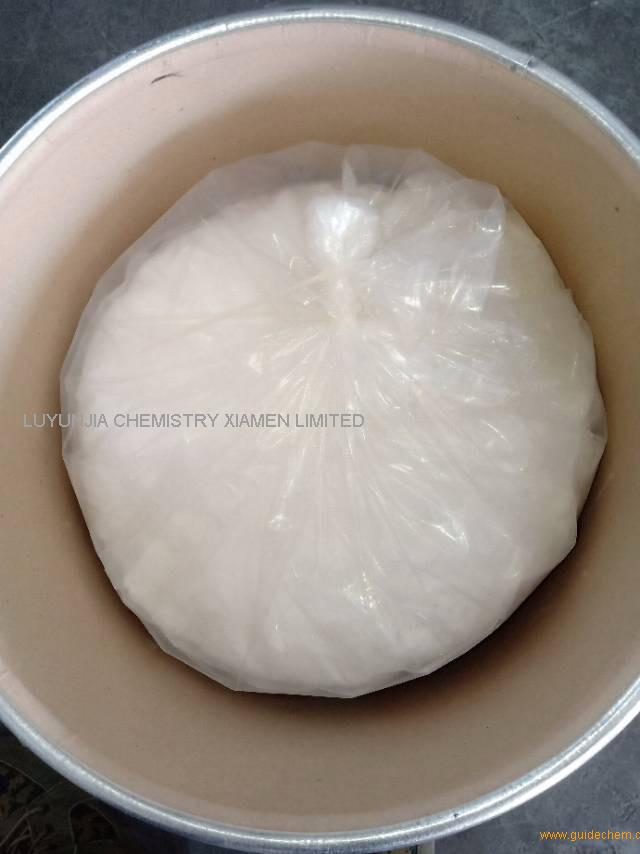
- Light and moisture barrier packaging: Material is packed in double polyethylene liners inside fibre drums or HDPE drums, typically at 25 kg, with desiccant where the water-activity risk warrants it, sealed under controlled humidity and, for photo-sensitive grades, in opaque or amber outer packaging. Headspace should be minimised or inerted for long voyages, and every drum must carry batch, retest date and storage-condition labelling to ICH Q7 expectations.
- Containment and occupational exposure control: Because sulfonamides are potent sensitisers and pharmacologically active, milling, charging and packing operations are designed to an occupational exposure band with local exhaust, closed transfer and, where the health-based exposure limit requires it, isolator or down-flow containment. Cleaning validation using permitted daily exposure or acceptable daily exposure derived limits, and documented operator training, are routinely audited.
6.2 Dangerous Goods Identification and Transit Protocols
Bulk sodium sulfathiazole is generally not assigned a UN dangerous-goods classification for road, sea or air transport when supplied as a non-reactive solid, and moves as pharmaceutical goods with a compliant safety data sheet and GHS labelling reflecting skin sensitisation and any aquatic hazard classification. Where a specific grade is classified for aquatic chronic toxicity, consignments may attract marine-pollutant provisions and UN 3077 or UN 3082, Class 9, packing group III treatment. Shipments should travel under the storage conditions stated on the label, usually controlled ambient temperature with protection from light and moisture, using sealed, tamper-evident packaging, temperature and humidity data loggers on long or hot-climate routes, and unbroken chain-of-custody documentation.
VII. Enterprise Global Expansion Strategy Guide
Three disciplines separate durable suppliers from transactional traders in this category.
- Lead with the regulatory file, not the molecule: Maintain an active certificate of suitability or active substance master file, a US drug master file where relevant, written confirmation of GMP equivalence for imported batches, and a complete open part covering route of synthesis, impurity qualification and stability. Buyers select on file quality because their own authorisations depend on it, and a supplier that can support variations and change control becomes structurally difficult to replace.
- Operate formal channel governance: Implement know-your-customer screening, signed end-use declarations, verification of the buyer's manufacturing or wholesale authorisation, screening against sanctions and denied-party lists, and escalation of any enquiry suggesting unlicensed compounding or non-therapeutic use. Documented governance protects the licence of the supplier as well as that of the customer.
- Differentiate on antimicrobial-resistance performance: Offer a documented discharge-limit commitment based on predicted-no-effect concentrations for resistance selection, third-party effluent testing, and an environmental risk assessment data package that supports the customer's own dossier. As stewardship expectations tighten, suppliers able to evidence environmental control will be preferred even at a price premium.
VIII. Conclusion
Sodium sulfathiazole is a mature sulfonamide whose commercial future is governed by stewardship rather than by volume. Regulated markets are narrowing indications and raising documentation expectations, while growth markets continue to require reliable GMP supply into licensed local formulations. The winners will be manufacturers that treat the regulatory file, the environmental record and the distribution chain as the product.
For procurement teams, the decision framework is straightforward: verify the API supplier's GMP and master-file status; confirm residue and withdrawal-period data align to the target market's maximum residue limits; require discharge and impurity data; and contractually restrict the material to authorised channels with end-use declaration and audit rights. Nothing in this paper constitutes therapeutic, dosing or treatment guidance for humans or animals.
IX. Industry Resource Connection and Supplier Ecosystem
Powered by Guidechem
This white paper is exclusively compiled by the Guidechem Intelligence Team based on global customs data, regulatory databases, and industry research. Guidechem is a leading global B2B chemical platform, dedicated to connecting global buyers with verified, high-quality manufacturers.
Relying on Guidechem's extensive global database, we have mapped the core participants in the current global Sodium sulfathiazole supply chain:
- China — sulfonamide API manufacturing base: Zhejiang, Shandong and Hebei host the largest concentration of sulfonamide active-substance capacity, with established chlorosulfonation infrastructure, certificates of suitability and drug master files, and mature export documentation. Buyers should verify GMP inspection history, written confirmation status and the depth of the impurity and residual-solvent package.
- India — regulated-market filing specialists: Hyderabad, Gujarat and Visakhapatnam combine API synthesis with strong dossier capability, WHO-GMP and regulated-market inspection experience, and a large veterinary finished-dose industry that anchors domestic demand and supports export registration work.
- Europe — authorisation holders and quality infrastructure: Spain, Italy, France and Germany concentrate marketing-authorisation holders, qualified persons, wholesale distribution authorisations, official medicines control laboratories and residue-testing capability. This ecosystem sets specification and audit expectations and is where certificate-of-suitability and environmental risk assessment requirements are enforced in practice.
Disclaimer: The content of this white paper is compiled based on public market data and regulatory information available as of 2026. Global chemical regulations are subject to dynamic adjustments. In actual export operations, enterprises must consult professional regulatory advisors or relevant competent authorities to obtain the latest compliance guidance.


 EN
 Agricultural News
 Food News
 Industrial News
 Cosmetic News
 Pharmaceutical News
 Science News


 1YR


