
I. Executive Summary
Dihydrogenated tallow dimethyl ammonium chloride (DHTDMAC, CAS 68002-59-5) is a dialkyl dimethyl quaternary ammonium compound whose two long alkyl chains derive from hydrogenated tallow, giving a predominantly saturated C16–C18 distribution and a softening range typically reported between about 45 and 65 °C. For decades it was the dominant cationic active in household rinse-cycle fabric softeners, and it remains in use across fabric care, hair conditioning, asphalt emulsification and mineral flotation. By 2026 it is a molecule defined by substitution history and by provenance: European softener demand migrated to esterquats on biodegradability and aquatic-toxicity grounds, and the animal origin of the alkyl chains now triggers animal by-product, traceability and deforestation due diligence that plant-based alternatives avoid.
Manufacture follows a well-established oleochemical sequence: rendered tallow is split to fatty acids, converted to fatty nitriles over an ammonia route, hydrogenated to primary hydrogenated tallow amine, built up to the secondary and then tertiary amine, and finally quaternised with methyl chloride. Quality is judged not on active content alone but on the balance between tertiary amine and its hydrochloride, on ash, colour and water and on residual methyl chloride. Producers who control quaternisation stoichiometry supply material that disperses predictably; those who do not ship lots that gel, cake or discolour.
Commercially, DHTDMAC therefore has a dual identity. As a surfactant it is a mature, cost-competitive oleochemical sold into price-sensitive applications; as an animal-derived material it is a regulated article subject to European animal by-product classification, transmissible spongiform encephalopathy controls, religious and dietary certification demands, and deforestation scrutiny. This white paper addresses both, together with the corrosion and aquatic-hazard classification, the CLP position, and the heated-transport and caking-control practices that decide whether a shipment is usable on arrival.
II. Product Deep Dive: Molecular Mechanisms and Production Evolution
2.1 Physicochemical Properties and Mechanisms
DHTDMAC is a surface-active cation: the quaternary nitrogen carries a permanent positive charge balanced by chloride, and the two long alkyl chains provide the hydrophobe. Because the tallow feedstock is hydrogenated, the chains are largely saturated, raising the melting range relative to unsaturated analogues and improving oxidative and colour stability in storage. It is supplied as flakes, pastilles, a waxy solid or a concentrated paste, and is dispersible rather than truly soluble in cold water — a distinction that governs how formulators handle it.
- Cationic Adsorption and Softening Mechanism: Most textile fibres, hair and mineral surfaces carry a net negative charge in water, so the cation adsorbs strongly, orienting its two alkyl chains away from the surface. The adsorbed layer lowers inter-fibre friction, imparts lubricity, reduces static build-up and increases surface hydrophobicity. Performance is governed by chain length, saturation level and counter-ion, which is why mono-alkyl and esterquat alternatives do not substitute one-for-one in legacy formulations.
- Physical Form, Melting Behaviour and Caking: Because the alkyl distribution varies with the tallow cut, the softening and melting range shifts from lot to lot and must be read from the certificate rather than from a generic datasheet. This variability drives every downstream handling decision: storage must stay below the softening point, molten transport requires controlled heating with margin against thermal degradation, and flake products need anti-caking measures and moisture control to prevent bridging in silos and bags.
2.2 Synthesis and Manufacturing Technologies
The route is a classic fatty-nitrogen value chain and is operated at scale wherever tallow or vegetable-oil oleochemistry exists. Process development effort concentrates on hydrogenation selectivity, on the amine build-up step, and above all on driving quaternisation to completion without generating free amine hydrochloride.
- Nitrile and Amine Route from Hydrogenated Tallow: Rendered and hydrogenated tallow is split to fatty acids, converted to fatty nitriles by reaction with ammonia over a dehydration catalyst, then hydrogenated over a nickel or copper-chromite catalyst to the primary hydrogenated tallow amine. Further conversion builds the secondary amine and, with methylamine incorporation or reductive alkylation, the tertiary di(hydrogenated tallow) methyl amine. Catalyst selection and hydrogenation conditions determine residual unsaturation, colour and the amine distribution that quaternisation inherits.
- Quaternisation with Methyl Chloride and Finishing: The tertiary amine is quaternised with methyl chloride, typically in an alcoholic or aqueous-alcoholic medium under pressure and elevated temperature, with stoichiometric control and, where required, an alkaline buffer to suppress amine-salt formation. Progress is followed by measuring free amine and amine hydrochloride, since residual tertiary amine reduces active content and amine salt depresses dispersibility. Finishing covers dilution to the commercial active level, filtration, colour control, flaking or pastillation and anti-caking treatment.
2.3 Core Application Matrix
- Fabric Softeners: Historically the leading rinse-cycle cationic, delivering softness, antistatic performance and fragrance deposition. In Western Europe it was progressively displaced by esterquats following industry risk assessment and environmental scrutiny of its biodegradability and aquatic toxicity, and it now serves markets and price tiers where cost and legacy formulation compatibility dominate.
- Hair Conditioners and Personal Care: Used as a conditioning and antistatic agent in rinse-off hair care, subject to the destination's cosmetic regime; in the EU, dialkyl quats of this family are subject to specific conditions that must be verified against the current text and annexes of Regulation (EC) No 1223/2009 rather than assumed from past practice.
- Asphalt Emulsifiers, Flotation and Organoclays: The cation acts as a cationic emulsifier for bitumen emulsions, as a collector or modifier in mineral flotation, and as an intercalation agent for organoclays used in drilling fluids, coatings and rheology control, where its thermal stability and strong surface adsorption are decisive.
III. Global Market Supply-Demand Landscape and Export Trends
3.1 Demand Drivers and Market Shifts
Household fabric softening, the historical volume driver, is now a mature and in several regions declining application for this chemistry; growth has migrated to institutional and industrial uses — asphalt emulsification for road construction and maintenance, mineral processing, and organoclays for drilling and coatings. Demand is also increasingly bifurcated by provenance: buyers serving vegan, halal or kosher markets, or operating under corporate bio-based sourcing targets, are specifying plant-derived or esterquat chemistry, while cost-driven and technical applications continue to accept hydrogenated tallow feedstock.
3.2 Capacity Distribution and Export Flows
Fatty-nitrogen capacity follows feedstock and downstream detergent manufacture. China has built substantial quaternary ammonium capacity serving domestic detergent and industrial demand and exporting regionally; the United States combines a large rendering industry with established fatty-amine and quat plants; Europe retains capacity but has largely restructured it around esterquats, with remaining dialkyl quat output tied to industrial and export applications. Tallow itself is globally traded, with major flows from North America, South America and Australia to oleochemical processors in Asia.
3.3 Market Bifurcation and Pricing Dynamics
Pricing follows tallow, which is itself a co-product of the meat and rendering industries and is therefore correlated with livestock slaughter volumes, biodiesel and oleochemical demand, and vegetable-oil substitution economics. Additives, methyl chloride, solvent and energy contribute, but the swing factor is the fat price. Because DHTDMAC competes against esterquats and against plant-based quats, its price advantage must continually be weighed against the regulatory and customer-acceptance cost of animal origin, and many buyers now run dual-approved formulations precisely to arbitrage that trade-off.
IV. In-depth Analysis of Global Compliance and Regulatory Barriers
Three regulatory layers apply simultaneously and are frequently confused. The first is industrial-chemical registration and classification. The second is animal by-product law, which governs whether rendered tallow-derived material may be placed on a given market and under what traceability. The third is sectoral: detergents, cosmetics, ecolabels and, increasingly, deforestation due diligence. A supplier that satisfies only the first will still have shipments refused.
4.1 European Market: REACH, CLP, and Sector-Specific Directives
- REACH, CLP and Detergent and Ecolabel Rules: The substance requires registration under Regulation (EC) No 1907/2006 for the tonnage band placed on the EU market, with classification under Regulation (EC) No 1272/2008 reflecting skin and eye effects and, critically, aquatic hazard: dialkyl quats of this type fall in the acute and chronic aquatic categories with multiplying factors assigned through the adaptation to technical progress, and the current entries must be read from the ATP and the supplier SDS. Detergent applications engage Regulation (EC) No 648/2004 on biodegradability and labelling, and EU Ecolabel criteria exclude dialkyl quats of this family — a commercial constraint rather than a legal ban.
- Animal By-Products Regulation (EC) No 1069/2009 and Regulation (EU) No 142/2011: Because the alkyl chains derive from rendered ruminant fat, the material sits within the EU animal by-product framework. Tallow from animals fit for human consumption is a Category 3 material usable for technical purposes only if processed by an approved method, originating from approved or registered establishments and travelling with commercial documentation enabling traceability. Operators must exclude specified risk material, satisfy transmissible spongiform encephalopathy requirements and, for imports, ensure country and establishment approval through the official trade documentation system.
4.2 North American Market: TSCA, EPA, and FDA Regulations
- TSCA Inventory and EPA Interfaces: The substance must be listed on the TSCA Chemical Substance Inventory for US placement, and significant new uses are reviewable under Section 5. Where a product making antimicrobial or sanitising claims is formulated, EPA registration under FIFRA is required and the quat must be an approved active for that use pattern; a cationic surfactant supplied for softening or emulsification is not automatically covered, and claim-driven misclassification is a recurring enforcement issue.
- Animal-Derived Input Controls and Customer Standards: Imports of rendered animal fats and derivatives into the United States are subject to animal-health import controls administered by USDA, and downstream users in food-adjacent, personal-care and institutional markets impose their own documentation. Buyers typically require country-of-origin statements, evidence of processing method, bovine spongiform encephalopathy status of the origin country, and, where relevant, certification that specified risk material was excluded.
4.3 The Critical Hurdle: Quality Control and Safety Limits
Compliance Warning: Two failure modes dominate. The first is provenance documentation: without animal by-product classification, processing method, establishment approval and origin evidence, an EU-bound shipment will be refused regardless of chemical quality. The second is specification drift: free amine and amine hydrochloride, ash, colour and water must be reported as lot values, because residual tertiary amine lowers active content while amine salt and moisture drive gelling and caking. Confirm the aquatic-hazard classification and multiplying factors against the current ATP to CLP, and confirm the cosmetic and ecolabel position against current texts before promising a market.
V. Green Trade Barriers and ESG in Manufacturing
No category of surfactant is more exposed to provenance-driven ESG questioning than a tallow-derived quaternary ammonium compound. Customers ask three things: whether the fat is traceable to approved rendering, whether it is associated with deforestation or land-use conversion, and whether an equivalent plant-based or readily biodegradable alternative exists. Suppliers should treat all three as commercial questions with documentary answers.
5.1 Carbon Footprint and Circular Economy
Tallow is a rendered co-product, so its upstream burden is allocated rather than directly incurred, which generally gives the material a favourable cradle-to-gate profile compared with purpose-grown vegetable oils. The process footprint is concentrated in hydrogenation, nitrile formation and quaternisation, all steam- and hydrogen-intensive, and in drying and flaking. European sites operate within the EU Emissions Trading System, and customers increasingly request product carbon footprints under ISO 14067 or equivalent methods. Circular measures that hold up in audit include solvent recovery, heat integration and recovery of fatty residues.
5.2 Sustainable Sourcing and Traceability
Traceability is the substantive ESG requirement. Operators should maintain documented chain of custody from rendering establishment through fat processor to quaternisation plant, with commercial documents and health certification retained. Where cattle-derived fats or derivatives fall within the product scope of Regulation (EU) 2023/1115 on deforestation-free products, geolocation data and a due diligence statement submitted through the EU information system are required, and the combined-nomenclature classification must be verified with the competent authority. Religious and dietary claims are separately contractual: halal and kosher certification require audited supervision of the rendering chain, and vegan positioning is not attainable with an animal-derived hydrophobe.
VI. Supply Chain Resilience and Export Logistics
DHTDMAC is not a hazardous reactivity problem; it is a physical-form problem. It softens, cakes, absorbs moisture and darkens if mishandled, and molten consignments impose a temperature-control discipline that many general chemical carriers are not equipped to provide.
6.1 Packaging Standards and Moisture/Contamination Control
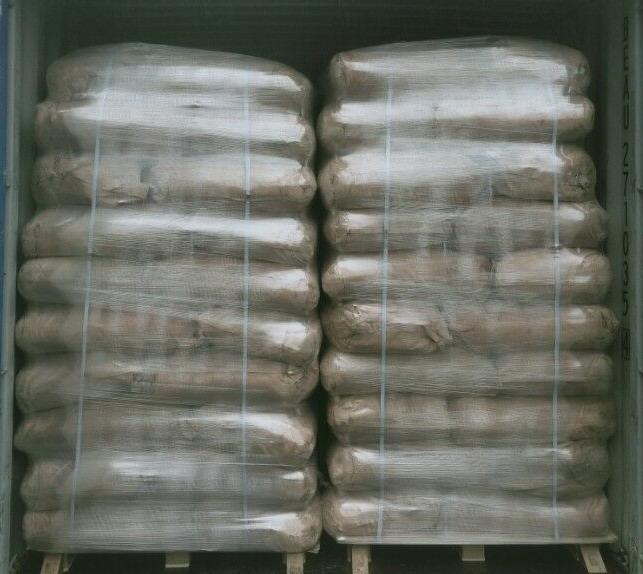
- Flake and Pastille Packaging with Anti-Caking Control: Solid grades are packed in multi-wall paper or woven polypropylene bags with a moisture-barrier liner, treated with a compatible anti-caking agent and palletised to limit compaction. Warehousing must stay below the softening range with controlled humidity, stock is rotated first-in first-out, and stacks are separated to allow air movement. Caked or bridged material indicates a storage failure in the chain rather than an inherent product defect.
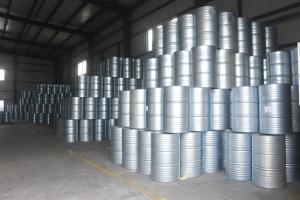
- Molten Handling, Heating Margins and Colour Control: Where material is supplied molten, heated tank containers with calibrated temperature control, insulation and, where appropriate, heating coils are used, held above the clear point but below the threshold at which colour and amine-salt formation accelerate. Temperature is logged across the voyage because both under-heating, which causes solidification and blocked discharge, and over-heating, which degrades colour, are chargeable failures. Tanks are dedicated or cleaned to a documented standard to avoid cross-contamination with anionic or oxidative residues.
6.2 Dangerous Goods Identification and Transit Protocols
Transport classification must be taken from the current safety data sheet and confirmed against the latest IMDG Code, IATA Dangerous Goods Regulations and ADR or 49 CFR. Where the material meets the criteria for an environmentally hazardous substance, solid consignments are offered as UN 3077, environmentally hazardous substance, solid, not otherwise specified, class 9, packing group III, with marine-pollutant marking; molten consignments in heated tanks carry elevated-temperature provisions. Because the product is animal-derived, shipments to the EU move with animal by-product commercial documentation and establishment references attached, segregated from food and feed cargo.
VII. Enterprise Global Expansion Strategy Guide
Suppliers that succeed with this molecule compete on provenance documentation and physical-form reliability rather than on chemistry. The following priorities reflect what buyers and auditors test.
- Industrialise Provenance Documentation: Build a dossier per shipment covering animal by-product category, processing method, approved establishment numbers, country of origin and transmissible spongiform encephalopathy status, with halal or kosher certificates where claimed and deforestation due diligence where the product scope applies.
- Control the Amine and Amine-Salt Equilibrium: Invest in quaternisation control and in routine determination of free amine, amine hydrochloride, ash, colour and water, reporting lot values rather than typicals. This is the specification area that most often decides whether a lot disperses cleanly in a customer's formulation.
- Offer a Qualified Non-Animal Alternative: Maintain plant-derived or esterquat alternatives within the same commercial portfolio so that customers facing vegan, halal, ecolabel or biodegradability constraints can be retained rather than lost, and present the substitution data honestly.
VIII. Conclusion
DHTDMAC is a mature cationic surfactant whose commercial future is narrower but still real: industrial applications value its adsorption, thermal stability and cost position, while household softener demand has largely migrated to esterquats in regulated markets. Its economics track tallow and hydrogenation energy; its market access increasingly depends on whether the producer can prove where the fat came from and how it was processed.
Into 2026 and beyond, the decisive capabilities will be documentary and physical rather than synthetic. Producers able to attach complete animal by-product and origin evidence to every lot, hold the amine and amine-salt balance within tight limits, and deliver flakes that do not cake or molten cargo that arrives within temperature window will hold their industrial base. Those who treat provenance as a formality will find that customs, ecolabel criteria and customer audits have already decided.
IX. Industry Resource Connection and Supplier Ecosystem
Powered by Guidechem
This white paper is exclusively compiled by the Guidechem Intelligence Team based on global customs data, regulatory databases, and industry research. Guidechem is a leading global B2B chemical platform, dedicated to connecting global buyers with verified, high-quality manufacturers.
Relying on Guidechem's extensive global database, we have mapped the core participants in the current global Dihydrogenated tallow dimethyl ammonium chloride (DHTDMAC) supply chain:
- China — Scale Quaternary Ammonium and Fatty-Nitrogen Capacity: Large, cost-competitive quat plants integrated to imported tallow and vegetable fatty acids, serving domestic detergent, asphalt and mineral-processing demand and exporting across Asia and beyond, with the strongest producers investing in amine-salt control and export documentation.
- United States — Rendering-to-Quat Integration: A vertically integrated chain linking a large rendering industry to fatty amine and quaternisation capacity, with tallow priced as a slaughter co-product and with animal-health import controls governing inbound material, competing on feedstock security and industrial technical service.
- European Union — Restructured Around Esterquats and Compliance: Capacity has been substantially retooled toward readily biodegradable esterquats, with remaining dialkyl quat output tied to industrial and export markets and operated under REACH, CLP aquatic-hazard classification, animal by-product rules and Ecolabel constraints that shape every customer conversation.
Disclaimer: The content of this white paper is compiled based on public market data and regulatory information available as of 2026. Global chemical regulations are subject to dynamic adjustments. In actual export operations, enterprises must consult professional regulatory advisors or relevant competent authorities to obtain the latest compliance guidance.



 EN
 Agricultural News
 Food News
 Industrial News
 Cosmetic News
 Pharmaceutical News
 Science News


 4YRS


