-
We detected your language preference as English. Would you like to switch to the English version for a better experience?
Switch to English
Stay here


In 2026, the global market for Dihydrogenated Tallow Dimethyl Ammonium Chloride (DHTDMAC, CAS: 61789-80-8) is undergoing structural repricing driven by oleochemical feedstock volatility, energy inflation, and tightening EHS compliance in fatty amine hydrogenation. For procurement leaders in textile softener production and organoclay modification, understanding true cost-plus pricing mechanics is essential to avoid overpaying in a fragmented spot market while securing resilient long-term supply contracts.

Cost-Plus Pricing Models: What Price Is Fair for Dihydrogenated Tallow Dimethyl Ammonium Chloride for Sale?
DHTDMAC pricing in 2026 is fundamentally governed by a layered cost-plus structure built on upstream oleochemical inputs, hydrogenation intensity, and purification yield losses. The dominant cost driver remains tallow-derived fatty amines, which account for 48–62% of total variable cost depending on feedstock origin (EU vs SEA rendering grade).
Recent industrial benchmarking shows that production-grade DHTDMAC (75% active matter) typically exhibits the following cost structure:
According to the 2026 oleochemical pricing correlation model, a 10% increase in tallow feedstock can translate into a 6.8–8.2% increase in finished DHTDMAC spot pricing, depending on hydrogen energy elasticity.
Supply availability of DHTDMAC is increasingly decoupled from demand fundamentals and instead driven by production-side constraints. Three systemic risk vectors dominate 2026 global supply dynamics:
These constraints create a “phantom shortage” scenario where nominal capacity exists but real deliverable volume is significantly reduced.
Expert Commentary: “We are entering a structural scarcity regime for long-chain quaternary ammonium compounds. Even when inventories appear stable, logistical friction can reduce effective supply by up to 30%,” notes Michael R. Stein, Supply Chain Analyst at Global Chemical Intelligence Group.
Enterprise procurement increasingly shifts toward bulk contracting models such as IBC (900 kg), ISO tank shipments, and long-term agreements (LTA). Unit economics demonstrate clear scale advantages:
Bulk RFQ platforms such as Guidechem’s sourcing ecosystem are increasingly used to bypass intermediaries and directly connect buyers to Tier-1 manufacturers, improving procurement transparency and reducing markup layers by 8–15%.
Expert Commentary: “The future of surfactant procurement is algorithmic sourcing. Companies that fail to integrate RFQ aggregation tools will systematically overpay in fragmented spot markets,” states Andrew K. Lim, Director of Industrial Procurement Strategy at Asia Chemical Advisory.
Customization of DHTDMAC formulations is now a critical competitive lever in textile softener and bentonite modification industries. Active matter can be engineered between 50%–80%, depending on viscosity, freezing point, and dispersion requirements.
Key technical parameters include:
Expert Commentary: “Customization is no longer optional—it is a necessity for climate-adaptive formulations. Without tuning phase stability, manufacturers risk product separation in cold-chain logistics,” explains Prof. David Nguyen, Chair of Applied Surfactant Chemistry at Singapore Institute of Technology.
In 2026, procurement strategy is increasingly defined by Total Cost of Ownership (TCO) rather than FOB pricing. While imported bulk shipments may appear cheaper, demurrage charges and compliance delays often reverse theoretical savings.
A hybrid sourcing model is emerging:
Expert Commentary: “Hybrid sourcing is the only mathematically stable procurement model under current volatility regimes,” notes Sarah Collins, Risk Director at Global Supply Chain Forum.
Modern MRP systems integrate consumption velocity, lead-time variability, and logistics uncertainty into a dynamic reorder point model:
ROP = (Average Daily Usage × Lead Time) + σ(Logistics Volatility)
For a mid-scale textile softener plant consuming 2.4 tons/day with a 21-day lead time, the reorder threshold typically exceeds 65–72 tons depending on supply chain variance.
Expert Commentary: “Digital MRP systems reduce inventory distortion by up to 22%, but only when logistics volatility is continuously recalibrated,” says Emily Rogers, Industrial Analytics Lead at McKinsey Chemical Operations Practice.
Enterprise buyers increasingly rely on verified supplier ecosystems to mitigate fraud and quality deviation risks. Certified suppliers must provide:
Platforms like structured chemical marketplaces (e.g., Guidechem ecosystem) enable rapid filtering of audited vendors, reducing supplier qualification cycles by up to 40%.
Expert Commentary: “Digital supplier verification is now a prerequisite for global trade financing approval in chemical procurement,” states Jonathan Meyers, Compliance Officer at International Chemical Trade Bank.
FAQs
Q1: What is the fair market price of Dihydrogenated Tallow Dimethyl Ammonium Chloride in 2026?
In 2026, fair pricing typically ranges between $1,450–$2,100 per metric ton (75% active matter FOB Asia/EU adjusted), depending on tallow feedstock volatility, hydrogenation energy costs, and packaging format (drum vs ISO tank). Bulk contracts under LTA structures may reduce effective pricing by 8–15%.
Q2: Why is DHTDMAC supply sometimes unavailable even when prices are high?
Availability constraints are primarily driven by hydrogenation capacity bottlenecks, REACH/EHS compliance restrictions, and hazardous chemical shipping delays. Even when nominal production exists, effective supply can be reduced by up to 20–30% due to logistics and regulatory friction.
Q3: What packaging type offers the best cost efficiency for bulk procurement?
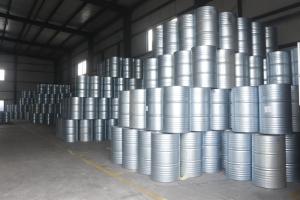
ISO tank shipments provide the lowest unit cost (typically ~0.92× baseline) and are recommended for long-term industrial procurement. IBC totes are optimal for mid-scale flexible sourcing, while drum packaging is suitable only for fragmented or trial-scale purchasing.
Q4: Can DHTDMAC formulations be customized for low-temperature stability?
Yes. Active matter concentration can be adjusted from 50% to 80%, and solvent systems (IPA/ethanol ratios) can be optimized to lower solidification points to ~18°C, improving freeze resistance for textile softener applications in cold-chain logistics.
References
[1] ISO 9001:2015 Quality Management Systems – Requirements
[2] ISO 14001:2015 Environmental Management Systems
[3] CAS Registry Number 61789-80-8, Chemical Abstracts Service Database
[4] Nature Reviews Materials, “Industrial surfactant systems and phase stability in oleochemical derivatives”, 2024
[5] European Chemicals Agency (ECHA), REACH Regulation Updates, 2025
Looking for stable, high-purity Dihydrogenated Tallow Dimethyl Ammonium Chloride with full regulatory compliance and predictable supply pricing? Secure your procurement advantage through verified bulk supply channels.
|
 |
 |
 |
 |
 |
 EN
EN
 Agricultural News
 Food News
 Industrial News
 Cosmetic News
 Pharmaceutical News
 Science News

 4YRS
4YRS


Expert Commentary: “Most buyers still underestimate the compounding effect of hydrogenation energy costs on quaternary ammonium compounds. In 2026, procurement teams should shift from price benchmarking to feedstock-indexed contracting. Without this shift, buyers effectively absorb upstream volatility without compensation,” says Dr. Helen Carter, Senior Surfactant Economist at the European Oleochemicals Institute.