
I. Executive Summary
N-Tallow alkyltripropylenetetra-amines (CAS 68911-79-5) are fatty polyamines in which a tallow-derived alkyl chain carries a tripropylenetetramine head group. They are workhorse cationic intermediates: bought by the tonne, formulated rather than used neat, and valued for the combination of a lipophilic C16 to C18 tail with a multi-amine head that adsorbs strongly on negatively charged mineral and metal surfaces. Principal outlets are asphalt anti-stripping agents and emulsifiers, corrosion inhibitors, mineral flotation collectors, epoxy hardener components, lubricant and fuel additive packages, and quaternisation feedstock for surfactant manufacture.
The substance is a UVCB material of variable composition, and that single fact drives its specification, its regulatory treatment and its commercial disputes. Chain extension by repeated acrylonitrile addition and hydrogenation does not stop cleanly at one oligomer, so commercial product is a distribution in which tri-, tetra- and penta-amine species coexist. Total amine value alone is therefore an inadequate buying criterion: two lots with an identical amine value can differ materially in oligomer distribution, in primary-to-secondary-to-tertiary amine ratio and hence in performance. Sophisticated buyers specify the distribution, not just the number.
Compliance is the other defining feature. Fatty polyamines carry a demanding classification profile, typically corrosive and very toxic to aquatic life with long-lasting effects, and they sit under overlapping regimes: REACH and CLP in Europe, including ongoing classification work on fatty-amine polyamines; TSCA in the United States; detergent and biodegradability requirements where surfactant claims are made; animal by-product rules for tallow-derived grades; and deforestation-free supply-chain obligations under the EU Deforestation Regulation. Buyers who treat this as a simple commodity purchase encounter problems at the port.
II. Product Deep Dive: Molecular Mechanisms and Production Evolution
2.1 Physicochemical Properties and Mechanisms
Commercial material is an amber to brown viscous liquid or semi-solid at ambient temperature, with a density near 0.9 grams per millilitre, a pour point governed by the alkyl distribution and a characteristic amine odour. It is soluble in alcohols and hydrocarbon solvents, dispersible in water when protonated, and essentially insoluble in neutral water as the free base. Total amine value in milligrams of potassium hydroxide per gram is the headline figure on every data sheet, with viscosity, Gardner colour, water and iodine value completing the standard panel.
- Cationic Substantivity and Surface Adsorption: In service the amine head group is protonated and the molecule behaves as a cationic surfactant, adsorbing strongly on negatively charged silicate, oxide and metal surfaces. That substantivity underpins its main applications: it displaces water from aggregate in asphalt, forms a hydrophobic film on steel, and renders mineral surfaces hydrophobic for flotation. Because adsorption depends on the number and accessibility of amine nitrogen atoms, the oligomer distribution directly controls performance.
- Amine-Type Distribution and Reactive Functionality: Each molecule presents primary, secondary and tertiary nitrogen atoms, and the ratio governs every downstream reaction. Primary and secondary amines cure epoxy resins, quaternise to cationic surfactants and form the salts used in emulsifier packages; tertiary nitrogens do none of these. The polyamine also chelates transition-metal ions, contributing to corrosion inhibition. Because the split is set by hydrogenation selectivity and chain length, it must be measured and specified, not inferred.
2.2 Synthesis and Manufacturing Technologies
Production begins with tallow-derived fatty acid or ester, which is converted through the nitrile to a primary fatty amine and then chain-extended. The extension step is the heart of the process and the source of both the product's value and its specification difficulty, because each addition of acrylonitrile followed by hydrogenation adds one propyleneamine unit, and the reaction is stopped at an average rather than an exact degree of extension.
- Cyanoethylation and Hydrogenation Chain Extension: The standard route class adds acrylonitrile to the fatty amine by Michael addition, then hydrogenates the nitrile to a primary amine over a nickel or cobalt catalyst under ammonia pressure to suppress secondary amine formation. Repeating the sequence builds the propyleneamine chain to the target average length. Critical controls are acrylonitrile stoichiometry, ammonia-to-amine ratio, temperature and catalyst selectivity, because excessive secondary amine formation and incomplete nitrile conversion both degrade quality.
- Oligomer Distribution Control and Finishing: Because the extension gives a statistical distribution, producers control the average and spread through reactant ratios, recycle of light and heavy fractions and, where a tighter cut is sold, short-path distillation. Finishing addresses colour and odour, the complaints most often raised by formulators: nitrogen blanketing, avoidance of hot spots and filtration for catalyst fines. Residual acrylonitrile and residual nitrile are specified independently of amine value.
2.3 Core Application Matrix
- Asphalt Anti-Stripping Agents and Emulsifiers: The largest volume outlet. Added at low treat rates to bitumen or used to make cationic bitumen emulsions, the polyamine improves adhesion between binder and aggregate in the presence of water, which is the dominant failure mode in hot-mix and chip-seal pavements. Performance correlates with amine nitrogen density, so the oligomer distribution is a genuine performance specification rather than an academic detail.
- Corrosion Inhibition and Mineral Flotation: In oilfield, refinery and water-treatment formulations the product films metal surfaces and neutralises acidic species; in mineral processing it acts as a cationic collector for silicate and carbonate gangue and for potash flotation. Both uses are formulation-intensive, and buyers typically qualify on a performance test in their own system.
- Epoxy Hardeners, Fuel and Lubricant Additives, and Quat Intermediate: The primary and secondary amine functions react with epoxy resins as curing-agent components, and the molecule is a standard feedstock for quaternisation to cationic surfactants and for additive packages providing detergency, dispersancy and anti-corrosion performance in fuels and lubricants.
III. Global Market Supply-Demand Landscape and Export Trends
3.1 Demand Drivers and Market Shifts
Demand is tied to infrastructure spending and to extractive-industry activity rather than to consumer cycles. Road construction and maintenance programmes set the pace for asphalt additives, mining and potash output set it for flotation collectors, and oil and gas production set it for corrosion inhibitors. Two structural trends matter: the shift towards warm-mix and high-reclaimed asphalt paving, which raises the performance demanded of adhesion promoters, and the gradual substitution pressure from bio-based and lower-classification alternatives in detergents and personal-care-adjacent surfactant uses.
3.2 Capacity Distribution and Export Flows
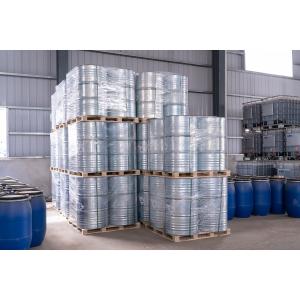
Capacity follows the oleochemical industry. South-East Asia, principally Malaysia and Indonesia, holds the integrated fatty-acid and fatty-amine base closest to the tallow and palm feedstock, and is the dominant export origin. China has added substantial fatty-amine and polyamine capacity serving its own road-building and mining sectors while exporting intermediates. The United States and Europe retain capacity tied to domestic tallow rendering and to downstream formulation, with European plants increasingly focused on specialty, tightly specified grades. Bulk flows run by sea in heated, nitrogen-blanketed isotanks or in drums, from South-East Asia and China into Europe, North America, the Middle East and Africa.
3.3 Market Bifurcation and Pricing Dynamics
Pricing tracks feedstock before anything else: tallow and palm-derived fatty acid prices, acrylonitrile cost and hydrogen cost set the floor, and freight for heated bulk sets the delivered spread. The market then bifurcates by specification. Standard commercial polyamine is sold on amine value, colour and water, and competes almost purely on delivered price. Tightly specified grades, with a controlled oligomer distribution, low residual nitrile, low colour, documented nitrosamine risk assessment and full sustainability documentation on the feedstock, command a premium and are sold on qualification. Buyers should recognise that the premium is buying consistency, which is what formulation plants actually need.
IV. In-depth Analysis of Global Compliance and Regulatory Barriers
This molecule sits under more overlapping regulatory regimes than its commodity status suggests. Classification and labelling drive transport and handling; chemical-inventory law governs market access; surfactant and biodegradability rules govern certain uses; animal by-product rules govern the tallow feedstock; and deforestation-free supply-chain rules govern the oleochemical origin. A shipment can be chemically perfect and still be refused entry.
4.1 European Market: REACH, CLP, and Sector-Specific Directives
- REACH Registration of a UVCB Substance and CLP Classification: As a UVCB material the registration must describe the composition variability and the analytical window defining the substance, and buyers should confirm the composition they purchase falls within the registered boundary rather than merely sharing a CAS number. Classification is typically severe: corrosive to skin, serious eye damage and acute and chronic aquatic toxicity, which drives labelling, packaging group and risk management. European classification work on fatty-amine polyamines continues, so notified classifications should be rechecked.
- Detergent Regulation, Biodegradability and Animal By-Products: Where the material is placed on the market as a surfactant, EU Detergent Regulation 648/2004 sets the framework, with ready biodegradability assessed by OECD 301 methods; cationic fatty polyamines generally do not support a ready-biodegradable claim. Because the alkyl chain is tallow-derived, the EU Animal By-Products framework, Regulation 1069/2009 with implementing Regulation 142/2011, governs the rendering input, and buyers should obtain documented evidence of compliant rendering.
4.2 North American Market: TSCA, EPA, and FDA Regulations
- TSCA Inventory Status and Import Certification: Commercial import into the United States requires the substance to be listed as active, with a positive or supported certification held by the importer before entry. Because the substance is a UVCB entry defined by composition, the inventory statement should cite the exact CAS number and should be accompanied by a composition description consistent with the material actually shipped, refreshed whenever the supplier or the alkyl feedstock changes.
- GHS, EPA and Product-Stewardship Expectations: In the United States the hazard communication standard implements GHS, so labels and safety data sheets must reflect the corrosive and aquatic toxicity classification, and the safety data sheet sections on handling, personal protective equipment and spill response must be specific to a heated, viscous, corrosive amine. Facilities handling reportable quantities should understand their emergency-planning obligations, and downstream formulators are expected to keep exposure scenarios and risk-management measures documented.
4.3 The Critical Hurdle: Quality Control and Safety Limits
Compliance Warning: Do not buy on total amine value alone. Specify the oligomer distribution, the primary, secondary and tertiary amine-type split, residual acrylonitrile and residual nitrile, water, colour and catalyst metal residue, and require the analytical method for each. Require a documented nitrosamine risk assessment for the polyamine stream, addressing nitrosating agents, precursor amines and control measures, and note that no nitrosating conditions are introduced in normal manufacture or recommended handling. Confirm the notified CLP classification including aquatic toxicity, confirm REACH registration covers the supplied composition window, and require feedstock traceability evidence for the tallow chain under the animal by-products rules and, where applicable, for palm-derived material under the EU Deforestation Regulation.
V. Green Trade Barriers and ESG in Manufacturing
For oleochemical intermediates, the environmental question that decides market access is the feedstock, not the reactor. Customers and regulators now ask where the fat came from, whether its production drove deforestation, and whether the resulting surfactant is acceptable in the receiving market. Producers who can answer those questions with documentary evidence rather than assurances are the ones who keep European business.
5.1 Carbon Footprint and Circular Economy
The major energy consumers are the hydrogenation step and the heating required to keep a viscous product fluid through processing, storage and transport. Measurable levers include heat integration around the hydrogenation loop, hydrogen efficiency, recovery of acrylonitrile and solvent where present, and recovered-heat utilisation across the fatty-acid and amine trains. Because the product is a formulation intermediate that ends up dispersed in asphalt, fuel or process water, end-of-life recovery is not realistic; the honest circular-economy argument is feedstock efficiency, energy integration and the use of rendered by-product fat that would otherwise be wasted.
5.2 Sustainable Sourcing and Traceability
Traceability obligations are now contractual as well as regulatory. Tallow-derived grades require documented evidence of compliant rendering under the animal by-products framework and, increasingly, mass-balance or segregated chain-of-custody evidence linking the alkyl chain to an approved origin. Where palm-derived material or palm substitutes enter the oleochemical pool, RSPO certification and compliance with the EU Deforestation Regulation 2023/1115, including geolocation and legality assurance for the producing area, become conditions of supply. ISO 9001 and ISO 14001 certification, chain-of-custody documentation and a documented responsible-sourcing policy form the standard evidence package.
VI. Supply Chain Resilience and Export Logistics
This is a heated, oxidisable, corrosive bulk liquid, so logistics is a genuine cost and quality driver. Viscosity rises sharply as temperature falls, colour darkens and odour intensifies on exposure to air at elevated temperature, and the product attacks copper, brass and some elastomers. Getting temperature, atmosphere and materials of construction right is what keeps a delivered lot within specification.
6.1 Packaging Standards and Moisture/Contamination Control
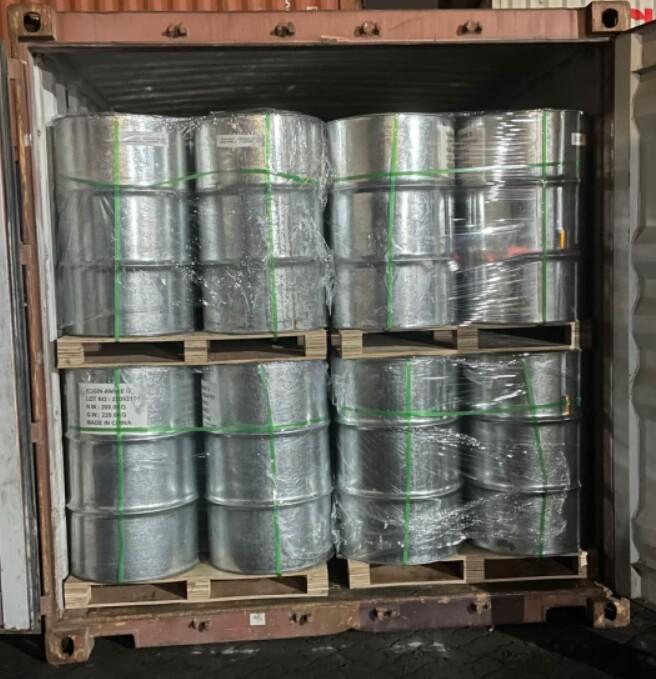
- Nitrogen Blanketing and Temperature Maintenance: Bulk moves in heated, insulated stainless or lined isotanks under a nitrogen pad, with temperature typically held well above the pour point and monitored throughout transit; drums and intermediate bulk containers are used for smaller volumes with the same blanketing principle. Exposure to air at handling temperature is the main driver of colour and odour deterioration, so transfers should be closed, tank headspaces inerted and residence time at temperature minimised.
- Materials Compatibility and Documentation: Gaskets, seals and hoses must be selected for hot aliphatic polyamine service, and copper, brass and zinc-containing alloys should be excluded from contact surfaces. Certificates should report amine value, amine-type distribution, oligomer distribution where specified, colour, water, residual nitrile and acrylonitrile, with batch traceability to the fatty-acid lot and to the declared feedstock origin, since a customer's sustainability claim depends on that link.
6.2 Dangerous Goods Identification and Transit Protocols
Fatty polyamines of this type are normally classified as corrosive for transport, most often under the amines liquid corrosive not otherwise specified entry in Class 8, with marine pollutant status applied because of aquatic toxicity. That drives UN-specification packaging, marking, labelling, segregation and documented emergency response. Transit protocols centre on maintaining the heating setpoint with a recorded log, avoiding prolonged port dwell, and verifying temperature and colour on discharge before the lot is accepted into storage.
VII. Enterprise Global Expansion Strategy Guide
For producers and buyers alike, three moves determine competitive position in this market.
- Sell the Distribution, Not Just the Amine Value: Build analytical capability to report oligomer distribution and amine-type split, and qualify customers on those parameters in their own formulation test. Consistency, not headline amine value, is what formulation plants pay for, and it is the most defensible basis for a premium.
- Front-Load Feedstock Compliance: Establish documented traceability for the tallow and palm-derived pool covering animal by-product categorisation, RSPO chain of custody where applicable and EU Deforestation Regulation geolocation and legality evidence. Producers without this documentation are progressively excluded from European tenders regardless of price.
- Invest in Heated, Inert Logistics: Dedicated heated and nitrogen-blanketed storage at origin and destination, validated loading procedures and temperature logging turn a perishable bulk commodity into a reliably specified product. This is also where catastrophic quality claims are avoided.
VIII. Conclusion
N-Tallow alkyltripropylenetetra-amines are a mature, high-volume oleochemical intermediate whose commercial future is being decided less in the reactor than in the specification and the supply chain. The chemistry is well established; what differentiates suppliers now is control of oligomer distribution, disciplined colour and odour management, a credible nitrosamine risk position and documentary proof of feedstock origin.
For buyers, the guidance is to specify the distribution, verify the classification and transport documentation before the vessel sails, and secure feedstock traceability as a contractual condition rather than a marketing claim. For producers, the opportunity lies with those who combine analytical honesty about composition with sustainability documentation that withstands audit under both animal by-products and deforestation-free supply-chain regimes.
IX. Industry Resource Connection and Supplier Ecosystem
Powered by Guidechem
This white paper is exclusively compiled by the Guidechem Intelligence Team based on global customs data, regulatory databases, and industry research. Guidechem is a leading global B2B chemical platform, dedicated to connecting global buyers with verified, high-quality manufacturers.
Relying on Guidechem's extensive global database, we have mapped the core participants in the current global N-tallow alkyltripropylenetetra-amines supply chain:
- South-East Asian Oleochemical Cluster: Malaysia and Indonesia host the integrated oleochemical base closest to tallow and palm feedstock, combining fatty-acid distillation, nitrile and amine production and polyamine chain extension in single complexes. This cluster dominates global export volume and sets the reference for delivered price. Its constraint is distance from end markets and the growing documentation burden on feedstock provenance.
- China Fatty-Amine and Polyamine Ecosystem: Producers in Shandong, Jiangsu and Zhejiang have built substantial fatty-amine and polyamine capacity serving domestic road construction, mining and additive demand while exporting intermediates. The cluster offers competitive pricing, flexible campaign sizes and improving hydrogenation capability, and can supply documented oligomer distribution and low-colour grades where specified.
- United States and European Downstream Ecosystem: North American production is tied to domestic rendering and to asphalt, mining and oilfield formulation, while European plants focus on tightly specified grades close to the formulators. Both ecosystems lead on compliance, product stewardship and sustainability documentation, and serve as the qualification and second-source base for buyers who cannot rely on a single Asian origin.
Disclaimer: The content of this white paper is compiled based on public market data and regulatory information available as of 2026. Global chemical regulations are subject to dynamic adjustments. In actual export operations, enterprises must consult professional regulatory advisors or relevant competent authorities to obtain the latest compliance guidance.



 EN
 Agricultural News
 Food News
 Industrial News
 Cosmetic News
 Pharmaceutical News
 Science News


 4YRS


