
I. Executive Summary
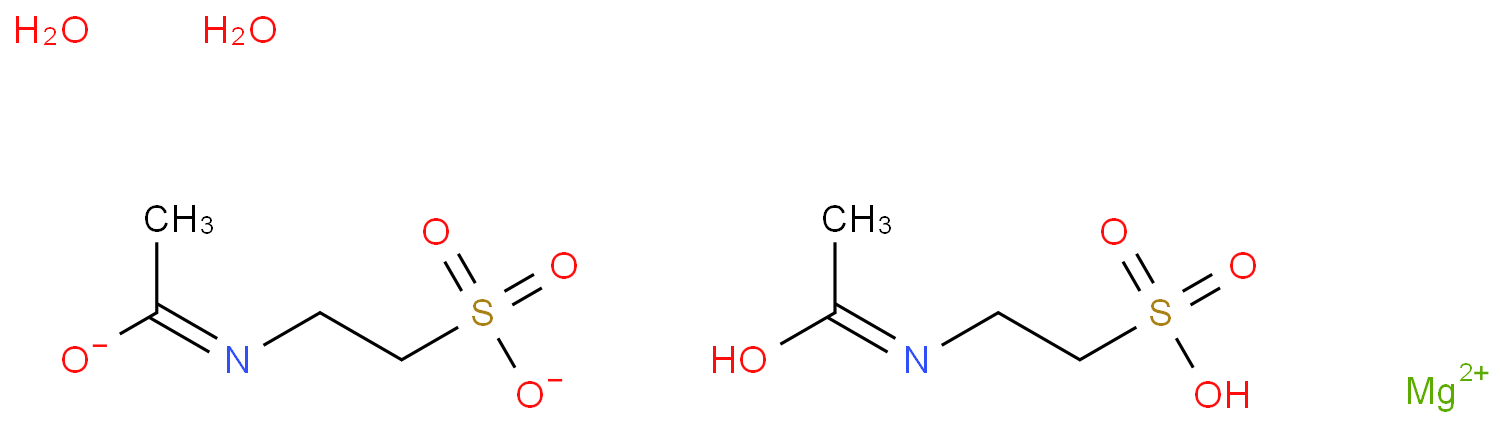
Magnesium acetyl taurate (CAS 75350-40-2) is a magnesium chelate of acetylated taurine, positioned at the intersection of two large nutrition ingredient categories: mineral supplementation and amino-acid-derivative nutrition. It is supplied as a white, water-soluble, typically hygroscopic powder with a declared magnesium assay determined by titration or ICP-OES, and it is bought by dietary supplement brand owners, food fortification specialists and contract manufacturers as a functional ingredient rather than as a pharmaceutical active substance. This white paper is written strictly for a B2B readership and makes no claim that the material prevents, treats, mitigates or cures any disease; any such claim would be unlawful in both the European Union and the United States.
Commercially, three questions dominate every enquiry. The first is analytical: what proportion of the magnesium is genuinely coordinated to the acetyl taurate ligand rather than present as an inorganic counter-ion or an unreacted magnesium salt, and how is that ratio evidenced. The second is regulatory: whether the ingredient can lawfully be used as a source of magnesium in food supplements in the destination market, whether the acetylated taurine moiety requires novel food authorisation, and which health-claim wording is permitted. The third is physical: whether the powder will survive a humid supply chain without caking, deacetylation or colour change.
This paper addresses all three. It sets out the chelation chemistry and the analytical toolkit used to characterise it, maps the European and United States compliance frameworks including the permitted mineral forms list and the Novel Food question, and describes the contaminant, packaging and logistics controls that food-grade buyers audit. It closes with a practical sourcing strategy for 2026.
II. Product Deep Dive: Molecular Mechanisms and Production Evolution
2.1 Physicochemical Properties and Mechanisms
The molecule combines a sulfonate group, which is strongly ionised across the whole pH range relevant to food use, with an amide carbonyl and an amide nitrogen that can participate in coordination to the magnesium cation. Acetylation of the taurine amino group removes the strongly basic amine of the parent amino acid and leaves a neutral amide, so the anion behaves as a harder oxygen donor than taurine itself. The practical consequence is a magnesium salt that dissolves readily in water, is far less alkaline than magnesium oxide, and is more amenable to tableting and encapsulation than poorly soluble inorganic magnesium sources.
- Coordination and chelation state: Magnesium is a hard, divalent cation that prefers oxygen donors, and in this material the sulfonate oxygens and the amide carbonyl are the plausible coordination sites. Whether the product is a true chelate, a simple salt or a mixture is a matter of evidence rather than of marketing language, and it is resolved by spectroscopic and thermal comparison against a physical mixture of the free acid and an inorganic magnesium salt. Buyers should ask for that comparison rather than accepting a chelation percentage quoted without method.
- Hygroscopicity and hydrolytic sensitivity: The powder takes up moisture readily and, under warm humid conditions, the amide bond can hydrolyse to regenerate taurine and acetic acid, which appears as a vinegar-like odour, a fall in pH and a drift in assay. Water activity, packaging barrier and storage temperature therefore determine shelf life as much as intrinsic chemical stability does, and loss on drying must be reported alongside assay on every certificate of analysis.
2.2 Synthesis and Manufacturing Technologies
Production is a two-stage aqueous process whose quality outcome depends mostly on what is controlled between the stages rather than in them. Taurine of food or pharmaceutical grade is first acetylated, then the resulting acid is neutralised with a magnesium base under controlled stoichiometry. Because the product is intended for ingestion, process design emphasises reagent purity, residue control and avoidance of organic solvents in the final isolation.
- Acetylation of taurine and ligand purification: Acetylation is carried out with acetic anhydride or an equivalent acetyl donor under pH and temperature control that favours N-acetylation and limits O-acetylation and diacetylation. The crude ligand is purified by crystallisation or by ion-exchange treatment to remove residual taurine, inorganic salts and acetate, with the residual acylating agent quenched and quantified because it is a specification-relevant impurity in a food ingredient.
- Controlled neutralisation and isolation: The purified acid is reacted with a high-purity magnesium source such as magnesium oxide, hydroxide or carbonate at a defined molar ratio, with pH, temperature and addition rate controlled to give a reproducible coordination state. The solution is clarified, filtered, and converted to powder by vacuum drying or spray drying under conditions that limit hydrolysis, then milled and blended to a consistent particle size distribution for tableting or capsule filling.
2.3 Core Application Matrix
- Dietary supplement ingredient: The principal outlet is finished supplement formulations in capsules, tablets and powder sticks, where the ingredient serves as a magnesium source with a defined elemental contribution. Use is subject to the permitted mineral forms applicable in each market, and finished-product labelling may only use authorised claim wording.
- Food and beverage fortification where authorised: In jurisdictions that permit the specific magnesium form, the ingredient can be used to fortify beverages and dry mixes. Solubility and low colour impact are the technical attractions, while the regulatory prerequisite is inclusion in the applicable national or Union list of permitted mineral substances.
- B2B premix and contract manufacturing supply: Ingredient blenders and contract manufacturers buy bulk quantities to produce custom premixes, private-label formulations and finished goods for brand owners. This channel drives demand for consistent particle size, flow properties and documentation packages that support the customer's own regulatory filings.
III. Global Market Supply-Demand Landscape and Export Trends
3.1 Demand Drivers and Market Shifts
Demand is anchored in the structural popularity of magnesium supplementation and in the continuous search by brand owners for magnesium forms that combine solubility, tolerability and a defensible marketing story. Two shifts shape 2026. First, regulatory scrutiny of novel mineral forms has increased in the European Union, so brand owners now prefer ingredients with a documented lawful status, and they increasingly ask suppliers to share the regulatory assessment rather than to assert compliance. Second, retail and marketplace platforms demand third-party certification and contaminant transparency, which pushes the whole chain toward audited, certified manufacturers.
3.2 Capacity Distribution and Export Flows
Capacity is concentrated where taurine and magnesium raw materials are available. Chinese producers, clustered around the established amino-acid and taurine manufacturing base, dominate upstream ligand supply and increasingly offer finished chelate with food-safety certification. European producers focus on food-grade mineral ingredients with strong documentation, often importing ligand or intermediate and finishing locally under certified quality systems. North American participants are largely ingredient distributors, blenders and contract manufacturers who qualify imported material and supply domestic brands.
3.3 Market Bifurcation and Pricing Dynamics
Pricing tracks the cost of food-grade taurine, the magnesium source and the drying step, but the spread between commodity and certified material is wide. Unaudited technical material competes on price alone, while material supported by a full contaminant panel, third-party GMP registration, kosher and halal certification and a documented regulatory assessment commands a substantial premium. Brand owners selling through regulated retail channels effectively cannot buy the cheaper tier, which is why the market has split into a documentation-driven segment and a price-driven segment.
IV. In-depth Analysis of Global Compliance and Regulatory Barriers
Compliance, not chemistry, is the binding constraint on this ingredient. Because it is intended for ingestion, it must satisfy food and supplement law in every destination market, and because the acetylated ligand is not a conventional nutrient, its status must be assessed rather than assumed. Suppliers who present a specification sheet without a regulatory dossier routinely lose tenders at the customer's regulatory review stage.
4.1 European Market: REACH, CLP, and Sector-Specific Directives
- Food Supplements Directive and permitted mineral forms: Food supplements are governed by Directive 2002/46/EC, and magnesium may only be added in the forms listed in the Union list of permitted vitamin and mineral substances adopted under that framework. An acetylated taurine salt is not among the conventional magnesium forms, so the lawful route is either inclusion in that list through the amendment procedure or use under a national provision where one exists. Buyers must confirm status before purchase, because an unlisted mineral form cannot lawfully be sold as a magnesium source.
- Novel Food, claims and chemical registration: Where the acetylated moiety has no significant history of consumption in the Union before the reference date, it falls within the Novel Food Regulation and requires authorisation before use, and the burden of that authorisation falls on the business placing the product on the market. Finished-product claims are limited to those authorised under the Nutrition and Health Claims Regulation, which does authorise several magnesium claims but has not substantiated most taurine-related claims; suppliers and customers must not present the ingredient as treating or preventing any condition. Manufacture or import above one tonne per year additionally engages REACH registration obligations.
4.2 North American Market: TSCA, EPA, and FDA Regulations
- DSHEA, NDI notification and FDA expectations: In the United States the ingredient is regulated as a dietary ingredient under the Dietary Supplement Health and Education Act. If it was not marketed as a dietary ingredient before the statutory cut-off, a new dietary ingredient notification with safety evidence is required before marketing, and the notifier bears the burden of proof. Current Good Manufacturing Practice for dietary supplements under 21 CFR Part 111 governs identity, purity, strength and composition testing, and the finished product must not bear disease claims absent an approved drug application.
- Contaminants, TSCA and third-party certification: Elemental contaminant limits in finished supplements are commonly assessed against USP general chapter methodology for elemental contaminants and against state-level requirements such as California Proposition 65 for lead and cadmium, while microbial limits follow compendial chapters for nutritional supplements. The substance must be confirmed on the TSCA inventory or covered by an applicable exemption before import, and retail customers increasingly require NSF or equivalent third-party GMP registration of the manufacturing site.
4.3 The Critical Hurdle: Quality Control and Safety Limits
Compliance Warning: The most common failure is a claim of chelation without a defensible method, coupled with an incomplete contaminant panel. Buyers should require magnesium content by ICP-OES or validated titration, ionic magnesium by ion-selective measurement or EDTA displacement, infrared spectra showing coordination-induced band shifts relative to a physical mixture, elemental analysis consistent with the declared stoichiometry, and thermal analysis defining hydration state. Every batch should also carry heavy metals by ICP-MS, arsenic and mercury, microbial counts and pathogens, residual solvent and residual acylating agent results, and a declaration of allergen, GMO, irradiation and animal-derived status.
V. Green Trade Barriers and ESG in Manufacturing
ESG pressure on nutrition ingredients has shifted from generic sustainability statements to verifiable manufacturing data. Food and supplement customers now ask where the magnesium and the taurine came from, how much water the process consumes, whether the plant runs a certified environmental management system, and whether the ingredient is suitable for vegetarian, kosher or halal positioning.
5.1 Carbon Footprint and Circular Economy
The footprint is dominated by upstream taurine production, which in most supply chains remains a synthetic route from petrochemical feedstocks, and by the energy used for spray drying and for drying a hygroscopic powder to specification. Reductions come from heat recovery on dryers, closed-loop water reuse in the neutralisation step, and renewable electricity contracts, while the magnesium oxide source from seawater or mineral origin should be declared with its own production route. Because the process is aqueous and solvent-free, its profile compares favourably with chelate processes that rely on organic isolation.
5.2 Sustainable Sourcing and Traceability
Traceability must cover both nutrient moieties: the taurine manufacturing site and its feedstock route, and the magnesium source including country of extraction. Certification schemes that matter commercially include ISO 22000 or FSSC 22000 for food safety, ISO 14001 for environmental management, and kosher, halal, non-GMO and vegetarian declarations. Suppliers able to provide lot-level traceability from raw material to finished powder, supported by retained samples and a deviation log, shorten their customers' qualification timelines materially.
VI. Supply Chain Resilience and Export Logistics
The material is not hazardous to transport, so logistics risk is entirely about moisture and hygiene rather than dangerous-goods classification. A powder that leaves the factory within specification can arrive caked, clumped or vinegar-smelling if the container was loaded at high humidity or held in a hot port, and food-grade customers will reject it on appearance alone.
6.1 Packaging Standards and Moisture/Contamination Control
- Barrier packaging and headspace control: Standard export presentation is a food-grade polyethylene liner inside a fibre drum or a multiwall laminated bag with an aluminium barrier layer, closed with desiccant and, where warranted, filled under dry air with documented water activity at packing. Because the powder is hygroscopic and hydrolytically sensitive, moisture barrier choice and desiccant capacity are validated parameters, and each container should be sealed with tamper-evident closure and identified by lot.
- Food-grade hygiene and storage conditions: Filling should occur in a hygienically designed area with foreign-body control, and storage should be cool and dry with pallets off the floor and clear segregation from odorous or allergenic materials. Buyers in the supplement industry expect the warehouse and transport chain to be certified to a recognised storage and distribution standard, and they audit retention samples and traceability records alongside the certificate of analysis.
6.2 Dangerous Goods Identification and Transit Protocols
Magnesium acetyl taurate is not classified as a dangerous good under ADR, IMDG or IATA and ships as general cargo, although the safety data sheet should still be current and the classification confirmed against the destination inventory. Practical safeguards that protect quality include moisture-indicator cards in each container, container desiccant for long sea legs to tropical destinations, temperature and humidity logging for high-value consignments, and customs documentation describing the product as a food ingredient with its intended use stated, which reduces the risk of classification disputes at the border.
VII. Enterprise Global Expansion Strategy Guide
Three priorities determine whether a supplier becomes a qualified long-term source in this category.
- Build a defensible chelation dossier: Characterise coordination state with infrared comparison against physical mixtures, quantify ionic versus bound magnesium, report elemental analysis and thermal behaviour, and publish the methods. Ingredient buyers cannot resell a marketing assertion, they need a reproducible measurement.
- Resolve regulatory status before selling: Establish whether the mineral form is permitted in the target market, whether novel food or new dietary ingredient authorisation is required, and which claims are lawful, then share that assessment with customers under confidentiality. Suppliers who help customers pass regulatory review win long-term contracts.
- Certify the plant and the contaminant panel: Obtain food-safety and environmental certification, add third-party supplement GMP registration, kosher, halal and non-GMO declarations, and run a full heavy-metal and microbiological panel on every lot. Retail-facing customers cannot buy without it.
VIII. Conclusion
Magnesium acetyl taurate is a technically straightforward but regulatorily demanding nutrition ingredient. The chemistry is within reach of any competent aqueous-process plant; the differentiators are a measurable chelation claim, a full contaminant and certification package, and an honest regulatory assessment that tells the customer exactly where the ingredient may lawfully be used. No supplier should present the material as a treatment for any disease, and no claim beyond authorised nutrient wording should appear in B2B documentation.
For buyers in 2026, the winning approach is to qualify on documentation, to require barrier packaging with moisture monitoring, and to source from manufacturers who will share responsibility for regulatory status rather than disclaiming it. For suppliers, the value lies in becoming the source whose dossier lets a brand owner pass regulatory review the first time.
IX. Industry Resource Connection and Supplier Ecosystem
Powered by Guidechem
This white paper is exclusively compiled by the Guidechem Intelligence Team based on global customs data, regulatory databases, and industry research. Guidechem is a leading global B2B chemical platform, dedicated to connecting global buyers with verified, high-quality manufacturers.
Relying on Guidechem's extensive global database, we have mapped the core participants in the current global Magnesium acetyl taurate supply chain:
- China: taurine-integrated manufacturing base: Chinese producers sit on the world's principal taurine and amino-acid manufacturing capacity, giving them cost advantages in the acetylated ligand and in finished chelate. The best operations now combine aqueous chelation with food-safety certification and export-grade contaminant testing, while buyers should confirm certification depth before ordering.
- European Union: food-grade mineral ingredient specialists: German, Dutch and French ingredient houses finish and blend mineral chelates under ISO 22000 or FSSC 22000, and lead on documentation, permitted-forms analysis and REACH coverage. Their strength is regulatory support for brand owners who must substantiate lawful use in the Union market.
- United States: blending, certification and brand supply: US participants concentrate on qualifying imported ingredient, blending premixes and manufacturing finished supplements under 21 CFR Part 111 with third-party GMP registration. Buyers entering the retail channel typically work through this tier for certification, labelling support and lot traceability.
Disclaimer: The content of this white paper is compiled based on public market data and regulatory information available as of 2026. Global chemical regulations are subject to dynamic adjustments. In actual export operations, enterprises must consult professional regulatory advisors or relevant competent authorities to obtain the latest compliance guidance.


 EN
 Agricultural News
 Food News
 Industrial News
 Cosmetic News
 Pharmaceutical News
 Science News


 11YRS

