
I. Executive Summary
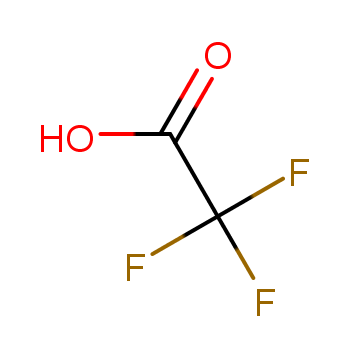
Trifluoroacetic acid (CAS 76-05-1), CF3COOH, is the simplest perfluorinated carboxylic acid and one of the most widely used strong acids in fine chemicals. It combines the acidity of a mineral acid with the volatility and organic solubility of a solvent, which makes it indispensable in reversed-phase chromatography, peptide cleavage and deprotection, and fluorinated intermediate synthesis. The same properties place it at the centre of per- and polyfluoroalkyl substance policy, because TFA is both a valuable reagent and an extremely persistent environmental residue. This paper examines its chemistry, manufacture, applications, compliance and sourcing.
Three developments define the 2026 market. Demand from peptide therapeutics, particularly injectable metabolic peptides, has sharply increased consumption in cleavage, purification and salt formation. Regulatory attention on ultra-short-chain PFAS has moved TFA from an accepted reagent to a substance under active assessment for persistence, mobility and possible classification. Manufacturers and users are therefore investing in recovery, abatement and alternative methods simultaneously. Buyers must plan for tighter specifications and higher compliance costs.
This document analyses those dynamics across mechanism and production, application sectors, trade flows, REACH, CLP, TSCA, EPA and PFAS policy, ESG performance, logistics and the supplier ecosystem. It is written for procurement, regulatory and process development professionals handling TFA at industrial scale. The central message is that TFA remains technically essential, but its licence to operate increasingly depends on containment and recovery.
II. Product Deep Dive: Molecular Mechanisms and Production Evolution
2.1 Physicochemical Properties and Mechanisms
Trifluoroacetic acid is a colourless, fuming liquid boiling near 72 °C, fully miscible with water and most organic solvents, and strong enough to protonate substrates resistant to mineral acids. The electron-withdrawing trifluoromethyl group lowers the pKa to roughly 0.2, about four orders of magnitude stronger than acetic acid, while conferring volatility and excellent solvating power for peptides and polar intermediates. It forms an azeotrope with water, which complicates both drying and recovery. These properties explain its technical value and its environmental mobility.
- Acidity, Volatility and Ion-Pairing Behaviour: TFA functions simultaneously as acid catalyst, solvent and ion-pairing agent, which is why it dominates reversed-phase purification of peptides and polar pharmaceuticals. Its volatility allows removal by evaporation or lyophilisation, leaving the trifluoroacetate salt of the target. That same volatility, combined with complete miscibility with water, makes emission control and wastewater treatment unusually difficult.
- Persistence, Mobility and Environmental Fate: The carbon-fluorine bonds of the trifluoromethyl group resist hydrolysis, photolysis and biodegradation, so TFA persists in the environment and travels readily with water. It is a terminal degradation product of several fluorinated gases, refrigerants and anaesthetics, and monitoring programmes report rising concentrations in precipitation, groundwater and drinking water. For users this fate translates directly into disclosure and abatement duties.
2.2 Synthesis and Manufacturing Technologies
Industrial TFA is produced mainly by electrochemical fluorination of acetyl chloride or acetic anhydride derivatives in anhydrous hydrogen fluoride, followed by hydrolysis of the resulting trifluoroacetyl fluoride, and by halogen-exchange and oxidation routes from chlorinated precursors. Electrochemical fluorination is capital- and electricity-intensive, tying cost to energy and to hydrogen fluoride availability from fluorspar. Impurity profiles differ by route, and chromatography and electronics users require very low metal and chloride content.
- Electrochemical Fluorination and Hydrolysis: In Simons-type electrochemical fluorination the precursor is electrolysed in anhydrous hydrogen fluoride at controlled cell voltage, replacing hydrogen with fluorine to give trifluoroacetyl fluoride, which is hydrolysed to TFA. Cell design, current density and HF purity determine selectivity and by-product formation. Plants must handle hydrogen fluoride and hydrogen safely and recover or neutralise fluoride in effluents.
- Purification, Recovery and Emission Abatement: Crude acid is purified by distillation, often with azeotropic or extractive steps to break the water azeotrope, then filtered for chromatographic grades. Because TFA is persistent, modern plants recover it from peptide cleavage and chromatography waste by distillation or ion exchange, and treat residual vapour by scrubbing or thermal oxidation. Recovery is now an economic and licence-to-operate requirement.
2.3 Core Application Matrix
- Chromatography and Analytical Science: TFA is the default acidic modifier in reversed-phase HPLC and LC-MS of peptides, proteins and polar pharmaceuticals, delivering sharp peaks and mass-spectrometric compatibility at low concentrations. It also serves as an NMR solvent additive. Buyers in this segment purchase small packs of high-purity acid with low metal and chloride content, and they are first to evaluate alternatives.
- Peptide and Oligonucleotide Manufacture: Solid-phase peptide synthesis uses TFA for repeated N-terminal deprotection, for final resin cleavage, and as the counter-ion in isolated trifluoroacetate salts. Demand tracks the expansion of peptide therapeutics, including metabolic and oncology peptides, making this the fastest-growing industrial segment. Residual TFA content in drug substance is a specification parameter, and salt exchange to acetate or hydrochloride is increasingly specified.
- Fluorinated Intermediates, Agrochemicals and Specialty Synthesis: TFA is the entry point to trifluoroacetic anhydride, trifluoroacetate esters and a wide family of trifluoromethylated building blocks used in pharmaceuticals and crop protection. It also serves as solvent and catalyst in rearrangements, deprotections and polymerisations. These uses are volume-driven and price-sensitive, and they are the segment most exposed to PFAS policy because emissions are diffuse.
III. Global Market Supply-Demand Landscape and Export Trends
3.1 Demand Drivers and Market Shifts
Three forces drive demand. Peptide therapeutic pipelines, especially injectable metabolic peptides, are expanding global cleavage and purification volumes. Analytical and quality-control throughput grows with biologics and complex generics. Fluorinated intermediate demand follows agrochemical and pharmaceutical launches. Countervailing pressure comes from PFAS policy, pushing users to reduce consumption, recover more and qualify alternative acids where performance allows.
3.2 Capacity Distribution and Export Flows
Production concentrates where fluorspar, hydrogen fluoride and affordable electricity are available, with major conversion in China, Europe, North America, Japan and India. Trade flows move bulk acid to formulation and repackaging hubs that supply laboratory and pharmaceutical customers. Because transport is regulated as corrosive, regional repackaging is economically attractive. Buyers should assess upstream hydrogen fluoride security and environmental permitting, not only nameplate capacity.
3.3 Market Bifurcation and Pricing Dynamics
Pricing tracks fluorspar, hydrogen fluoride, energy and the cost of environmental compliance, and it bifurcates sharply between bulk industrial acid and high-purity chromatographic or pharmaceutical grades. Certified low-metal, low-chloride material in small packs commands multiples of bulk price. PFAS-driven abatement and reporting costs are being internalised into pricing. Contracts increasingly include recovery and take-back provisions alongside traditional supply terms.
IV. In-depth Analysis of Global Compliance and Regulatory Barriers
TFA is regulated as a corrosive chemical and, increasingly, as a PFAS. The first layer is ordinary chemical control: REACH registration, CLP classification, transport and workplace exposure. The second layer is PFAS-specific and evolving quickly: reporting obligations under TSCA, assessment under the European universal restriction proposal, drinking-water and environmental monitoring, and member-state classification initiatives. Companies handling TFA at scale must manage both layers and document decisions as policy evolves.
4.1 European Market: REACH, CLP, and Sector-Specific Directives
- REACH, CLP and the Universal PFAS Restriction: TFA is a registered substance, classified as corrosive to skin, harmful by inhalation and if swallowed, and hazardous to the aquatic environment with long-lasting effects. It falls within the scope of the multi-member-state universal PFAS restriction proposal under evaluation by ECHA, although no TFA-specific restriction has been adopted. A member-state harmonised classification proposal has also been advanced. Users should plan for tighter conditions.
- Drinking Water and Persistent Mobile Substances: The recast Drinking Water Directive's PFAS-total parameter has sharpened attention on ultra-short-chain substances, and TFA is routinely included in national monitoring even where not individually enumerated. It meets criteria for very persistent and very mobile substances, driving expectations for emission inventory, abatement and substitution assessment. Industrial users should quantify releases to air and water and document reduction plans.
4.2 North American Market: TSCA, EPA, and FDA Regulations
- TSCA PFAS Reporting and EPA Monitoring: TFA falls within the PFAS definition used for reporting under TSCA, so manufacturers and importers have been required to report historical volumes, uses and exposures. EPA monitoring programmes have included TFA among measured PFAS, and occurrence data for drinking water continues to accumulate. Companies should maintain defensible records of volumes, uses and environmental releases.
- Workplace, Transport and Product Stewardship: TFA is corrosive, requiring compatible materials of construction, ventilation, personal protective equipment and emergency eyewash provision, with occupational exposure controlled under general industry standards. Air permitting obligations arise where volatile fluorinated compounds are released, and wastewater discharges attract scrutiny because conventional treatment does not remove TFA. Product stewardship increasingly requires customer guidance on handling, recovery and disposal.
4.3 The Critical Hurdle: Quality Control and Safety Limits
Compliance Warning: The defining compliance risk with TFA is invisible loss: vapour and aqueous releases that are neither measured nor permitted, and which now attract PFAS-specific scrutiny. Buyers and users must inventory use, quantify releases to air and water, install or contract recovery and abatement, and document substitution assessments. Specifications should fix assay, chloride, metal and fluorinated impurity limits. Disposal by drain or uncontrolled evaporation must be treated as non-compliant.
V. Green Trade Barriers and ESG in Manufacturing
Sustainability performance is dominated by one issue: persistence. Because the molecule survives treatment and travels with water, environmental performance is measured by how much is released rather than by how efficiently it is made. Buyers increasingly require emission inventories, recovery rates and abatement technology descriptions in tenders. Investors and regulators apply the same lens. Suppliers who quantify and reduce releases convert environmental risk into commercial advantage.
5.1 Carbon Footprint and Circular Economy
Electrochemical fluorination is electricity-intensive, so Scope 2 emissions dominate production, while Scope 3 arises from fluorspar mining, hydrogen fluoride manufacture and transport. Renewable electricity procurement and cell efficiency improvements are the main levers, with heat integration in distillation and recovery adding further gains. Recovery from customer waste streams reduces both footprint and virgin demand. Reporting follows ISO 14001 and ISO 50001 with measured Scope 1, 2 and 3 inventories.
5.2 Sustainable Sourcing and Traceability
Traceability focuses on fluorinated impurity profiles, metal and chloride content, and the origin of hydrogen fluoride. Chromatographic and pharmaceutical grades require lot-level certificates with impurity data and, increasingly, documentation that fluorinated by-products are controlled. Chain-of-custody matters where recovered TFA re-enters the supply chain, because provenance and reprocessing validation must be auditable. Mature suppliers operate ISO 9001 and ISO 14001 systems.
VI. Supply Chain Resilience and Export Logistics
Trifluoroacetic acid is transported as a corrosive liquid, so packaging, segregation and documentation dominate logistics. It attacks many metals and some plastics, requiring fluoropolymer-lined or verified compatible containers, and its volatility demands vapour-tight closures and temperature-aware handling. Small packs serve laboratory and analytical customers, while bulk movements serve peptide and intermediate manufacturers. Emergency planning must assume both corrosive contact and vapour exposure.
6.1 Packaging Standards and Moisture/Contamination Control
- Materials Compatibility and Vapour Containment: Containers are typically fluoropolymer-lined steel drums, compatible high-density polyethylene or glass for smaller quantities, selected after verification of gasket and closure compatibility. Closures must be vapour-tight, vented only through approved devices where regulations require. Secondary containment should be corrosion-resistant and sized for full contents. Labels must carry the corrosive pictogram and emergency guidance.
- Segregation, Temperature and Purity Protection: TFA must be segregated from bases, oxidisable metals and incompatible reagents, and stored in cool, ventilated areas with acid-resistant flooring. For chromatographic grades, contact with metal surfaces and repeated opening degrade specification, so dedicated dispensing and inert transfer are recommended. Lot records should track pack size and retest date. Contamination is the leading quality failure in small-pack supply.
6.2 Dangerous Goods Identification and Transit Protocols
For transport, trifluoroacetic acid is assigned to UN 2699, Class 8, Packing Group I, requiring corrosive labelling, approved packaging and documentation. Air shipment quantities are tightly constrained, so most bulk movement is by road and sea. Because releases are environmentally persistent, spill response must prevent entry to drains and watercourses. Safety data sheets and emergency information must accompany every consignment.
VII. Enterprise Global Expansion Strategy Guide
Competitive advantage now comes from stewardship as much as supply reliability. The three priorities below reflect what pharmaceutical, analytical and chemical buyers increasingly require: emission control and recovery, specification depth for critical grades, and credible PFAS policy engagement. Each converts a corrosive commodity into a defensible long-term supply position.
- Invest in Recovery, Abatement and Closed-Loop Service: Offer recovery of TFA from cleavage and chromatography waste through distillation or ion exchange, with documented recovery rates and specification of recycled material. Pair supply with emission inventory support, abatement guidance and take-back logistics. Customers under PFAS scrutiny preferentially buy from suppliers who reduce their reported releases.
- Deepen Specifications for Critical Grades: Maintain chromatographic and pharmaceutical grades with tight assay, chloride, metal and fluorinated impurity limits, supported by validated analytical methods and certificates retaining raw data. Offer packaged formats that preserve specification through dispensing, and provide compatibility data for materials of construction. Specification depth is the main defence against substitution by alternative acids.
- Engage Credibly with PFAS Policy and Reporting: Track TSCA PFAS reporting, the European universal restriction process and member-state classification proposals, maintaining a documented position supported by exposure and use data. Measure Scope 1, 2 and 3 emissions and publish quantified reduction targets under ISO 14001 and ISO 50001. Participate in monitoring and substitution research instead of waiting for mandates.
VIII. Conclusion
Trifluoroacetic acid remains technically irreplaceable in much of peptide manufacturing and chromatography, yet it is now permanently associated with the PFAS agenda. Its commercial future will be decided less by chemistry than by how effectively producers and users control releases and document stewardship. Suppliers combining reliable bulk supply with recovery services and transparent reporting will lead the category.
Buyers should inventory TFA use, quantify releases, require recovery and abatement commitments from suppliers, and qualify alternatives where performance permits. Suppliers should treat emission control and specification depth as commercial assets rather than compliance overhead. Organisations acting on these priorities will remain competitive through 2026 and the rest of the decade.
IX. Industry Resource Connection and Supplier Ecosystem
Powered by Guidechem
This white paper is exclusively compiled by the Guidechem Intelligence Team based on global customs data, regulatory databases, and industry research. Guidechem is a leading global B2B chemical platform, dedicated to connecting global buyers with verified, high-quality manufacturers.
Relying on Guidechem's extensive global database, we have mapped the core participants in the current global Trifluoroacetic acid supply chain:
- North America — Fluorochemical Producers, Repackagers and Analytical Channels: The North American tier combines fluorochemical producers, repackagers and analytical channels serving pharmaceutical, biotech and laboratory customers. Participants compete on grade purity, packaging formats and stewardship documentation. Buyers value recovery services and defensible PFAS reporting support. Regional demand is strongly influenced by installed peptide manufacturing capacity.
- Europe — PFAS Scrutiny, High-Purity Grades and Recovery Investment: European supply operates under detailed REACH registration, CLP classification and intense PFAS policy scrutiny, with producers and users investing early in recovery and abatement. Regional strength lies in high-purity chromatographic grades and documented environmental performance. Buyers gain regulatory predictability at higher compliance cost. Distributors increasingly provide emission documentation and take-back logistics.
- Asia-Pacific and China — Integrated Fluorochemical Capacity and Bulk Export: The Asia-Pacific tier, led by fluorochemical capacity integrated with fluorspar and hydrogen fluoride, supplies the largest share of global bulk acid and increasingly exports higher purity grades. Cost advantage is substantial, though customers should verify impurity profiles and environmental permitting. Growing peptide and agrochemical manufacturing sustains domestic demand. Buyers pair regional bulk sourcing with certified Western supply.
Disclaimer: The content of this white paper is compiled based on public market data and regulatory information available as of 2026. Global chemical regulations are subject to dynamic adjustments. In actual export operations, enterprises must consult professional regulatory advisors or relevant competent authorities to obtain the latest compliance guidance.


 EN
EN
 Agricultural News
 Food News
 Industrial News
 Cosmetic News
 Pharmaceutical News
 Science News

 3YRS
3YRS

