-
We detected your language preference as English. Would you like to switch to the English version for a better experience?
Switch to English
Stay here


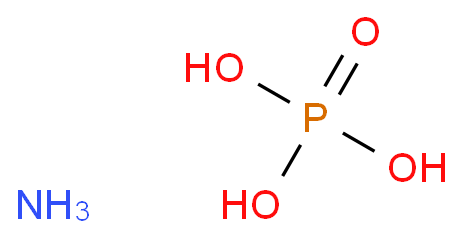
Ammonium dihydrogen phosphate (MAP, CAS 7722-76-1), NH4H2PO4, 115.03 g/mol, is the most phosphorus-dense mainstream fertiliser salt on the market - nominally 12% N and 61% P2O5 - and simultaneously an industrial phosphate flame retardant, a dry-chemical fire extinguishing agent and a food-grade acidity regulator and yeast nutrient. That dual identity is the central commercial fact: one neutralisation reaction feeds three regulatory regimes and three price structures.
Three forces shape 2026 export planning. The EU Fertilising Products Regulation (EU) 2019/1009 now governs CE marking, contaminant limits and the stepped cadmium ceiling for phosphate fertilisers, making rock origin a compliance variable rather than a purchasing detail. The EU carbon border adjustment mechanism enters its definitive regime for ammonia-derived nitrogen chains, pushing embedded-carbon data into fertiliser tenders. And China, the largest producer, continues to manage phosphate exports through commodity inspection and seasonal licensing windows, so supply availability cannot be assumed from nameplate capacity alone.
Buyers responding to this environment segment rigorously: fertiliser-grade contracts indexed to rock, sulphur and ammonia; technical and food-grade contracts with fixed purity, fluoride and heavy-metal limits and dedicated production campaigns. Producers who can document cadmium content per tonne of P2O5, declare a cradle-to-gate product carbon footprint, and ship without caking across a long voyage will take share from price-only competitors.
MAP is the fully protonated end member of the ammonium phosphate family, crystallising from acid ammonium phosphate liquors at an NH3:H3PO4 mole ratio near unity. With a solution pH around 4.5 and a density near 1.80 g/cm3, it is markedly less hygroscopic than diammonium phosphate and urea and stores well in humid climates. It decomposes on heating rather than melting, releasing ammonia and water and condensing to polyphosphates above roughly 190 °C - behaviour that underpins both its fertiliser performance and its flame-retardant action.
Commercial MAP is made by neutralising phosphoric acid with anhydrous or aqueous ammonia; the heat of reaction drives water evaporation and is the energy backbone of the plant. Product quality is decided upstream, by whether the acid is wet-process acid made from phosphate rock and sulphuric acid or purified acid that has passed defluorination, desulphation and solvent extraction, and downstream, by how the slurry is granulated and conditioned.
Fertiliser demand remains the price setter, driven by cropped area, crop prices and affordability, with India, Brazil and Southeast Asia anchoring import tenders. Two structural shifts matter more in 2026: the move toward water-soluble and controlled-placement phosphate products in intensive horticulture, and the steady growth of industrial demand for MAP in fire suppression and fire-retardant formulations as wildfire risk, building-code enforcement and lithium-ion battery fire standards tighten.
Capacity is concentrated where rock, sulphur and ammonia converge. China holds the largest phosphate rock and phosphoric acid base, clustered in Guizhou, Hubei, Yunnan and Sichuan; Morocco, Saudi Arabia and Jordan hold the next tranche of integrated rock-to-product capacity; Russia and North America add mine-to-plant systems serving their own agricultural basins plus export cargoes. Because fertiliser-grade MAP is a bulk, low-value-per-tonne product, trade is freight-sensitive and regional, while technical and food grades move in containers worldwide.
Fertiliser-grade MAP is priced off three inputs - phosphate rock, sulphur and ammonia - and quoted against published indices or tender outcomes, with freight, bagging and seasonal working capital built into the delivered number. Technical and food-grade material is priced as a specialty phosphate: a fixed or formula-based premium over the fertiliser reference, justified by purity, low fluoride, low heavy metals, particle-size control and documentation. The DAP-MAP spread, Chinese export availability windows and Indian and Brazilian tender timing create the volatility, and the price risk is best managed with index-linked contracts plus volume flexibility.
MAP sits at the intersection of three regulatory worlds. As a fertiliser it is a CE-markable EU fertilising product with contaminant ceilings and label guarantees; as a food additive it is a specified substance with purity criteria; as an industrial chemical it is a REACH-registered, essentially unclassified solid whose risk profile is dominated by dust and thermal decomposition.
Phosphate fertilisers are being pulled into climate and circular-economy policy on two fronts: the carbon intensity of ammonia, and the environmental legacy of phosphoric acid production. Neither changes the chemistry, but both now decide who wins tenders.
The dominant contributor to MAP's cradle-to-gate footprint is ammonia, since Haber-Bosch synthesis from natural gas carries both process emissions and combustion energy; acid concentration, granulation drying and freight follow. With the EU carbon border adjustment mechanism moving into its definitive phase for nitrogen-fertiliser chains, importers must be ready to declare embedded emissions and to document them with verified installation data. Producers are responding with low-carbon and renewable-sourced ammonia, waste-heat recovery in acid concentration, and product carbon footprint declarations aligned to ISO 14067 or sector guidance.
Beyond carbon, buyers audit two legacy issues: phosphogypsum, whose stacks carry naturally occurring radionuclides and must be managed under the site's permitting regime, and phosphorus itself, since phosphate rock is a finite, geographically concentrated resource recognised as critical. Traceability programmes therefore document rock origin and its metal signature, water balance and total-phosphorus discharge, and land rehabilitation commitments, increasingly under ISO 14001 and third-party ratings. Recovered phosphorus - struvite from wastewater and ash from sewage sludge - is entering fertilising-product frameworks, creating a circular premium segment alongside mined material.
Fertiliser logistics is a seasonality business: cargoes must arrive inside narrow application windows, and a caked or contaminated hold costs more than the freight itself. MAP is forgiving compared with urea or ammonium nitrate, but long voyages through tropical humidity, high stacking loads still produce lumps, dust and analysis disputes at discharge.
Straight MAP is normally shipped as a non-hazardous solid - not an oxidiser, not a marine pollutant - so bulk cargoes move under solid bulk cargo rules with moisture and ventilation declarations, and bagged cargo moves as general cargo with dust control at loading and discharge. The position changes the moment MAP is blended with ammonium nitrate, which carries its own oxidising-solid entries and segregation rules, so exporters must classify each formulation individually and confirm the shipping description against the current modal rulebook rather than reusing a previous booking. Sampling at load, independent survey at discharge and agreed analysis protocols settle the claims that dominate bulk fertiliser disputes.
The exporters gaining ground are those treating MAP as a portfolio rather than a commodity tonnage.
MAP is a mature molecule in an immature regulatory environment. The chemistry has not changed for decades - neutralise phosphoric acid with ammonia and granulate the product - but the terms of trade now include stepped cadmium ceilings, CE conformity assessment, embedded-carbon declarations and export licensing windows in the largest producing country. Those requirements reward producers who know their rock and their ammonia and penalise traders who cannot document either.
For buyers, the practical 2026 agenda is to qualify two sources per grade, contract on index-linked terms with volume flexibility, and require per-lot contaminant and nutrient data. For producers, the highest-return investments are grade segregation, low-cadmium feedstock security and product carbon footprint capability. In a bulk market, differentiation comes from documentation and reliability, and MAP is no exception.
Powered by Guidechem
This white paper is exclusively compiled by the Guidechem Intelligence Team based on global customs data, regulatory databases, and industry research. Guidechem is a leading global B2B chemical platform, dedicated to connecting global buyers with verified, high-quality manufacturers.
Relying on Guidechem's extensive global database, we have mapped the core participants in the current global Ammonium dihydrogen phosphate (MAP) supply chain:
Disclaimer: The content of this white paper is compiled based on public market data and regulatory information available as of 2026. Global chemical regulations are subject to dynamic adjustments. In actual export operations, enterprises must consult professional regulatory advisors or relevant competent authorities to obtain the latest compliance guidance.
|
 |
 |
 |
 EN
EN
 Agricultural News
 Food News
 Industrial News
 Cosmetic News
 Pharmaceutical News
 Science News

 2YRS
2YRS

