
I. Executive Summary
Sodium sulfate, CAS 7757-82-6, is a high-tonnage inorganic salt available as the mineral thenardite and as synthetic product recovered from numerous process streams. Delivered cost is dominated by freight, drying energy and grade rather than chemistry. Global demand rests on four pillars: detergent formulations, kraft pulp, glass melting and textile processing, with smaller outlets in food, pharmaceutical and thermal-storage applications.
Because the product is low-value and bulky, geography defines strategy. Material rarely travels economically beyond a limited radius unless it moves by vessel in bulk, so regional self-sufficiency and captive byproduct integration determine competitive position. Asian availability, particularly from Chinese natural and byproduct sources, sets the seaborne benchmark, while European and North American capacity is tied to specific industrial hosts whose operating rates then dictate local tightness independent of global balances.
Three issues dominate 2026 procurement. Specifications are fragmenting, since detergent and industrial buyers accept technical grade whereas glass, food and pharmaceutical customers require tight control of iron, chloride, heavy metals and insoluble matter. Environmental expectations now extend to drying energy, mining footprint and water balance. And because the product hydrates exothermically, packaging and handling discipline determine whether material arrives as intended.
II. Product Deep Dive: Molecular Mechanisms and Production Evolution
2.1 Physicochemical Properties and Mechanisms
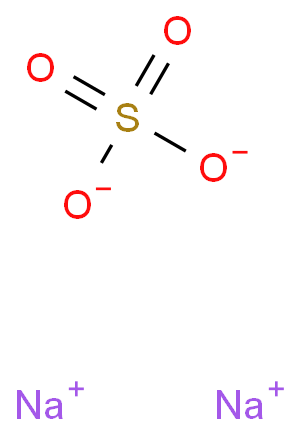
Anhydrous sodium sulfate (Na2SO4, MW 142.04 g/mol) forms colourless orthorhombic crystals of density 2.66 g/cm³, melting near 884 °C and dissolving readily in water. Below 32.4 °C the stable solid is the decahydrate, historically called Glauber's salt, whose incongruent transition governs storage behaviour and phase-change applications. The anhydrous salt is chemically inert toward most organic substrates, which is why it serves as filler, electrolyte and processing aid.
- Hydration Equilibrium and Retrograde Solubility: Dissolution reaches a maximum around 32.4 °C and does not increase materially thereafter, because the decahydrate gives way to the anhydrous phase. This unusual profile drives scale and fouling in evaporators and crystallisers, since deposits form preferentially on cooling surfaces at specific temperatures. It also underlies hydration heat release in storage, where absorbed moisture collapses free-flowing powder into hard, cemented masses.
- Ionic Strength, Redox Behaviour and Flux Action: In aqueous processing the dissolved salt raises ionic strength, driving salt-assisted dye exhaustion onto cellulosic fibres and moderating surfactant packing in spray-dried powders. In kraft pulping, sulfate is reduced with carbon in the recovery furnace to sodium sulfide, the active delignification species. In glass melting, sulfate decomposition releases sulfur dioxide that assists fining through bubble transport.
2.2 Synthesis and Manufacturing Technologies
Three supply routes coexist: mining of natural thenardite or mirabilite brines, evaporation and crystallisation from sulfate-bearing process liquors, and deliberate synthesis, classically the reaction between sodium chloride and sulfuric acid that coproduces hydrochloric acid. Because so much material is a captive coproduct of other industries, availability responds to the operating rates of those hosts rather than to sodium sulfate demand, which produces the counter-intuitive shortages familiar to experienced buyers.
- Natural Brine Mining and Solar Crystallisation: Natural deposits are worked by solution mining or open extraction, followed by solar evaporation, multi-effect crystallisation and mechanical drying to anhydrous product. Impurity profiles reflect the geology, typically carrying chloride, calcium, magnesium and insoluble clay. Mechanical vapour recompression and heat integration reduce energy intensity, while tailings management, brine reinjection and dust suppression define the environmental licence to operate.
- Recovery From Industrial Process Liquors: Substantial tonnage originates in sulfate-containing effluents from inorganic and organic operations, including hydrochloric acid production via the Mannheim route, formate-based organic acid manufacture, chromium chemicals, viscose fibre spinning baths and sodium-based flue gas desulfurisation. Recovery typically involves neutralisation, clarification, multi-effect evaporation and crystallisation, with byproduct doubling as effluent compliance for the host process.
2.3 Core Application Matrix
- Detergents and Cleaners: The largest traditional outlet uses the anhydrous salt as a free-flowing filler and processing aid in spray-dried laundry powders, where it regulates density, dustiness and particle structure with minimal chemical interaction. Compaction and water-saving formulations in mature markets reduce per-wash inclusion, whereas rising household penetration of powdered products in emerging economies sustains overall tonnage.
- Kraft Pulp and Paper: Sulfate serves as sodium and sulfur make-up for the kraft recovery loop, where it is reduced in the recovery boiler to sodium sulfide that regenerates white liquor. Because it closes a chemical cycle rather than being consumed once, demand tracks mill throughput and losses from the cycle, linking the product directly to packaging fibre rather than to printing paper trends.
- Glass, Textiles, Food and Thermal Storage: Glass makers value sulfate as a fining and alkali source whose redox must be held within narrow limits, while textile dyers exploit salting-out behaviour to level dye exhaustion on cellulosics. Smaller regulated applications include food-additive uses under the European E514(i) designation with its purity criteria, compendial grades used as osmotic laxative actives, and decahydrate-based latent heat storage materials.
III. Global Market Supply-Demand Landscape and Export Trends
3.1 Demand Drivers and Market Shifts
Demand has quietly rotated away from consumer laundry toward industrial uses. Growth in packaging-driven kraft pulp, container glass and technical textile processing now sets direction, while mature detergent markets reduce inclusion levels through compaction and liquid formats. Because each end use has different specification and geographic pull, regional balances routinely diverge from global ones, and buyers should track mill and furnace operating rates alongside headline consumption statistics.
3.2 Capacity Distribution and Export Flows
Asia-Pacific holds the dominant position, combining natural Chinese reserves with large volumes recovered from chemical manufacture, serving domestic converters and seaborne export markets. Europe retains production tied to industrial hosts together with natural operations on the Iberian Peninsula and Türkiye, while North American output draws from desert brines and byproduct recovery. Low value density limits haul distance, so flows are regional except where bulk shipping applies.
3.3 Market Bifurcation and Pricing Dynamics
The market splits cleanly between technical product sold effectively at delivered cost and specialised grades carrying quality premiums. Bulk detergent and industrial material prices track energy, freight and the operating rates of byproduct hosts, moving quickly when the latter change. Conversely, low-iron glass grade, food-grade material meeting additive purity criteria and compendial pharmaceutical grade maintain substantially wider margins, so the same substance can occupy several apparently unrelated price points at once.
IV. In-depth Analysis of Global Compliance and Regulatory Barriers
Although sodium sulfate is among the least hazardous high-tonnage substances in commerce, it is not regulation-free. Registration, classification and transport obligations apply uniformly, while food, pharmaceutical, detergent and drinking-water frameworks add sector-specific requirements that only bite when claims or impurity profiles place material in those channels. Exporters most often fail not through toxicity issues but by supplying technical material into applications with unrecognised purity expectations.
4.1 European Market: REACH, CLP, and Sector-Specific Directives
- REACH Registration and CLP Classification: Supply into the EEA requires registration in the applicable tonnage band with joint-submission access, supported by physicochemical, toxicological and ecotoxicological data appropriate to an inorganic salt. Classification should be verified against the current Classification and Labelling Inventory rather than copied from legacy safety data sheets, since notified entries for this substance have varied over time. The resulting extended safety data sheet must align with any exposure scenario.
- Food Additive, Detergent and Water Frameworks: Material used in food must satisfy the E514(i) designation together with the purity criteria of Commission Regulation (EU) No 231/2012 and conditions of use under Annex II of Regulation (EC) No 1333/2008. Detergent applications interact with the EU Ecolabel and national chemical-content procurement criteria, while dissolved sulfate falls under Water Framework Directive objectives and national discharge consents.
4.2 North American Market: TSCA, EPA, and FDA Regulations
- TSCA Inventory Status and EPA Water Programs: Sodium sulfate appears on the TSCA inventory as an existing chemical, and reporting obligations should be confirmed for each cycle. Environmentally, sulfate is addressed through the Safe Drinking Water Act national secondary drinking water regulation, whose non-enforceable sulfate guideline of 250 mg per litre shapes municipal acceptance limits, and through discharge permits covering salinity and total dissolved solids.
- FDA Expectations in Food and Drug Channels: Food-contact and food-ingredient applications require compliance with applicable FDA requirements and manufacturer substantiation of purity, while material used as an active osmotic laxative must meet the applicable USP monograph and be produced under cGMP conditions. Buyers should also confirm heavy-metal limits appropriate to the intended route of exposure before accepting a lot.
4.3 The Critical Hurdle: Quality Control and Safety Limits
Compliance Warning: Never assume that technical-grade sodium sulfate satisfies every application. Detergent and general industrial use tolerates modest impurities, but glass makers specify maximum iron content because ferric iron colours the melt, and semiconductor-adjacent or reagent uses impose tighter metallic and insoluble-matter limits still. Food-grade and pharmaceutical material must meet the applicable purity criteria and compendial monograph, including assays reported on the dried basis, loss on drying, pH range, chloride and sulfide levels, water-insoluble matter and heavy-metal limits expressed as lead, arsenic and selenium. Because the substance is also supplied via byproduct recovery, verify that the certificate of analysis identifies the producing process and that certificates are traceable to retained samples. Confirm current CLP entries rather than reusing historic classifications, and apply ICH Q3D principles for excipient use, where sodium itself is not a concern while extrinsic elements require documented risk assessment.
V. Green Trade Barriers and ESG in Manufacturing
Environmental performance increasingly determines whether a low-value commodity retains a route to market. Drying and calcination carry most of the energy burden, while mining and brine operations carry land, water and biodiversity considerations that customers raise directly. Because the substance frequently originates as a coproduct, its footprint appears either favourable or unfavourable depending on allocation method, making transparent methodology more valuable than a headline number.
5.1 Carbon Footprint and Circular Economy
Recovery from process liquors is intrinsically circular, converting sulfate-bearing effluent into saleable product and displacing virgin extraction, which often lowers cradle-to-gate impact under conservative allocation. Further gains come from mechanical vapour recompression, waste-heat utilisation from host plants and replacement of fossil-fired drying. Because transport dominates the profile for bulky material, regional sourcing often cuts emissions more than process change.
5.2 Sustainable Sourcing and Traceability
Responsible sourcing addresses mining rehabilitation, brine abstraction and community water balance for natural operations, alongside worker safety in dusty drying and bagging plants. ISO 9001 and ISO 14001 certification provide the management-system substrate, and product carbon footprint declarations aligned to ISO 14067 give buyers defensible Scope 3 inputs. Chain-of-custody documentation connecting a delivered lot to its production route also protects both parties when downstream customers audit environmental claims.
VI. Supply Chain Resilience and Export Logistics
Logistics rather than chemistry decides profitability for this salt. Freight can exceed production cost beyond a modest radius, so qualifying distant capacity makes sense only when inland waterway or deep-sea options exist. Because the anhydrous material hydrates readily, any humidity breach converts free-flowing product into cemented blocks that cannot be discharged pneumatically, making packaging quality and covered storage every bit as important as price negotiation.
6.1 Packaging Standards and Moisture/Contamination Control
- Bagging Specification and Moisture Barrier: Standard formats are polyethylene-laminated woven bags of 25 or 50 kg, intermediate bulk containers of around one tonne with inner liners, and bulk delivery by tipper or vessel. Effective liners with documented water vapour transmission rates, heat-sealed closures and pallet stretch-hoods are essential. Every bag should carry batch, grade and production-date coding so that caking incidents can be traced.
- Caking Prevention and Warehouse Discipline: Warehouses must be dry, well ventilated and protected from temperature cycling that drives repeated hydration rather than one-time surface uptake. Stock rotation, retained-sample testing for loss on drying before dispatch, and anti-caking handling such as controlled drying and flow-conditioning during bagging all reduce claims. Contamination control requires dedicated cleaning between campaigns, especially when switching grades.
6.2 Dangerous Goods Identification and Transit Protocols
Sodium sulfate carries no UN number and is not a dangerous good under ICAO IATA, IMDG or ADR, which simplifies documentation but often breeds complacency. Bulk marine carriage still requires verified hold cleanliness, dry-weather loading and careful moisture exclusion, since wetted product damages both the cargo and later consignments. Dust should be controlled at transfer points.
VII. Enterprise Global Expansion Strategy Guide
Winning positions in a commodity salt are built on logistics economics, grade selectivity and integration rather than on product novelty. Producers should rank opportunities by delivered margin rather than ex-works price, because freight, energy and grade premium together determine whether a new lane is viable. The following actions consistently separate durable participants from opportunistic traders.
- Anchor Capacity in Regional Network: Combine bulk savings with regional finishing hubs so that bagging, blending and specification adjustment occur close to customers. Because haul distance dominates economics, this structure protects margin during freight spikes and allows rapid response when a local byproduct host changes operating rate.
- Move Deliberately Toward Higher Grades: Systematically upgrade capability to produce compendial grades, low-iron glass grades and food-additive grades, since those segments sustain wider margins and longer contracts. Certification under ISO 9001 and ISO 14001, documented cleaning validation between campaigns and independent testing are prerequisites rather than differentiators.
- Monetise Circularity and Footprint Data: Quantify the emissions advantage of byproduct recovery under a disclosed allocation methodology, publish third-party-verified product carbon footprints, and offer supplied logistics optimisation such as returnable intermediate bulk containers. Circularity claims supported by conservative accounting increasingly win volume traditionally decided on delivered cost alone.
VIII. Conclusion
Sodium sulfate demonstrates how a chemically undemanding substance can nonetheless present sophisticated commercial challenges. Demand is rotating from consumer laundry toward pulp, packaging glass and technical textile processing, while supply remains hostage to the operating rates of processes that generate sulfate as a coproduct. That structure produces local tightness during apparent global surplus, so buyers relying on headline balances routinely misread availability.
Resilience therefore rests on regional sourcing, explicit specification discipline and honest accounting of the environmental profile. Procurement teams should qualify multiple sources across regions, match grade to application with documented limits for iron, chloride, insoluble matter and heavy metals, and insist on moisture control from plant to silo. Producers who invest in grade upgrades, circular positioning and verified footprint data convert a commodity into a differentiated business.
IX. Industry Resource Connection and Supplier Ecosystem
Powered by Guidechem
This white paper is exclusively compiled by the Guidechem Intelligence Team based on global customs data, regulatory databases, and industry research. Guidechem is a leading global B2B chemical platform, dedicated to connecting global buyers with verified, high-quality manufacturers.
Relying on Guidechem's extensive global database, we have mapped the core participants in the current global Sodium sulfate supply chain:
- North America Tier: This tier combines natural desert-brine operations with recovery assets integrated into chemical production, serving detergent blenders, pulp mills and glass producers through regional contracts. Distribution is dominated by inland rail and barge economics, so plant location relative to the customer base determines competitive position more than production technology.
- Europe Tier: European participation centres on host-integrated recovery units together with established natural production on the Iberian Peninsula and Türkiye, generally supplying captive or nearby customers. Higher energy and compliance costs encourage investment in higher-value glass, food and pharmaceutical grades rather than expansion of commodity tonnage.
- Asia-Pacific / China Tier: Chinese producers dominate global availability by combining substantial natural thenardite resources with extensive recovery from hydrochloric acid, organic acid and fibre process streams. This tier sets the seaborne benchmark for technical material and is progressively upgrading capacity to supply low-iron and higher purity grades.
Disclaimer: The content of this white paper is compiled based on public market data and regulatory information available as of 2026. Global chemical regulations are subject to dynamic adjustments. In actual export operations, enterprises must consult professional regulatory advisors or relevant competent authorities to obtain the latest compliance guidance.


 EN
EN
 Agricultural News
 Food News
 Industrial News
 Cosmetic News
 Pharmaceutical News
 Science News

 1YR
1YR

