
I. Executive Summary
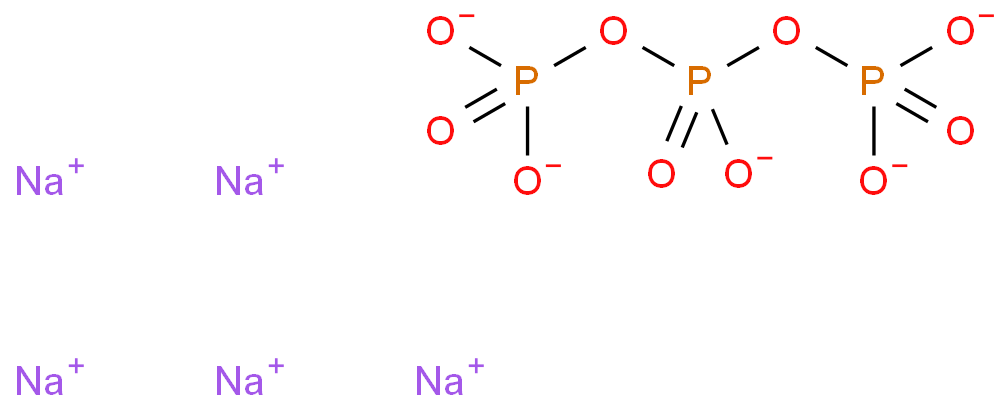
Sodium tripolyphosphate (CAS 7758-29-4), Na5P3O10, is a condensed phosphate builder supplied as a white, hygroscopic powder or granulate. It sequesters calcium and magnesium, deflocculates suspended solids, buffers alkalinity and binds water in protein systems, which is why it has anchored detergent formulations, food processing, ceramics and drilling fluids for decades. Commercial performance depends on phase composition, hydration rate, solubility and purity rather than on nominal assay alone. This paper examines the chemistry, manufacture, applications, compliance and sourcing of this phosphate builder.
Three forces now shape the category. Phosphorus regulation has removed most consumer detergent demand in Europe and North America, redirecting volume toward industrial and institutional cleaning, food processing and technical uses. Phosphate rock economics and critical raw material policy have raised the strategic importance of supply security. Eutrophication and circular phosphorus agendas have made environmental performance a purchasing criterion. Buyers who understand these shifts plan capacity and qualification accordingly.
The result is a market mature in aggregate but structurally reallocating. Volumes move from regulated consumer detergents toward food-grade and technical grades with tighter documentation. This document analyses that reallocation across mechanism and manufacture, trade flows, REACH, CLP, TSCA, EPA and food law, ESG expectations, logistics and the supplier ecosystem.
II. Product Deep Dive: Molecular Mechanisms and Production Evolution
2.1 Physicochemical Properties and Mechanisms
Sodium tripolyphosphate is a linear condensed phosphate in which three orthophosphate units share two bridging oxygens. In solution it complexes alkaline earth ions strongly, disperses particulate matter by raising surface charge, and hydrolyses slowly back to orthophosphate, a property governing both functional lifetime and environmental fate. The solid exists in two principal crystalline forms with markedly different hydration behaviour, so physical grade design matters as much as chemical composition. Water of hydration, bulk density and particle size are therefore specification parameters, not packaging details.
- Sequestration, Dispersion and Hydrolysis: Tripolyphosphate forms soluble complexes with calcium and magnesium, softening water and preventing scale and surfactant precipitation, while adsorbed phosphate raises particle charge and deflocculates suspensions. Hydrolysis to orthophosphate proceeds with time, temperature and pH, shortening functional life in hot alkaline systems but enabling eventual nutrient return. Formulators must balance builder performance against hydrolytic loss.
- Polymorph Control and Hydration Behaviour: The high-temperature crystalline form hydrates rapidly, causing caking and heat release on addition to water, while the low-temperature form hydrates more slowly and dissolves more predictably. Commercial grades are engineered to a defined ratio of the two phases, controlling dissolution rate, dusting and storage stability. Buyers should specify phase ratio and hydration rate, not simply P2O5 content.
2.2 Synthesis and Manufacturing Technologies
Manufacture begins with phosphoric acid, either wet-process acid purified from phosphate rock digestion or thermal acid from elemental phosphorus, neutralised with soda ash or caustic soda to an orthophosphate ratio of two disodium to one monosodium salt. The solution or slurry is dried and calcined in a spray tower or rotary kiln, where condensation to tripolyphosphate occurs under controlled temperature and residence time. Cooling, milling and classification set the final physical grade.
- Neutralisation, Calcination and Phase Engineering: Precise control of the sodium-to-phosphorus ratio is the first critical variable, because deviation shifts product toward pyrophosphate or metaphosphate and changes solubility. Calcination temperature and residence time then determine the crystalline phase ratio, which is fixed by rapid cooling. Modern plants verify phase composition in-line before blending to hold dissolution behaviour within specification.
- Purification, Physical Form and Grade Segregation: Wet-process acid carries iron, aluminium, magnesium, fluoride and sulfate, which affect colour, solubility and food acceptability, so acid purification separates technical from food grades. Granulation or agglomeration produces free-flowing low-dust product, while milling yields powder for rapid dissolution. Food and potable-water grades require dedicated campaigns and lot-level impurity verification.
2.3 Core Application Matrix
- Industrial and Institutional Cleaning: Detergent building remains the reference application, although phosphorus limits have removed most consumer laundry and dishwasher use in regulated markets. Institutional and industrial formulations, including hard-surface cleaners, vehicle washes, bottle washing and textile scouring, still rely on tripolyphosphate for sequestration and soil suspension. Buyers in this segment purchase technical grade on price and physical performance.
- Food Processing and Protein Water Binding: As E451, tripolyphosphate raises pH and dissociates actomyosin, increasing water binding in meat, poultry, seafood and surimi and improving yield and texture. It also acts as an emulsifying salt in processed cheese. Use is constrained by category-specific maximum levels and by total dietary phosphorus considerations. Food-grade supply requires compendial purity.
- Ceramics, Drilling Fluids and Water Treatment: Ceramic producers use it as a deflocculant to reduce slurry viscosity at high solids; drilling fluids use it as a clay dispersant and thinner; water systems apply low doses for sequestration and corrosion control, with potable use requiring certification. These technical applications are volume-driven and largely insulated from detergent regulation, which is why they have gained strategic weight.
III. Global Market Supply-Demand Landscape and Export Trends
3.1 Demand Drivers and Market Shifts
Three shifts define demand. Phosphorus regulation in consumer detergents has permanently reduced volumes in Europe and North America, while emerging markets retain higher permitted levels. Food processing demand grows with protein consumption and convenience formats, particularly in Asia-Pacific. Technical demand from ceramics, drilling and industrial cleaning provides a stable base. Suppliers must manage a portfolio rather than a single market.
3.2 Capacity Distribution and Export Flows
Capacity follows phosphate rock and acid infrastructure: China, North Africa, the Middle East and the United States host integrated phosphate complexes, while Europe depends largely on imported acid or finished phosphate. Trade flows move rock and acid to conversion plants and finished tripolyphosphate to detergent and food customers worldwide. Freight and energy costs keep regional conversion competitive. Buyers should assess upstream rock security, not only conversion capacity.
3.3 Market Bifurcation and Pricing Dynamics
Pricing tracks phosphate rock, sulfur, ammonia or caustic and energy, and it bifurcates between technical and certified food or potable grades. Detergent-grade volumes face structural decline and intense competition, compressing margins, while certified grades command premiums for segregation, impurity testing and audits. Contracts increasingly reference rock and sulfur benchmarks. Security of rock supply has become a competitive variable, not merely a cost input.
IV. In-depth Analysis of Global Compliance and Regulatory Barriers
Sodium tripolyphosphate sits at the intersection of chemicals regulation, detergent law and food law. Chemical control requires REACH registration and CLP classification; detergent use is constrained by phosphorus limits in consumer products; food use requires additive authorisation, purity specifications and labelling. Environmental obligations arise from phosphorus discharge and eutrophication. Companies treating it solely as a bulk salt underestimate the documentation load in food and regulated cleaning markets.
4.1 European Market: REACH, CLP, and Sector-Specific Directives
- REACH, CLP and Detergent Phosphorus Limits: As a registered substance it requires standard registration and supply-chain communication, and it is commonly classified as irritating to eyes and to the respiratory tract. Consumer detergent use is limited by Regulation (EC) No 648/2004 as amended by Regulation (EU) No 259/2012, which caps phosphorus content per standard dose in laundry and dishwasher products. Industrial and institutional products remain outside those caps.
- Food Additive Authorisation and Phosphorus Intake: Food use is permitted under Regulation (EC) No 1333/2008 for E451 in defined categories, with purity criteria set by the food additive specifications regulation. European risk assessment has established a group acceptable daily intake for phosphates expressed as phosphorus, and total dietary exposure remains under review. Processors must track added phosphate and declare it in ingredient lists.
4.2 North American Market: TSCA, EPA, and FDA Regulations
- FDA, FSIS and Food-Grade Expectations: Sodium tripolyphosphate is affirmed as generally recognised as safe for defined food uses under FDA rules, and meat and poultry applications fall additionally under FSIS permissions covering added phosphate limits and labelling. Food-grade supply must meet Food Chemicals Codex or equivalent specifications, with heavy-metal and fluoride limits verified by lot. Buyers should confirm the intended product category is permitted before ordering.
- TSCA, EPA and Nutrient Pollution Controls: The substance is listed as active on the TSCA Inventory with standard reporting obligations. Commercially the binding constraints are environmental: phosphorus discharge limits under Clean Water Act permitting and total maximum daily load programmes, state restrictions on phosphorus in household dishwasher detergents and lawn fertilisers, and nutrient management expectations for industrial effluent. Potable-water use requires NSF/ANSI 60 certification.
4.3 The Critical Hurdle: Quality Control and Safety Limits
Compliance Warning: The most costly failure is grade confusion: technical material sold into a food or potable application without compendial certification, or detergent-grade product shipped into a market with phosphorus caps. Buyers must specify phase composition, P2O5 content, insoluble matter, fluoride and heavy-metal limits, and the applicable food or potable certification. Phosphorus content must be calculated against destination detergent limits before shipment.
V. Green Trade Barriers and ESG in Manufacturing
Phosphorus is simultaneously a finite resource, a nutrient pollutant and, in several jurisdictions, a designated critical raw material. Sustainability performance therefore spans rock sourcing, conversion energy and end-of-life nutrient fate. Buyers increasingly ask about rock origin, cadmium and heavy-metal content, phosphogypsum management and recycled phosphorus content. Transparency on these points is becoming a tender criterion in food, detergent and municipal supply chains.
5.1 Carbon Footprint and Circular Economy
Emissions arise from rock mining and beneficiation, sulfuric acid production, calcination energy and freight, so most of the footprint sits in Scope 3. Producers integrated with sulfur-based acid plants recover reaction heat, lowering cradle-to-gate intensity, while electric-furnace routes are highly energy-dependent. Waste heat recovery and renewable electricity procurement are the principal reduction levers. Reporting follows ISO 14001 and ISO 50001 with measured Scope 1, 2 and 3 inventories.
5.2 Sustainable Sourcing and Traceability
Traceability begins at the mine, because rock origin determines cadmium, uranium-series radionuclide and heavy-metal profiles that propagate through acid into finished phosphate. Chain-of-custody documentation should link finished lots to acid and rock sources, supported by impurity testing and phosphogypsum management records. Food and potable grades require segregated campaigns and cleaning verification. Mature suppliers operate ISO 9001 and ISO 14001 systems and provide kosher and halal certification.
VI. Supply Chain Resilience and Export Logistics
Tripolyphosphate is not dangerous for transport, but it is hygroscopic and prone to caking, so moisture control dominates logistics design. Product moves in bagged form, in big bags, and in bulk road tankers, rail cars or vessels depending on volume. Storage must remain dry and ventilated, with stock rotation to avoid aged, partially hydrated material. Physical degradation, not hazard, is the principal risk in this supply chain.
6.1 Packaging Standards and Moisture/Contamination Control
- Moisture Barrier and Caking Prevention: Bags should use polyethylene liners and moisture-resistant outer plies, palletised and stretch-wrapped or shrink-hooded for container shipment, with desiccants or container liners on long sea routes. Bulk shipments require sealed, dry tankers or silos with vapour barriers. Product should be stored off the floor, away from humidity sources, and used on a first-in, first-out basis.
- Dust Control, Segregation and Hygiene: Fine powder generates dust irritating to eyes and the respiratory tract, so handling requires local extraction, appropriate protective equipment and low-dust granulated grades where practicable. Food-grade material must be segregated from technical stock and transported only in clean, dedicated or verified equipment. Lot labelling should carry grade, production date and certification references to support traceability.
6.2 Dangerous Goods Identification and Transit Protocols
Shipments are generally not classified as dangerous goods for road, sea or air transport, although dust and irritation hazards still require appropriate labelling and safety data sheets. Containerised sea freight dominates intercontinental movement, and moisture management inside containers matters most on long tropical routes. Bulk vessel and rail movements require dry, clean holds or cars with documented cleaning. Insurance claims in this category arise mainly from caking and contamination.
VII. Enterprise Global Expansion Strategy Guide
Winning in this category requires portfolio positioning rather than price leadership. The three priorities below reflect what detergent, food and technical buyers reward: regulatory-aligned grade design, upstream rock security and documented environmental performance. Each converts a commodity phosphate into a differentiated supply that resists substitution on price alone.
- Align Grade Design with Destination Regulation: Maintain separate detergent, industrial, food and potable grades, each verified against destination phosphorus caps and compendial specifications. Provide customers with phosphorus content per dose calculations to support detergent compliance, and with impurity data to support food and potable qualification. Grade clarity prevents the costly failures that arise when technical material enters regulated channels.
- Secure Upstream Rock and Acid Supply: Qualify rock and acid sources, hold strategic inventory against phosphate rock and sulfur volatility, and consider long-term offtake or partnership arrangements. Diversify across regions to mitigate export restrictions, tariffs and logistics disruption. Upstream security is now a competitive asset as critical raw material policy tightens, not merely a procurement detail.
- Build a Circular Phosphorus Story: Measure Scope 1, 2 and 3 emissions per tonne, document rock origin and impurity profiles, and invest in phosphogypsum management or valorisation. Explore recovered phosphorus from sewage sludge ash or struvite as partial feed where specifications allow. Publish quantified targets under ISO 14001 and ISO 50001. Environmental transparency increasingly decides food and municipal tenders.
VIII. Conclusion
Sodium tripolyphosphate is a mature phosphate whose future is defined by regulation and resource policy rather than by new chemistry. Detergent demand will keep contracting in regulated markets, while food, institutional cleaning and technical uses absorb the reallocated volume. Suppliers able to serve certified grades with secure upstream supply will capture disproportionate value during this transition.
Buyers should specify phase composition, purity and applicable certification, and calculate phosphorus content against destination limits before ordering. Suppliers should treat rock security and environmental transparency as commercial assets rather than compliance overhead. Organisations applying these principles will remain competitive through 2026 and the remainder of the decade.
IX. Industry Resource Connection and Supplier Ecosystem
Powered by Guidechem
This white paper is exclusively compiled by the Guidechem Intelligence Team based on global customs data, regulatory databases, and industry research. Guidechem is a leading global B2B chemical platform, dedicated to connecting global buyers with verified, high-quality manufacturers.
Relying on Guidechem's extensive global database, we have mapped the core participants in the current global Sodium tripolyphosphate supply chain:
- North America — Integrated Phosphate Complexes and Certified Grades: The North American tier combines integrated phosphate producers with detergent, food and water-treatment customers, supported by mature TSCA, EPA and food-safety frameworks. Participants compete on rock integration, grade certification and logistics reliability. Buyers value documented impurity profiles and potable-water certification. Structural detergent decline has pushed regional producers toward food, technical and export markets.
- Europe — Detergent Caps, Traceability and Import Dependence: European supply is shaped by detergent phosphorus caps, REACH discipline and dependence on imported rock or acid, which makes origin and environmental documentation central to qualification. Regional strength lies in food-grade and specialty technical grades with rigorous traceability. Buyers gain regulatory predictability at higher conversion cost. Distributors frequently provide blending, repacking and compliance documentation.
- Asia-Pacific and China — Largest Conversion Base and Export Scale: The Asia-Pacific tier, led by large phosphate complexes, supplies the biggest share of global capacity, with cost advantage from integrated rock, acid and energy. Regional producers increasingly upgrade to food and low-impurity technical grades for export, although qualification takes longer. Environmental enforcement on phosphogypsum and effluent phosphorus is consolidating capacity. Buyers pair regional volume sourcing with certified supply.
Disclaimer: The content of this white paper is compiled based on public market data and regulatory information available as of 2026. Global chemical regulations are subject to dynamic adjustments. In actual export operations, enterprises must consult professional regulatory advisors or relevant competent authorities to obtain the latest compliance guidance.


 EN
EN
 Agricultural News
 Food News
 Industrial News
 Cosmetic News
 Pharmaceutical News
 Science News

 1YR
1YR


