
I. Executive Summary
Diammonium phosphate (DAP, CAS 7783-28-0, EC 231-987-8) is the most heavily traded ammoniated phosphate and the benchmark against which the phosphate chain is priced. Its identity rests on the classic 18-46-0 analysis — 18% nitrogen and 46% phosphate as P2O5 — delivered as a hard, free-flowing, water-soluble granule. Nutrient declaration, water-solubility ratio, particle size, crushing strength and trace elements are set by ammoniation chemistry and wet-process acid quality, so a cadmium failure disqualifies a cargo.
Four pressures define 2026 trading. DAP sits at the intersection of phosphate rock, sulphuric acid and ammonia, so its cost curve tracks Moroccan rock benchmarks, sulphur freight and gas-linked ammonia. China's statutory fertiliser export inspection, variable export tax and licensing repeatedly withdraw seaborne tonnage, while phosphogypsum, fluoride and total-phosphorus licensing decides which plants can run.
DAP is therefore three businesses sharing one CAS number. Fertiliser grade is a bulk, margin-thin trade decided by granulation quality, arrival condition and cadmium compliance. Food and pharmaceutical grade — E342(ii), FCC, USP/NF — is documentation-intensive, where heavy metals, assay and microbial criteria outweigh tonnage. Industrial grade serves flame retardants, dry-powder extinguishing agents, yeast nutrition, ceramics and water treatment.
II. Product Deep Dive: Molecular Mechanisms and Production Evolution
2.1 Physicochemical Properties and Mechanisms
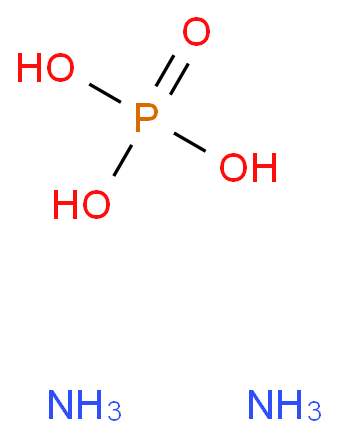
DAP is the diammonium salt of orthophosphoric acid, (NH4)2HPO4, formula weight 132.06 g/mol, crystal density near 1.62 g/cm3. It crystallises as a white to off-white solid whose colour proxies acid purity: grey, brown or green casts signal iron, aluminium, magnesium or organic carry-over. Freely water-soluble and alkaline in reaction — a 1% solution typically at pH 7.6–8.2 — it supplies ammonium nitrogen retained on the soil exchange complex plus immediately available orthophosphate.
- Nutrient chemistry and solubility ratio: Fertiliser DAP is specified at 18% N and 46% P2O5, with phosphate delivered as water-soluble orthophosphate. The under-specified parameter is the water-solubility ratio, typically above 90% in a correctly ammoniated product, alongside the citrate-soluble available fraction. Solubility is the fastest diagnostic of over-ammoniation, which drives reversion to insoluble metal phosphates.
- Thermal behaviour, hygroscopicity and caking: DAP has no stable melt: heating drives off ammonia and reverts it toward monoammonium phosphate well below 200 °C, which caps dryer temperature and mandates ammonia scrubbing. Ammonia loss, not moisture alone, drives grade drift. Reported critical relative humidity sits in the low-to-mid 70% range at ambient temperature, so holds above it cause surface dissolution, crystal bridging and hard caking.
2.2 Synthesis and Manufacturing Technologies
Commercial DAP is made by neutralising phosphoric acid with anhydrous ammonia at an NH3:H3PO4 molar ratio near 2.0, and the architecture chosen to manage that exothermic reaction sets quality, energy use and impurity profile. Upstream, wet-process acid from sulphuric acidulation of phosphate rock fixes the cadmium, arsenic, fluoride and metal burden, because everything dissolved from the rock reports to the acid.
- Pipe reactor (pipe cross reactor) granulation: Acid and ammonia react in a short, high-intensity tubular reactor and the hot melt-slurry is sprayed onto the rolling bed of a drum granulator or Spherodizer. Reaction heat flashes water as steam, giving low slurry moisture, minimal drying duty and excellent on-size yield.
- Pre-neutraliser (tank reactor) granulation: Ammoniation is carried out in a stirred tank to a controlled N:P molar ratio, commonly around 1.4–1.6 for DAP service, and the slurry is pumped to the granulator where the balance of ammonia is added. The route tolerates acid variability and allows very large trains, but higher slurry water content demands more dryer fuel and greater recycle.
2.3 Core Application Matrix
- Fertiliser grade: Sold as straight 18-46-0, as a component of NPK bulk blends and as a starter phosphate source. Buyers specify total N, available and water-soluble P2O5, moisture, particle-size distribution (commonly 2–4 mm), crushing strength and contaminant limits. Physical quality matters as much as chemistry, because dust, fines and caking cause claims and segregation in blends.
- Food and pharmaceutical grade (E342(ii), FCC, USP/NF): High-purity DAP is a buffering and sequestrant agent and, most commercially, a yeast nutrient supplying assimilable nitrogen and phosphate in wine, beer, ethanol and industrial fermentation. It is governed by Regulation (EC) No 1333/2008 and the EU purity criteria for E342(ii), the Food Chemicals Codex monograph, USP/NF requirements and JECFA/Codex specifications, with a phosphate group maximum tolerable daily intake expressed as phosphorus.
- Industrial and technical grade: Used as an inorganic flame retardant for wood, paper, textiles and intumescent coatings, where the ammonia-phosphorus pair promotes char formation; in ammonium-phosphate dry-powder extinguishing agents; and in ceramic binders, sugar refining and industrial water treatment. Specifications are set by particle size, solubility, solution pH and colour rather than nutrient declaration, and orders are small and technically negotiated.
III. Global Market Supply-Demand Landscape and Export Trends
3.1 Demand Drivers and Market Shifts
Demand is anchored in concentrated import markets — South Asia, Latin America, Southeast Asia and parts of Africa — whose buying calendars follow monsoon and planting windows. India, Brazil and Pakistan absorb the largest seaborne volumes, and their tender systems turn policy and currency into price.
3.2 Capacity Distribution and Export Flows
Supply concentrates in rock-and-acid integrated regions. China pairs large rock reserves with enormous ammoniation capacity, but its exportable surplus is policy-mediated by statutory export inspection, seasonal export tax and licensing. Morocco and North Africa convert high-quality rock into export-oriented, low-cadmium-advantaged product; the United States and Russia run integrated complexes with strong domestic pull; Saudi Arabia and Jordan have built rock-to-granule chains purely for export.
3.3 Market Bifurcation and Pricing Dynamics
DAP pricing is a conversion margin over rock, sulphuric acid and ammonia, plus freight. Rock is priced off benchmark contracts, sulphur tracks refinery by-product supply and freight, and ammonia tracks natural gas. Because DAP is a low-value bulk solid, freight and port handling add a material fob-to-cfr spread and can outweigh chemistry.
IV. In-depth Analysis of Global Compliance and Regulatory Barriers
DAP is simultaneously a fertilising product, a food additive, a technical chemical and, in some jurisdictions, a quasi-strategic commodity subject to export control. The commonest failure in trade is applying a fertiliser-grade dossier to a food-grade enquiry, or assuming a REACH-registered substance is automatically an authorised fertilising product.
4.1 European Market: REACH, CLP, and Sector-Specific Directives
- Fertilising Products Regulation (EU) 2019/1009 and cadmium: EU market placement as a fertilising product requires conformity with Regulation (EU) 2019/1009 — product function category PFC 1(C) for inorganic macronutrient fertilisers, labelling and declaration rules, and contaminant limits for arsenic, cadmium, hexavalent chromium, mercury, lead and nickel. Cadmium is decisive: the EU ceiling is expressed against P2O5 and subject to periodic review, while several Member States have operated materially stricter national regimes.
- REACH registration, CLP status and food-additive purity: DAP is registered under REACH; importers and only representatives must confirm coverage of their tonnage band and uses and that the extended safety data sheet reflects current exposure scenarios. Fertiliser and technical grades carry no harmonised classification in Annex VI of CLP Regulation (EC) 1272/2008, so documented self-classification and national list checks remain required.
4.2 North American Market: TSCA, EPA, and FDA Regulations
- TSCA, state fertiliser registration and nutrient policy: DAP is listed on the TSCA inventory and produced in very high volume, so chemical-control barriers are minimal against the fertiliser-specific regime. Labelling is governed by state law through the AAPFCO model framework: registration and label approval per state, guaranteed-analysis declarations, tonnage reporting and inspection fees. Metals are scrutinised through the AAPFCO/state heavy-metal framework, and environmental compliance centres on phosphorus runoff, eutrophication and EPA water-quality programmes.
- FCC/USP food-grade expectations: Food-grade DAP must meet the Food Chemicals Codex monograph — assay, pH, fluoride, arsenic, lead and loss on drying — plus the USP/NF monograph where a pharmacopoeial claim is made. Processors require evidence of food-additive status for the intended use, an allergen statement and food-contact compliance for the packaging line.
4.3 The Critical Hurdle: Quality Control and Safety Limits
Compliance Warning: The most expensive compliance failure in DAP trade is cadmium. Inherited from the phosphate rock and carried almost quantitatively through acidulation and ammoniation, it cannot be processed out: the only remedies are rock selection, blending, acid purification or refusing the order. Contract on cadmium explicitly — numeric ceiling, analytical method (typically ICP-MS or ICP-OES after microwave digestion), sampling protocol and remedy. Verify the current consolidated text of Regulation (EU) 2019/1009, any amendment to the cadmium threshold and the destination's national limit before each season, and apply the same discipline to arsenic, lead, mercury, nickel, hexavalent chromium and fluoride. Never transfer a fertiliser-grade lot into a food, feed or pharmaceutical application.
V. Green Trade Barriers and ESG in Manufacturing
DAP sits at the centre of the phosphorus sustainability debate, and ESG pressure now reaches through the acid plant into the customer's Scope 3 reporting. Two themes dominate 2026 questionnaires: the carbon intensity of ammonia and acid production, and the legacy of phosphate mining and phosphogypsum.
5.1 Carbon Footprint and Circular Economy
The footprint is dominated by ammonia (steam reforming or coal gasification), acidulation energy and drying duty — the last far lower in pipe-reactor trains that exploit the heat of ammoniation. As carbon-border adjustment and fertiliser carbon-footprint methodologies mature, EU-bound product increasingly needs third-party-verified cradle-to-gate footprints. Circularity pressure focuses on phosphogypsum, whose stacking, radionuclide content and leachate are regulated as waste in most jurisdictions.
5.2 Sustainable Sourcing and Traceability
Traceability means rock-to-granule custody: which mine, acid plant, train and cargo. It is the only way to substantiate a cadmium, radionuclide or low-carbon claim, and what makes a rejection containable. Water stewardship is the third pillar: total-phosphorus discharge, fluoride and ammonia emissions and gypsum-stack water balance are regulated nationally and, in Europe, under the Water Framework Directive.
VI. Supply Chain Resilience and Export Logistics
DAP is a high-tonnage, low-unit-value, moisture-sensitive solid, so logistics economics are inseparable from product economics. Water and attrition are the enemies: moisture drives caking and grade dilution through ammonia loss, while attrition generates fines and dust that trigger discharge claims.
6.1 Packaging Standards and Moisture/Contamination Control
- Bulk versus bagged and the moisture barrier: Bulk shipment is the norm for fertiliser grade, with hold cleanliness, ventilation and cargo temperature written into the charter party and third-party draft surveys at both ends; bagged or big-bag presentation suits higher-value and food-grade business. Controlling parameters are moisture at shipment, product temperature below the caking threshold and an effective barrier — lined woven polypropylene or barrier paper for bags, lined and ventilated holds for bulk.
- Dust control, ATEX discipline and grade segregation: Fine ammonium phosphate dispersions create explosion and housekeeping hazards, so installations should be assessed under ATEX and IECEx in Europe or NFPA 652 and the agricultural-dust codes in the United States, with earthing, dust collection, spark detection and hot-work controls. Segregation matters equally: fertiliser, industrial and food grades need separate lines and dedicated packaging, because contamination of a food lot cannot be re-tested away.
6.2 Dangerous Goods Identification and Transit Protocols
In normal commercial forms DAP is generally not classified as a dangerous good under the UN Model Regulations and is not carried as a regulated hazardous material under the IMDG Code, ADR, RID or IATA Dangerous Goods Regulations; in bulk it moves under the IMSBC Code. Confirm status per shipment, since national list entries and coated grades can change it.
VII. Enterprise Global Expansion Strategy Guide
Winning in DAP is less about finding capacity than structuring specification, compliance and logistics so a cargo clears both the port and the audit.
- Segment by grade, build the dossier per grade: Treat fertiliser, food/pharma and industrial DAP as separate businesses with separate plants, specifications and documentation packs. Food grade needs FCC/USP/E342(ii) conformance, food-safety certification and rock-to-bag traceability; fertiliser grade needs contaminant analytics, granule physicals and destination registrations.
- Contract the contaminant, not the promise: Write numeric ceilings for cadmium, arsenic, lead, mercury and nickel into the contract, specify the method and sampling protocol, require witnessed third-party analysis at load and define the remedy in advance. Pair this with low-cadmium rock sourcing, blending or acid purification so the number is achievable.
- Hedge policy risk and diversify origin: Because much exportable DAP is exposed to Chinese statutory export inspection, seasonal export tax and licensing, model policy interruptions explicitly, keep at least two qualified origins and use flexible laycans with origin-substitution clauses. Sellers should treat the inspection and tariff calendar as a commercial variable.
VIII. Conclusion
DAP looks like a commodity and behaves like a specification business. The chemistry is a century old and the technology mature, yet the outcome of a 2026 cargo is decided by four variables: the cadmium and trace-element profile inherited from the rock, the granule's condition after an ocean voyage, the conformity documentation behind the fertilising-product or food-additive claim, and the export-policy environment at the moment of loading.
Buyers should qualify suppliers on evidence rather than price: audit the acid plant and rock source, demand cargo-level third-party certificates, verify the EU and national cadmium position per destination before each season, and design logistics around moisture exclusion and dust control. Producers should build a low-cadmium, low-carbon, fully documented line sellable into regulated markets at a premium.
IX. Industry Resource Connection and Supplier Ecosystem
Powered by Guidechem
This white paper is exclusively compiled by the Guidechem Intelligence Team based on global customs data, regulatory databases, and industry research. Guidechem is a leading global B2B chemical platform, dedicated to connecting global buyers with verified, high-quality manufacturers.
Relying on Guidechem's extensive global database, we have mapped the core participants in the current global Diammonium phosphate (DAP) supply chain:
- China — integrated rock-to-granule complexes: Producers in Guizhou, Hubei, Yunnan and Sichuan pair domestic rock with very large ammoniation and granulation capacity and supply much of the world's food-grade and industrial-grade ammonium phosphate. Exportable surplus is policy-mediated by statutory export inspection, seasonal export tax and licensing. The strongest offer 18-46-0 with full contaminant certificates and FCC/USP/E342(ii)-aligned food-grade material from dedicated lines.
- Morocco and North Africa — rock-advantaged export platforms: Integrated mining, acidulation and granulation at coastal sites give this ecosystem structural advantages on rock quality and logistics, making it a principal source of low-cadmium-advantaged DAP into Europe and the Atlantic basin. Participants compete on specification stability, port capacity and framework supply rather than spot discounting.
- United States, Russia and the Middle East — gas-linked ammonia integration: US Gulf Coast and Russian complexes pair captive ammonia with domestic rock or imported acid, with cost position driven by natural gas economics. Middle Eastern producers in Saudi Arabia and Jordan have built rock-to-granule platforms oriented to seaborne markets in South Asia and East Africa.
Disclaimer: The content of this white paper is compiled based on public market data and regulatory information available as of 2026. Global chemical regulations are subject to dynamic adjustments. In actual export operations, enterprises must consult professional regulatory advisors or relevant competent authorities to obtain the latest compliance guidance.


 EN
EN
 Agricultural News
 Food News
 Industrial News
 Cosmetic News
 Pharmaceutical News
 Science News

 2YRS
2YRS

