-
We detected your language preference as English. Would you like to switch to the English version for a better experience?
Switch to English
Stay here


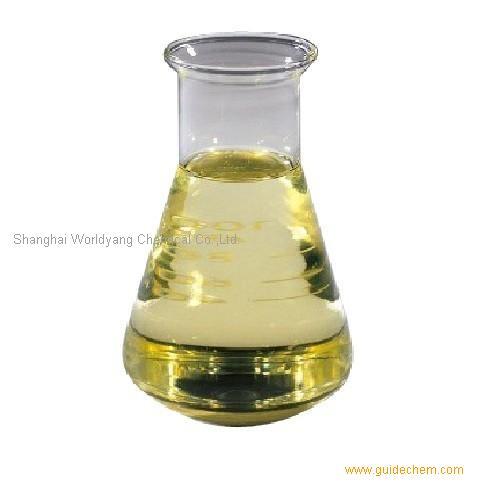
Chloroacetyl chloride (CAS 79-04-9) is one of the most reactive bulk acylating agents in industrial organic chemistry. With the formula ClCH2COCl, it combines an acid chloride and an alpha-chloromethyl group in one molecule, so it both acylates and installs a reactive site for downstream substitution. It is a colourless to pale yellow fuming liquid boiling near 106 degrees Celsius, and it reacts exothermically and violently with water to give chloroacetic acid and hydrogen chloride, which is the single fact that governs its specification, packaging and transport.
Commercial demand is concentrated in three downstream families. Chloroacetanilide herbicides such as acetochlor, alachlor and butachlor consume the largest tonnage through chloroacetylation of substituted anilines; pharmaceutical synthesis uses it for local anaesthetic intermediates, beta-lactam and cephalosporin side chains and other active ingredient building blocks; and dye, pigment and surfactant producers use it to introduce chloroacetyl groups into aromatic amines and surfactant intermediates. Volumes are therefore seasonal and tied to agricultural cycles.
For buyers, chloroacetyl chloride is a hazard-management purchase as much as a chemical purchase. Classification combines corrosivity, acute toxicity and water reactivity; process use generates hydrogen chloride off-gas that must be absorbed, and, on thionyl chloride routes, sulfur dioxide as well; and anhydrous, nitrogen-padded, corrosion-resistant containment is mandatory from reactor to receiving tank. This white paper examines manufacturing routes, applications, the REACH, CLP and TSCA perimeter, and the packaging, segregation and emergency-response discipline that separates competent suppliers from the rest.
The molecule has a density near 1.42 grams per millilitre, a melting point near minus 22 degrees Celsius and a flash point high enough that flammability is secondary to its corrosive and lachrymatory behaviour. It fumes in moist air, is miscible with many aprotic organic solvents, and hydrolyses rapidly in water and in aqueous alkali. Handling specifications therefore centre on water content of the receiving system, on materials of construction, and on exclusion of nucleophiles such as alcohols and amines until the deliberate reaction step.
Industrial manufacture falls into three route families. Monochloroacetic acid can be converted to the acid chloride with a chlorinating agent of the thionyl chloride, phosphorus chloride or phosgene class; acetyl chloride or ketene can be chlorinated; and methylene chloride can be carbonylated. Route selection is driven by feedstock integration, by the value and hazard of by-products, and by the off-gas treatment plant a site can afford. All routes are conducted anhydrous in glass-lined, Hastelloy or fluoropolymer-lined equipment.
Demand tracks herbicide production more than anything else, and therefore tracks planted area, crop prices, weather and the regulatory fate of chloroacetanilide actives in Europe, North America and Brazil. Regulatory pressure on individual herbicide actives shifts volume between molecules within the same family rather than eliminating the family, so chloroacetyl chloride demand is more stable than any single product. Pharmaceutical demand is smaller in tonnage but less cyclical and more specification-driven, and is where supplier qualification creates durable relationships.
China holds the largest and most integrated capacity, concentrated in Shandong, Jiangsu and Zhejiang where acetic acid, chlorine, chlor-alkali and monochloroacetic acid are available on the same site or in the same park, and where agrochemical formulators sit nearby. Indian capacity in Gujarat and Maharashtra grew alongside the generic agrochemical and pharmaceutical industries and increasingly serves both domestic consumption and export. European and North American production is smaller, more captive and more tightly regulated, with material often consumed by the producing group's own agrochemical or pharmaceutical plants and only surplus traded.
Pricing follows chlorine, acetic acid and acetyl chloride, monochloroacetic acid, sulphur-derived chlorinating agents and energy, with sharp seasonal peaks before the northern hemisphere planting season. A two-tier market has emerged: technical grade sold in bulk to herbicide producers on assay and price, and high-purity, low-dichloro, low-iron material sold to pharmaceutical and fine chemical customers at a substantial premium with thicker documentation. Because the product cannot be stored indefinitely without risk of pressure build-up and corrosion, buyers with limited tank capacity pay for reliability rather than for warehousing.
Chloroacetyl chloride is a registered industrial chemical and a hazardous material, so exporters face chemical-substance obligations and transport obligations simultaneously. Because it is an intermediate rather than a consumer product, most downstream regulatory exposure is inherited by the buyer's own product registrations, but the supplier still carries CLP classification and labelling, safety data sheet quality, and any applicable plant-level permitting. In practice, rejected shipments are far more often caused by documentation and packaging failures than by chemistry.
Acid chloride manufacture is energy and chlorine intensive and produces acidic gas streams, so environmental performance is judged on gas absorption efficiency, on chloride-containing waste minimisation and on energy use in distillation. Buyers in Europe and in multinational agrochemical groups increasingly audit these items as part of supplier qualification, and financing and insurance providers apply their own environmental and safety screens to chlorination plants. Transparent performance data is now a commercial asset rather than a compliance cost.
Emissions and energy concentrate in three places: chlorine production or procurement, the chlorination or carbonylation step, and vacuum distillation. Producers improve performance through high-efficiency falling-film hydrogen chloride absorption that converts by-product gas into saleable hydrochloric acid, through sulfur dioxide capture and conversion where a sulfur-based chlorinating agent is used, through heat integration on distillation columns, and through solvent and residue recovery. Credible product carbon footprints follow ISO 14067 or the GHG Protocol with verified Scope 1 and 2 data and a stated boundary for purchased chlorine and acetic acid.
Traceability for this intermediate means documented feedstock origin, chlorine and acetic acid provenance, waste-stream destinations and a full audit trail from reactor batch to delivered drum. Because the material supports crop-protection products, agrochemical customers increasingly require evidence of responsible manufacturing practices, ISO 9001, ISO 14001 and ISO 45001 certification, Responsible Care participation and independently verified environmental reporting. Suppliers able to present these documents inside their tender responses consistently outrank lower-priced competitors lacking them.
Logistics is where this product is won or lost. Every contact with atmospheric moisture, every incompatible gasket and every water-based fire suppression system is a potential incident, so packaging, segregation and emergency planning must be engineered in advance. Exporters should also plan for narrow agrochemical delivery windows: a container delayed by a documentation error at peak season can cost a customer an entire application period and permanently damage the relationship.
Chloroacetyl chloride is transported as a corrosive substance with acute toxicity and, in most regulatory systems, a toxic subsidiary risk by inhalation, together with the water-reactivity hazard. The applicable United Nations number, hazard class, subsidiary risk and packing group must be read from the current dangerous goods regulations and from the manufacturer's classification and safety data sheet for that specific grade, never assumed from a previous shipment. Transit protocol requires UN-certified packaging, correct marking and labelling, segregation from water, aqueous products, alkalis, amines, alcohols and oxidisers, dry and ventilated stowage, and emergency response information carried on board. Water must never be applied to a spill; dry inert absorbent and trained response are required, and air transport of toxic-inhalation-hazard material is severely restricted under the IATA Dangerous Goods Regulations.
Exporters in this category compete on safety record, delivery precision and documentation. Because the chemistry itself is mature and specifications are well understood, differentiation comes from being the supplier whose drums arrive intact, whose classification paperwork clears customs on the first submission and whose technical team can support the customer's acylation process. Three priorities follow: hazard-classification discipline, off-gas and process safety investment, and seasonal capacity planning.
Chloroacetyl chloride remains an indispensable bifunctional acylating agent whose demand is anchored in chloroacetanilide herbicides and in pharmaceutical and fine chemical synthesis. Its market is mature, its chemistry is well understood and its growth follows agriculture and generic pharmaceutical production rather than any disruptive substitution. What changes year to year is not the molecule but the regulatory and safety bar around it, which continues to rise in every major producing and consuming region.
Sustainable advantage therefore belongs to producers and traders who treat hazard management as a core competence: anhydrous, nitrogen-padded, lined containment; disciplined control of dichloroacetyl chloride, free chlorine and free acid; high-efficiency acid gas absorption; verified REACH and TSCA status; and documentation that clears customs without exception. Buyers should qualify suppliers on safety record and delivery reliability alongside assay, because in this category a packaging or classification failure costs far more than a few percent on price.
Powered by Guidechem
This white paper is exclusively compiled by the Guidechem Intelligence Team based on global customs data, regulatory databases, and industry research. Guidechem is a leading global B2B chemical platform, dedicated to connecting global buyers with verified, high-quality manufacturers.
Relying on Guidechem's extensive global database, we have mapped the core participants in the current global Chloroacetyl chloride supply chain:
Disclaimer: The content of this white paper is compiled based on public market data and regulatory information available as of 2026. Global chemical regulations are subject to dynamic adjustments. In actual export operations, enterprises must consult professional regulatory advisors or relevant competent authorities to obtain the latest compliance guidance.
|
 |
 |
 |
 EN
 Agricultural News
 Food News
 Industrial News
 Cosmetic News
 Pharmaceutical News
 Science News


 1YR

