-
We detected your language preference as English. Would you like to switch to the English version for a better experience?
Switch to English
Stay here


Methyl acetate (CAS 79-20-9) is a light, fast-evaporating ester serving two very different masters. As a solvent it offers a boiling point near 57 °C, strong solvency for nitrocellulose, acrylics, vinyls and many resins, mild odour and a favourable toxicological profile. It is a workhorse in coatings, printing inks, adhesives, nail-care formulations and pharmaceutical processing. As an intermediate it is the feedstock for carbonylation to acetic anhydride, a hydrolysis feedstock returning acetic acid and methanol, and a transesterification partner in specialty esters.
The commercial character follows from that duality. A large share of global methyl acetate originates as a co-product or captive intermediate, most notably within polyvinyl alcohol manufacture, where methanolysis of polyvinyl acetate releases methyl acetate for recovery and recycle. Merchant supply is therefore linked to acetyl-chain operating rates rather than to solvent demand alone. Buyers see abundant, aggressively priced material when downstream acetyl units run hard, and unexpected tightness when turnarounds curtail them. Contracts that ignore this linkage misprice risk.
This paper reviews production technology, the physicochemical and hazard profile, the application matrix and the regulatory framework governing the product in 2026. Coverage includes REACH and CLP in Europe, TSCA, EPA volatile organic compound policy and RCRA waste handling in the United States, food-contact and flavouring considerations, and the dangerous-goods regime for UN 1231. Carbon and circular-economy pressures, packaging and transit discipline for a Class 3 liquid, and expansion priorities for producers and industrial buyers complete the analysis.
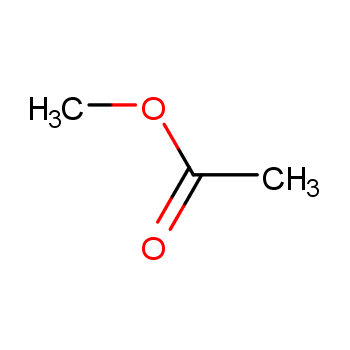
Methyl acetate is the simplest aliphatic ester: a colourless, low-viscosity, highly volatile liquid. Its boiling point is around 57 °C, its closed-cup flash point near minus 10 °C, and it is partly miscible with water before hydrolysing. Vapour is heavier than air and forms flammable mixtures over a wide range, so it travels to distant ignition sources. The ester linkage is decisive: under acid or base catalysis it hydrolyses to methanol and acetic acid.
Two production philosophies coexist. The dedicated route is direct esterification of methanol with acetic acid over an acidic catalyst, increasingly in reactive distillation columns that combine reaction and separation to overcome equilibrium limits. The integrated route treats methyl acetate as a circulating intermediate generated in polyvinyl alcohol plants by methanolysis of polyvinyl acetate, then recovered and either hydrolysed back to acetic acid and methanol or sold as merchant product. It is also carbonylated to acetic anhydride in integrated acetyl complexes.
Solvent demand is increasingly shaped by regulation rather than volume growth. Volatile organic compound controls in coatings, inks, adhesives and consumer products have pushed formulators to redesign around faster-evaporating, more acceptable solvents, and methyl acetate benefits where it replaces ketone, aromatic or chlorinated solvents of greater concern. Pharmaceutical and agrochemical outsourcing adds process-solvent volume in Asia, while packaging growth supports ink and adhesive use.
Asia-Pacific is the dominant producing and consuming region, with China combining large integrated acetyl complexes, polyvinyl alcohol capacity that generates methyl acetate as a co-product and a growing coal-chemical route. Japan and Korea contribute technology-led capacity,. North America is anchored by integrated acetyl and acetic anhydride producers, with merchant volumes supplemented by imports. Europe runs fewer, tightly regulated plants with imports filling the merchant gap. Freight economics keep most trade regional.
The market splits into a high-volume technical solvent tier priced closely against methanol and acetic acid with thin margins, and a specification tier where purity, water and acidity limits, odour, colour and documentation command a premium. Because much supply is co-product or captive, pricing decouples from solvent demand: when acetyl chains run hard, incremental methyl acetate is offered aggressively and technical spreads compress. Index-linked contracts with turnaround provisions and dual sourcing reduce exposure.
Methyl acetate is a mature, well-characterised substance, so its regulatory burden concerns how it may be used, emitted, transported and disposed of rather than whether it may be marketed. Three regimes dominate: flammability and worker-protection rules, volatile organic compound and air-emission controls that determine whether a formulation may be sold, and product-contact rules for cosmetic, food-contact and flavouring uses. Each varies by market.
Solvent producers face a distinctive ESG proposition: their product is an emissions vector, so their environmental profile is judged in the customer's stack as much as at the factory gate. Regulatory pressure on volatile organic compounds, corporate Scope 3 accounting and solvent-selection guides converge on one question — how much of this molecule reaches the atmosphere, and where did its carbon come from.
Scope 1 emissions arise from distillation energy, Scope 2 from electricity for pumping, refrigeration and vapour recovery, and Scope 3 dominates through the carbon content of methanol and acetic acid,. Decarbonisation therefore runs through the feedstock: bio-methanol from biomass or captured carbon dioxide with renewable hydrogen, and bio-acetic acid routes delivered through mass-balance certification such as ISCC PLUS. Recovery by condensation, adsorption or membranes and energy recovery from controlled incineration are the practical use-side levers.
Traceability requirements concentrate on the origin of the carbon. Buyers in coatings, cosmetics and consumer-goods chains increasingly request mass-balance documentation, chain-of-custody certificates and third-party verification for renewable or recycled content, and producers must map batches back to certified feedstock lots under ISO 9001 and ISO 14001 systems. Reporting should extend to Scope 1–3 emissions, water use and solvent-recovery rates per tonne.
Logistics for methyl acetate is a flammability-management problem with a quality dimension attached. The product is high-volume and low-value, so freight efficiency pushes toward bulk movement by road tanker, rail tank car, intermediate bulk container and ISO tank. Every mode must be engineered for a Class 3, packing group II material with a sub-ambient flash point, and every mode risks water ingress or vapour loss.
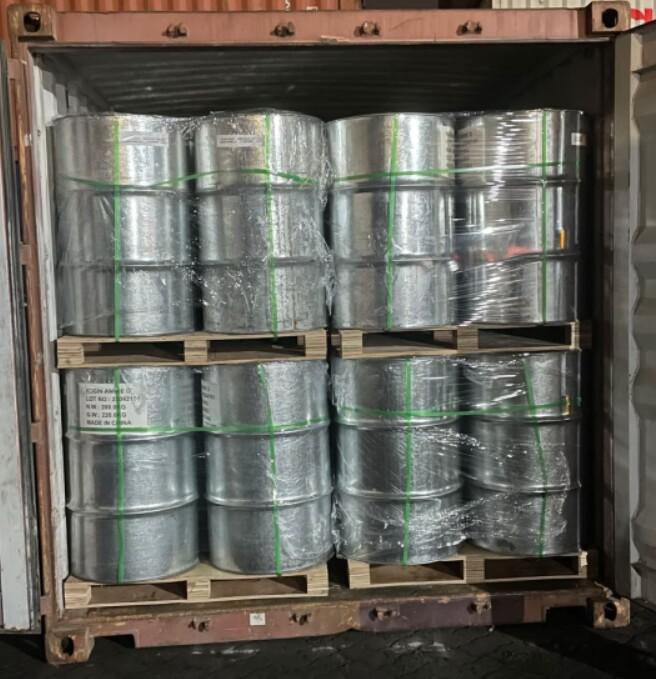
Methyl acetate is assigned UN 1231, Class 3 flammable liquid, packing group II, and must move in UN-specification packaging with correct labelling, marking and documentation under the IMDG Code, IATA rules, ADR/RID or 49 CFR. Emergency response for flammable liquids applies, with foam, dry chemical or carbon dioxide and the caution that water streams may spread a burning pool. Because vapour is heavier than air, ignition-source control must extend beyond the load point, and road and rail movements face placarding, driver training and, in Europe, tunnel restrictions. Segregation from oxidisers, strong acids, strong alkalis and amines is required, and stowage should avoid heat and direct sun. Bulk sea movements need documented tank preparation, inerting and vapour-emission control, with receivers verifying seals before discharge; .
Because methyl acetate is structurally commoditised at the technical grade, differentiation must be built deliberately rather than discovered. Successful producers and traders couple a defensible cost position with specification reliability, regulatory support and service capabilities. The priorities below reflect where competitive advantage is actually won in this market.
Methyl acetate is a mature solvent and a strategic intermediate whose commercial behaviour is governed less by its chemistry than by its position in the acetyl chain and by regulatory treatment of volatile organic compounds. Demand is stable to moderately growing in coatings, inks, adhesives and pharmaceutical processing,. Supply is plentiful where acetyl complexes run hard and tight where they do not.
Through 2026 durable advantage will come from disciplined execution rather than capacity expansion: tight control of water and acidity from plant to point of use, rigorous Class 3 logistics under UN 1231, a verified per-jurisdiction regulatory register, and credible progress on bio-circular feedstocks. Those competing on price alone stay exposed to the sharpest swings in a market whose supply is decided by plants not built to serve it.
Powered by Guidechem
This white paper is exclusively compiled by the Guidechem Intelligence Team based on global customs data, regulatory databases, and industry research. Guidechem is a leading global B2B chemical platform, dedicated to connecting global buyers with verified, high-quality manufacturers.
Relying on Guidechem's extensive global database, we have mapped the core participants in the current global Methyl acetate supply chain:
Disclaimer: The content of this white paper is compiled based on public market data and regulatory information available as of 2026. Global chemical regulations are subject to dynamic adjustments. In actual export operations, enterprises must consult professional regulatory advisors or relevant competent authorities to obtain the latest compliance guidance.
|
 |
 |
 |
 |
 |
 EN
EN
 Agricultural News
 Food News
 Industrial News
 Cosmetic News
 Pharmaceutical News
 Science News

 1YR
1YR

