
I. Executive Summary
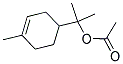
Terpinyl acetate (CAS 8007-35-0) is the acetate ester of the terpineols — a mixed-isomer monoterpene ester whose clean bergamot-lavender character makes it one of the workhorse materials of modern perfumery. It is produced from turpentine via pinene hydration to terpineol followed by acetylation, and it is consumed almost entirely by fragrance and flavour houses, with minor industrial use as a high-boiling solvent and carrier. In 2026 it sits between two pressures: volatile pinene and turpentine feedstock costs on one side, and an expanding compliance perimeter — IFRA use standards, EU allergen labelling, REACH and aquatic-hazard classification — on the other.
Commercially, the decisive variables are isomer profile and odour grade rather than simple assay. Buyers specify total ester content by GC, the proportion of the α-isomer that carries the characteristic note, residual terpineol, acidity, colour and peroxide value, and increasingly the provenance of the pinene — gum naval stores versus crude sulfate turpentine — because that determines whether the material can be presented as natural and whether it satisfies buyer sustainability schemes.
This white paper traces the turpentine-to-acetate route, isomer control, the specification and application architecture, demand and capacity, the EU and US regulatory framework, pine-resin sustainability and forest certification, the oxidation-sensitive logistics chain, a practical sourcing strategy, and the three producing ecosystems — China, the United States and the European Union — that determine availability and price.
II. Product Deep Dive: Molecular Mechanisms and Production Evolution
2.1 Physicochemical Properties and Mechanisms
Terpinyl acetate is a C12 monoterpene ester, typically a colourless to pale yellow liquid with a boiling point near 220 °C, density around 0.96 g/cm3, negligible water solubility and full miscibility with ethanol and fragrance oils. Its odour is sweet, herbal and citrus-woody, with the bergamot and lavender facet perfumers use to bridge citrus top notes and floral middles. The ester also has useful substantivity on substrates, which is why it performs in soaps, detergents and fabric conditioners as well as in fine fragrance.
- Structural isomerism as the quality determinant: The commercial material is a mixture in which α-terpinyl acetate (p-menth-1-en-8-yl acetate) carries the prized bergamot-lavender note, while β- and γ-isomers are weaker and can read as harsh or terpenic. Because the isomers differ only slightly in boiling point, capillary GC on a polar stationary phase is the specification tool, and isomer ratio is what separates odour-grade from technical material.
- Hydrolytic and oxidative sensitivity: As the ester of a tertiary alcohol, terpinyl acetate hydrolyses under acid or alkaline conditions to terpineol and acetic acid, lifting acidity and flattening the odour, while the unsaturated ring oxidises to hydroperoxides and coloured bodies. Specifications therefore cap acid value and peroxide value, and buyers avoid prolonged contact with iron and copper, which catalyse both degradation routes.
2.2 Synthesis and Manufacturing Technologies
The route begins with turpentine. Crude sulfate turpentine recovered from kraft pulping and gum turpentine tapped from living pines both deliver α-pinene, which is hydrated to terpineol — classically via terpin hydrate crystallisation and partial dehydration, or by direct catalytic hydration over acid catalysts — and the terpineol is acetylated with acetic anhydride under acid catalysis, with ketene or acetyl chloride used in some plants. The acetylated crude is neutralised, washed and fractionally distilled under vacuum.
- Isomer control and fractionation: Because pinene hydration yields a mixture of α-, β- and γ-terpineol, the acetylation product inherits that distribution, so the plant's real task is separation: high-efficiency vacuum fractionation with structured packing, low reboiler temperatures and short residence times to suppress rearrangement and dehydration. Control of the acid catalyst and acetylation temperature limits terpenic by-products carrying camphoraceous off-notes.
- Odour-grade finishing and analysis: Final quality is set by polishing — neutralisation, washing, drying, permitted antioxidant where the use allows, and filtration — then release testing: GC for ester content and isomer ratio, acid value, peroxide value, refractive index, density and colour. Sensory evaluation against a retained reference remains part of release, because GC cannot fully predict the effect of trace terpenic impurities.
2.3 Core Application Matrix
- Fine fragrance and personal care: Terpinyl acetate builds lavender, bergamot, lilac and fougère accords and is valued for stability in surfactant bases, so it appears across fine fragrance, soaps, shower gels and detergents. Use levels are not a matter of formulation preference alone: they are bounded by the IFRA Standards, which set maximum concentrations by product category.
- Flavour use: α-Terpinyl acetate is used as a flavouring substance under the FEMA GRAS programme and relevant food flavouring regulations, typically in citrus, spice and mint compositions at very low levels. Food-grade supply requires tighter documentation — purity, residual solvent and metal controls, plus kosher and halal status where the customer's brand requires it.
- Industrial and functional uses: Beyond perfumery, the ester serves as a slow-evaporating solvent and odour-masking carrier in air-care and hard-surface cleaners, and as a processing aid in some resin and coating formulations, where solvency and flash point matter more than odour grade. These outlets absorb technical-grade material and provide a useful sink for off-spec odour lots.
III. Global Market Supply-Demand Landscape and Export Trends
3.1 Demand Drivers and Market Shifts
Demand is driven by home care and fabric care, where the ester's stability in aggressive surfactant bases is hard to replace, and by reformulation pressure from cosmetic allergen labelling: formulators shifting away from multi-allergen natural citrus oils toward defined single molecules that can be documented precisely. At the same time, pinene availability is structurally tied to pulp production and to the labour-intensive gum-tapping economy, so supply responds slowly to price signals.
3.2 Capacity Distribution and Export Flows
Turpentine is a recovered feedstock, so capacity follows pulping and tapping. China dominates gum naval stores — gum tapping and fractionation concentrated in Guangxi, Guangdong and Yunnan — and has built substantial esterification and fractionation capacity. The United States supplies crude sulfate turpentine from south-eastern kraft mills. Brazil, Indonesia, Portugal and Spain contribute gum turpentine, while EU and US aroma-chemical producers convert pinene to terpineol and ester, and fragrance houses blend and standardise.
3.3 Market Bifurcation and Pricing Dynamics
Pricing tracks turpentine and α-pinene, acetic anhydride, and energy for vacuum fractionation, with turpentine the dominant variable and itself cyclical with pulp and construction markets. The grade spread is wide: technical material is priced close to feedstock, while odour-grade and natural-certified material carries a qualification premium reflecting sensory qualification, analytical capability and audit cost. Buyers should use annual frameworks with pass-through clauses rather than spot purchasing, and should expect lead times to lengthen when pulp mills cut output.
IV. In-depth Analysis of Global Compliance and Regulatory Barriers
Terpinyl acetate is regulated less as an industrial chemical than as a consumer-facing ingredient. The obligations that actually bind a shipment are REACH registration and CLP classification for the EU market, the IFRA Standards for fragrance use, cosmetic allergen labelling for finished products, and food-flavour documentation for ingestible applications. Because the material normally enters a compounded fragrance before reaching a consumer, most of these obligations are discharged through declarations rather than through the drum label.
4.1 European Market: REACH, CLP, and Sector-Specific Directives
- REACH registration and CLP classification: The substance must be covered by a registration appropriate to its multi-constituent or UVCB identity, with the isomer profile described accurately in the substance identification. Under CLP, terpene esters of this type are commonly notified as skin and eye irritants with an aquatic chronic hazard — typically Skin Irrit. 2, Eye Irrit. 2 and Aquatic Chronic 2 (H315, H319, H411) — but buyers should read the specific SDS, since notifications differ and future ATP entries can change the picture.
- Cosmetic allergen labelling and the IFRA Standards: Under Regulation (EC) 1223/2009, as amended by (EU) 2023/1545, listed fragrance allergens must be declared on cosmetic products above defined thresholds, and the list has been expanded well beyond the original twenty-six entries with transition periods; the obligation sits with the finished product and is discharged through the fragrance composition declaration. In parallel, the IFRA Standards set category-specific maximum use levels derived from the quantitative risk assessment, so buyers should require an IFRA certificate naming the amendment and the applicable limits.
4.2 North American Market: TSCA, EPA, and FDA Regulations
- TSCA inventory and VOC regulation: Terpinyl acetate is listed on the TSCA inventory, so chemical commerce is unobstructed at federal level. The operative constraints are air-quality rules: as a volatile organic compound, the ester is subject to state consumer-product VOC limits, including California's consumer products programme, and manufacturing sites require air permits covering solvent emissions.
- FDA flavour and food-contact expectations: α-Terpinyl acetate is used as a flavouring substance under the FEMA GRAS programme, with finished-food labelling governed by FDA rules. Suppliers into food chains should provide food-grade documentation covering purity, residual solvents and metals, plus kosher and halal certification where required, and should keep the distinction between fragrance grade and food grade explicit in quotations.
4.3 The Critical Hurdle: Quality Control and Safety Limits
Compliance Warning: Do not buy terpinyl acetate on ester content alone. Specify total ester content and isomer ratio by GC, acid value, peroxide value, colour and residual terpineol; require the current SDS with classification, an IFRA conformity certificate naming the amendment and category limits, a REACH or TSCA status letter, and allergen and flavour documentation for cosmetic or food use. Confirm whether the aquatic chronic classification triggers UN 3082 packing and labelling for your mode of transport, and store the material cool, dark and under nitrogen.
V. Green Trade Barriers and ESG in Manufacturing
Terpinyl acetate has a structural ESG advantage: it is bio-based and largely derived from recovered feedstock. That advantage only converts into a commercial one if it is evidenced, which is why certification of the pine-chemical chain has moved from a marketing option to a tender requirement in many fragrance supply chains.
5.1 Carbon Footprint and Circular Economy
Crude sulfate turpentine is a by-product of kraft pulping and gum turpentine is a renewable tapped exudate, so the feedstock carries biogenic carbon. The processing footprint is dominated by steam and vacuum for fractionation plus the embodied carbon of acetic anhydride. Buyers should ask how biogenic carbon is reported, whether a bio-based carbon-content determination is available, and how emissions are allocated between the pulp mill and the turpentine stream.
5.2 Sustainable Sourcing and Traceability
Pine resin is not itself a listed deforestation commodity, so the operational instruments are forest certification and chain-of-custody schemes: FSC or PEFC coverage for gum naval stores, and chain-of-custody or mass-balance certification such as ISCC PLUS for turpentine derived from pulp. Because resin tapping is labour-intensive, social audits and supplier codes of conduct form part of credible programmes, alongside ISO 9001 and ISO 14001 certification at the fractionation plant.
VI. Supply Chain Resilience and Export Logistics
The material is a stable liquid by chemical standards but a delicate one by sensory standards. The logistics task is to keep it cool, dry, dark and out of contact with reactive metals, and to preserve a loading sample so that any odour dispute can be settled by comparison rather than by argument.
6.1 Packaging Standards and Moisture/Contamination Control
- Container materials and inerting: Shipments move in lacquer-lined steel drums, HDPE drums or IBCs, with headspace blanketed with nitrogen where the grade justifies it. Iron and copper contact is avoided because trace metals accelerate oxidation and colour formation, and water is excluded because hydrolysis lifts acid value. Storage below about 30 °C, away from direct light, preserves both colour and odour.
- Lot integrity and reference retention: Keep lots to a single distillation campaign, retain a sealed reference sample from each lot under nitrogen in glass, and retain the GC fingerprint alongside the sensory evaluation. Typical shelf life is one to two years, with acid value and peroxide value re-tested at intervals; a retained reference is what makes an off-odour claim provable.
6.2 Dangerous Goods Identification and Transit Protocols
Classification depends on the SDS. Where the aquatic chronic hazard is notified, the consignment is typically carried as an environmentally hazardous liquid — UN 3082, Class 9, packing group III — with the marking, documentation and packaging required under IMDG, ADR or IATA; where the SDS does not support that classification it travels as a non-regulated liquid. Confirm classification before booking rather than after. Bulk moves in lined ISO tank containers or stainless road tankers, and drums travel in ventilated containers away from heat sources.
VII. Enterprise Global Expansion Strategy Guide
Three moves determine whether a buyer secures reliable terpinyl acetate supply: qualifying on sensory and isomer criteria, hedging the pinene route, and pre-positioning the compliance pack that fragrance houses demand.
- Qualify on odour and isomer ratio, not on assay: Build a specification combining GC ester content and isomer ratio with acid value, peroxide value, colour and a sensory test against a retained reference, and qualify at least two suppliers per grade with pre-shipment samples. Assay alone will not predict whether a lot is acceptable to a perfumer.
- Secure the pinene route, not just the plant: Dual-source across gum-derived and crude-sulfate-derived turpentine so that a pulp-cycle downturn or a poor tapping season does not remove your supply, and use annual volume frameworks with turpentine price pass-through rather than spot purchases.
- Pre-position the compliance pack: Hold the IFRA certificate naming the amendment and category limits, the allergen declaration, the current SDS, REACH and TSCA status letters, forest or mass-balance certification, and food-grade or kosher and halal documents where claimed. This pack is what unblocks fragrance-house approval.
VIII. Conclusion
Terpinyl acetate rewards precision. The chemistry is mature and the route is well understood, but value is set by isomer ratio and sensory quality, availability is set by a recovered feedstock whose supply is governed by pulp markets and tapping economics, and market access is set by declarations — IFRA conformity, allergen status, REACH and TSCA position, and increasingly forest or mass-balance certification. Buyers who treat the molecule as a defined, documented ingredient rather than as a bulk terpene derivative will hold supply through the next turpentine cycle; those who buy on ester content alone will keep relearning the lesson at the odour bench.
The near-term watch list covers the transition timetable for expanded cosmetic allergen labelling in the EU, successive IFRA amendments and their category limits, and the turpentine cycle as pulp markets move. Any of these can change both the demand picture and the documentation burden within a single buying season.
IX. Industry Resource Connection and Supplier Ecosystem
Powered by Guidechem
This white paper is exclusively compiled by the Guidechem Intelligence Team based on global customs data, regulatory databases, and industry research. Guidechem is a leading global B2B chemical platform, dedicated to connecting global buyers with verified, high-quality manufacturers.
Relying on Guidechem's extensive global database, we have mapped the core participants in the current global Terpinyl acetate supply chain:
- China — gum naval stores and integrated fractionation: China anchors gum turpentine supply, with tapping and primary distillation concentrated in Guangxi, Guangdong and Yunnan, and downstream esterification and high-vacuum fractionation clustered in the east. This region offers the deepest volume and the shortest route from oleoresin to ester, but buyers should verify tapping-origin documentation, forest certification coverage and the consistency of isomer profiles between campaigns.
- United States — crude sulfate turpentine route: South-eastern kraft pulp mills recover crude sulfate turpentine, giving a feedstock linked to paper markets rather than to tapping labour. US producers and fractionators convert pinene to terpineol and acetate with strong analytical and documentation practice, and supply both fragrance and flavour grades; availability moves with the pulp cycle, which is the key risk to monitor in this region.
- European Union — compliance-led specialty supply: EU producers and blenders, together with Iberian and Brazilian gum supply into their chains, focus on odour-grade and documented material for fragrance houses, with mature REACH and CLP practice and the strongest grasp of IFRA and allergen obligations. This region typically sets the specification benchmark and is the natural source for audit-sensitive and natural-certified grades.
Disclaimer: The content of this white paper is compiled based on public market data and regulatory information available as of 2026. Global chemical regulations are subject to dynamic adjustments. In actual export operations, enterprises must consult professional regulatory advisors or relevant competent authorities to obtain the latest compliance guidance.


 EN
 Agricultural News
 Food News
 Industrial News
 Cosmetic News
 Pharmaceutical News
 Science News



 1YR

