
I. Executive Summary
1,3,5-Tris(2-hydroxyethyl)cyanuric acid (THEIC; CAS 839-90-7), also named tris(2-hydroxyethyl) isocyanurate, is a trifunctional polyol built on a triazine-2,4,6-trione ring. With a molar mass of about 261 g/mol, three primary hydroxyls and a theoretical hydroxyl value near 640–650 mg KOH/g, it occupies a narrow but commercially important position: it is the polyol that lets polyester and polyurethane systems reach sustained thermal class ratings that ordinary polyols cannot. Its core markets in 2026 are heat-resistant wire enamels, high-temperature industrial coatings, powder-coating resins and heat-stabiliser and flame-retardant packages for PVC and engineering plastics.
The molecule is bought on hydroxyl value and colour rather than on nominal assay. Hydroxyl value determines stoichiometry in polyesterimide and polyurethane formulations and therefore the crosslink density and thermal endurance of the cured film; colour and moisture determine whether a wire enamel or clear coating meets appearance requirements; and residual ethylene oxide, residual ethylene glycol and unreacted cyanuric acid are the impurity limits that separate a qualified supplier from a marginal one. Because the product is hygroscopic and dust-forming, packaging and storage conditions are part of the specification.
On compliance, THEIC is comparatively lightly regulated but not documentation-free: REACH registration or only-representative coverage for EU deliveries, confirmation of TSCA Inventory listing for the United States, a GHS position read from the current SDS without assuming a harmonised Annex VI entry, and residual ethylene oxide control because ethylene oxide is a carcinogenic reactant. One clarification matters commercially: THEIC is a cyanuric acid derivative, chemically and toxicologically distinct from melamine and melamine-formaldehyde resins, and it should not be grouped with them in compliance or customer communications.
II. Product Deep Dive: Molecular Mechanisms and Production Evolution
2.1 Physicochemical Properties and Mechanisms
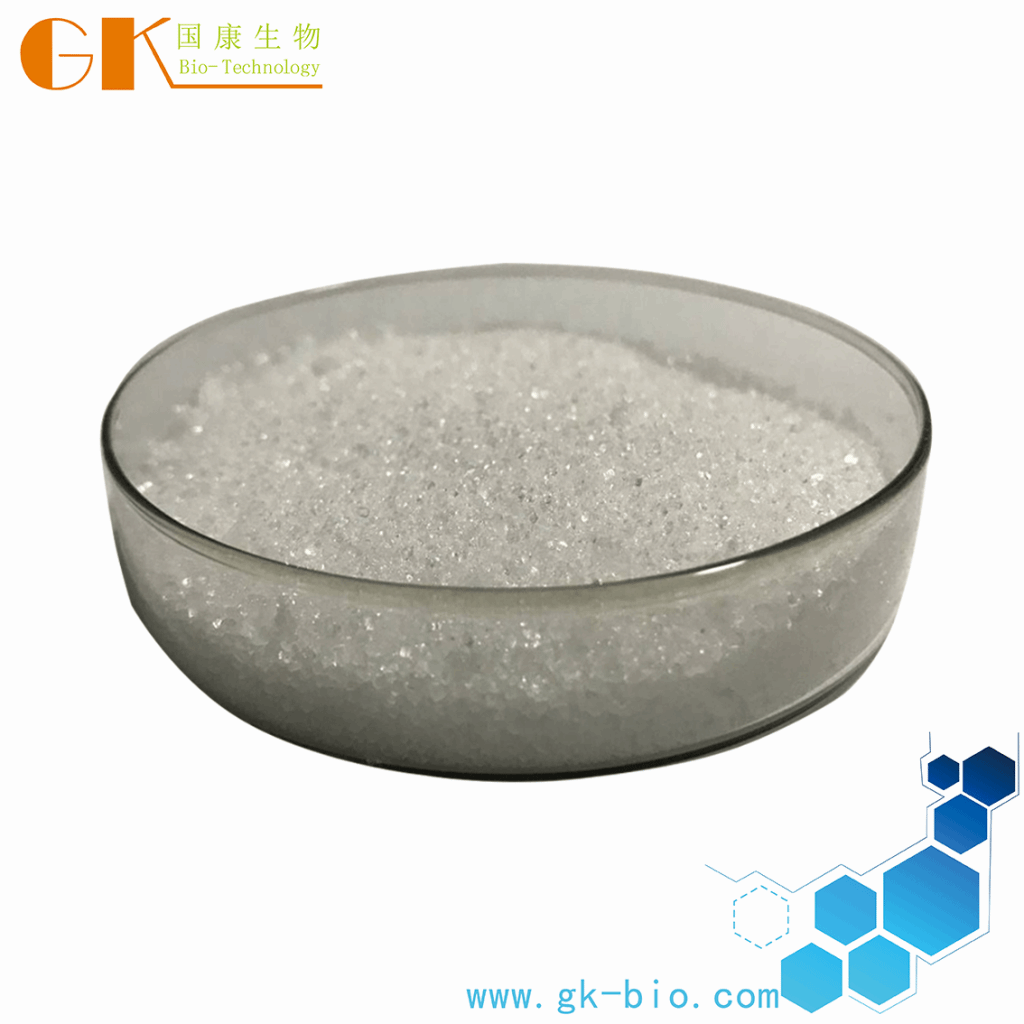
THEIC (C9H15N3O6, molar mass about 261 g/mol) is a white crystalline powder melting in the region of 132–136 °C, soluble in water and polar aprotic solvents and only moderately soluble in alcohols. The molecule combines two functional ideas: three primary alcohol groups that react like an ordinary short-chain triol, and a heterocyclic triazine-trione core that is thermally robust, nitrogen-rich and char-forming. That combination is the entire basis of its industrial value.
- Triazine ring as a thermal and fire-performance anchor: The isocyanurate ring resists thermal cleavage far better than aliphatic ester or ether segments, so incorporating it into a polyester or polyurethane backbone raises the temperature at which the network begins to degrade. Its high nitrogen content also promotes char formation and dilutes flammable volatiles, which is why THEIC appears in intumescent and phosphorus-synergistic flame-retardant packages and in thermal-class wire enamels.
- Triol reactivity and hygroscopicity: The three primary hydroxyls esterify and urethane-form predictably, giving high crosslink density at modest addition and good hydrolytic and solvent resistance in the cured network. The same polarity makes the solid hygroscopic: absorbed water shifts the effective hydroxyl value, causes caking and introduces a variable that shows up as inconsistent viscosity and gel time in the customer's reactor.
2.2 Synthesis and Manufacturing Technologies
Commercial manufacture is an N-hydroxyethylation of cyanuric acid, and the engineering challenge is not conversion but ethylene oxide handling, colour control and removal of the glycol and oligomeric by-products that EO chemistry inevitably produces.
- Ethylene oxide addition (mainstream route): Cyanuric acid is reacted with roughly three equivalents of ethylene oxide under alkaline or tertiary-amine catalysis in water or a polar aprotic medium at elevated temperature and controlled pressure. Critical parameters are the EO feed rate, temperature, catalyst level and the water content of the medium, since excess water converts EO to ethylene glycol and raises the glycol load the purification step must remove. Ethylene oxide handling requires closed, inerted, EX-rated equipment with rigorous residual stripping.
- Alternative hydroxyethylation and finishing: Routes based on ethylene carbonate or on 2-haloethanol with base avoid gaseous EO but introduce carbonate salts or halide that must be removed by ion exchange or washing, and they are chosen where EO handling is not permitted. Finishing typically combines decolourisation, ion-exchange or crystallisation purification, vacuum drying and low-dust forming. Release testing covers hydroxyl value and assay, melting range, triazine ring content by nitrogen determination, moisture by Karl Fischer, colour, residual ethylene oxide by headspace GC, residual ethylene glycol, cyanuric acid and ash.
2.3 Core Application Matrix
- Heat-resistant wire enamels and high-temperature coatings: The largest value outlet: THEIC is the polyol that raises polyester, polyesterimide and polyurethane magnet-wire enamels to higher thermal classes and gives industrial stoving coatings their heat-ageing, solvent and refrigerant resistance.
- Powder-coating resins and crosslinked networks: As a trifunctional polyol it builds branched polyester resins for powder coatings and serves as a crosslinker in polyurethane elastomers, adhesives and sealants where high crosslink density and thermal stability are both required.
- Heat-stabiliser and flame-retardant synergist: In PVC and engineering-plastics formulations the triazine ring and hydroxyl functionality support heat-stabiliser packages, and the nitrogen-rich char-forming core acts as a synergist in intumescent and phosphorus-based flame-retardant systems, often allowing lower total flame-retardant loading.
III. Global Market Supply-Demand Landscape and Export Trends
3.1 Demand Drivers and Market Shifts
Demand is tied to electrification and to thermal-management requirements. Traction motors, transformers, compressors and e-mobility windings all need magnet wire with higher thermal endurance, which pushes enamel formulators toward THEIC-based polyester and polyesterimide systems; industrial coatings and powder coatings add steadier volume. Substitution pressure exists from other high-functionality polyols and from melamine-based crosslinkers, but the triazine ring's combination of thermal stability and char formation is not easily reproduced, so demand is relatively inelastic.
3.2 Capacity Distribution and Export Flows
Capacity follows cyanuric acid and ethylene oxide availability plus the ability to handle EO safely. China holds the largest base, with producers in Shandong, Jiangsu, Zhejiang and Henan supplying domestic enamel and powder-coating resin makers and exporting merchant volumes. Japan and Korea host quality-focused producers aligned with wire-enamel and electronics customers. Europe and the United States maintain smaller positions emphasising specification consistency, technical service and regulatory documentation, frequently importing bulk and repackaging or blending locally.
3.3 Market Bifurcation and Pricing Dynamics
Pricing tracks cyanuric acid and ethylene oxide costs, energy for drying and crystallisation, and plant occupancy. The market splits between technical grade, sold on hydroxyl value and price into stabiliser and general resin applications, and enamel or electronic grade, sold on colour, moisture and residual ethylene oxide and glycol limits with formulation-specific approvals. Because requalifying a wire enamel is slow and expensive, approved grades are defended by switching cost rather than spot parity, and annual contracts dominate.
IV. In-depth Analysis of Global Compliance and Regulatory Barriers
THEIC is not a substance of high concern, but three compliance threads still shape market access: the registration and classification position in each importing region, residual ethylene oxide control, and the requirement to distinguish the molecule clearly from melamine chemistry in customer and regulatory communications.
4.1 European Market: REACH, CLP, and Sector-Specific Directives
- REACH registration and classification discipline: Importers must hold, or rely on, a valid REACH registration covering the actual tonnage band and use, with an extended safety data sheet where required; non-EU producers need a properly appointed only-representative. On classification, no harmonised Annex VI entry should be assumed: the applicable classification must be read from the current SDS and the C and L Inventory, and many notifications are limited or non-classified. Buyers should still require a full SDS in the destination language and confirm the position at each contract cycle.
- Ethylene oxide residues and sector rules: Because ethylene oxide is a carcinogenic reactant, residual EO in the finished polyol is controlled as a matter of product stewardship and, where the customer's article is regulated, of legal compliance —EU restrictions on ethylene oxide and its residues apply to sensitive applications, and food-contact and toy-related uses impose their own migration or content limits. Wire enamel and electronics customers additionally expect declarations on halogen, heavy metals and substances restricted under RoHS and REACH Annex XVII.
4.2 North American Market: TSCA, EPA, and FDA Regulations
- TSCA Inventory and EPA controls: The substance's TSCA Inventory listing must be confirmed before import or manufacture, with any significant new use rule checked. Ethylene oxide is separately subject to stringent EPA emission and risk-management controls, so producers using the EO route must document stripping efficiency, workplace monitoring and abatement, and buyers increasingly ask for that evidence as part of supplier qualification.
- FDA and end-use sector rules: Where THEIC-derived resins appear in food-contact coatings or in electrical equipment, the finished article must sit within the applicable FDA food-contact clearances or UL recognition, and suppliers should support the file with composition and extractives data. For flame-retardant applications, customers expect documentation that the package meets the relevant UL 94 or construction-product fire performance without relying on restricted halogenated additives.
4.3 The Critical Hurdle: Quality Control and Safety Limits
Compliance Warning: Hydroxyl value is the specification that governs performance, and residual ethylene oxide the one that governs compliance, and a supplier reporting only assay satisfies neither. Procurement files must fix hydroxyl value with the method stated, assay, melting range, moisture by Karl Fischer, colour, residual ethylene oxide by headspace GC, residual ethylene glycol and cyanuric acid, and must require a retest date because the product is hygroscopic. Handling controls follow from the same properties: dust control with local exhaust, antistatic and EX-rated equipment for a combustible organic powder, and sealed, dry packaging with desiccant. Finally, keep the molecule clearly separated from melamine: THEIC is a cyanuric acid derivative with no amino functionality and no formaldehyde chemistry, and conflating the two in safety data or customer declarations creates avoidable regulatory and reputational risk.
V. Green Trade Barriers and ESG in Manufacturing
ESG review of THEIC focuses on ethylene oxide management, energy use in purification and drying, and the downstream benefits the triazine ring delivers in longer-life, fire-safer products.
5.1 Carbon Footprint and Circular Economy
Cradle-to-gate emissions are dominated by the cyanuric acid and ethylene oxide chains plus the energy used in crystallisation, decolourisation and vacuum drying. Producers publishing Scope 1 and 2 inventories, recovering process water and solvents and using heat integration can document a materially lower footprint, which increasingly counts in tender scoring for e-mobility and appliance supply chains. The triazine ring also supports circular-economy arguments: higher thermal class extends service life, and nitrogen-based char formation can reduce total flame-retardant loading.
5.2 Sustainable Sourcing and Traceability
Traceability means campaign-level records linking each lot to the cyanuric acid and ethylene oxide feeds, the purification and drying records and the retained-sample archive, with residual ethylene oxide results retained per lot. ISO 9001, ISO 14001 and ISO 45001 certification is the expected baseline, and auditors look for EO workplace monitoring, abatement documentation and dust-explosion protection. Customers in Europe now routinely request RoHS and REACH Annex XVII declarations, halogen and heavy-metal statements and a named regulatory contact.
VI. Supply Chain Resilience and Export Logistics
The product is a hygroscopic, dust-forming crystalline solid with a moderate melting point, so logistics are governed by moisture uptake, caking and dust control rather than by acute hazard.
6.1 Packaging Standards and Moisture/Contamination Control
- Barrier packaging and desiccation: Standard packaging is multiwall paper sacks or fibre drums with a polyethylene barrier liner, sealed with desiccant where humidity is high, palletised and shrink-wrapped; low-dust granular or prilled forms reduce exposure during charging.
- Storage conditions and shelf life: Store cool, dry and sealed, typically below 30 °C and below 50% relative humidity, away from heat sources and oxidisers, since the material softens and cakes well before its melting point if stored warm. Declared shelf life is commonly twelve to twenty-four months with retest; prudent buyers require moisture and hydroxyl value on receipt for lots held beyond six months.
6.2 Dangerous Goods Identification and Transit Protocols
Classification must always be taken from the current, version-controlled safety data sheet rather than from precedent; many shipments of this polyol travel as non-hazardous for transport, but buyers should confirm the SDS position and any national dust or irritation labelling for each destination, with the UN number, packing group and labelling following from the SDS declaration where a classification applies. Practical transit controls are driven by moisture and dust: sealed, desiccated containers or container liners for long sea voyages through tropical humidity, stowage away from heat sources, and dust-explosion safety with antistatic equipment and no open transfer at every handling point.
VII. Enterprise Global Expansion Strategy Guide
Suppliers that grow in this market sell formulation outcomes and documentation rather than kilograms.
- Fix the specification on hydroxyl value: Publish hydroxyl value, assay, melting range, moisture, colour, residual ethylene oxide, ethylene glycol and cyanuric acid with stated methods, plus a retest date, and support it with REACH or only-representative confirmation, TSCA status and destination-language SDS versions.
- Differentiate by grade and form: Offer an enamel or electronic grade with tight colour and residual limits alongside a technical grade for stabiliser and general resin use, and provide low-dust, granular or prilled forms that reduce customer handling cost and exposure.
- Invest in qualification support: Fund application data on thermal class, flame performance and stabiliser synergy, hold regional buffer stock in climate-controlled warehouses, qualify two plants, and index pricing to cyanuric acid and ethylene oxide so customers can plan.
VIII. Conclusion
THEIC's 2026 outlook is quietly strong. Electrification, higher thermal-class magnet wire, durable industrial coatings and halogen-lean flame-retardant packages all pull in the same direction, and the triazine-trione ring gives the molecule a performance combination — thermal stability, char formation and trifunctional reactivity — that alternatives struggle to match. Compliance pressure is moderate rather than severe, but it is specific: registration and classification must be verified, residual ethylene oxide must be controlled and documented, and the product must be kept clearly distinct from melamine chemistry in every declaration.
Buyers should therefore procure on hydroxyl value, colour, moisture and residual ethylene oxide; require registration, TSCA and SDS confirmation plus RoHS and Annex XVII declarations; specify barrier packaging, desiccation and retest obligations; and favour suppliers who can document ethylene oxide stripping and dust-explosion controls. Verified suppliers for this chemistry can be reached through the Guidechem ecosystem below.
IX. Industry Resource Connection and Supplier Ecosystem
Powered by Guidechem
This white paper is exclusively compiled by the Guidechem Intelligence Team based on global customs data, regulatory databases, and industry research. Guidechem is a leading global B2B chemical platform, dedicated to connecting global buyers with verified, high-quality manufacturers.
Relying on Guidechem's extensive global database, we have mapped the core participants in the current global 1,3,5-Tris(2-hydroxyethyl)cyanuric acid (THEIC) supply chain:
- China — integrated cyanuric acid and EO base: Producers in Shandong, Jiangsu, Zhejiang and Henan sit close to cyanuric acid and ethylene oxide supply and serve domestic enamel, powder-coating and stabiliser customers while exporting merchant volumes. Verify REACH only-representative coverage and residual ethylene oxide limits before qualifying.
- Japan and Korea — enamel and electronics specialists: Quality-focused producers aligned with magnet-wire, electrical and electronics customers offer tight colour, moisture and residual limits, low-dust forms and strong application support, at a price premium justified by qualification stability.
- Europe and the United States — technical service and compliance: Smaller regional positions emphasise specification consistency, regulatory documentation, regional warehousing and blending, supplying high-temperature coating and flame-retardant customers that require RoHS, Annex XVII and food-contact declarations.
Disclaimer: The content of this white paper is compiled based on public market data and regulatory information available as of 2026. Global chemical regulations are subject to dynamic adjustments. In actual export operations, enterprises must consult professional regulatory advisors or relevant competent authorities to obtain the latest compliance guidance.


 EN
 Agricultural News
 Food News
 Industrial News
 Cosmetic News
 Pharmaceutical News
 Science News


 3YRS


