-
We detected your language preference as English. Would you like to switch to the English version for a better experience?
Switch to English
Stay here


2-Ethyl anthraquinone (2-EAQ, CAS 84-51-5) is the working carrier of the anthraquinone process, the route used for essentially all world production of hydrogen peroxide. The molecule never reaches the finished product. Dissolved in a mixed solvent at roughly 120 to 180 grams per litre, it circulates around a closed loop, is hydrogenated over a palladium or nickel catalyst to the corresponding anthrahydroquinone, then oxidised by air to regenerate the quinone while liberating hydrogen peroxide that water extraction removes. Because hydrogen peroxide capacity is concentrated in China and demand keeps rising wherever peroxide displaces chlorine chemistry, 2-EAQ has become strategic rather than commodity, and its purity sets hydrogenation selectivity, catalyst life and working-solution stability.
This white paper addresses what buyers actually specify against: the redox chemistry that governs loop productivity, the impurity and physical-form specification that governs solvent and catalyst life, and the regulatory and logistics framework surrounding a high-melting, dust-forming aromatic solid traded in tens of tonnes per shipment. It also locates the real de-rating risk, which is rarely the fresh quinone but the tetrahydro, anthrone and epoxide degradation products that accumulate over years of operation.
Three commercial conclusions follow. Demand tracks hydrogen peroxide investment cycles in pulp bleaching, textiles, electronics, wastewater treatment and propylene oxide rather than general chemical output. Supply is geographically concentrated, so buyers outside China should assume strategic inventory rather than just-in-time delivery. And specification is where the money sits: a few parts per million of sulphur or chloride can permanently poison a fixed-bed palladium catalyst whose replacement cost dwarfs the purchase price of the quinone itself.
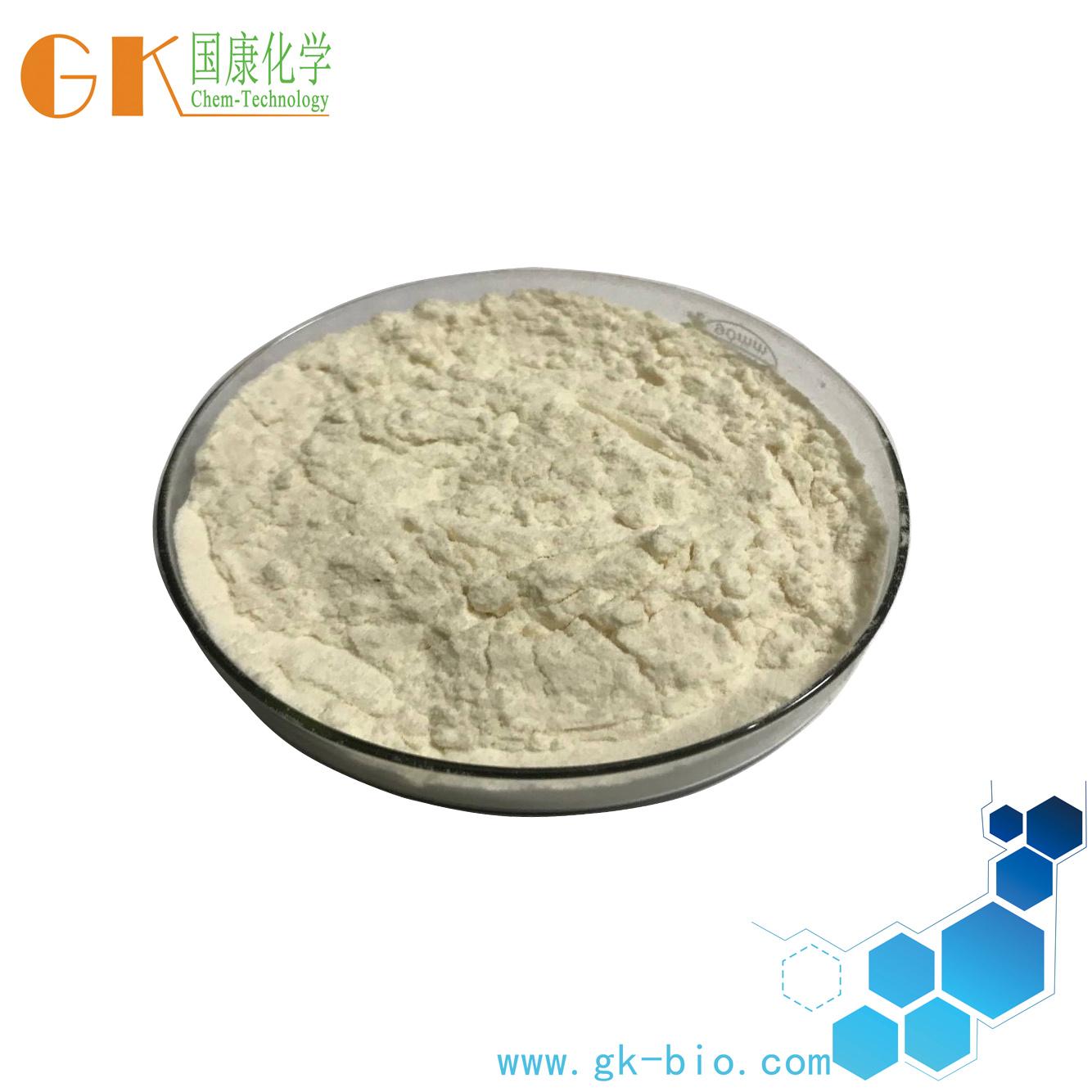
2-EAQ is a pale yellow crystalline solid, C16H12O2 at 236.27 grams per mole, melting in a narrow band around 105 to 108 degrees Celsius and effectively insoluble in water. The ethyl substituent exists to improve solubility relative to unsubstituted anthraquinone, allowing the carrier concentrations that make a modern loop economically dense. It dissolves well in the C9 to C10 aromatic hydrocarbon fraction forming the bulk of the working solution and in polar co-solvents such as trioctyl phosphate, tetrabutylurea or 2-methylcyclohexyl acetate.
The dominant industrial route class is Friedel-Crafts acylation of ethylbenzene with phthalic anhydride to give the substituted benzoylbenzoic acid, followed by acid-catalysed ring closure to the anthraquinone skeleton. Both steps load the crude product with exactly the species that an hydrogenation catalyst cannot tolerate, so purification rather than synthesis defines product quality. Producers combine crystallisation, washing and, for higher grades, melt crystallisation or vacuum distillation to reach specification, and control of the acidic cyclization step determines the residual sulphur burden.
Carrier demand follows hydrogen peroxide itself. Elemental-chlorine-free and totally-chlorine-free pulp bleaching remains the anchor use in Europe, North America and Latin America; textile bleaching drives volumes across South and Southeast Asia; semiconductor fabrication absorbs high-purity grades in Japan, Korea and Taiwan; advanced oxidation processes for industrial wastewater are a structural growth story under tightening discharge consents; and hydrogen-peroxide-to-propylene-oxide units have added a large, geographically concentrated block of demand in China. Environmental substitution away from chlorine, plus a rebound in electronics investment, keeps the multi-year trend positive.
China holds the largest share of both hydrogen peroxide capacity and merchant 2-EAQ production, with plants clustered in Shandong, Jiangsu and Hebei near phthalic anhydride and ethylbenzene feedstock. Japan and Korea retain high-purity capability tied to electronics-grade peroxide chains. Europe and North America run comparatively little merchant quinone capacity and rely on integrated production plus imports. Exports flow from China into India, the Middle East, Southeast Asia and Latin America, normally entered under HS heading 2914 for ketones and quinones.
Pricing follows aromatic feedstocks and the cost of the acid and solvent streams used in manufacture, but the real dispersion is between industrial fill grades and low-poison grades qualified for modern loop designs. Because the value at risk is the hydrogenation catalyst, buyers pay premiums for sulphur and chloride certificates backed by ion chromatography and stated detection limits. Prices also tighten when turnarounds coincide with new train fills, since one large loop can represent weeks of merchant output.
Three jurisdictions dominate the paperwork: the European Union under REACH and CLP, the United States under TSCA, and the Chinese and Indian regimes governing both the quinone and the peroxide made from it. Dossier obligations attach to 2-EAQ as an industrial intermediate; the peroxide producer's own registration of hydrogen peroxide is a separate obligation that does not cover the carrier.
This value chain carries a genuinely positive environmental narrative that still has to be evidenced rather than asserted: hydrogen peroxide is the standard substitute for chlorine bleaching and for oxidative wastewater treatment, leaving only water as its decomposition product. Buyers nevertheless demand quantified footprints, verified origin of the hydrogen used upstream, and traceability through the working solution.
System boundaries decide the answer. Per tonne of hydrogen peroxide, most emissions sit in hydrogen supply, whether grey hydrogen from natural gas or electrolytic hydrogen from renewable electricity, followed by compression and solvent circulation power and the energy needed to regenerate degraded working solution. Under the European framework, low-carbon claims increasingly have to be supported by the renewable-origin rules for hydrogen set out in the renewable energy directive and its delegated acts, so claims reach back through the quinone supply chain only weakly. Suppliers therefore field requests for cradle-to-gate footprints calculated to ISO 14067 and for solvent recovery rates.
Traceability in this value chain has two distinctive features. First, palladium accountability: spent hydrogenation catalyst is returned to refiners under metal-accounting agreements, and that loop must be documented to satisfy customers and auditors. Second, solvent chain of custody, since working-solution components and their impurities end up as trace organics in finished peroxide. Standard expectations otherwise apply: Responsible Care or Together for Sustainability audits, ISO 9001, 14001 and 45001 certification, and declarations that no intentionally added per- or polyfluoroalkyl substances were used anywhere in manufacture or packaging.
2-EAQ is a high-melting, dust-forming organic solid moving in volumes from twenty-five kilogramme bags to full heated tank containers. The logistic risks are combustible dust during transfer, the fact that the product is solid at ambient conditions, and classification drift when a supplier's notified aquatic hazard changes.
Where the notified classification carries aquatic chronic toxicity, sea and road consignments move as UN 3077, environmentally hazardous substance, solid, not otherwise specified, Class 9, packing group III, with the marine pollutant mark; where it does not, the material generally travels as a non-regulated solid. Classification must be confirmed per supplier per revision rather than inherited from the previous lot. At both loading and receiving ends expect ATEX zoning, bonded earthing, no compressed-air cleaning and nuisance dust monitoring.
Three moves separate companies that hold margin in this chain from those exposed to the next turnaround cycle.
2-EAQ is unusual among intermediates because it is bought once in bulk to fill a loop and then continuously in small quantities to replace chemical losses. That purchasing pattern makes operating discipline rather than scale the main determinant of total cost, and makes specification fidelity more valuable than headline price. Suppliers that can document poison-level control with credible detection limits will continue to move up the value chain.
The structural outlook for 2026 is intact: electronics, environmental treatment, pulp bleaching and propylene oxide keep pulling hydrogen peroxide demand upward, while supply concentration argues for deliberate redundancy among buyers elsewhere. The practical advice for both sides is to treat analytical capability as a commercial asset and to write loop-performance metrics into the supply agreement.
Powered by Guidechem
This white paper is exclusively compiled by the Guidechem Intelligence Team based on global customs data, regulatory databases, and industry research. Guidechem is a leading global B2B chemical platform, dedicated to connecting global buyers with verified, high-quality manufacturers.
Relying on Guidechem's extensive global database, we have mapped the core participants in the current global 2-Ethyl anthraquinone supply chain:
Disclaimer: The content of this white paper is compiled based on public market data and regulatory information available as of 2026. Global chemical regulations are subject to dynamic adjustments. In actual export operations, enterprises must consult professional regulatory advisors or relevant competent authorities to obtain the latest compliance guidance.
|
 |
 |
 |
 EN
 Agricultural News
 Food News
 Industrial News
 Cosmetic News
 Pharmaceutical News
 Science News


 1YR

